


One of the most natural, biologically attuned responses to early infancy is to hold a newborn tight against your chest. In this delicate fourth trimester, your baby desires the steady warmth, the familiar rhythm of your heartbeat and the mild kinetic rocking it felt in the womb. The developmental instinct is met naturally with babywearing, which calms a delicate nervous system, reduces infant screaming and promotes solid emotional bond. It also returns your physical freedom so you may prepare a healthy dinner, take care of an older sibling or simply step outside for some fresh air without having to push a stroller.
But jumping into the world of infant carriers can be daunting fast. New parents are presented with a daunting wall of contraptions. There are the meters-long wraps of cloth that seem like difficult puzzles, the hefty hiking backpacks weighed down by industrial fasteners and the rigid front packs that pinch hard into your collarbones. A poorly made or counter-intuitive to adjust, carrier causes uncomfortable strain on your recuperating spine while not providing sufficient structural support for your baby’s delicate hips and neck.
A good baby carrier should feel like an extension of your hug, not like a heavy piece of technology. Cozy Parents’ editorial framework explores early childhood gear through the lens of developmental anatomy, ergonomic clarity, sensory wellbeing and clutter-free living. We believe that everyday appliances should work non-stop, safeguard physical health and be a natural part of a serene and purposeful home.
If you’re ready to dig into more therapist-approved shopping frameworks, tranquil home systems, and selected product recommendations for increasing families, Cozy Parents offers grounded, practical resources for meaningful living.
Anatomical Principles: Supporting Developing Spines and Hips
A new born arrives without the muscle tone and the skeletal contours of an older youngster. For the first several months their bodies rely totally on external physical assistance to keep their airways open and to ensure their joints are properly aligned.
When checking out any carrier for daily use, paediatric physical therapists and orthopaedic specialists look for four essential biomechanical markers:
1. The M-Position: A Healthier Way to Rest Your Hip
“An infant’s legs should never hang straight down from the pelvis,” says the International Hip Dysplasia Institute. Instead the carrier seat has to go from knee pit to knee pit, lifting the knees a bit higher than the buttocks to create a deep, spread-squat “M” shape. This position enables the head of the thigh bone to fit snugly in the shallow pelvic socket . This encourages good joint development and prevents hip dysplasia .
2. Preservation of the Main C-curve
The newborn grows in the womb in full flexion. The spine of the infant is naturally rounded in what is called the main C-curve position. Never put a newborn into an unnatural, flattened or hyperextended upright position of the spine The back panel or wrap fabric of the carrier should follow and support this natural flexion gently and yet with enough lateral strain to prevent the infant from sagging backwards.
3. Clear Airway Management and the T.I.C.K.S. Rule
Babies have tiny airways and they do not have the strength in their neck muscles to elevate their head if it falls forward. Safe babywearing follows the tried and true T.I.C.K.S. guidelines. Your baby should be Tight, In view at all times, Close enough to kiss, Keeps chin off the chest and have a Supported back. The carrier neckline should sit softly at the base of the skull, never digging into the back of the head, or covering the nose and mouth with excess cloth.
4. Even Weight Distribution Throughout the Adult Body
If you carry a child who weighs 8 to 20 pounds for an hour, you have to consider how to distribute that weight on your own body. Premium carriers have wide, crossable shoulder straps, contoured lumbar belts or spreadable woven fabric panels. Distribute the burden equally over your shoulders, upper back and pelvic bones to minimise postpartum muscle spasms, upper back weariness and neck strain.
Carefully Crafted Carriers for Peaceful Everyday Cuddling
To help you find a carrier that’s intuitive, comfy, and developmentally sound, we tested seven top contenders available on Amazon US now.
Each model features proven hip-healthy placement, durable construction and practical convenience for active family living.
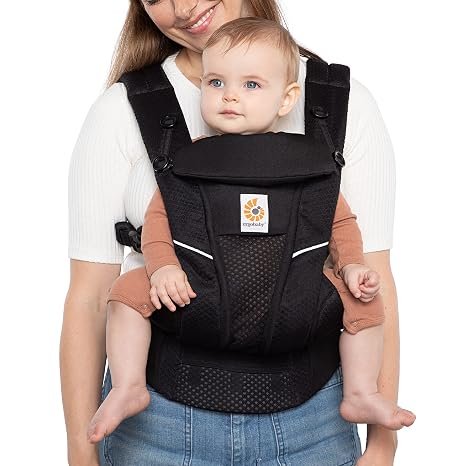
1. Ergobaby Omni Breeze Baby Carrier (Breathable)
Ergobaby Omni Breeze The Omni Breeze, the gold standard of full-featured, all-stage babywearing, is engineered for optimal ventilation and daily endurance. The whole body of the carrier is made of lightweight SoftFlex Mesh to encourage active air circulation to keep carer and newborn from overheating during humid summer strolls or long contact naps. It fits babies starting at seven pounds without needing a separate infant insert and easily grows to accommodate toddlers up to forty-five pounds.
The carrier contains memory foam shoulder straps that are ergonomically designed to be worn straight or crossed over your back, and a firm, supportive lumbar panel to stabilise your lower back. Intuitive sliding tabs on the waistband allow you to modify the seat width in seconds, keeping your baby’s thighs in an ergonomic M-position with each growth spurt. It has discrete side pockets, a retractable privacy cover for sun protection and sophisticated buckle hardware an heirloom-quality investment made to last a lifetime through years of everyday travels.
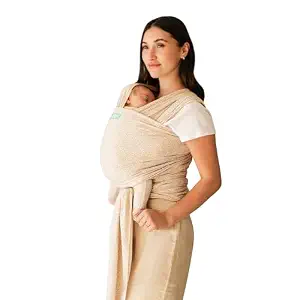
2. Moby Classic 100 Percent Cotton Baby Wrap
A tried and true simple solution for parents who want the soft, womb-like feel of a classic fabric wrap. Made from 100% natural, breathable cotton with zero synthetic elastane, this continuous five-meter wrap offers firm, non-sagging tensile strength that moulds perfectly to your newborn’s curves from eight to thirty-three pounds.
The fabric wraps around your shoulders and chest so the weight of your baby is distributed equally across your entire back rather than pressing down on any one area. Unbleached, pure cotton is incredibly soft on infant skin & washes like a dream in the machine. It’s especially soothing for colicky or preterm babies who thrive on constant chest-to-chest contact, making it a low-profile go-to for peaceful postpartum recovery at home.

3. Konny Baby Carrier AirMesh
The Konny Baby Carrier AirMesh is a revolutionary, hassle-free solution for parents who enjoy the cosiness of a wrap but hate complicated knot tying and flapping fabric tails. This ultra-lightweight carrier weighs only ounces and compresses down compact enough to sneak into a coat pocket. Designed to slip on like a simple T-shirt, AirMesh is a high performance poly-spandex combination that wicks moisture, breathes incredibly well and dries quickly.
Broad, wing-like shoulder panels extend across your deltoids to re-direct downward pressure away from your neck. It has an outside support strap that encircles the waist for increased stability and doubles as a handy travel pouch. Certified by the International Hip Dysplasia Institute as a hip-healthy carrier, it’s a fuss-free, grab-and-go solution for quick nursery calming and neighbourhood strolls.
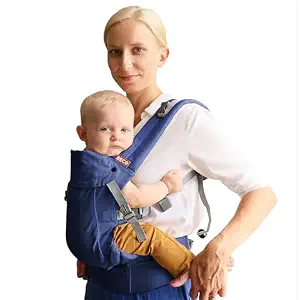
4. Beco Gemini Multi-Position Baby Carrier
With utilitarian minimalism and traditional craftsmanship in mind, the Beco Gemini is a lean soft-structured carrier for easy everyday use. Constructed from soft, durable 100% cotton canvas, it has a simple profile with no unnecessary straps, heavy flaps or confusing attachments. It supports babies from seven to thirty-five pounds right out of the box, with an adjustable snap-width base that narrows for newborns and widens as your infant grows.
The carrier has 4 varied positions to carry your child: front-inward, front-outward, hip, and back carry. Its amply cushioned shoulder straps can be crisscrossed in a ‘X’ configuration across your back for better leverage for tiny frames or carers recuperating from pelvic floor pain. The built-in headrest folds down neatly with secure latches or flips up to support an infant’s neck for stroller-free market outings.
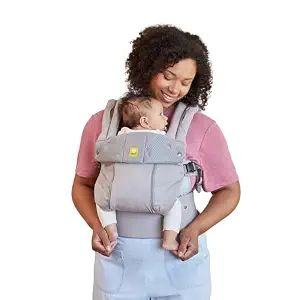
5. LÍLLÉbaby Complete All Seasons Carrier Ergonomic
The LÍLLÉbaby Complete All Seasons is a heavy-duty carrier, designed for year-round use with considerable lumbar support. Its signature feature is a zip-down front temperature control panel: zip it up to keep baby warm in chilly weather, or zip it down to reveal breathable 3D mesh that cools your baby in warm afternoons. It fits infants from seven pounds all the way up to forty-five pounds with no extra insert.
Parents will appreciate the generous padded lumbar support cushion that sits behind the wide waist belt, greatly decreasing tension on the lower back during long hauls. The two-way-adustable shoulder straps can be worn backpack style or crossed, the adjustable neck support adjusts with magnetic-snap precision. Outstanding structural stability for busy families frequently on the go, visiting park trails or conducting outdoor errands.
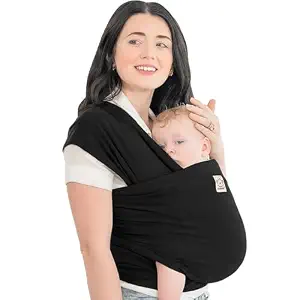
6. KeaBabies All In One Baby Wrap Carrier Stretchy
The KeaBabies All-in-1 Wrap is a daily wrap that is affordable and super reliable, made with a bespoke proprietary blend of premium cotton and high-recovery elastane. This particular blend of fabrics gives just the right amount of four-way stretch enough to let you slide baby in and out gently, but enough to snap back firmly without sagging while you go about your morning ritual.
The KeaBabies wrap is made with enough length so that it may fit people of all body types and sizes comfortably with no unpleasant leftover tails. The wrap naturally holds your baby’s spine in the appropriate C-curve and keeps their hips in the safe M-position from seven to thirty-five pounds. It’s a discreet nursing cover or calming swaddle on-the-go, so it’s a reliable, budget friendly workhorse for hands-free home life.
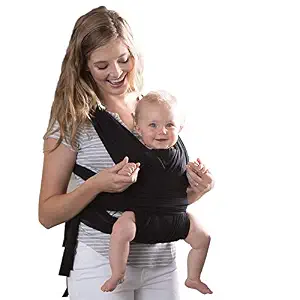
7. Boppy ComfyFit Hybrid Carrier for Baby
The Boppy ComfyFit Hybrid is the perfect bridge between the rigid security of a buckle carrier and the tailored cosiness of a yoga-wrap, giving new parents a soothing, reassuring fit. It has a simple supportive buckle waistband that wraps around your hips with one click and wide elastic yoga-inspired fabric straps that cross over your shoulders and tie securely over your infant.
The fabric is a fluid athletic spandex blend that offers UPF 50+ sun protection and glides across garments without catching or constricting. The structural centre panel offers gentle support for your baby’s back and hips, while the soft fabric arms make it easy to adjust the side support. It has a built-in zipped pocket for keys or cards and folds into its own travel pouch, an obvious bridge for families moving out of early infancy.
Weaving Babywearing into a Grounded Home Rhythm
The physical foundation for babywearing is the introduction of a high quality carrier into your home but it is the development of mindful daily practices that makes the practice sustainable and relaxing.
Incorporate these four practical tactics across your week to maintain an organised home and tranquil routines:
1. Practice Fit Techniques with a Soft Weighted Object
Before you strap your precious infant into a wrap or buckle carrier for the first time, practice your adjustments in front of a mirror with a stuffed toy or a rolled-up bath towel. The fabric tension, the clasp clicks, the strap angles, once you become used to them, the performance anxiety goes away and when the time comes for their first actual carry, you may soothe your baby with peaceful assurance.
2. Use Clothes that Share Body Heat
Remember a baby carrier is like an extra layer of insulating fleece, and your body heat a constant personal heater. Choose light, breathable organic cotton layers (like a footless romper) for your baby, not heavy fleece sleepers. Choosing footless apparel also allows their little toes and ankles to not be pinched or constrained when their legs are sitting in the deep M-squat.
3. Make a Hook For The Entryway To Hang Things Up Straight Away
Carriers with long tails, buckles and webbing soon become visual clutter, thrown haphazardly across kitchen chairs or corridor benches. Place a simple wooden wall hanger right next to your front door or nursery rocker. Hanging up your carrier as soon as you get home keeps the fabric off unclean floors, avoids straps from tangling and makes it ready for your next stroll.
4. Time In Carrier, Unrestricted Floor Play Balance
Babywearing is a great tool to calm fussiness, deal with reflux and run errands but babies need lots of floor time to explore their bodies. Incorporate dedicated tummy time and open movement sessions on a non-toxic play mat to supplement carrier naps. Thanks to this equilibrium your kid is able to develop their neck extensor muscles, to turn over and to explore their physical autonomy freely.
Bottom Line for Mindful Homes
A baby carrier is so much more than a practical piece of childcare equipment. It’s a wearable home, where your baby feels protected, heard and anchored as you navigate the world together. The correct carrier respects the delicate biomechanics of your infant, aids in your physical comfort and minimises the superfluous friction of heavy gear.
Pick a carrier that’s made with proven hip ergonomics, breathable non toxic materials and intuitive daily adjustments and you’re establishing a sustainable routine of connection and serenity for the months ahead.
This week, take a few time to analyse your daily movement, fine-tune your fit and appreciate the grounded intimacy that babywearing gives to your home.
You never have to make the selections of early childhood equipment or home systems alone. Cozy Parents is your go-to for honest product audits, developmental insights and calm home frameworks to support you in building a grounded, deliberate family life.