
Few developmental milestones compare to the pure, unbridled joy of a baby taking his or her very first unassisted steps. Learning to walk is a tremendous leap in early physical autonomy, from tentative gliding along the living room coffee table to balancing on two wobbly feet. The instinct to safeguard your child’s sensitive feet from outdoor landscape, rough pavement and cold surfaces comes in immediately as he graduates from floor-bound explorer to active upright toddler.
But when parents enter the children’s shoe section, they often fall prey to marketing traps and outmoded anatomical advice. The shelves are full of miniature versions of adult fashion sneakers, featuring hard rubber outsoles, high foam heels, stiff ankle collars and narrow, tapered toe boxes. Adorable as these shoes are to look at on display, putting a brand-new walker into rigid, restricted footwear is the biomechanical equivalent of putting ski boots on their feet. Rigid footwear does not assist the natural balance but rather impairs the balance reflexes, blunts vital sensory signals from the ground and alters the growing gait pattern.
Footwear for early walkers should protect fragile soles from environmental threats but not interfere with natural foot mechanics. At Cozy Parents, our editorial methodology assesses early children equipment through the viewpoint of paediatric developmental biomechanics, non-toxic material purity, sensory wellness and clutter-conscious living. We believe in children’s footwear that is flexible, lightweight and anatomically designed promoting natural balance and respecting the developing body.
If you are ready to establish a low-stress, intentional home with expert buying guidelines, sensible developmental routines and minimalist gadget reviews, Cozy Parents delivers practical resources for a tranquil everyday family life.
Paediatric Podiatry Basics: What Young Feet Actually Require
An infant’s foot is not just a little version of an adult foot. At birth, there is essentially little hard bone; it consists of soft, elastic cartilage, loose ligaments, and a thick protective fat cushion that mimics a natural flat arch. The human foot consists of twenty-six bones that slowly ossify through early life, under the direction and formation of physical motion, pressure and tactile connection with the floor.
When paediatric podiatrists and physical therapists are assessing footwear for an emerging walker, four key structural characteristics are considered:
1. Barefoot Simulation and Sense Feedback
The soles of an infant’s feet are packed with thousands of nerve endings that constantly feed proprioceptive information to the brain. This sensory information tells the central nervous system where the body is in space, allowing the brain to modify micro-balance, ankle stability and postural alignment on the fly. Thick cushioned soles are sensory blockers. A beginner’s shoe sole needs to be very thin and very flexible so the infant can feel the contours and texture of the ground beneath.
2. Wide Toe Boxes, Anatomical
Watch a toddler standing barefoot: his or her little toes fan out wide to provide a broad, stable triangle base of support (the heel, the base of the big toe and the base of the small toe). It is very common for regular fashion shoes to taper towards the front, squeezing the toes together. A good first walker shoe must have an asymmetrical, foot-shaped, broad toe box that enables the toes to expand, grasp and flex freely without lateral compression.
3. Real Zero-Drop Profiles
“Zero-drop” means that the ball of the foot and the heel are in the same exact horizontal plane with zero elevation at the heel. A higher heel wedge is used in many modern running shoes and lifestyle sneakers. To the developing toddler, the heel is raised up, which tips the pelvis forward, hyperextends the knees, shortens the Achilles tendon and throws off the natural posture even before the kid has learnt to walk consistently.
4. Flexibility In Torsion In All Directions
Pick up the shoe and test it with your hands: you should easily be able to roll it into a complete ball and twist it like a wet towel with two fingers. With considerable force or even worse, refuse to bend at all . This will inhibit the natural roll of the foot from heel-strike to toe-off . If a shoe bends just at one hinge point , this is also bad . True first-walker shoes act in sync with foot muscles rather than pushing the foot to bend against hard vulcanized rubber.
Best Baby Shoes for New Walkers
To help you select healthy, flexible and comfortable first shoes, we researched seven notable footwear options now available on Amazon US.
All picks are designed to paediatric podiatry standards, with safe non-toxic materials, barefoot feel construction and strong stays-on closures.
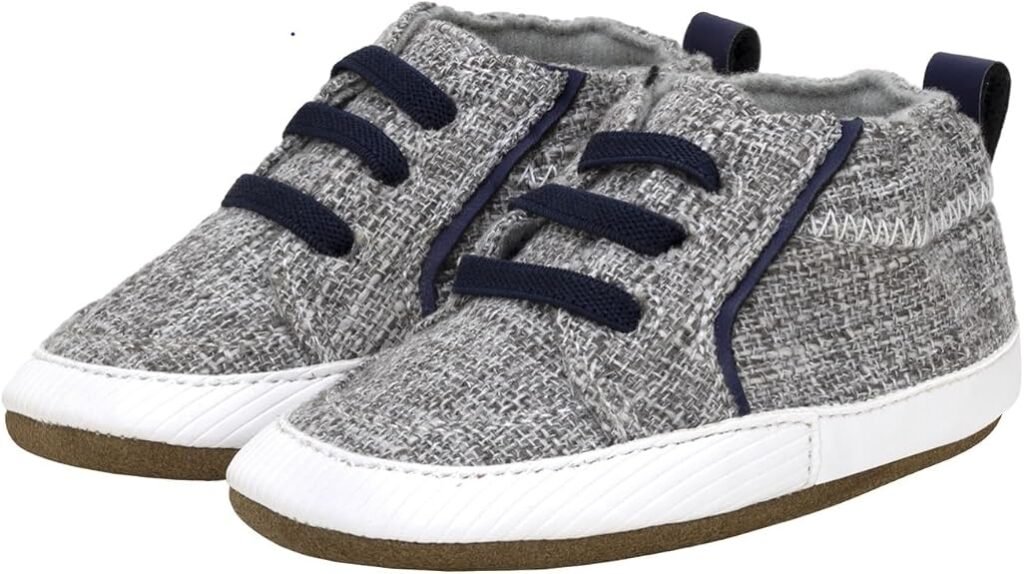
1. Robeez Soft Soles Leather Infant Moccasins
Robeez Soft Soles, recognised by paediatricians as the highest standard for starting walkers, has been given the official Seal of Acceptance by the American Podiatric Medical Association (APMA). These shoes are produced from the finest natural leather, extremely soft which mimics the natural mechanics of bare feet while protecting fragile soles from cold surfaces and trash in the great outdoors.
The sole is textured non-slip suede, enough to get grip but not enough to stick or trip on the emerging steps. The best practical feature is the soft, elastic ankle cuff that makes the shoe easy to slip on but holds strong despite persistent toddler kicking and pulling. The breathable natural leather flexes in all directions, allowing foot muscles to grab and strengthen naturally throughout both interior cruising and dry outside patio exploration.
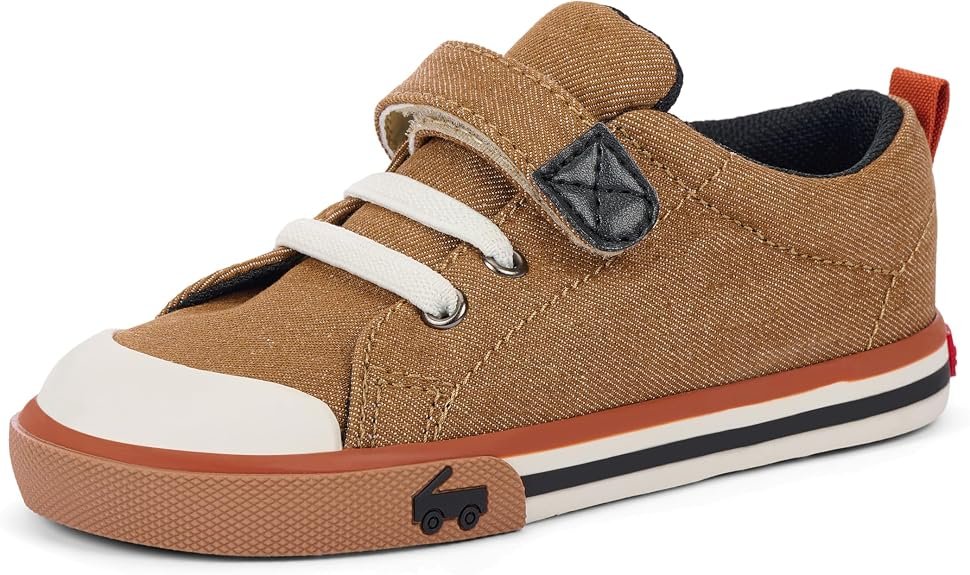
2. See Kai Run Stevie II First Walker Sneaker
Bridging the gap between a flexible soft sole and a protective street sneaker, the See Kai Run Stevie II is an amazing everyday walking shoe approved by the APMA. Built on a bespoke, foot-shaped last with a spacious toe box, it provides developing toes plenty of room to splay and grip without feeling cramped.
The shoe boasts an ultra-flexible, lightweight rubber outsole with deep flex grooves that allow natural multi-directional foot movement across asphalt, grass, and playground mulch. Its twin hook-and-loop strap system opens wide, letting getting wiggly tiny feet in and out a quick, tear-free process. Lined with breathable, natural canvas and equipped with a removable leather-lined footbed, it provides all-day comfort for active children exploring the neighborhood.
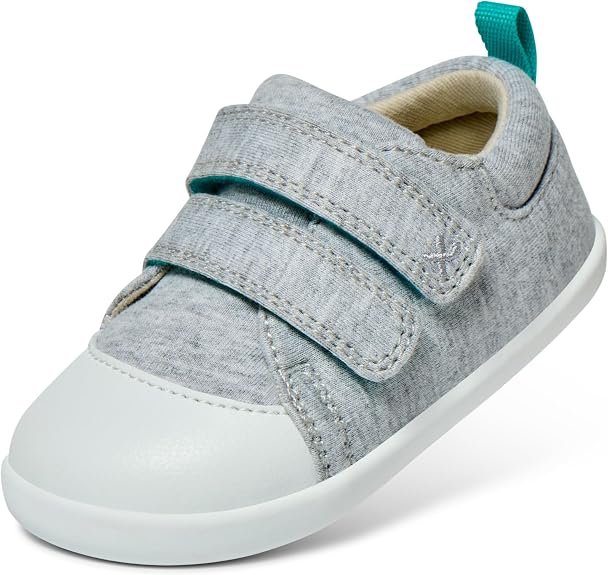
3. Ten Little Everyday First Walkers
Designed in close collaboration with pediatric podiatrists, Ten Little Everyday First Walkers are engineered expressly to reduce footwear confusion for expanding families. These shoes are made of sturdy, non-toxic vegan leather which is free of PVC, phthalates and heavy metals. The anatomical toe box mimics the natural fan shape of healthy toddler feet.
The zero-drop natural rubber outsole features non-slip traction, multi-directional flexibility, and protects feet from damp pavement. There’s a simple fit-tracking system in the shoes: The replaceable insoles are emblazoned with fun graphic line markers to clearly show when your toddler’s toes are nearing the edge and in need of the next size up. Scuff-resistant toe bumpers and flat, no-fuss hook-and-loop straps make this a clean, minimalist everyday sneaker that lasts through playground escapades.
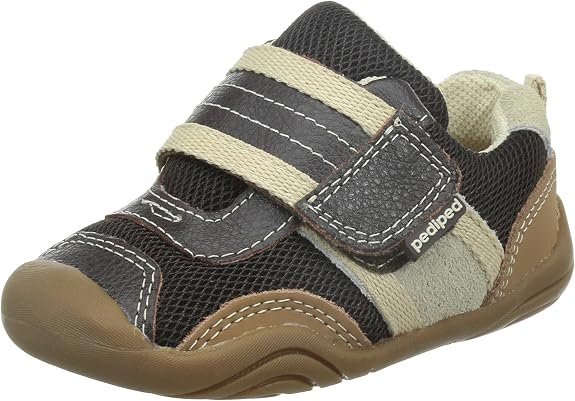
4. Pediped Grip ’n’ Go Cliff Sneaker
Grip ‘n’ Go Cliff is a transition shoe featuring pediped’s exclusive G2 Technology and APMA approved. It is for toddlers who are graduating from tentative strolling to confident running. It blends a soft, featherweight natural rubber sole with rounded edges that replicate the natural contour of a child’s foot, eliminating trips and stumbles over rug edges and pavement cracks.
The shoe incorporates memory foam insoles that gently comfort feet without interfering with ground-feel proprioception. Breathable leather upper and mesh panels keep little feet dry, and the faux-lace elastic front and single wide velcro strap provide a secure, customised fit. It offers tough protection in a very flexible, foot-healthy chassis, with its abrasion-resistant toe caps and frequent floor play.
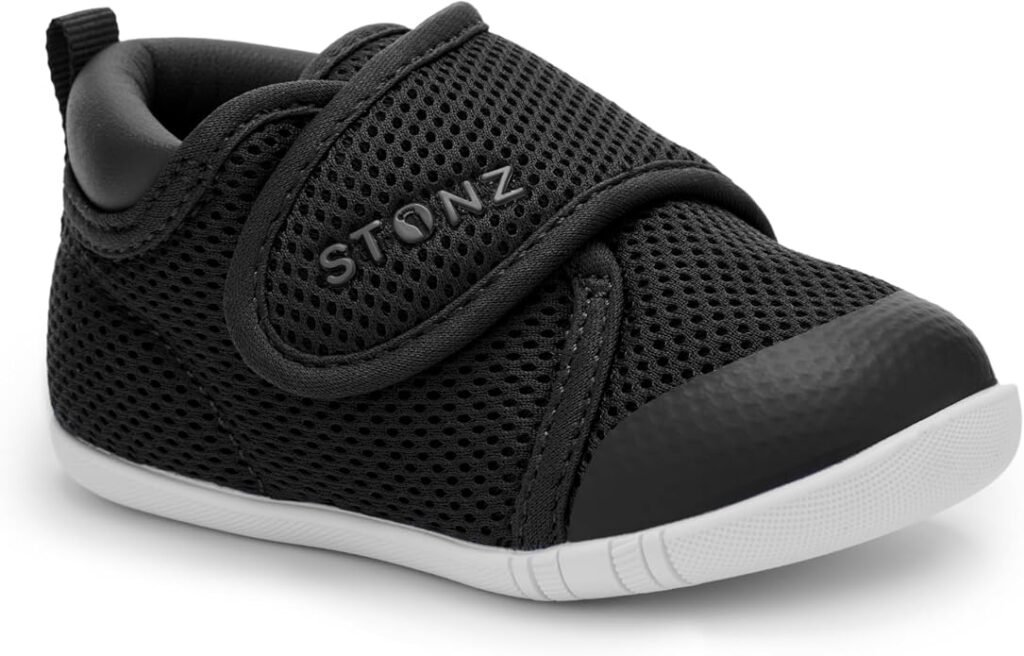
5. Stonz Cruiser Baby and Toddler Shoes
Stonz Cruiser shoes are designed for the crawler-to-walker developmental stage, with a lightweight, breathable silhouette to promote normal musculoskeletal development. The shoes have a super-wide opening tongue that flips all the way forward, so you don’t have to become annoyed by trying to cram fat baby heels into tight openings.
The zero-drop footbed promotes optimal spinal alignment and the ultra-flexible, non-slip rubber sole flexes freely in all directions. Breathable high-performance air mesh on the outside keeps feet cool during warm weather play. Adjustable hook and loop fastening and elastic ankle band wraps around the foot for a snug fit. It’s light enough that your youngster can elevate his or her feet naturally without changing their stride.
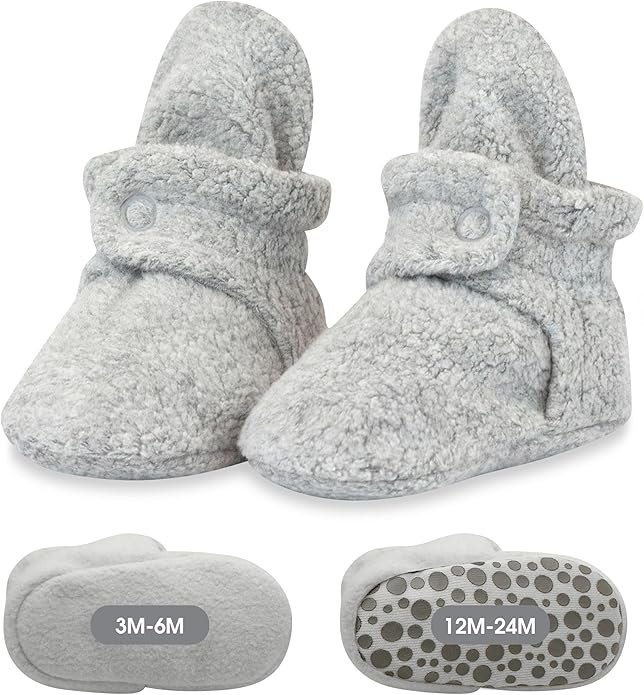
6. Zutano Cozie Fleece Gripper Baby Booties
During the cooler fall and winter months when leather sneakers are too cold for indoor-outdoor transitions, Zutano Gripper Booties offer warm, snug comfort without sacrificing foot movement. These boots are crafted from ultra-soft cotton-blend fleece to keep small feet warm and breathable while acting as a flexible second skin.
Traditional socks twist and slip off in seconds, but Zutano booties have a clever two-snap closing mechanism and a delicate elastic band around the ankle. This design means even the most determined infant cannot kick them off in the stroller or car seat. The bottom sole is covered with dense rubber grippers for slip-resistant traction on slippery hardwood floors and tile, making these an essential, cosy staple for early cruisers.
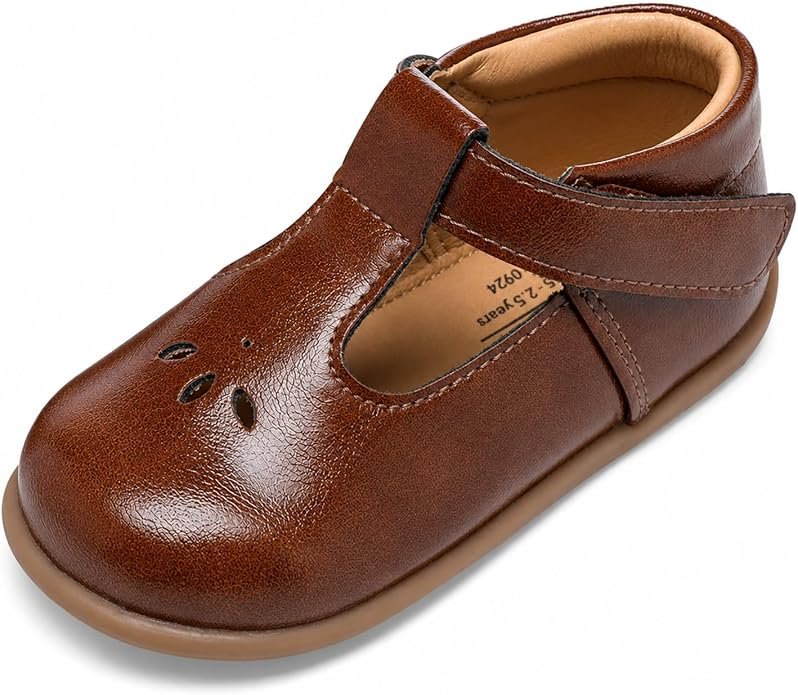
7. Jack & Lily My Mocs Leather First Walkers
Jack & Lily My Mocs are hand-made of buttery soft, non-toxic genuine leather. They have the look of a tailored shoe with the feel of a soft-sole moccasin. The large, rounded toe box gives toes total flexibility to wriggle and flex, encouraging natural arch formation and foot muscle tone.
The key engineering innovation is the super-flex rubber sole. This is an ultra-thin sheet of textured rubber that is sewn directly into the leather base. It gives true outdoor durability and slide resistance while preserving 100% torsional flexibility. Padded collar keeps heels chafe free. Hidden hook-and-loop side strap for a snug, customisable fit around high-instep baby feet Versatile dress-up or park-day shoe for curious little walkers
Practical Habits: Measurings, Sizings and Entryway Order
Supportive podiatrist-approved shoes give the physical foundation for good steps but keeping up with rapid newborn foot growth requires basic housekeeping solutions. A toddler’s feet can grow half a size every two to three months and squeezing growing toes into outdated shoes can permanently change the mechanics of stride.
Adopt these four simple habits to keep your feet in shape and your foyer quiet:
1. Stand, Don’t Sit, to Measure Feet
Never take an infant’s foot size with the infant’s legs dangling or with the infant resting on your lap. When weight is placed on the foot, the soft cartilage flattens and stretches and the toes spread. Place your toddler’s naked foot against a wall on a clean sheet of paper. Holding a pencil vertically, trace outline of heel and longest toe. Measure the distance in mm. Buy shoes that provide about a half-inch (10-12mm) between the longest toe and the front of the shoe. This space allows for growth and forward movement when walking.
2. Audit Sizing Every 6-to-8 Weeks
Toddlers can’t tell you their shoes are too tight, but they may be cranky, refuse to walk or stumble often. Every 6-8 weeks, set a recurring reminder on your calendar to take out the shoe insoles (if they are removable) and push your child’s foot against them, or feel the front of the shoe while they are standing upright. And if the toes are hitting the front edge, then it’s time to size up straight away.
3. Maintain Two-Pair Shoe Limit
Don’t be tempted to purchase a dozen pairs of attractive baby shoes that your child will outgrow before they ever wear them. A new walker requires only two pairs of shoes that work: a sturdy, flexible sneaker for outdoor playground and park outings, and a soft, breathable moccasin or bootie for indoor-outdoor errands. Having a small shoe inventory reduces closet clutter and helps you leave the house faster in the morning.
4. Create a Shoe Basket at Child Height
Create a space for early independence by setting a modest, open woven basket at your toddler’s eye level on your front door. Teach your youngster to put their shoes in the basket when they get home. High-quality first walking shoes have easy hook and loop straps so that babies as young as eighteen months can begin to practice opening their strap and putting shoes away, making entryway tidiness a confidence-building daily milestone.
Increasing Balance And Physical Freedom
You don’t want a baby’s first walking shoes to be inflexible as a cast or overdesigned as a fashion statement. The real goal is to give light, reliable shelter from the elements, yet let the remarkable biomechanics of the human foot happen just as nature intended.
Opting for shoes with ultra-thin, flexible soles, large anatomical toe boxes, zero-drop heel geometry and non-toxic, breathable materials provides your child with the physical basis to be able to balance, run and explore the world with total confidence.
Take a few minutes this week to look at your toddler’s present footwear, let their little toes wiggle away on the living room floor, and pick first shoes that respect your child’s emerging independence.
You don’t have to go it alone on early childhood gear decisions or milestone equipment choices. Cozy Parents is your source for honest product reviews, developmental theories and minimalist house solutions for conscious, grounded parenting.