

When you become a parent, you naturally want to make every area of your home safe for free mobility and discovery. But for renting families this stage is often accompanied by a particular stress: the struggle to reconcile the essential physical safety of a newly mobile infant with the limits of a lease and the fear of losing a security deposit.
Normal childproofing instructions presume you own the walls outright, so they recommend drilling hefty toggle anchors through plasterboard, driving wood screws through the face frames of kitchen cabinets and permanently affixing hardware to ornamental millwork. With tenancy agreements being so strict many parents feel forced into two equally frustrating extremes of either being a hovering mother hen that will not let their child take a tumble, or covering their living space with flimsy adhesive gadgets that cannot cope under actual pressure and rip the paint down to the gypsum when removed.
We at CozyParents think that kid safety and home preservation are not mutually exclusive. You don’t need to perform any demolition work to set up an atmosphere for a curious youngster. Read on to learn about the mechanical physics of babyproofing, non-invasive structural workarounds and reversible engineering to create an open, peaceful, Montessori-friendly nursery and living room that protects your child’s gross motor autonomy and your rental deposit.
Why Renters Need Smart Engineering
Childproofing is seldom about thwarting a premeditated attack on a house; it is about combating expected developmental schemas and biomechanical milestones.
1. Enclosure and Trajectory Schemes
Toddlers are learning about the world through concepts of space and sense. They will crawl into cupboards, empty drawers and sequester small items behind doors, the enclosure scheme. Their evolving trajectory schema also encourages them to push, pull, lean, and test resistance at the same time. If you’ve ever watched a toddler yank on a cabinet handle or attempt to push against a barrier inside a doorway, they’re utilising their whole body weight as a lever. To babyproof rental properties, you need devices that can resist dynamic horizontal leverage without the use of wall piercing fasteners.
2. How Exactly Toddlers Fall
An infant pulling himself up to stand or a toddler cruising along baseboards has a high center of mass in the torso and inadequate postural corrections. Falls are frequent laterally or backward against door jambs, radiators or cabinet corners. You can’t just “stick on” protection in a rental space with low-grade tape. It must absorb kinetic shock without shearing sideways or marring the underlying finish.
3. Emotional Regulation is Supported by Clear Boundaries
Kids are at their best when physical limits are obvious, predictable and unchanging. If a safety gate wobbles or a cabinet latch gives way halfway, kids see the barrier as a game or a problem to be beaten which increases their irritation and tenacity. Reversible childproofing hardware needs to be structurally as solid as drilling hardware to be able to establish calm, stable environmental restrictions.
Babyproofing Solutions for Renters (No Drilling Required)
These seven tried and true, super-reliable childproofing devices from Amazon US give you rock solid physical protection without damaging your rental’s walls, woodwork and cabinetry.
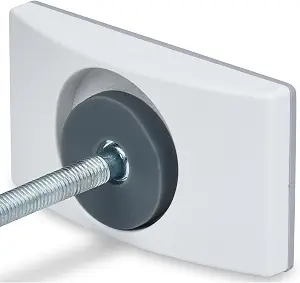
1. Wall Nanny Pressure Mounted Gate Flat Wall Protectors Cups
Heavy-duty, low-profile elastomer and hard-rubber wall saver cups designed to seat pressure-mounted safety gate spindles without drilling.
Standard pressure gates need to be cranked down super tight for safety, which easily makes structural holes through rental plasterboard or peels paint down to the paper core. The Wall Nanny has a larger surface area that distributes the compressive load equally over the stud. Its innovative flat-bottom form means it may be installed flush against baseboards where square spindles don’t typically go, which fully eliminates wall gouging and substantially enhances the gate’s lateral stability.
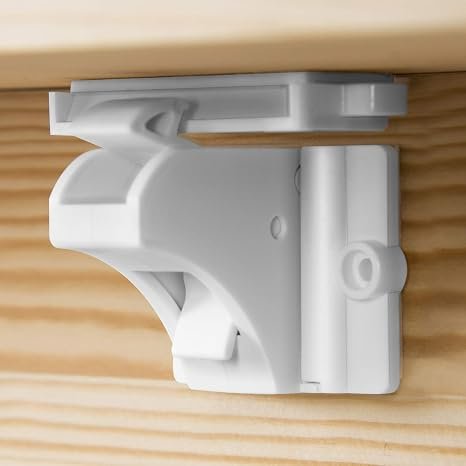
2. Vmaisi Hidden Magnetic Cabinet & Drawer Locks (Adhesive Mounting System)
Interior magnetic latches with heavy-duty 3M foam backing that lock kitchen and bathroom cabinets without a single exterior screw or visible latch.
Unlike outside strap locks that wreck your kitchen sightlines and rip off cabinet varnish, these locks attach entirely inside the cupboard frame. The magnetic key, softly swiped across the wood on the outside, quickly frees the catch. Applied with correct surface-preparation techniques, the industrial glue sticks fast to forceful toddler tugs, but releases cleanly when softened with light heat on moving day.
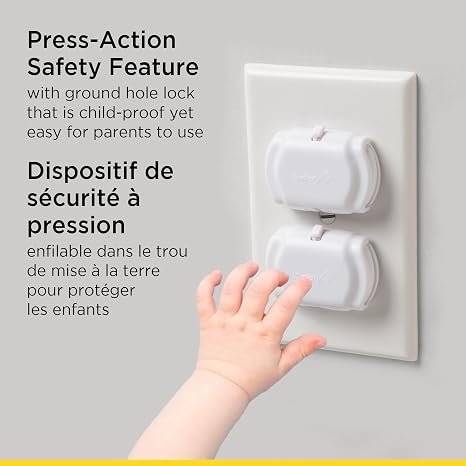
3. Safety First Deluxe Press & Glow Outlet Covers / Self-Closing Outlet Plates
Replacement wall plate covers that are reversible, with spring-loaded sliding socket shields that snap shut the moment an electrical cord is unplugged.
Individual plastic outlet covers are severe choking hazards and infamously easy for curious kids to rip free. These replacement plates use the single existing screw hole found on normal duplex electrical plates. They look clean and modern, with no additional drilling required, and they immediately block child access to live currents. Just keep the landlord’s original plastic plates in a labelled zip-top bag and switch them back when your lease is up.
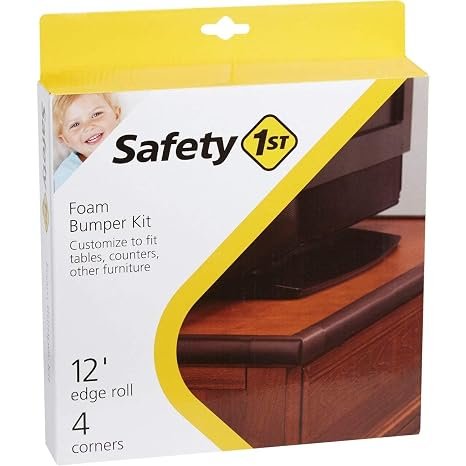
4. Safety 1st Custom Fit Foam Edge & Corner Guard w/Peel-and-Stick Backing
High-density, closed-cell NBR foam strip tape for padding stone worktops, low window sills and rental baseboards.
Built-in architectural details such as low brick hearths, ceramic tiled entryway steps or stone window aprons cannot be removed or sanded down in rental flats. This high-density foam serves as an impact-absorbing cushion to prevent against cranial collisions during early walking stages. It sticks well on stone and tile and cleans off well with rubbing alcohol without ruining the brickwork.
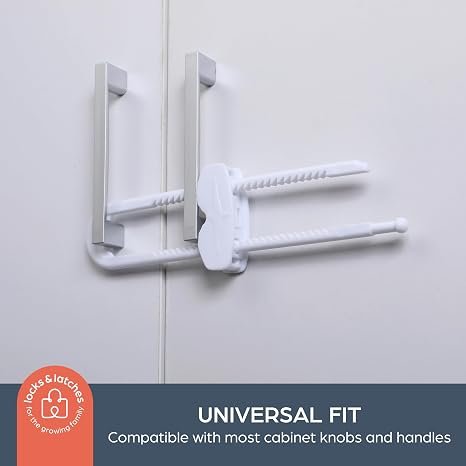
5. Dreambaby Sliding Locks for D-Shaped Cabinet Handles
External ratcheting bar-and-catch locks that fit over pairs of side-by-side cabinet doors and are equipped with knobs or D-shaped handles.
Zero tape, zero tools; these mechanical sliders are perfect for under-sink utility cabinets with harsh dish soaps and garbage disposals where adhesives just won’t do (like on antique or unpolished rental wood). They hook over existing cabinet hardware, snap into a tight ratchet lock and release with a squeeze of an adult dual-button. They leave no trace, no residue, no friction traces whatsoever.
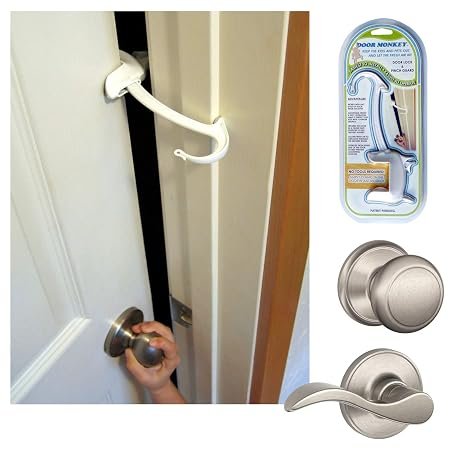
6. Door Monkey Door Lock & Pinch Guard
A smart, no-tools door lock that clamps directly onto the edge of ordinary interior residential doors and latches automatically against existing door stop moulding.
To keep a toddler out of an off-limits home office, laundry room or master bathroom, you generally have to install high hook-and-eye latches or locksets. In just two seconds, the Door Monkey glides onto the vertical edge of the door at adult height no screws, adhesive or tape necessary. The door is propped open about one inch to provide airflow but also stays securely shut and acts as a pinch guard to prevent little fingers from getting caught in the heavy hinges.
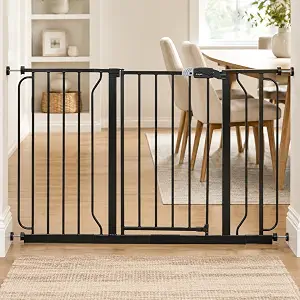
7. Easy Gift Step 2-in-1 Pressure Mount Extra Wide Safety Gate
A walk-through pressure gate made of solid steel with an adjustable tension spindle mechanism and a child-proof dual-latch handle.
The Regalo Easy Step works by using only mechanical horizontal expansion pressure to block off corridors, galley kitchens or room-to-room transitions. Rubberised wall cups combined with this form a hard, immoveable barrier that is used to endure intense shaking without leaving marks, scuffs or indentations on the landlord’s painted door frames. (Note: Pressure gates should never be used at the top of a stairway where a hardware-mounted gate is an absolute safety requirement.)
Practical Renter Protocols: The Art of Non-Destructive Installation
It’s not only the materials you purchase that keep rental damage from happening, it’s the physics of installation and the chemistry of safe removal.
1. Master the 50/50 Surface Prep
- Adhesive childproofing products don’t fail because children have superhuman strength. They fail because microscopic layers of silicone gloss, kitchen oil and airborne dust damage the adhesive of the tape.
- Clean surfaces of rented woodwork and cabinets with a 50% isopropyl alcohol and 50% water solution before to installing an adhesive base.
- Avoid using home cleaning sprays or oil based furniture polishes immediately prior to installation since they leave slippery barrier films.
- Let the surface air dry, and press firmly on the tape for a full 30 seconds. Let the glue cure for 24 to 48 hours before letting your child interact with the latch.
2. Clean Removal Protocol (Protecting Your Deposit)
- When it’s time to move out, don’t pull or rip an adhesive lock off painted plasterboard, veneer or cabinets. If you pull the tape when it’s cold it will cause a tensile shear that will rip off latex paint and wood laminate.
- Apply a household hair drier on medium heat and direct the airflow at the plastic base for 60 to 90 seconds. The heat melts the acrylic foam core but doesn’t burn the wood.
- Take a length of light nylon monofilament fishing line or unflavoured dental floss about a foot long and slide it behind the plastic mount. Saw the mount back and forth with a steady motion. The thread will cut through the softened glue layer nicely.
- Roll off any leftover rubbery residue with your thumb, and remove any remaining stickiness with a few drops of mineral oil or citrus adhesive remover.
3. The Non-Negotiable Exception: Making Tall Furniture Safe
We are as concerned about keeping rental finishes in pristine condition as you are but there is one thing CozyParents absolutely, uncompromisingly draws the line at: anti-tip furniture straps on tall, top-heavy furniture.
Furniture straps and tension straps that use no-drill adhesive and are affixed only to plasterboard paper are not safe with the dynamic kinetic shock of a climbing youngster. A 30-pound toddler can generate hundreds of pounds of forward rotational torque by climbing inside an expanded dresser drawer. Adhesives merely delaminate the paper face from the gypsum core, causing instant structural failure.