

Music is one the most natural and immersive entry points to early childhood learning. Long before children understand spoken vocabulary or complicated phrase structures, their neurological systems are sensitively tuned to cadence, pitch, tempo and rhythm. When a young child hits a drum, shakes a wooden maraca, or glides a mallet across a xylophone, they are not just generating noise; they are building core cerebral connections for auditory discrimination, motor planning, and emotional regulation.
But many current musical toys on the market today rely primarily on pre-recorded electronic sound chips, flashing LED lights and mechanised plastic buttons. When a child pushes a button and plays a pre-programmed digital melody, then he is a passive spectator, not an active producer. With electronic toys you lose the real time physical cause and effect relationship between strike force, acoustic vibration and auditory feedback.
Children learn best with real acoustic instruments which promote real musicianship, active listening habits and rhythm understanding. Simple, acoustically resonant tools made of natural wood, authentic drumheads and tuned metal keys, the young child has direct control of tone, volume and pace.
Bring well-designed, child-safe instruments into your house and you will make music-making a rich and open-ended sensory activity that promotes early childhood focus and fine motor precision.
At Cozy Parents, we examine early childhood equipment through a stringent lens of spatial clarity, physical health, developmental utility and clutter-controlled minimalism. We believe your home should serve as a calm, mindful refuge where your child’s innate curiosity can grow without sensory overload.
If you are eager to discover additional therapist-backed frameworks, home organization tactics and expert gear reviews for growing families, visiting our website can connect you with practical resources geared for intentional daily living.
The Neurological Benefits of Acoustic Music Play
To understand why real acoustic instruments outnumber computerized sound-makers, it helps to explore how the growing brain processes sound. Auditory processing is the brain’s ability to perceive, interpret and differentiate tiny differences in acoustic signals a vital precondition for speech acquisition and reading readiness.
When a baby plays an acoustic instrument, multiple critical neural processes happen at the same time:
Pitch Perception & Hearing Discrimination
Since the instruments are acoustic and rely on how and where they are hit, the pitch is flexible and the overtones are organic. A metal xylophone key struck at the middle gives a rich resonant note, while a blow at the edge produces a higher, sharper ring. By training the auditory cortex of the brain to discriminate small differences in frequency, these little acoustic differences directly enhance phonemic awareness in acquisition of spoken language.
Clocking & Sync Timing
At heart, rhythm is timing. When a youngster shakes an egg shaker or strikes a wooden block to a steady rhythm, they synchronize their motor output with their auditory input. This synchronisation between the brain and body called sensorimotor coupling, bolsters the neural networks that support executive function, impulse control, and spatial-temporal cognition.
Two-sided coordination & Dynamic Control
To play instruments you need good physical control. This requires bilateral integration, which is the capacity to use both sides of the body together to complete a task. Holding a stick in one hand and supporting the drum with the other. Also, learning to hit softly for a quiet sound or hard for a loud sound enables babies to modulate the force they use and helps them to refine the intrinsic control of the muscles in the hand.
Best Kids Musical Instruments
Let us evaluate seven diverse, highly rated instruments currently active and readily available on Amazon US to help you design a smart, acoustically rich music area at home.
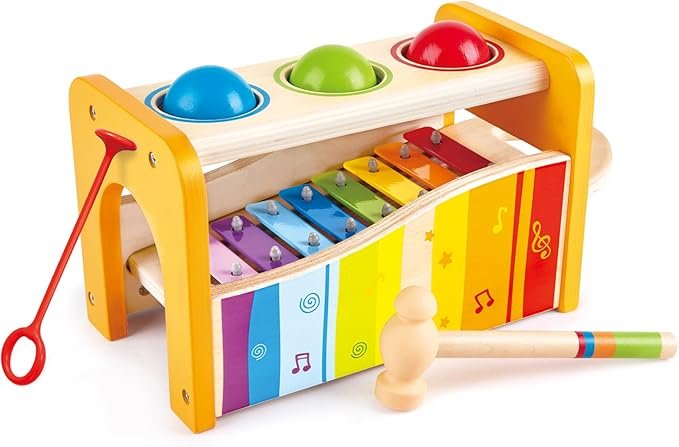
1. Hape Pound and Tap Bench Slide Out Xylophone
This wooden instrument is multi functional, combining early cause and effect physical play with study of melody. Toddlers pound colourful wooden balls through rubber-lined rings with a light wooden hammer, sending them sliding down a multi-colored xylophone ramp to form a cascading musical scale.
As your child grows, the metal-key xylophone slides out fully from the wooden frame and may be played as a stand-alone eight-note instrument using a mallet included in the set.
Made of sustainable wood and finished with non-toxic, water based finishes, it’s sturdy enough to handle strong toddler play while imparting pitch hierarchy and spatial coordination.
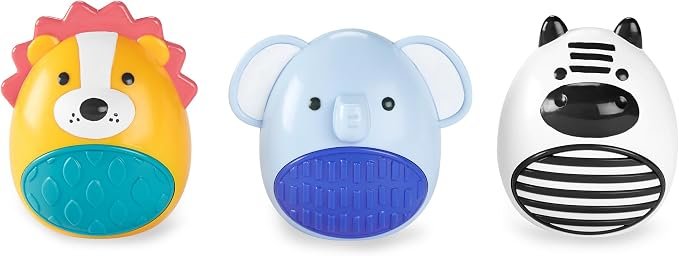
2. Skip Hop Explore & More Musical Egg Shaker Set
Egg shakers are one of the most accessible percussion tools for newborns and young toddlers because they fit naturally in a developing palm-grip. This collection of 3 animal themed shakers (owl, hedgehog and fox) has different inside textures, beads and sonic chambers .
Each shaker makes its own sound, from a soft gentle rustle to a crisp loud rattle, encouraging infants to listen intently and compare aural input.
Their plastic bodies are smooth and curved, simple to clean, non-toxic and without small external parts. They are the perfect starting instrument for early rhythm training and grip strengthening.
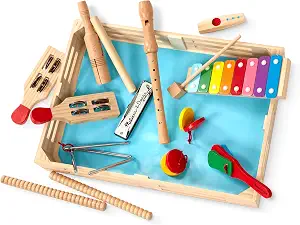
3. Melissa & Doug Band-in-a-Box Musical Instruments Set
This traditional wooden set provides families with a great range of tone and texture for a thorough introduction to acoustic percussion. The 10 piece set comes in a durable wooden storage crate and includes a tambourine, cymbals, maracas, a clacker, tone blocks and a metal triangle with striker.
Every instrument offers children the chance to try out numerous types of physical movements – shaking, hitting, scraping and tapping to create different acoustic tones.
Its open-ended format fosters group family play, or solo discovery of rhythm, allowing preschoolers to explore how different materials create varied sound quality.
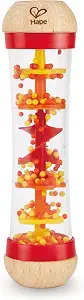
This translucent wooden rainmaker is designed to give visual as well as audio input and to simulate the calming sound of pouring rain. When kids invert the hollow tube, hundreds of colourful micro-beads tumble down internal trickle plates producing a spinning propeller wheel to turn as sound tumbles down the column.
The smooth natural wood end-caps are suitable for little hands to hold and allow toddlers to experiment with speed and angle.
A delicate tilt of the rainmaker produces a quiet, constant soothing hum, while a fast turn provides a crisp, startling rushing sound: a visual, intuitive demonstration of physical velocity and loudness control.
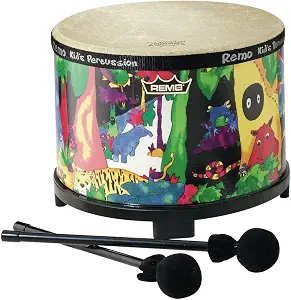
5. Remo Kids Percussion Floor Tom Drum
This floor tom is produced by a leading manufacturer of professional drumheads worldwide, and offers true acoustic quality at a size suitable for home play. It is 10 inches across and 7.5 inches high and it sits on rubber feet which lift the acoustic shell a little off the floor to allow sound waves to resonate freely without being muffled.
The Fiberskyn head is Remo’s own invention and delivers a deep, warm and true drum sound with palms, fingers tips or the soft mallets it comes with.
Its strong build can withstand even vigorous play, which makes it a fantastic tool for teaching consistent beat keeping, pulse tracking and dynamic control.
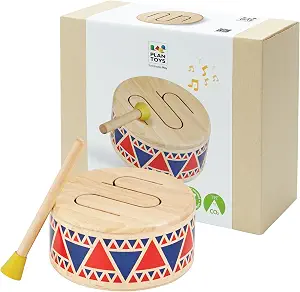
Made from eco-friendly rubberwood, and free from any poisonous chemicals, this stylish wooden drum is a calm, warm alternative to noisy metal or synthetic drums. The top drumhead contains a distinctively carved hardwood surface with curved cutouts that produce different musical tones depending on where on the surface the drumhead is struck.
A beater with a rubber head to cushion the impact and provide a pleasing sound without being too loud for a quiet living room.
The minimalistic wooden design fits perfectly into modern homes and provides a calming tactile choice for children learning hand-eye coordination and spatial accuracy.
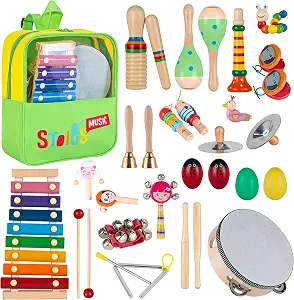
7. Stoie Musical Instruments Set For Toddlers
This natural wooden percussion set features a tambourine, maracas, hand bells, rhythm sticks and a wooden sounder and is designed with Montessori minimalism in mind. All instruments have smooth, unpainted natural wood, accented with non-toxic finishes, to reveal the natural acoustic resonance of timber.
The introduction of simple rhythm sticks (claves) is particularly valuable for early music education, as tapping two solid wood sticks together pushes toddlers to practice mid-line crossover and exact bilateral aiming.
The complete set fits nicely in an accompanying cotton canvas Tote Bag, keeping your music corner clean and clutter-free.
How to Build a Pleasant Music Corner at Home
Introducing your youngster to musical instruments doesn’t have to mean a noisy, messy living room. With careful planning and defined storage limitations, composing music can be a peaceful, organised pastime.
Here are four home organization tips to consider:
1. Keep Instruments in Open Baskets
Place instruments in shallow, natural woven baskets or low wooden trays on accessible shelves. Grouping instruments by sound type shakers in one basket, wooden percussion in another allows your child to select objects independently and understand where things belong when play time finishes.
2. Instrument Rotation Practice
Instead of a full 10 piece band on shelves everyday, have 2 or 3 different acoustic objects at one time (i.e. one drum, one set of egg shakers and a rainmaker). Changing the choices every few weeks will keep the interest level strong in your child while preserving a visual calm in your play space.
3. Create a Special “Music Spot”
Select a certain rug, floor cushion or low mat for musical experimentation. Teaching your toddler to sit on their cushion while playing instruments offers a distinct physical barrier that discourages walking around with mallets or rhythm sticks, fostering safety and focused attention.
4. Model of the Contrast between Quiet and Loud
Play “Volume Detective” and help your child discover dynamics. Practice making the softest, quietest shake possible with an egg shaker and then contrast it with a hard, vigorous beat on a drum. Learning how to control volume is self-regulation of the body and consciousness of one’s own space.
Important differences Electronic Sound Toys & Instruments
Understanding the evident difference between actual acoustic instruments and automated electronic toys emphasises why acoustic options better assist early childhood development:
Sound Production Mechanics: With acoustic instruments the child gets instant feedback from the actual vibrations that are directly produced by his movement. Electronic toys use digital sound chips that are activated by simple button pushes. These are battery operated .
Overtone and Auditory Variety: Real instruments have genuine variation of tone and pitch subtleties depending on the force, angle and location of the strike. But electronic toys provide fixed and repeating digital audio samples. They do not vary in tone.
Motor Development: Acoustic play involves the correct modulation of force, grip control and bilateral coordination. Toys that are operated by the depression of buttons need very little physical exertion and give little workout for the intrinsic muscles of the hand.
Sensory Environment: Peaceful setting encourages attentive, active listening with natural wood and metal instruments. Flashing lights and high-pitched electronic speakers can create sensory overload and fast weariness.
Longevity & Versatility: Real acoustic instruments transform from simple infant sensory exploration to systematic preschool music education. Electronic gadgets are generally outgrown soon as children weary of repetitive sound loops.
Making a Harmonious Early Learning Environment at Home
Bringing real acoustic instruments into your toddler’s daily life does much more than entertain it builds a solid foundation for auditory processing, physical motor control and creative confidence. A handcrafted wooden drum, tuned metal key or natural percussion instrument gives your youngster a place to explore tone, pace and rhythm in their own way.
Take a time today to look at your child’s play environment, replace button-activated noise makers with a few high-quality acoustic instruments, and enjoy seeing your little one discover the delight of generating real music.
You don’t have to make the decision about early childhood gear or house set-up options alone. Visit us for a steady stream of real life development tips, minimalist home organization ideas and genuine product evaluations.