
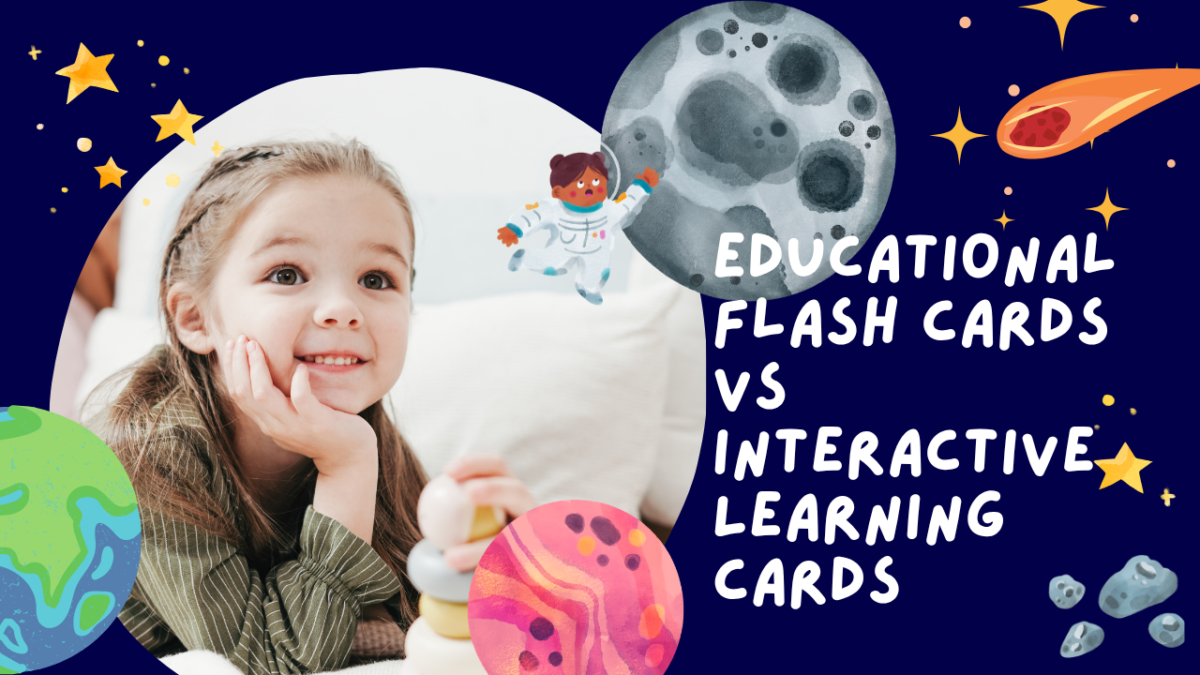
Once a toddler starts to close the gap between thought and spoken word, a whole new world of parenting anxiety often opens up. We are left combing aisles and digital storefronts for the “perfect” tool to unlock their literacy, numeracy or phonetic potential. In today’s world of commerce, this search usually leads to a crossroads. The static, traditional world of educational flash cards or the buzzing, high-tech world of interactive learning cards.
For the intentional parent, this decision is not only about “learning your ABCs” but the quality of the signal we send to our child’s developing brain and the visual harmony we maintain in our homes. The pressure to “fast-track” milestones too often leads to what we call “flashcard fatigue” where the joy of spontaneous discovery is supplanted by the stress of rote performance. On the flip side, many interactive cards employ loud digital noise, flashing lights and repetitive “reward” sounds that break a child’s attention span rather than build it.
At Cozy Parents we know that the best learning tools are a bridge to connection, not a barrier of distraction. We believe in ‘deep play’ choosing durable, tangible, psychologically sound resources that spark independent thinking, all while honouring the serenity of a minimalist, screen-free home. In this guide we will look at how to tell which tools actually help your child grow.
Developmental Foundations: The Science of Engagement at an Early Age
Beyond the colorful packaging, we find that the efficacy of a learning card is a function of how it engages the child’s nervous system. A preschooler’s brain is a work in progress; it adores novelty, repetition and most of all, social interaction.
1. Active Recall over Passive Recognition
Good learning cards support “active recall” the effort of pulling information from memory rather than merely recognizing it on a screen or a brightly lit gadget. This is the difference between a child knowing the letter “B” because they have done the cognitive work to identify it and a child waiting for a digital voice to tell them what they are looking at. Active recall builds neural pathways and produces real mastery of the material. The brain has to “work” when presented with a static card for a child.
2. Language Support and Joint Attention
Toddlers are social learners. The best cards are those that encourage “serve and return” interaction between parent and child. This scaffolding using the child’s existing knowledge with the adult as the guide is the gold standard for language acquisition and emotional bonding. In this dialogue, the parent is effectively substituted by interactive cards that “talk” to the child. When you select tools that require a human element you are reinforcing the most important learning dynamic between you and your child.
3. Multi-Sensory Processing
The more systems process information in parallel, the deeper it is encoded. The proprioceptive and tactile systems are activated by tactile textures, realistic imagery or a substantial weight of a card. A flimsy card gives very little feedback to a toddler’s developing hands. A thick-stock or high-quality card, or a card paired with a physical object, provides the grounding, “real-world” feedback that makes the learning experience feel substantial and meaningful, rather than ephemeral and digital.
Choosing Your Route: Flashcards or Interactive Tools
There are tons of options out there, but they are not all created equal. Let’s look at the key differences and what to look for.
Old School Flashcards: A Minimalist’s Choice
Cards are often dismissed as “old fashioned” but are surprisingly powerful in an intentional home. They don’t need batteries, they don’t emit artificial high-frequency light and they don’t create a “dopamine loop” where the child is driven by the reward of the sound rather than the content of the card.
The old-fashioned flash card has the value of its silence. It makes the child sit with the picture and process it. It allows for pacing that is controlled by the child. If your toddler is tired, you can go slower. If they are interested you can spend ten minutes on one card, talking about the colours, the history of the object or a memory you have of it. This is the core of slow parenting.
Interactive Learning Cards: The “Bridging” Tools
Interactive cards aren’t inherently “bad” but they need to be chosen with extreme care. The dangers are in “over stimulation”. If a card set is dependent upon a convoluted electronic pen or a screen built into the board to work, it’s probably adding “noise” to the play experience.
But there are some interactive tools that offer a “bridge.” They’re tools that provide feedback through tactile buttons or physical manipulation, not by turning the experience into a video game. The aim is to make sure the technology is supporting the learning, not detracting from it. The tool has failed its primary purpose if the child is more interested in the sound effects than the letters on the page.
7 Tools for Purposeful Learning
The first step to a peaceful playroom is choosing the right supplies. Here are seven options that focus on durability and developmental integrity.
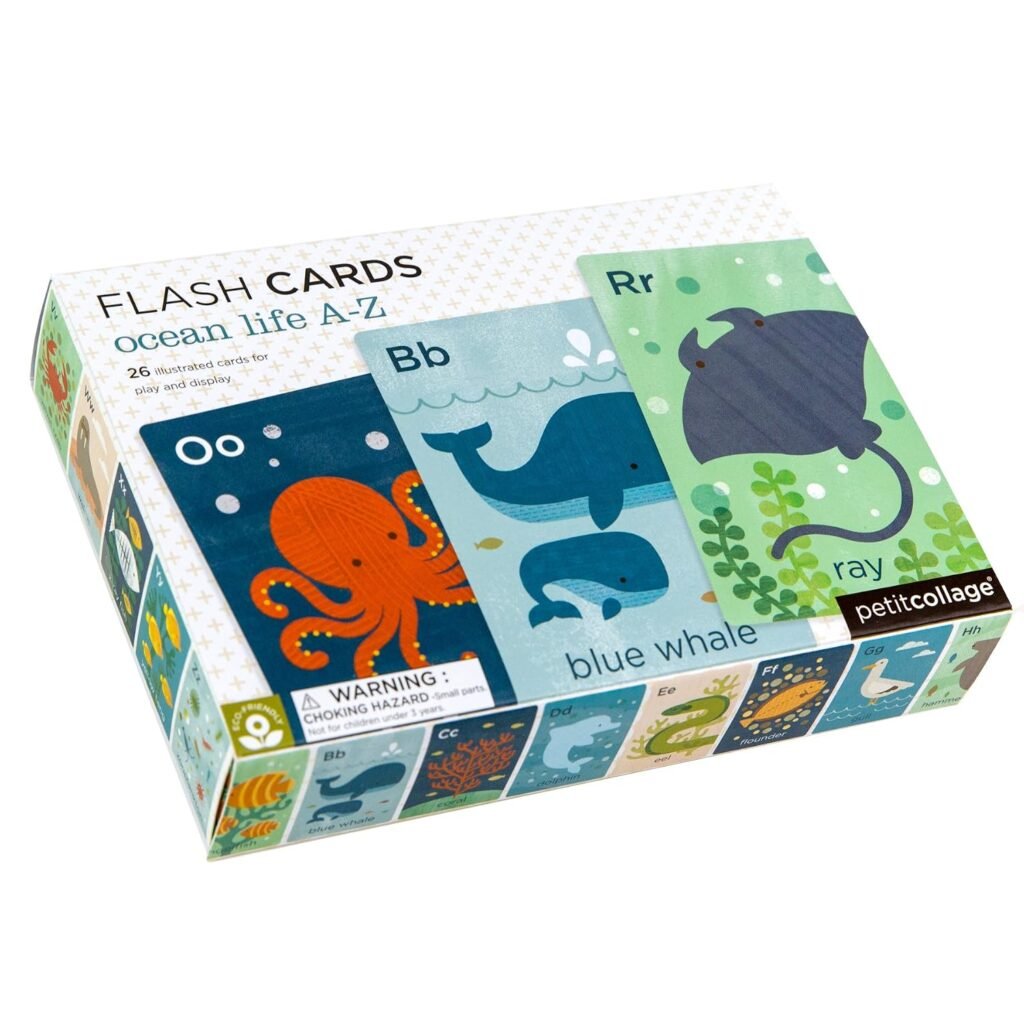
1. Petit Collage Alphabet Flash Cards
The cards are printed on recycled FSC-certified cardstock using vegetable-based inks. Bold, artistic animal illustrations grace one side of each card, with the corresponding letter on the reverse. These are a minimalist’s delight. It is sophisticated, high-contrast artwork that engages a child’s visual system without the neon overstimulation of mass-market brands. Made from a thick, sturdy cardstock that will endure the “grab and bend” stage of early toddlerhood.
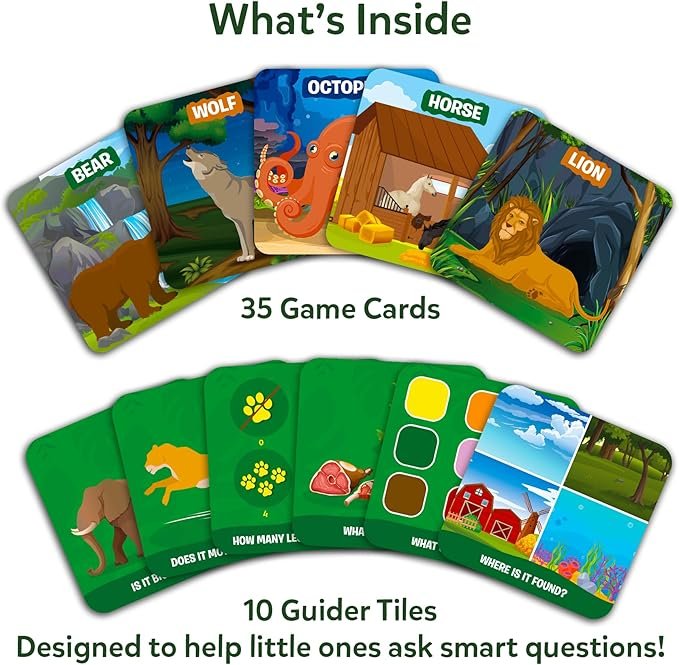
2. Skillmatics Guess in 10 Junior: Animal Kingdom
An interactive question and discovery card game, with 30 double-sided cards and a set of Guiding Tiles. Children are encouraged to ask up to 10 questions to guess the animal on the card. This moves the “interactive” part from a battery-powered chip to the child’s own thought processes. It develops categorization skills and deductive reasoning, key cognitive milestones, while keeping the living room free of digital pings and beeps.
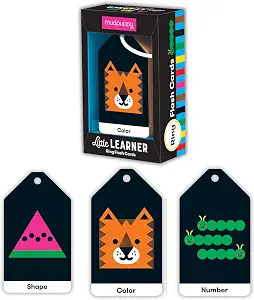
3. Mudpuppy Sight Word Flash Cards
a set of double-sided cards in a plastic ring that can be reclosed. Minimalist design, a masterclass in organization, with common sight words and whimsical, calming illustrations. This prevents the “card scatter” from cluttering the floor and allows the child to flip through them like a book on their own. This encourages fine motor skills and independence in their learning process.
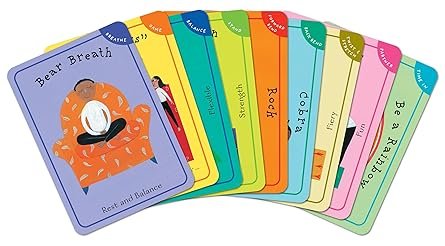
4. Barefoot Books Yoga Pretzels Activity Card
A set of large, strong cards featuring inclusive, kind illustrations of various yoga poses and mindfulness activities. These are re-defining ‘interactive.’ Instead of pressing a button, the child interacts with his or her own body and breath. This is a great tool for emotional regulation and gross motor planning and would be a great fit in a home that values calm, purposeful movement.
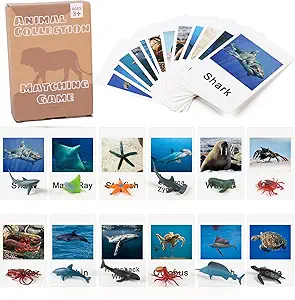
5. Panda Brothers Montessori Matching Cards Animals
This set includes cards with high-definition realistic imagery to be used with small non-toxic animal figurines for matching exercises. Attaching a flat card to a 3D object helps children develop spatial awareness and symbolic thinking. This Montessori inspired method bridges the gap between the concrete world and abstract concepts, minimizing frustration and maximizing the child’s attention span during independent play.
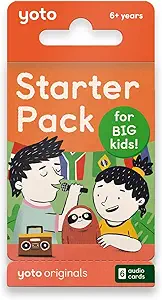
6. Tittles Interactive Audio Cards (No Screen)
A minimalist audio-player system that uses physical cards to trigger stories and songs, with no screen. The cards are constructed from heavy-duty, matte-finish materials. This is the best of “interactive” technology. It provides the happy auditory feedback kids like, minus the blue light or dopamine-looping visuals of a tablet. It provides a peaceful, sound-rich environment that encourages auditory processing and imagination.
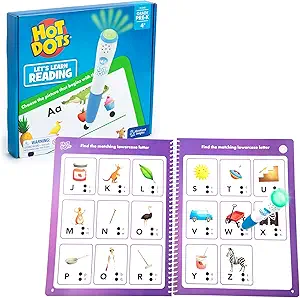
7. Educational Insights Hot Dots Jr. Let’s Learn Pre-K
This tool is more “gadget-heavy” but great for encouraging self-correction. The system uses an interactive pen that provides instant green light/happy sound feedback for correct answers. The feedback is localized to the pen and card, so it does not crowd the ambience of the room. This is a useful “bridge” tool for children wanting more kinetic feedback during solo learning time.
Practical Advisory: Designing a Low-Friction Learning Environment
To keep your home peaceful and make the most of these tools, here are some ways to use them together:
The “Three-Period Lesson” Method
Following the Montessori method use three stages to introduce cards:
1) Naming: “This is a bird.”
2) Recognition: “Show me the bird.”
3) Recall: “What is this? This takes the pressure off the kid and makes learning feel like a story unfolding. If you take away the pressure of immediate performance, you let the child’s brain relax and that’s when the deepest learning takes place.
Scattering for Discovery
Don’t hide cards in a dark toy box, but scatter three or four on a low, open wooden tray. When a child “discovers” a tool on their own terms, their internal motivation to learn is much greater than if a lesson is forced upon them. Strewing creates a “prepared environment” in your living room where the child is always invited to learn, without requiring constant parental direction.
“Deck” limitation
You don’t have to show all 50 cards at once. A toddler can easily handle 5-7 cards. Limiting the quantity decreases visual noise and allows the child to master a small set before moving on to a second set, encouraging a sense of accomplishment rather than the “overwhelm” that causes toys to be tossed aside.
The Rule of Barefeet
Whenever possible, combine movement with learning. If you are learning about animals, have your child “hop” to the card that shows a frog. If you are teaching colors, have them “run” to a red object in the room when they see the red card. Deep, visceral learning occurs when the intellectual information on the card is linked to the physical body.
The Lasting Importance of Meaningful Play
The decision to use educational flashcards versus interactive learning tools doesn’t have to be a “either/or” proposition of “old school” versus “high tech.” The best path is one that puts the child’s psychological readiness and the emotional climate of the home first. When you choose cards that are tactile, artistic and rooted in active discovery, you’re doing more than teaching your child facts you’re teaching them how to focus, how to wonder, how to learn.
At Cozy Parents, we believe that every part of your home should either serve a purpose or offer a moment of peace. Ultimately, the “right” choice is the one that allows you to sit with your child, share a moment of discovery and watch their world expand through your interaction. Whether you choose a set of wooden matching cards or an interactive audio-story system, ensure that the human element remains at the heart of the experience.
We hope this guide has given you the clarity to curate a space that honors your family’s values.