
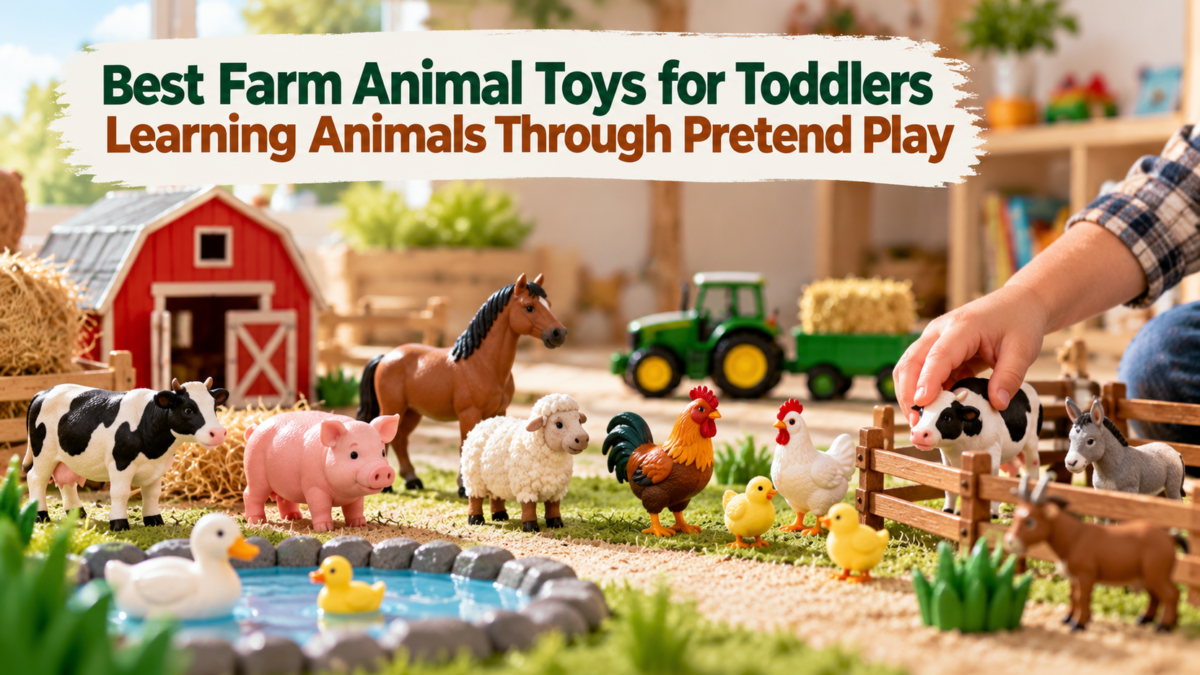
Watching a toddler play with a tactile animal figure is fascinating and soothing in its rhythm. If you have ever watched a two-year-old place a wooden cow in the palm of his hand, “mooing” softly and with wonder, lining sheep up on a couch cushion, feeding them slowly and quietly, then you have witnessed the raw, unadulterated instinct of early imaginative modeling. In a modern market of noisy, battery-operated barns that moo at the push of a button, of flashing electronic farm sets and automated toys that dictate the whole script of play, it’s easy to assume that entertainment needs synthetic sounds and digital flashing lights. But these noisy novelties don’t often provide the deep neurological, emotional and social engagement that a developing child really needs.
Parents eager to take advantage of this seemingly endless interest in animals are often faced with oversized, primary-colored plastic play centers and giant molded farm complexes that dominate the living room and offend home decor. Products of this kind may claim to encourage connection with the farm, but they tend to disrupt the esthetic balance of a room and do not offer the subtle, graduated proprioceptive and imaginative challenges which a developing child actually needs to achieve mastery of symbolic representation and social empathy.
We believe a child’s playroom should be a refuge for focused, purposeful movement and independent imaginative mastery. Our philosophy is based on “intentional play” and the selection of durable, tactile and well designed resources that respect the developing nervous system of the child and the visual harmony of the home. This comprehensive guide will discuss the complex developmental milestones supported by toddler farm animal toys, the development of a low friction play ecosystem, and highlight 7 excellent farm animal products on Amazon US that honor your child’s developing body and mind, all while maintaining the esthetic serenity of your home.
Play in Farm Animals: Developmental Foundations
To appreciate the lasting educational and therapeutic value of toy farm animals we need to consider how a young brain and hand engage with symbolic narrative, physical properties and biological relationships. Child development and pediatric occupational therapy principles show that sorting, arranging, and animating toy animals are not passive pastimes; they are active, multi-sensory skills involving symbolic thought, fine-motor pincer precision, and emotional self-regulation.
1. The Narrative Construction of Symbols and Empathy
Between eighteen months and three years of age, the child moves from simple sensorimotor manipulation to symbolic imaginative play. A toy farm animal is rarely just wood or plastic. It is a mother sheep watching over her flock, a curious pig trotting a muddy path, or a tired horse resting in a barn. Toddlers use the animals to make sense of their observations of the living world by projecting real-world roles and emotions, practicing emotional self-regulation and exploring complex social narratives. It’s creative storytelling, a good way to get out your feelings and it helps with vocabulary and social empathy.
2. Management of Loose Parts and Grasping Small Objects
Manipulating small animal figures of good weight requires advanced fine-motor coordination. A toddler who picks up a fragile wooden calf, puts a chicken on a fence rail or lines up ducks is developing a three-finger pincer grasp and bilateral hand integration. One little hand needs to hold the play surface steady, the other has to put the figure down exactly, steadying it. This constant physical feedback loop trains hand muscles and spatial awareness in real time, building the foundational dexterity needed for future writing and self-help independence.
3. Biological Classification and Connection to Nature
To a child, playing with farm animals is the first door to natural science and zoological classification. When toddlers classify animals by species, match parents to their babies (a cow to a calf, for instance) or sort creatures based on their habitat, they are thinking in a primitive taxonomic way. This tactile cognitive sorting develops advanced cognitive flexibility. Children learn that all living things share some characteristics, such as structures and behaviors. This makes them very interested in nature and to care about other living things.
The Product Roundup
Durability, natural nontoxic materials, and simple design are important things to consider when choosing farm animal toys that fit a child’s developing physical and mental skills.
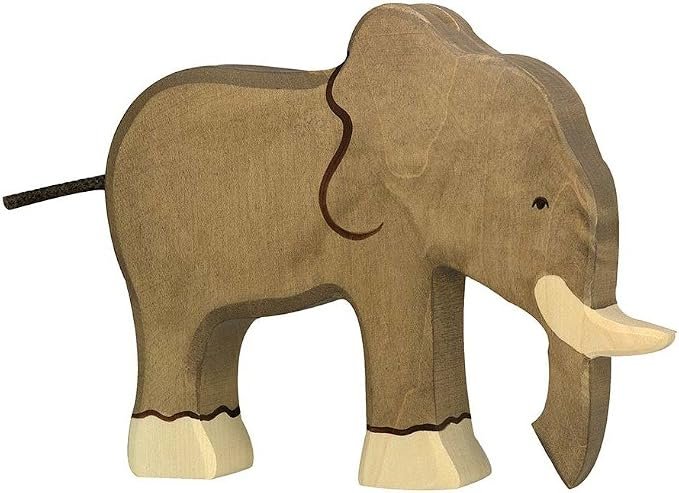
1. Wooden Farm Animals Holztiger Starter Kit
A sustainable set of hand-carved wooden animals made from maple wood with thick chunky shapes, smooth rounded edges and non-toxic water-based organic color stains for early tactile exploration.
Benefits: This classic wooden animal collection makes safe play easy and perfect for a young toddler’s grip. The natural maple construction anchors the nursery esthetic and the smooth, seamless design keeps dirt from getting stuck in hidden crevices, making wipe-down cleaning a cinch.
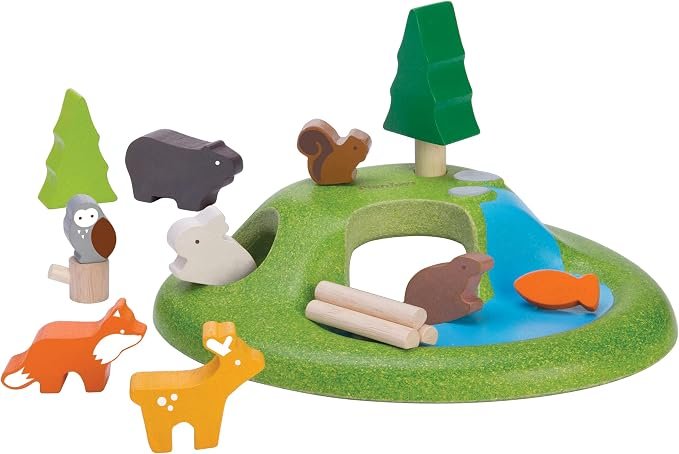
2. PlanToys Wood Farm Animal Family
This sweet farm family is made of 100% sustainable rubberwood, formaldehyde-free glues, organic water-based dyes and no toxic surface coatings. A sturdy, heirloom option for small-world play.
Benefits: These solid wood animals are a clean, easy to sterilize choice with no hollow spaces or breakable parts. They are without metal parts so they will never rust and are a great companion for block built structures. The smooth heavy frame is easy for a twelve month old infant to hold and stand on their own.
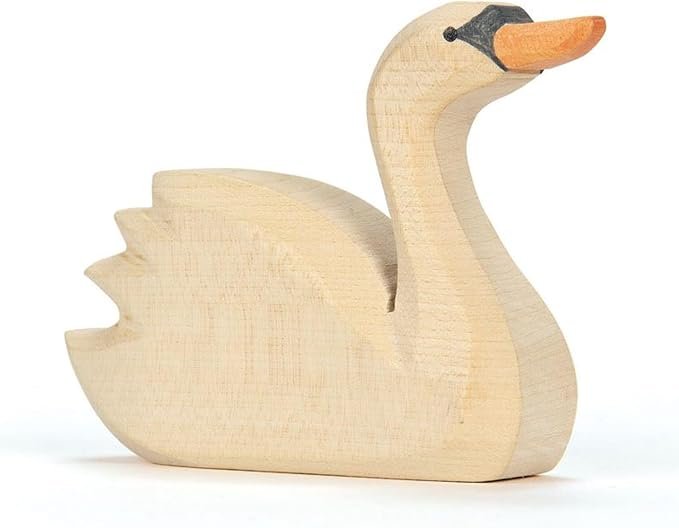
3. Ostheimer Wooden Farm Figures (Handmade)
Locally sourced from within Europe and made from sustainable European hardwoods. Hand painted with transparent, non-toxic water-based stains which let the natural grain of the wood show through.
Pros: Organic, minimalist silhouette is a triumph of open-ended design, with zero plastic seams to snap or synthetic parts to pop off. The natural wood texture is soft to the touch and offers a grounding tactile experience. In the simple organic form children are encouraged to play with the animals in block farms, felt meadows or imaginary smallworlds.
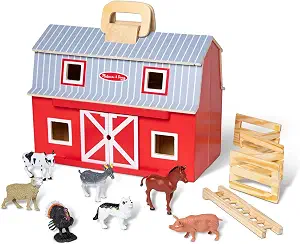
4. Melissa & Doug Wood Animals and Farm Playset
Description: Small wooden fold up barn with color coded stalls, swinging doors and a selection of chunky, bright colored solid wooden farm animals to fit inside.
Benefits: Two kinds of play for children in one unit animal shelter management and fine motor door manipulation. The wooden latches help with finger isolation and problem solving and the attached carrying handle allows parents to neatly store away the farm and prevent floor clutter.
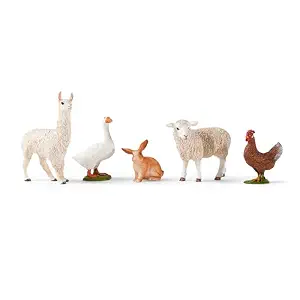
5. Schleich Farm World Starter Pack
Detailed hand painted figurine set made of durable and high density non-toxic PVC material designed to reproduce realistic animal textures and anatomical details for educational purpose.
Benefits: Good for older toddlers who like realistic biological details. The sturdy molding can handle a beating in the sandbox or water, and still gives lots of tactile joy. Well made and very easy to clean. Realistic design that grows with the child through the preschool years.
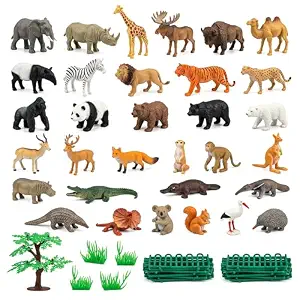
6. Raduga Grez Wooden Animal Families
Description: Solid linden wood, hand-sanded to a smooth silky surface, treated with natural flaxseed oil no chemical paints or synthetic varnishes.
Benefits: This heirloom quality animal set is free of any artificial finishes, plastics or chemical treatment. Hardwood is naturally sanitary and if kept properly will not permit the growth of bacteria. Its warm, organic grain gives the infant a sensory connection to something grounding, but in a way that maintains minimalist home esthetics.
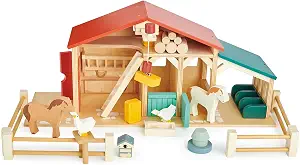
7. Tender Leaf Toys Woodlands and Farm Meadow Play Set
Durable, non-toxic set of animals and landscapes. Features smooth wooden figures, fabric play mats and simple, sturdy stacking pieces.
Benefits: Detailed animal shapes, but the organic build means no loud rattling or chemical plastic smell like you get with mass-market toys so playtime can be peaceful in the house. It encourages active storytelling, sorting and story development, turning a simple play session into an interesting exploration of rural life.
Practical Tips for Creating a Low-Friction Animal Play Ecosystem
Collecting farm animal toys is half the fight. How you handle, store and mix them in your living space is what determines how well your home maintains its hygiene and peace.
1. The Low Shelf Meadow Strategy
Store your child’s toy animals in a shallow, open wooden tray or a low-profile canvas basket at child’s eye level, or paint simple “pastures” on a low wooden shelf. Infants and toddlers can reach for play materials themselves if inspired by visible and accessible figures who do not need adult help. It encourages independence and makes clean up a game not a chore.
2. Play Mats and Floor Protection from Natural Fabrics
However, if you’re playing active small-world games and repeatedly dropping heavy wooden figures, hardwood floors can suffer. And if you can, pair your animal collection with a soft organic cotton play cloth or wool felt mat. It prevents your flooring from scuff marks and impact noise. It also significantly reduces the ambient clatter, so that your living space remains acoustically calm.
3. Open-Ended Fence and Block Integration
Avoid stiff plastic farmyards that are hard to snap together and fall apart very easily. Instead, use open-ended materials. Build farm animal pens out of wooden blocks, spread out silk play cloths to roll out pastures or let children build their own barns with simple planks. It promotes creative flexibility and keeps your playroom floor free of permanent plastic structures.
Premium Intentional Farm Toys vs. Mass Market Toys An Comparative Analysis
Parents typically have to choose between high-end sustainable farm animal toys for toddlers or cheap mass-market plastic options. This is why knowing these options in the specific dimensions makes intentional gear such an important investment for your family.
Durability Premium sustainable wooden animals, solid beeswax treated pieces and high density molded figures are designed to withstand the rigors of storytelling, dropping and handling on a daily basis without degrading. Conversely, cheap mass-market plastic animals often have fragile limbs, hollow dent-prone and brittle bodies, and peeling paint that chips off into a child’s environment.
Purposeful creatures are built with a minimalist sense of spatial harmony as it relates to functional storage and home integration, in neutral tones, organic wood textures and compact profiles that sit gracefully in small decorative baskets, not massive plastic barn complexes. Cheap plastic alternatives in bright neon colors and chunky, awkward playsets that look chaotic at home.
Ergonomics and safety: Premium quality animals are made with non-toxic finishes, seamless one-piece molding and smooth edges that are kind to a baby’s developing immune system and sensitive skin. Cheap knock-offs might feature untested chemical softeners, sharp molded seams, or small detachable parts that pose a choking hazard.
From a sensory perspective, natural wood, organic finishes and matte plastics ground with organic textures and neutral scent profiles to soothe an overstimulated infant. Synthetic plastic novelty animals are often slick in texture and have loud, high-pitched electronic sound buttons or artificial chemical odors that may upset a young child.
For intentional farm animals, developmental and therapeutic value is often open-ended, from a simple grasping object for a twelve-month-old to a key element of complex imaginative small-world engineering as the child grows older. Cheap novelty toys have pre-programmed gimmicks that work for a little while until the child gets bored and tosses them away.
The Enduring Value of Deliberate Play
Selecting farm animal toys for your toddler is a deep act of environmental and psychological stewardship. By choosing items that respect your infant’s physical needs and safety, you are giving them the right tools to explore symbolic empathy and storytelling with confidence, curiosity and calm free from the distracting noise of modern commercialism.
At CozyParents we believe that everything in your home should have a purpose, encourage growth or create a moment of peace. Choosing a sustainable variety of developmental tools with care is not just an investment in a playroom, but an investment in your child learning to find focus and joy in natural, intentional objects.
We hope you’ll stay with CozyParents for more minimalist parenting tips, expert-backed gear roundups and intentional strategies that’ll help restore serenity to your family’s daily rhythm. Do you currently use a natural storage method for your child’s animals or want to curate your nursery space this week? We would love to hear from you in the comments! We love to hear how you create peaceful, intentional spaces for your growing family.