
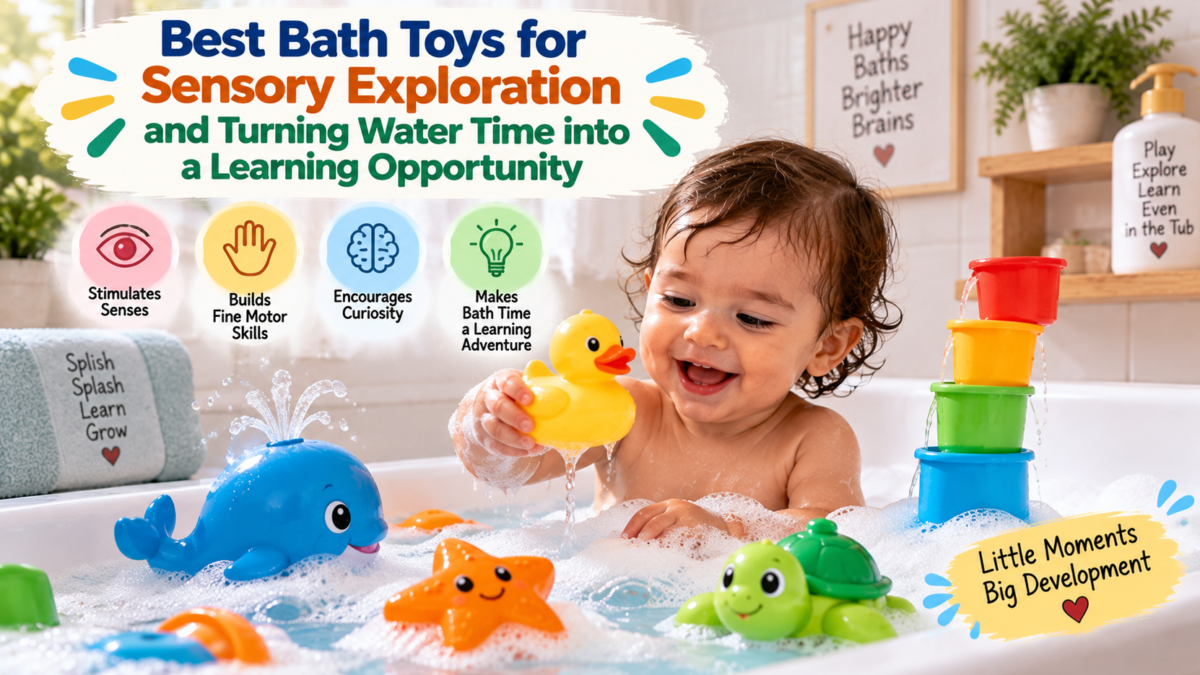
There is a quiet, spellbound moment that happens when a toddler sits in warm bath water watching liquid trickle through the tiny perforations of a silicone cup. The child looks, with a wide unhurried focus, at the drops hitting the surface and spreading ripples across the tub. In that simple exchange, an ordinary bath is no longer simply a routine way of getting clean; it becomes an intuitive, hands-on physics laboratory.
But for many modern parents the bath aisle is a minefield of hollow plastic squirt novelties and noisy gadgets. A typical PVC squeeze toy hides a common hazard: warm, soapy water always gets inside, creating a dark, stagnant pocket where mold biofilms (Aspergillus and Phoma) thrive. Families get stuck in a maddening cycle of tossing slimy toys in the trash every few weeks. But then there are battery-operated fountain toys that spit out synthetic songs and bright flashing LEDs, turning a relaxing evening wind-down into a chaotic, overstimulating spectacle.
At CozyParents we believe in “intentional play” selecting durable, non-toxic, and smartly designed tools that respect your child’s developing nervous system while maintaining the visual calm of your home. Water play is one of the most naturally regulating sensory experiences of early childhood. In this guide, we explore the developmental mechanics of aquatic exploration, provide practical frameworks for maintaining a clean and mold-free tub and highlight seven excellent, verified bath toys on Amazon US that treat your child as a real explorer of the physical world.
Developmental Foundations: Water Play as a Way of Teaching and Regulating
When selecting bath toys that truly encourage learning, we have to consider how water interacts with an infant’s or toddler’s body and brain. The aquatic environment offers physical properties that dry playroom floors just cannot replicate, as shown by pediatric occupational therapy and early childhood neurology.
1. Sensorimotor Grounding and Hydrostatic Pressure
The water itself exerts natural hydrostatic pressure, the gentle, even force that fluid exerts against every inch of the body that is submerged. When a child is immersed in warm water, the ambient pressure surrounding the torso, legs and arms provides a continuous stream of proprioceptive input to the central nervous system. This ongoing input provides a gentle neurological reset: it grounds high-energy states, softens sensory defensiveness and helps prime the brain for the transition to sleep.
2. Physical Mechanics: Buoyancy, Drag and Trajectory
Water is a natural teacher of Newton’s mechanics. Abstract notions become physical feedback in the tub:
Buoyancy and Mass Toddlers soon discover that an open plastic hull stubbornly floats to the surface, while heavier things sink or slide under. They dunk over and over, building mental models of density, displacement, and buoyant force.
Viscosity and Resistance. A hand or a paddle moving through water must exert a deliberate graded effort, as opposed to waving through empty air. This dynamic drag is a natural builder of the shoulder girdle, back stabilizers and forearm musculature.
Early spatial thinking and geometric reasoning Gravity and Flow: pouring liquid from different heights, watching waterwheels turn and water adapt to any container shape
3. Bilateral Coordination and Pouring Accuracy
It’s a huge physical accomplishment for a toddler to pour water from one container to another without spilling over the edge. It requires coordinated control of both hands to stabilize the target cup with the non-dominant hand, while the dominant hand grips, rotates the wrist (supination and pronation) and adjusts the pouring angle. As the center of gravity of a liquid shifts as it moves, learning to counter-balance that fluid weight refines the palmar arches and finger isolation motor skills that carry directly over to self-feeding and drinking from open cups.
The Product Roundup: 7 Thoughtful Bath Toys for Water Play
If you want to select toys that can be immersed daily in warm water and yet remain clean, opt for open-drain architecture, food-grade silicone, recycled HDPE and mold-free mechanical designs. Here are 7 verified, highly-rated options that fit the CozyParents philosophy, available on Amazon US.
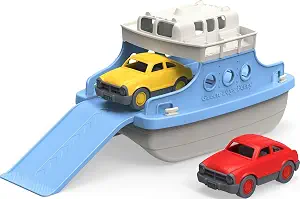
1. Green Toys Ferry Boat with Mini Cars
Description: A buoyant, double-decker passenger ferry made in the USA from 100% recycled food-grade HDPE milk jugs, completely free of BPA, phthalates, metal axels or external paint.
Why It Works for Child and Home: Green Toys is the gold standard in durable, sanitary kid gear. The Ferry Boat has a wide, super-stable hull that sails across bath water without tipping all the time. Its pull-out ramp lets toddlers drive the two included cars on and off, combining simple floating cause-and-effect with imaginative vehicle play. The design is completely open with no hidden cavities, drains completely dry and can be placed in the top rack of your dishwasher for hassle free cleaning.
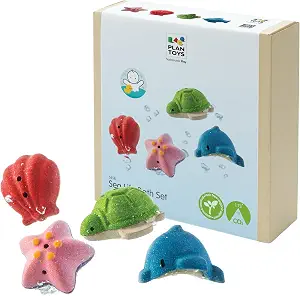
Four marine animal figurines (dolphin, turtle, starfish and seal) made from PlanToys’ exclusive PlanWood (reclaimed rubberwood sawdust compacted under high pressure with organic pigments and formaldehyde-free E-Zero glue).
Why it works for Child and Home: Regular wood cannot stand standing water but PlanWood is specially designed to do well in the wet. The plant-based dyes and organic resins give a warm, velvety matte finish that feels grounding in wet toddler hands—a welcome alternative to slippery plastic. The figures float on the surface, moving with the currents of the bath and sparking quiet storytelling about nature.
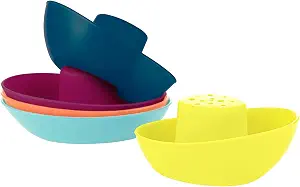
3. Boon FLEET Boats – Set of 5 Stacking
Set of five stackable, nesting open-deck boats made of high-density, BPA-free polypropylene with wide drainage decks and perforated transoms for rain-shower effects.
Why It Works for Child and Home: The Boon Fleet is beautiful because it has a hollow-free, open architecture. No compartments sealed with rubber valves that can trap water. Toddlers can connect the boats into a segmented train, stack them neatly into a tower on the tub ledge or lift them up to watch water trickle out of the stern holes. The soft modern colors flow into the family bathrooms without visual clutter.
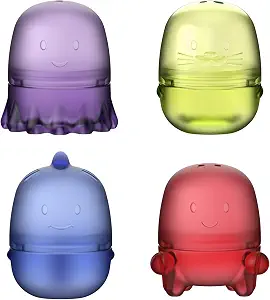
4. Ubbi Silicone Squeeze Bath Toys (Set of 4) Mold-Free
A set of four ocean animal figurines (penguin, dolphin, crab and whale) made from 100% food grade silicone that come apart into two separate halves for thorough cleaning and air drying.
Why It Works for Child and Home: Squeezers are great for hand strength, but closed squeezers are notorious for growing interior mold. Ubbi gets around this with a simple mechanical twist: each creature unscrews easily at the center seam. Parents can check it out inside, rinse it out, put it through the dishwasher and leave it open on a drying rack. The soft touch silicone provides a comfortable grip for little hands without pinching.
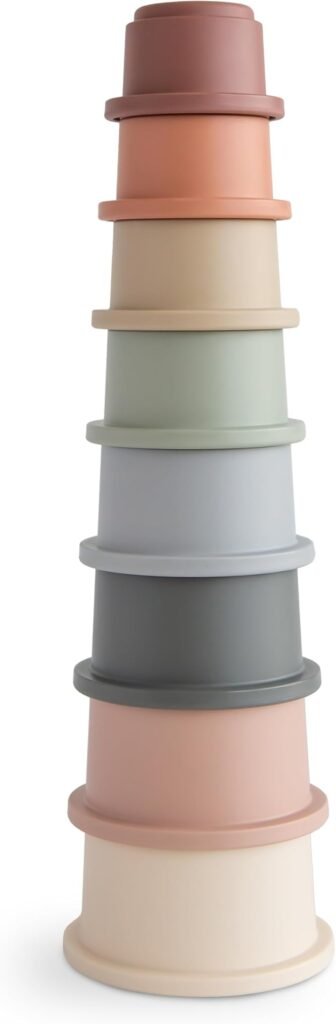
5. Mushie Silicone Pouring Cups Stackable Set
100% food grade silicone water cups in pastel colors, 4 pieces each with unique drainage patterns on the bottom.
Why it works for child and home: Mushie is functional water play in clean Scandinavian design. Each cup has a different flow dynamic, one sprays, one streams, one cascades. Toddlers learn to predict the rate of emptying for each cup individually based on its hole pattern. Made with soft silicone, they won’t chip acrylic tubs or crack tiles if dropped and the full set stacks into a single 3-inch footprint.
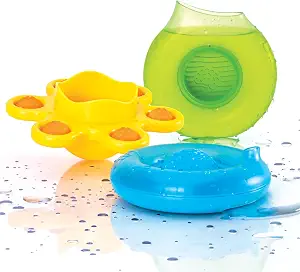
6. Dimpl Splash Bath Toy by Fat Brain Toys
A floating sensory bath toy with a center spinning waterwheel, textured, food-grade silicone “dimple” bubbles that pop when pressed with a thumb and a suction-cup base.
Why it works for kid and home: This toy blends mechanical cause-and-effect with fine-motor work. Water poured from the top turns the waterwheel smoothly and illustrates the principles of momentum and gravity. The textured silicone bubbles provide wet toddler fingers a secure grip as they practice finger isolation while balancing on their knees in the tub.
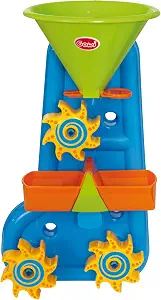
7. Gowi Toys Austria Tub Water Mill
Vertical water track with suction mounts, made from eco-friendly bamboo composite and safe plastics, includes pouring funnels, directional gate valves and an interlocking waterwheel.
Why It Works for Child and Home: Vertical water tracks encourage toddlers to pull up into their knees or stand, testing balance and core stability against water buoyancy. Kids pour water into the upper hopper and use the gate levers to adjust the flow to direct the stream to turn the wheel below. Its natural, warm bamboo earth-toned styling looks good against bathroom tile, getting rid of neon plastic clutter.
It’s Advice You Can Use: How to Make Your Tub Area Clean and Mold Free
The first step is to curate non-toxic bath toys. Whether your space stays clean or becomes a haven for mildew depends on how you store, drain and maintain them in a humid bathroom.
1. The Open-Mesh Net Hanging Protocol
The most common bathroom mistake is throwing wet toys into a solid plastic bin or lining them up along the tub rim. The water inside solid containers quickly collects at the bottom, creating a humid microclimate where soap scum and slime buildup quickly.
Instead, secure a sturdy, open-mesh net or a quick-drying canvas bag high on your shower tile, well away from the water line, with suction cups:
Give each toy a good shake to get rid of surface water before dropping it into the net.
The open weave allows for 360-degree airflow, so everything dries out in a few hours.
Store toys up high so you can regain clean sightlines to your bathroom during adult showers.
2. Bi-Weekly Vinegar Bath Detox
Even open-drain toys will eventually build up a light film of body wash and soap scum. Set up a simple cleaning rhythm twice a month:
Fill a basin or tub with 1 part distilled white vinegar and 3 parts warm tap water.
Immerse silicone cups, open plastic boats and water tracks for 20-30 minutes. The mild acetic acid dissolves mineral buildup, breaks down soap scum and keeps fungal spores from taking hold.
Use a soft natural bristle brush to clean out any small holes or seams.
Rinse everything well with clear water and allow to dry thoroughly on a clean towel in a sunny window for natural UV freshening.
3. Squeeze Sealed Squirters Toss
Audit your bathroom today to protect your child’s health: Get rid of any toy with a tiny hole in the bottom that cannot be removed (think traditional rubber ducks or cheap novelty squirters). Even if you squeeze them out after each bath, the dark, damp interior will almost inevitably grow mold in a couple of weeks. When kids play and squirt that confined water, they risk exposure to fungal spores that can irritate sensitive skin, eyes and respiratory passages.
4 Calming Rituals for a More Tranquil Evening Water Exploration
Water play is a natural way for high-energy toddlers to settle down before bed. With a few thoughtful adjustments to routine, bath time can be a relaxed time for connection:
1. Soak in warm light
The overhead bathroom light is harsh and jarring for a child reclined in the tub, working against natural melatonin release. Try dimming your main vanity lights and turning on a warm-toned (2200K) nightlight or small salt lamp on a dry counter safely away from the water. The softer glow creates soft reflections across the surface of the water, helping to reduce heart rates and calm sensitive nervous systems.
2. The Acoustic “Waterfall” Switch.
As the nite draws to a close, don’t rush to turn off the lights. Instead, tell your child to sit quietly for a minute while you lift a perforated cup high above the water and let the stream fall back in a steady, gentle shower. Hold your child’s eyes closed and listen to the rhythmic patter. This brief mindfulness moment brings their attention back to the physical present and is a familiar cue that bath time is ending.
3. Warm and cool water differences
To introduce basic temperature awareness, offer two cups during play, one filled with warm bath water and one with slightly cooler tap water. The idea is that your child dips their fingers into each or lets the water run down their forearms to explore subtle sensory differences. This promotes descriptive language (i.e. “warm,” “cool,” “refreshing”) and enhances sensory processing.
4. The Snug Towel Cocoon
A toddler can be shocked when he or she leaves warm water and encounters cooler room air, sometimes resulting in tears at bedtime. Warm and cushion that transition with a thick cotton towel. Lift your child straight up into the towel, wrapping them tightly in the towel, using gentle steady pressure along the arms and back. This organizing proprioceptive input helps calm the sensory chill. Setting a relaxed tone for getting into pajamas.
Celebrating the Fluid Miracles of Childhood
In addition to avoiding tub clutter and mold, intentionally choosing bath toys is an act of developmental care. When you offer your child well-made, thoughtfully designed tools that cooperate with the honest mechanics of water, a daily hygiene task becomes an open window for discovery and calm connection.
Get away from the cacophony of battery operated gadgets and the cheap squirt toys and enjoy a peaceful home environment to explore the physical world at a leisurely pace with your toddler.
At CozyParents, we believe that everything in your home should have a purpose, strengthen the bond between family members and help maintain peace in your home. What is your favorite thing for your child to do with water in the bath, and how do you keep your bathroom space calm and organized? We love hearing how you create peaceful, intentional spaces at home. Share your experiences with us in the comments below.