
One of the most connective traditions a household may have is to gather around the table for family game nite. When you sit down across the table from one another with a shuffled deck, expect to share some laughs, engage in some friendly competition and enjoy some vibrant chat that naturally pulls everyone’s focus away from their own screens. Card games can be a gentle introduction to executive functioning skills for children: waiting their time, remembering visual patterns, calculating strategic risks, learning to win graciously and cope with losing emotionally.
But planning game nite can cause some surprising friction in the household. Traditional board games may be physically daunting — towering cardboard boxes filled with dozens of plastic tokens, multi-panel folding boards, spin dials and thick twenty-page instruction books that have parents spending half the nite reading rules rather than playing. Younger children get bored if a game is too complicated or too long (beyond bedtime), meltdowns occur, the board Box gets shoved in a messy closet for months.
A good card game should be easy to learn, easy to set up, and fun for numerous generations at the same time. At Cozy Parents, we see children’s leisure games through the prism of developmental cognitive science, social-emotional learning, durable materials and clutter-conscious living. Family games need to pack flat, set up in under two minutes and give real shared joy without taking over your living space with throwaway cardboard clutter.
If you’re ready to create a mindful, relaxed family leisure routine with the help of professional buying frameworks, practical routines, and minimalist gadget recommendations, Cozy Parents has solid resources for tranquil everyday life.
The Anatomy of Shared Play
Passive entertainment can never challenge the developing brain the way card games can. Card games are different from digital programs, which are inflexible and automate rules. In card games kids have to hold instructions in their active working memory, pick up concrete cues from their opponents and move physical items in real time.
When developmental psychologists and early learning specialists assess card games for family game nite, they look for four basic design benchmarks:
1. Low Entry Barrier (The “Three-Minute Rule”)
The classic family card game is distinguished by instant accessibility. If it takes more than three minutes to explain the main rules or if the children need to look at a reference guide on every round, the game will induce irritation and loss of focus. Higher-level card games use intuitive visual cues such as matching colors, numbers or recognized iconography so that even youngsters as young as four or five are able to grasp the objective in the very first round.
2. Multi-Generational Balance and Hidden Handicaps
If the grown-ups have to feign excitement or purposefully play badly to let a child win, then the game is a bust. Games that combine luck, quick visual perception and simple strategy are naturally egalitarian. Sometimes the seven-year-old with the quick eyes wins at games of visual scanning or speed against the adult. Real victories that count, real self worth.
3. Pacing and Limited Play Cycles
Family routines have predictable timetables. Long board games that take over sixty minutes sometimes clash with bath times, bedtime routines and short toddler attention spans. Seek out card games with tightly restricted play cycles, often ten to twenty minute rounds. The short rounds make it easy to play one quick hand before supper or thread three together for a full evening event.
4. Cardstock Weight, Linen Finishes and Travel Compactness
Cheap, raw paper cardstock folds, frays and absorbs greasy food oils after three plays. Choose card games printed on a sturdy 300+ GSM paper material with a textured linen finish that does not flex easily and allows for easy hand shuffling and reduced glare on the table. And small tuck boxes or travel tins fit into one drawer, not into a towering stack of big board boxes that take up family room space.
Some Family Card Games for Screen Free Evenings
To help you create an accessible, laughter-filled family gaming shelf, we’ve reviewed seven of the best card games now on offer on Amazon US.
Each choice features fast rule pickup, inter-generational appeal and sturdy, travel-ready packaging.

1. Taco Cat Goat Cheese Pizza (Ages: 7+)
A runaway hit for family gatherings, Taco Cat Goat Cheese Pizza is a high-paced, laugh-out-loud game of visual rhythm and lightning fast reflexes. The principle is delightfully simple. Players take turns flipping up a card while reciting the five phrases in order (“Taco,” “Cat,” “Goat,” “Cheese,” “Pizza”). If the card turned over is the same as the word stated, everyone has to smack the central discard pile as rapidly as they can. The last player to smack takes the whole pile.
Special action cards particular to the Gorilla, Groundhog and Narwhal enhance this game, requiring players to mimic a specific bodily gesture (such thumping their chest or clapping aloft) before smacking the deck. It challenges visual-auditory integration, blocks impulsive emotions and produces spontaneous laughter for grandparents and elementary schoolers. It comes in a robust, compact tuck box and is an essential travel friendly icebreaker.
2. Spot It! Classic (4+) by Asmodee
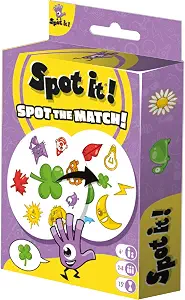
Backed by advanced mathematical combinatorics, yet utterly straightforward for preschoolers, Spot It! is a modern classic of visual perception. The deck comprises of 55 round cards, each containing 8 different symbols. Whatever two cards you choose from the deck, there is always exactly one matching symbol between them.
Players race to find the matching symbol between their card and the middle pile, calling it out before snatching or discarding. Since matching is based on visual identification, not on reading or counting, four year olds can actually compete on equal footing with adults. It’s packaged in a virtually unbreakable round metal tin that slips into a handbag or backpack, delivering five unique mini-games in a zero-footprint container.
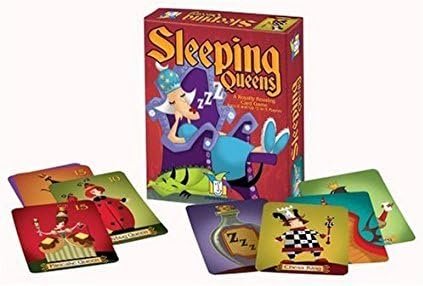
3. Sleeping Queens by Gamewright (8+)
Created by a six year old and created by Gamewright, Sleeping Queens is a fun strategy card game that mixes basic math concepts with imaginative play. The objective is to awaken twelve sleeping royal cards (such as the Pancake Queen or the Ladybug Queen) using King cards, while defending them against Knight attacks and sleeping potions provided by opponents.
The mechanisms stimulate tactical thinking without overwhelming young players. Dragon cards block Knights, Wands deflect sleeping medicines and Rose Queens wake an extra partner. Kids need to make basic addition equations (such playing a 2, 3 and 5 card and saying “2 + 3 = 5”) to cycle cards out of their hands so mental math practice is a natural, fun part of play. The colorful, non-toxic printed cards and rich character backstory make it a household fixture for years to come.
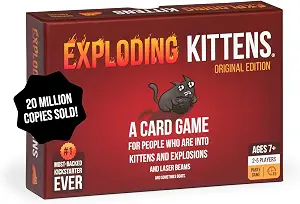
4. Exploding Kittens (Ages 7 and Up)
Exploding Kittens is a fast-paced game of Russian roulette powered by kittens for families who like humorous mischief, tension and unique cartoon visuals. Players take turns drawing cards from a shared deck until someone draws an Exploding Kitten, eliminating them from the game unless they have a Defuse card (laser pointers, belly rubs, catnip sandwiches).
The rest of the deck is action cards that allow you to skip turns, glance at the top cards in the deck, make your opponents draw extra cards or move the explosive kitten to a secret spot in the draw pile. It teaches probability monitoring, strategic bluffing and risk management in a quick ten to fifteen minute play cycle. The funny pictures keep the kids interested and the tight strategic pacing keeps the parents hooked round after round.
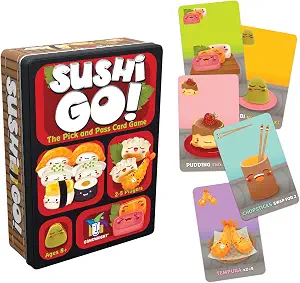
5. Sushi Go! by Gamewright (8+)
Sushi Go! is a pleasantly approachable game for introducing young children to the concept of card drafting, with a sophisticated tabletop mechanic wrapped up in lovely Japanese culinary art. Each player receives a hand of cards and selects one card to retain face up in front of them, passing the remainder of the hand to the player on their left.
Each round is a dinner at a sushi conveyor belt restaurant. Players earn points by collecting matching sushi combinations, tripling the value of Nigiri when dipped in Wasabi, collecting complete sets of Sashimi or hoarding Tempura. It emphasizes forward planning, pattern recognition and adaptable strategy as to what cards are going around the table. The game itself plays in less than twenty minutes and comes in a sleek embossed metal tin that can take regular travel.
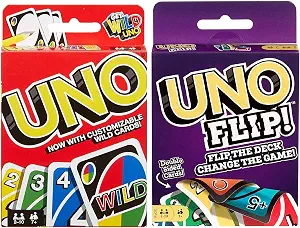
6. Uno Flip! by Mattel Games (7+ years)
Uno Flip! takes the world-famous classic and reinvents it with a dynamic tactical twist, injecting exciting new life into good old color- and number-matching. The game utilizes a double-sided deck, the “Light Side” plays like standard Uno, while the “Dark Side” has more harsher penalties such as Draw Five cards and Skip Everyone instructions.
When a player plays a special Flip card, all cards on the table, in the draw pile and in players’ hands are flipped over to the opposing side, instantaneously reversing game momentum. This mechanic requires constant mental agility, because players have to keep track of how cards will change when the deck turns. It’s a crowd-pleasing, straightforward, and affordable game that removes the predictability of ordinary card matching.
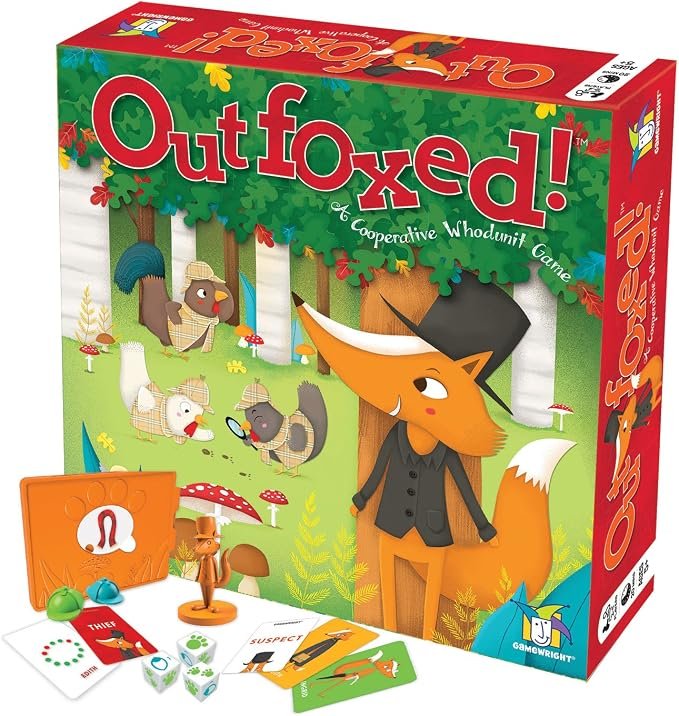
7. Outfoxed! from Gamewright (Ages 5+)
Outfoxed! is technically an entry-level cooperative mystery with cards and dice but its unusual cooperative features earn it a devoted spot on any family shelf. Detective hens team together to collect clues and discover which sly fox stole Mrs. Plumpert’s pot pie before the thief can make his getaway down the foxhole.
Players take a common path, drawing suspect cards and placing clue tiles into an inventive physical plastic Clue Decoder. The decoder tells you if the burglar is wearing certain accessories such a hat, glasses or scarf. You compare attributes, and figure out which suspects to rule out. Everyone wins or loses as a team. This gets rid of sibling rivalry and encourages teamwork. It is a great confidence builder for young children.
Home Planning Building a Minimalist Family Game Shelf
The best thing about card games is that they contain a lot of fun in a very small space. But tuck boxes rip, loose cards get lost beneath furniture, and game nites lose their smooth flow without some basic storage habits.
If you want your family game collection to be organized, durable and ready for spontaneous play, practice these four purposeful habits:
1. Rubber Bands or Clear Plastic Boxes To Protect Decks
Standard paper tuck boxes can tear at the top flap after multiple openings by passionate hands. For high-rotation decks, keep cards in cheap clear plastic snap-close deck cases (standard trading card size) or wrap the original box with a wide, soft silicone band to protect it. The cards are securely packaged, so there is no chance of stray cards falling between the cushions of the sofa.
2. Define the “Open-Shelf Five-Box” Limit
Don’t cram dozens of board games into deep hallway closets nobody ever sees or remembers are there. Instead, establish a grab-and-go, open-shelf display with just four or five of your highest rotation card games in your main living space. A modest, nicely packaged rotation, accessible at your child’s eye level, encourages spontaneous after-dinner requests to play, rather than turning to television.
3. Develop the Habit of Instant Card Counting
Take thirty seconds before you close up a game box and count the deck with your kids. Making the card count a joint post-game ritual means missing cards are identified immediately surrounding the rug or beneath chair legs before vacuuming. It encourages kids to respect family property and ensures the deck is complete the next time you open the box.
4. Establish a Regular “Game Night Rhythm”
Games flourish when they are a reliable fixture in the home, not a sporadic and unruly event. Pick a regular time that you will repeat, such as Friday nites after pizza or Sunday afternoons before dinner and make it your family game time. Children have something real to look forward to all week in a routine beat, forging a relationship at home and shared laughter.
Social Happiness & Expanding Connection
A family card game is not just a casual pastime; it’s a shared social space where kids strengthen executive attention, learn resilience and feel the warmth of their parents’ undivided focus. The appropriate game obliterates age boundaries, turns blunders into belly laughs and produces lasting childhood memories without cluttering your home with huge plastic novelties.
Selecting games with intuitive rules, quick play cycles, durable materials and balanced mechanics means you’re investing in a purposeful tradition that will foster connection and emotional intelligence for years to come.
Take a few minutes this week to clear off the dining table, bring out a simple deck of cards, gather your family around and rediscover the timeless, screen-free delight of playing side by side.
You don’t need to figure out early childhood equipment choices or family living practices on your own. Cozy Parents is your trusted partner for deliberate, grounded parenting, providing honest product audits, developmental frameworks and minimalist home systems.