

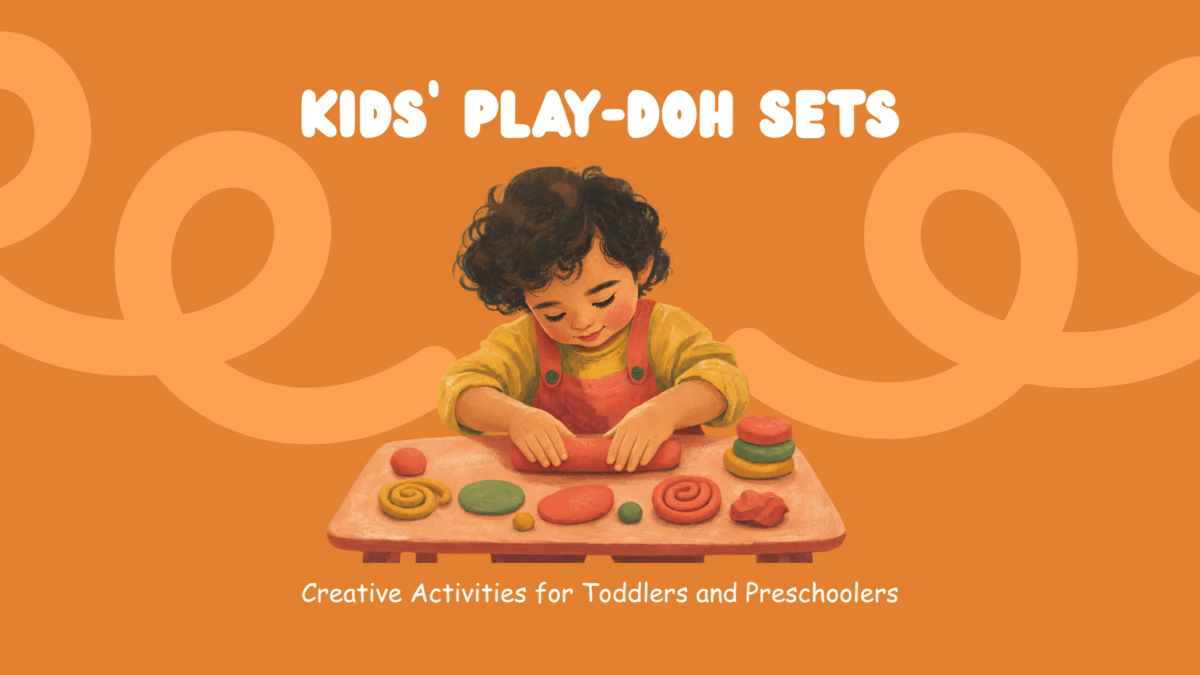
Lifting the lid off a new tub of modelling dough is one of the most evocative sensory experiences of early infancy. The unique salty odour, malleable texture and vivid primary colours lure children into an open-ended world where hands mould raw material into whatever the imagination can dream. Playing with soft modelling material before a toddler can write their name or use scissors is a developmental bridge that turns uncontrolled sensory inquiry into deliberate finger coordination and creative confidence.
But adding dough activities to a purposeful, clutter-busting household sometimes comes with parental apprehension. Commercial toy aisles are filled with complex plastic monstrosities: giant mechanical playsets with thousands of inaccessible gear gaps trapping dried dough; brittle crank extruders that clog under young hands and cheap novelty accessories that scatter across kitchen tiles. Colours become a dull brown mass in a matter of days, bits of crusty bread stick to rug fibres and parents are on their hands and knees trying to pick dried crumbs out of plastic parts for 20 minutes.
You don’t need fancy equipment for a developmentally rich modelling center. The emphasis is on open-ended, responsive instruments that build strong small hands but also allow for quick and simple cleanup. At Cozy Parents we view children’s tactile play through the lens of paediatric fine motor skill development, sensory regulation, non-toxic material safety and clutter managed minimalism. We believe creative play should support a child’s physical autonomy without taking your kitchen or playroom to a place of excessive maintenance.
Cozy Parents is for those who want to create the intentional, low-stress play area with expert purchase frameworks, practical routines and minimalist gear recommendations that promote calm family life everyday.
How Paediatric Occupational Therapy Develops Critical Skills
Paediatric occupational therapists consider modelling dough one of the single most effective, low-cost therapeutic media for young children. A youngster must build up the intrinsic muscles of their hands so that they can be able to hold a pencil in a mature tripod grasp, cut along a straight line or fasten shirt buttons.
When occupational therapists examine modelling dough tools and activities for early children there are four fundamental developmental mechanics to consider:
1. Development Of The Arch & Strengthening Of The Intrinsic Muscles
The human hand has complex muscle groups that construct the transverse and longitudinal palmar arches, allowing the palm to cup and stabilise items. Resistant dough is pressed, flattened, pounded and kneaded to activate these deep muscles against resistance naturally. This rigorous activity improves endurance of the hand and keeps the hand from fatiguing and the fingers from cramping into positions many youngsters experience entering Kindergarten.
2. Calibration of Finger Isolation and Pincer Grasp
Pinching edges or rolling a lump of dough into small beads needs finger isolation (the ability to use the thumb, index and middle fingers independently of the rest of the hand). Pinching little bits off a bigger roll increases the web area between the thumb and forefinger. This translates immediately to precision in handwriting, using dining utensils and zipping outerwear.
3. Crossing the Midline and Bilateral Coordination
Bilateral motor coordination is required for simple modelling tools (e.g., stabilising a dough roll with one hand while cutting across it with a plastic safety knife or pressing down with both hands on a rolling pin). Coordinating both sides of the body simultaneously helps to enhance communication between the hemispheres of a developing brain, which in turn strengthens spatial awareness and the capacity to move smoothly across the body’s physical midline.
4. Proprioceptive Input & Emotional De-escalation
Tactile play provides extensive proprioceptive feedback, sensory information delivered from the joints and muscles that contract to the central nervous system. When a toddler is feeling overstimulated, nervous or dysregulated after a long day, the repetitive, heavy activity of rolling, compressing and flattening dense dough is an emotional reset. It creates their sensory system, lowers cortisol levels and promotes long periods of quiet, concentrated attention.
7 Fun Play-Doh Sets for Small Hands
So we’ve reviewed 7 outstanding sets to help you choose smartly in terms of durable, developmentally suited and easy to clean modelling sets, now active on Amazon US.
All three offer good physical interaction, open-ended creative potential and easy cleanup after play.
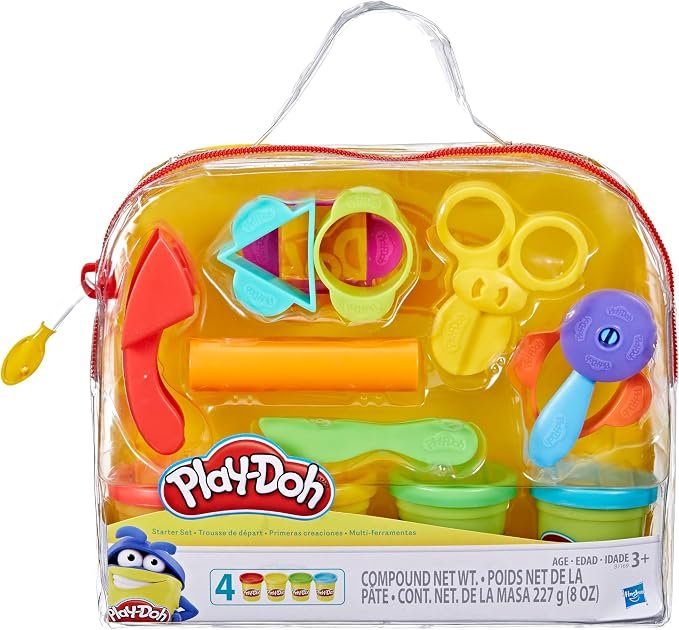
1. Play-Doh Starter Set with Storage Tote (Ages 3+)
The Play-Doh Starter Set is still the gold standard for early tactile exploration, eschewing superfluous gimmicks in favour of core motor principles. This small package features four classic two-ounce cans of modelling compound and nine timeless tools for kids in a transparent, weatherproof storage tote with snap-on handle.
The kit includes a rolling pin suitable for little hands, a double wheel cutter for effortlessly rolling on flat dough, kid-safe plastic scissors to practise snip-cutting without pinching fingers and traditional geometric cutters. The clear plastic tote serves as a permanent home to all the pieces after playing is over, which makes it a necessary, clutter-free launching pad for the young sculptor.
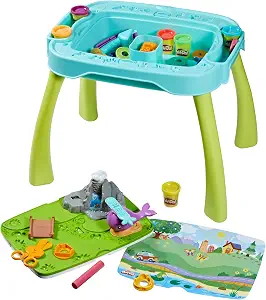
2. Play-Doh All-in-One Center Activity Table (3+ to 6 years)
For families who want a dedicated physical station that keeps dough messes within a specified perimeter, the Play-Doh All-in-One Activity Table provides a versatile furniture solution. With wide, solid legs, this child-height table has a roomy double-sided activity top, one side a flat, smooth surface for freeform rolling and cutting, the other revealing embossed textures and animal stamps.
Under the table surface is an incorporated storage box that stores cans and accessories out of sight. A built-in side extruder arm allows infants to squeeze out classic spaghetti and star strands using downward body leverage instead of weak finger pinching. Rounded corners and easy-wipe non-porous plastics hold dough within its raised borders, keeping kitchen surfaces and rugs clean.
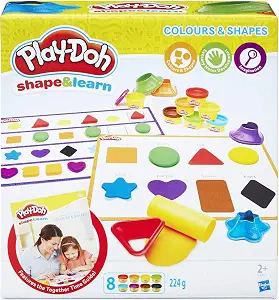
3. Play-Doh Shapes and Colours Set (Age 2 to 4)
Designed in partnership with early childhood educators, the Shapes and Colours Set is meant to promote the cognitive and physical development of children ages two and three. This set avoids complex figures, and focuses on simple geometric categories and tactile sorting.
The package includes eight chunky, robust form cutters (circles, squares, triangles and stars), a two-sided roller with replaceable texture wheels and two double-sided activity playmats. The wipeable mats are visual matching tasks where infants can arrange corresponding coloured and shaped dough cutouts, boosting early spatial recognition and colour identification. The tools are designed with rounded, thick edges that keep dough from clogging inside of fine spaces, resulting in frustration-free play.
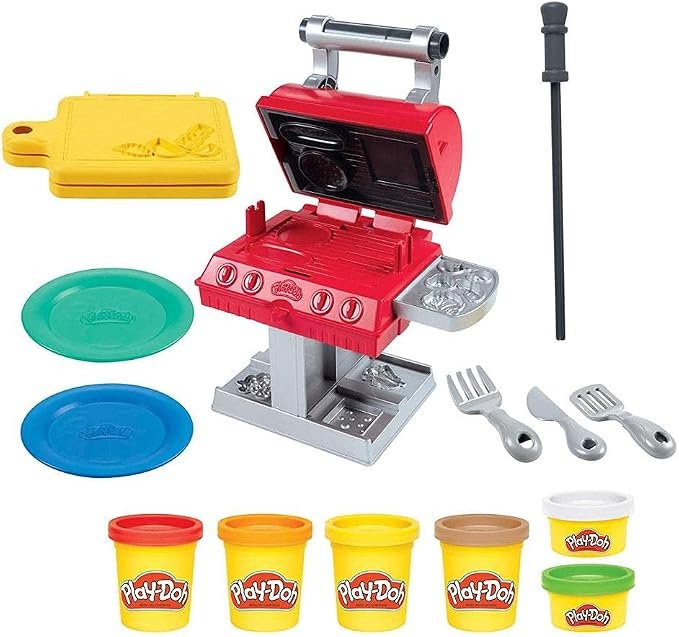
4. Play-Doh Kitchen Creations Grill ‘n Stamp Playset (Age 3+)
Early symbolic play is incorporated into The Kitchen Creations Grill ‘n Stamp kit to bring pretend cooking to a hands-on tactile craft level. The star of the show is a clamshell tabletop grill that uses a built-in stamp mechanism: drop a ball of dough on the grill plate, press down on the top cover and it automatically stamps out lifelike grill marks on fake burgers, hot dogs and skewers.
The Grill ‘n Stamp has large, open moulds that let finished dough shapes come out easily without sticking, unlike complicated culinary playsets that need boring multi-step construction. The set features a flexible spatula, plastic plates and a variety of two-color Play-Doh cans to help toddlers practise slicing, flipping and serving creations during social pretend play.
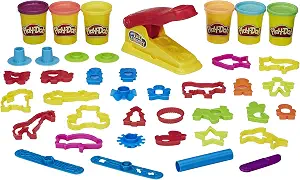
5. Play-Doh Fun Factory Deluxe Set (3+ yrs)
The Fun Factory Deluxe is a nostalgic, time-tested favourite spanning generations, taking the original manual lever extruder to the next level. The mechanical press is mounted on a weighted, low profile base. Preschoolers can insert a cylinder of dough and slide one of two interchangeable rails into the base and press down on the long red handle to compress ten different continuous shapes.
The long lever handle gives lots of mechanical advantage so that even small toddlers with developing grip strength can extrude dough themselves without adult support. The deluxe kit contains trimming knives, cutting wheels and six full-size cans of non-toxic compound. The extruder chamber opens up completely from the front, so cleaning out remaining dough is a fast scrape away with the accompanying tool.
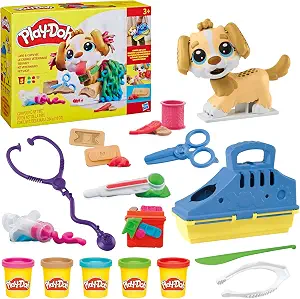
6. Play-Doh Care ‘n Carry Vet Playset (3-6 Years)
The Care ‘n Carry Vet Playset is a tactile sculpting and sympathetic pretend play kit that inspires narrative. This collection has a lovely plastic puppy patient that resides in a portable pet carrier and encourages children to be veterinarians, groomers and carers.
Kids build a goofy puppy hair out of dough, extrude a lengthy tongue, stamp out medical bandages and cut nails with safety scissors. The set comes with veterinarian equipment, like a stethoscope stamper, pretend thermometer and flexible syringe extruder, to demystify clinic appointments. The full ten piece set fits directly into the dog carrier tote, keeping loose accessories organised and manageable for travel.

7. Play-Doh Colour Case Pack 24-Pack Colour Collection
Plastic tools offer organised forms, but the best development of open-ended motor skills happens when kids get lots of fresh, pliable compound.” The 24-Pack of Play-Doh has a full spectrum of bright, non-toxic colours in full-size 3-ounce cans.
Nothing is more frustrating than trying to sculpt with old, dried out, dough and having a designated reserve of fresh cans takes that irritation away. It lets kids experiment freely with colour mixing, texture stacking and large-scale structural rolling without worrying about maintaining a single little can. This high-yield supply pack is kept in a simple closet storage bucket and delivers months of screen-free sensory engagement.
Practical Setup: Preventing Dough Play Cleanup Burnout
A modelling session should be a welcoming, happy routine, not a domestic burden that parents dread cleaning up.
Adopt these four practical practices to create an ordered, low-friction routine that keeps dough confined and instruments working:
1. Define a Non-Porous “Workstation Boundary”
Do not let open dough play on naked rugs or expensive porous wooden floors. Place tactile activities on a designated wooden craft table, kitchen island, or over a big, wipeable silicone craft mat with raised perimeter edges. The obvious rule that dough stays flat on the mat keeps dropped bits from being trailed all over the home.
2. Enforce an Active Limit of “Two-Can”
Choice overload quickly derails concentrated play. Give a toddler ten open cans at once and they will not build anything but will combine all ten colours into one murky brown mass in less than sixty seconds. Stick to a rigorous “two-can limit”: only let your child use two colours at a time. If a third colour is desired, one of the original cans must first be sealed and put back into the storage bin.
3. Remove Dough Pockets Before Storing
When storing plastic tools, check that there is no moist dough left in small gaps or extruder nozzles. Dough left in a closed extruder will solidify into a tough clog that will jam the moving parts next time. While the bits of dough are still soft, use a toothpick or the rounded end of a child-safe plastic knife to pop them out, keeping the tools moving smoothly.
4. Natural Ways To Bring Back Somewhat Crumbly Dough
Commercial modelling compound that is played with repeatedly will dry up naturally and become crumbly and rigid. Do not throw away the dried dough right away. If compound is stiff, to revive, put two drops of water on surface, fold dough over itself, wrap in damp paper towel and cover in its plastic can overnight. The moisture re-distributes itself evenly in the morning and regains its soft, working flexibility.
Fostering Creativity and Fine Motor Confidence
Dough modelling is much more than a colourful craft supply; it is an open-ended, sensory-rich workshop in which your child improves the physical structure of her hands, finds spatial cause-and-effect and enjoys the deep quiet of tactile manipulation. It takes away mechanical irritation, keeps your living room organised, and turns a regular kitchen table into a place of joyous discovery.
Go for long-lasting, open-ended toys, set clear boundaries at the workstation and focus on fine motor strengthening rather than fussy battery-operated gadgets. This way you will provide your child with a base medium for play that promotes coordination and creative confidence for years to come.
This week, spend a few minutes clearing a quiet corner of your kitchen table, laying out a couple of fresh cans of dough with a basic rolling pin and watch your child discover the peaceful joy of crafting something entirely their own.
You don’t have to handle children’s equipment choices, or play space management, on your own. Cozy Parents is your partner for grounded, mindful parenting, featuring honest product audits, developmental frameworks and minimalist house methods.