
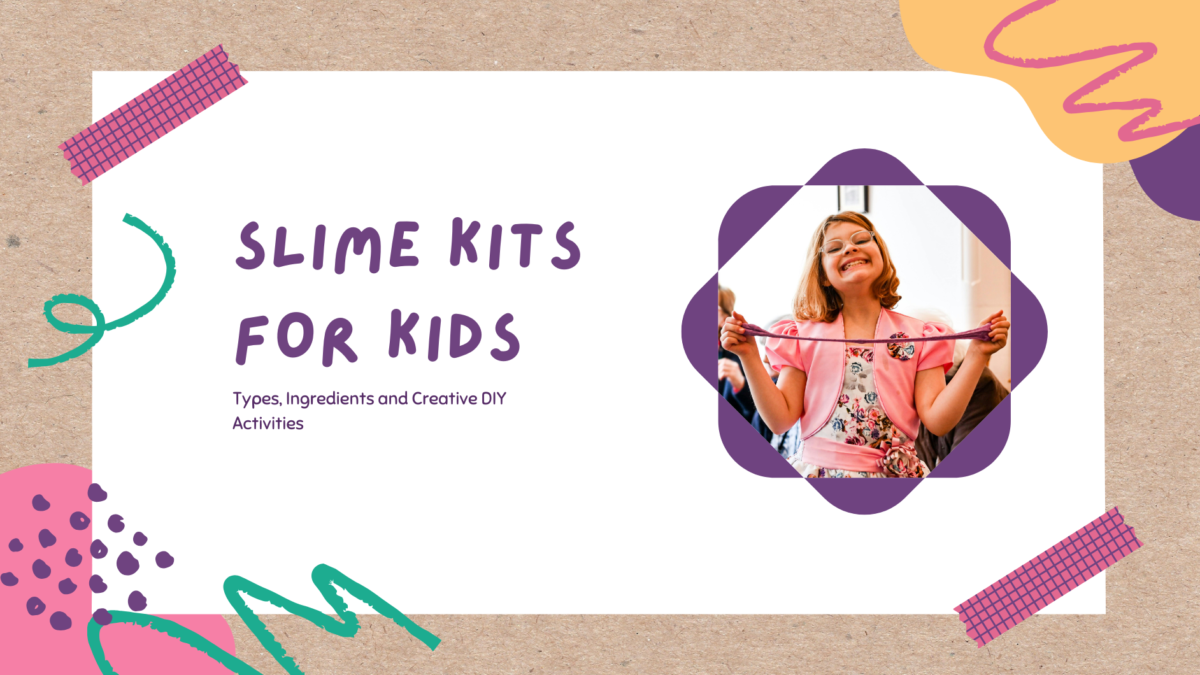
Over the past ten years, few sensory phenomena have captivated childhood imagination like homemade slime. For a toddler, measuring liquid polymer, adding an activator and watching a bowl of liquid morph into a tactile, flexible substance is everyday magic. Making slime is not just a delightful sensory experience but also a great, kitchen-counter chemical project. It teaches youngsters about “hands-on states of matter,” tactile sensory inquiry and the scientific art of altering physical formulas to make different sensations.
But the term “slime” can also bring instant domestic doom to parents trying to have a peaceful, orderly home. There are horror stories all over the Internet about parenting: chemical burns from powdered Borax, damaged wool rugs, soiled dining tables and kits full with loose micro-glitter and cheap plastic beads that are strewn all over the floor. A poorly made slime kit or one that is too intricate with unclear activator ratios, can leave kids with either a sticky, unmanageable soup that glues their fingers together, or a rubbery, stiff puck that shreds instantaneously.
A good slime kit will have dependable, skin-safe cross-linking chemistry and keep prep and cleaning limited. At Cozy Parents, we examine children’s leisure activities for non-toxicity, sensory modulation, fine motor engagement and clutter-conscious household systems. We believe that fun, engaging science should inspire curiosity and creative initiative, not convert your kitchen or living room into a permanent disaster zone.
Cozy Parents offers practical resources for a tranquil everyday family life with expert shopping guides, easy-to-follow routines, and evaluations of minimalist goods to help you construct a purposeful, low-key play space.
Why is Slime Safe & Tactile
Slime is a non-Newtonian fluid, a fluid in which the viscosity depends on the mechanical shear force given to it. It flows like a sluggish liquid when softly pooled in an open hand yet resists deformation like an elastic solid when squeezed, stretched or slapped violently.
Pediatric occupational therapists and chemical safety specialists use four basic standards when auditing slime kits for ingredient safety and sensory value:
1. Borate Cross-Linking and Safe Liquid Activators
Regular slime is made up of polyvinyl alcohol ( PVA ) , the main polymer in washable school glues. On a molecular scale , PVA is long, tangled polymer chains in the liquid form. They slide past each other. The activator of sodium borate or boric acid traps water molecules and crosslinks these polymer chains into a flexible, three-dimensional network. Parents are not recommended to handle raw powdered Borax crystals in loose form due to the risk of inhaling and potential skin irritation if not diluted correctly. Look for kits that use pre-buffered, dermatologically tested liquid activators (such contact lens saline solutions buffered with sodium bicarbonate).
2. Texture Variety and Sensory Modulation
various formulations give various sensory and proprioceptive inputs: not all slime behaves the same;
- Classic Clear/Glossy Slime: A translucent polymer that has a high elasticity and does a good job of stretching and bubbling.
- Fluffy Slime: Packed with micro-foam beads or cosmetic shaving cream, providing a pillowy, cloud-like squish that only requires low hand power.
- Butter Slime: Mixed with soft, air-dry modeling clay for a smooth, spreadable dough feel that holds shapes without dripping.
- Cloud/Drizzle Slime: Made with hydrated sodium polyacrylate (instant snow) that creates a distinctive cascading cotton candy drizzle effect when pulled apart.
3. Safe Pigments and Fragrances for Skin
Safety in terms of skin contact is of utmost importance because kids will be playing with slime for long periods of time and on end. Steer clear of cheap kits that employ industrial solvent-based dyes that will stain your palms and fingernails for days. Good kits employ food-grade, water-soluble colors and phthalate-free, naturally-derived aroma drops that offer modest sensory stimulation without overloading fragile respiratory systems or triggering contact dermatitis.
4. Airtight: Preservation and Containment
As soon as slime comes into contact with the ambient air it begins to lose its wetness. Not storing it properly, causing it to dehydrate into a crusty useless disk. Premium kits favor heavy-duty, screw-top or latching airtight containers that keep moisture levels for weeks and dedicated mixing trays that prevent sticky liquid spills from hitting kitchen countertops.
Best Slime Kits for Safe and Creative Play
We analyzed seven excellent products now active on Amazon US to help you choose a reliable, chemical-safe and mess-conscious slime kit.
All of the picks have balanced polymer chemistry, full safety compliance and fun, imaginative textures.
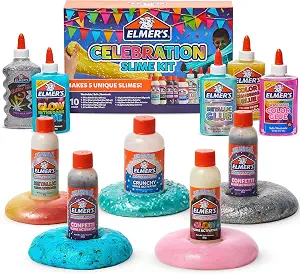
1. Elmer’s Celebration Slime Kit (3+ years)
The Elmer’s Celebration Slime Kit is the most universally acknowledged most safe and foolproof launching point for family slime manufacturing and is designed upon Elmer’s unique Magical Liquid. This all-in-one liquid activator substitutes raw chemical powders, baking soda and saline mixtures with a pre-buffered, dermatologically-tested composition that guaranties consistent results.
The wide range includes a variety of specialty washable glues like metallic, glow-in-the-dark, color changing and glitter glues, plus four bottles of Magical Liquid. It is 100% washable, non-toxic and child safe, any spills on clothing or washcloths rinse off readily in a typical laundry cycle. It is the premiere at-home polymer science laboratory for novices with no guesswork.
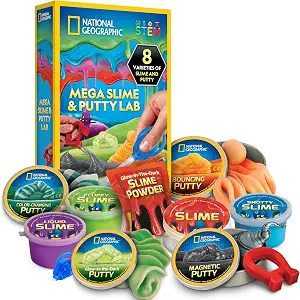
2. National Geographic Mega Slime Kit & Putty Lab (Ages 8 and up)
The National Geographic Mega Slime Kit & Putty Lab is a great instructional kit for families that want to learn about polymer science but don’t want the mess of mixing liquids. It’s ready to play right out of the box. Created by science teachers, it includes eight different pre-made slimes and putties that come in durable, reusable metal storage containers.
Included in the collection are magnetic putty that reacts to the included heavy-duty horseshoe magnet, illuminating putty, bouncing putty, color-changing putty and soft fluffy slimes. It includes a full-color, sixteen-page instructional handbook that explores non-Newtonian fluid dynamics and polymer bonding in nature, and provides a screen-free STEM experience that removes all countertop glue messes.
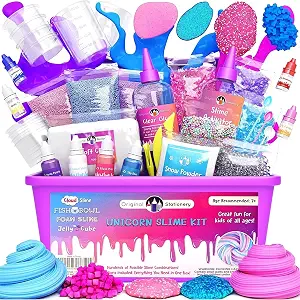
3. Original Stationery Ultimate DIY Slime Kit (Ages 7 and up)
A perennial favorite for creating complex textures, the Original Stationery Ultimate DIY Slime Kit comes in a durable, hard-shell plastic craft tub that may also be used as a permanent storage locker. This huge set includes child-safe PVA glues, pre-measured activators and a host of specialty mix-ins.
Using shaving foam, clay packs and food-grade aroma oils (strawberry, bubblegum and vanilla), children may create classic, fluffy, butter and glow-in-the-dark slimes. The kit contains an instructional manual with explicit chemical formulae, measuring droppers and airtight containers to keep your finished creations fresh. Its craft-box style is designed to hold dozens of items in one footprint.
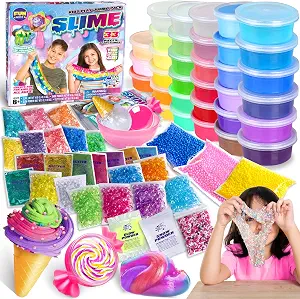
4. Zen Laboratory DIY Slime Kit for Kids (5 Years+)
The Zen Laboratory Slime Kit is designed for easy, stress-free sensory exploration. Each kit includes eighteen pre-made crystal-clear slimes and a huge variety of tactile add-ins. It avoids the usual frustrations of sticky liquid activator mistakes, with pre-activated slime bases that let younger kids jump right into personalized creativity.
The package comes with a range of sensory add-ins including soft foam beads, slices of fruit, non-toxic glitter vials, glow powder and animal-shaped clay molds. The clear slime base is uniquely non-sticky, coming away clean from hands and non-porous tabletop. It comes in a compact, segmented carrying container and is the perfect mess-reduced creative station for birthday events or rainy-day fun.
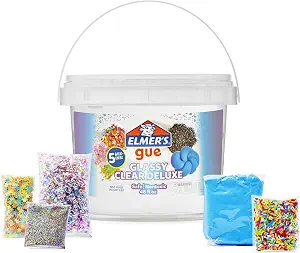
5. Elmer’s Gue Premade Slime Variety Pack (Ages 3+)
Busy parents looking for the tactile delights of slime without the bowls, spoons and sticky measuring processes may now enjoy Elmer’s Gue, ready-to-play, quality compound right out of the jar. The multi-pack features textures including Crunchy Glass Bead Gue, Blueberry Cloud Gue and Cosmic Shimmer Gue, all using Elmer’s trusted non-toxic, washable solution.
Each variety is individually sealed in an 8-ounce wide mouth plastic tub that is easy to remove and pack. It is created with a slightly stiffer viscoelastic profile so that it does not aggressively stick to hands or melt into puddles. It’s a readily available sensory item that requires no maintenance, and may be brought out for fifteen minutes of soothing tactile input before supper.
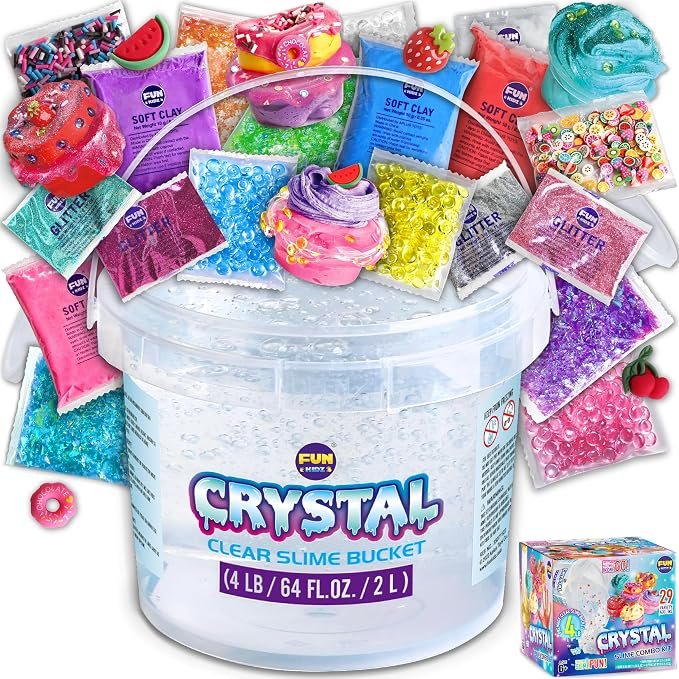
6. Cra-Z-Art Slime Super Slime Studio (6 and up)
Cra-Z-Art’s Nickelodeon Super Slime Studio is a brand-new, fun manual mixing station that brings classic green-slime TV reminiscence to today’s creative activity. The studio contains a mechanical hand-cranked mixing bowl that is attached to an activity base so kids may pour in materials and then spin the crank to mix slime without sticky fingers in the beginning liquid stage.
The set includes neon colorants, glitter packets, clear and white glue bases and gentle activators to create bright quantities of slime. Mechanical spinner provides a smooth, equal blend and avoids areas of unmixed activator. The integrated supply slots on the base make slime making a fun lab routine that involves splatters within the machine.
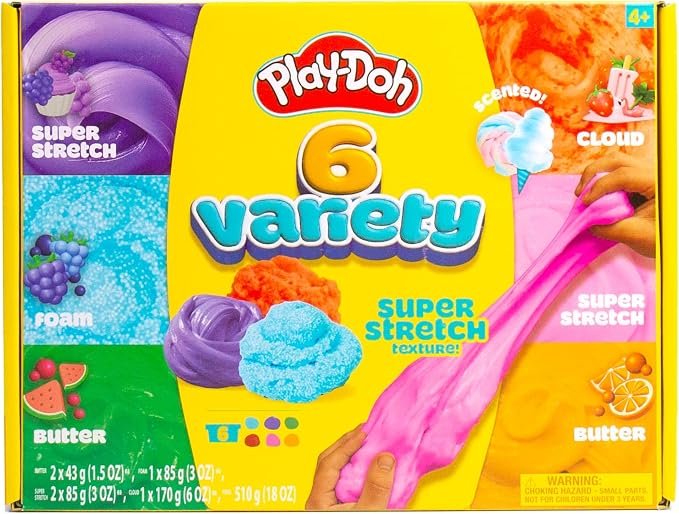
7. Play-Doh Slime Variety Pack (Ages 3 and Up)
For families with younger children who want tactile squishing and little mess, the Play-Doh Slime Variety Pack gives reliable, tested safety from the world’s most trusted maker of modeling compound. The package is full of several textures: basic stretchy slime, super-cloud fluffy slime, hydro-glitz metallic slime and ultra-stretchy krackle compound.
These compounds satisfy high safety criteria for preschoolers and are substantially stiffer than homemade DIY slimes, making them simpler for little, developing hands to use without adhering to fingers. They’re available in recyclable, snap-lid plastic containers and provide an accessible, clutter-free sensory bridge for little ones working to establish grip strength.
Containing Your Slime Play Without Stressing Your Household
Making slime should be a fun sensory experience, not a household horror story that has parents scrubbing floors and tossing out ruined clothes.
To keep tactile chemistry entertaining, safe, and visually tidy, use these four practical habits:
1. Create a “Hard-Surface Only” Rule
Never do slime play in bedrooms with carpet, on upholstered living room sofas or near pricey throw pillows. Keep all slime play on hard, non-porous surfaces such as a kitchen island, laminate dining table, or picnic table outside. Large wipeable silicone craft mat with raised corners to collect spills and protect table finishes.
2. Execute the Hair-Tied, Sleeves-Up Protocol
Do a short 30-second prep ritual before you open any slime container: pull back long hair firmly, roll up long sleeves over your elbows, and take off any jewelry or fabric bracelets. Slime also loves fuzzy sweater knits and loose hair, so setting this simple physical boundary keeps us from getting sticky entanglements before playtime even starts.
3. Store Slime in Labeled Airtight Jars Only
Don’t leave completed slime on paper plates, plastic wrap or open trays. Store each batch in separate airtight plastic jars or screw top containers. Use a dry-erase marker to teach your child to write the creation date and texture type on the lid. If a batch smells rotten, turns watery, or becomes a rubbery puck after a few weeks, throw it away in the garbage bin immediately.
4. Practice Structured Tactile Challenges Without Screens
Instead of letting kids crush slime on the table, focus their energy toward thoughtful, fine-motor difficulties. See how thin they can stretch a “slime bubble” over the mat, conceal small plastic animal figurines within the compound for a sensory rescue operation, or practice slicing through butter slime with a dull wooden spatula. Structured play develops focus, bilateral coordination and sustained calm.
Increasing Curiosity & Sensory Confidence
A slime kit is not a trendy gimmick, but an accessible, hands-on scientific lab where children explore the tangible mysteries of polymer chemistry, use the deep muscles of their hands and find peaceful sensory modulation through physical touch. The right kit removes the dangers of harsh chemicals, keeps your house safe from unmanageable messes and turns an afternoon craft into a powerful lesson in exploration and patience.
Choosing kits that include skin-safe liquid activators, a variety of non-toxic textures and secure airtight storage allows you to provide your child a rich and creative medium to explore, satisfying their curiosity without disturbing the peace of the household.
This weekend, take some time to clear a clean, hard surface, roll up your sleeves together and enjoy the beautiful, squishy science of creating something wonderful with your own hands.
You never have to figure out kid equipment options or design space organization on your own. Looking for honest product reviews, developmental frameworks and minimalist home strategies? Cozy Parents is your trusted partner for purposeful, grounded parenting.