
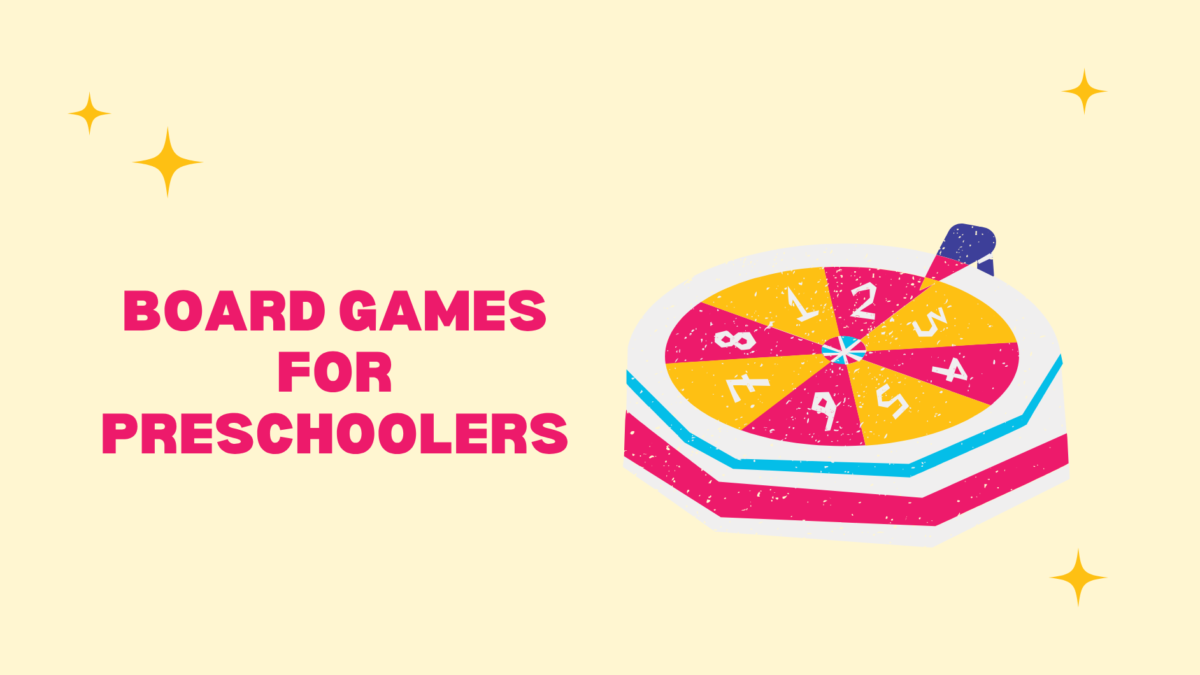
The first board game you teach a three or four year child is a huge developmental milestone. Children learn about rule-governed social play by sitting around a shared board, moving from solitary toys or unstructured pretend play. It’s a delightful learning experience, teaching little minds basic social scripts: wait your time, follow a straight path of movement, identify color or number clues, and ride emotional rollercoasters when the game pieces don’t drop where they wanted.
But for many parents, entering the commercial preschool game aisle can be a frustrating experience. Many classic mass-market games for young children are built on rigid, outdated mechanics: roll-and-move tracks that drag on endlessly without meaningful player choices, fragile paper money and harsh elimination penalties where a bad spin sends a sobbing three-year-old back to the starting line. When a game relies on hundreds of sets of cardboard pieces or cheap plastic spinners that fly out of position, game nite rapidly turns into tears, missing pieces under the floor and closet clutter.
A properly developmentally appropriate preschool board game needs intuitive physical mechanics, no reading, bounded play sessions and shared cooperative joy. We, at Cozy Parents, assess children’s tabletop activities from the perspective of early childhood cognitive development, emotional control, non-toxic material durability, and clutter-conscious living. We believe early games should help develop a child’s social confidence and executive functioning without cluttering your home with flimsy plastic parts.
If you want a purposeful, low-stress family play routine based on expert buying guidelines, practical routines and minimalist gear reviews, Cozy Parents is a source of grounded materials for tranquil daily family life.
Cognitive Frameworks Early On: What Makes a Good Preschool Game
Children aged between three and five years are undergoing tremendous cerebral development, yet attention span, fine motor grip and emotional regulation all need to be considered in the design.
Pediatric occupational therapists and early childhood educators use four key benchmarks when evaluating a board game for this age group:
1. Cooperative Mechanics vs. Cutthroat Competition
Young children are only beginning to develop theory of mind and self regulation. When you throw in zero-sum, competitive dynamics ( my joy is your disappointment ) things can get very, very emotional and dysregulated. Cooperative games, where all of the players are on the same team against a common game mechanism (beat the rising sun, escape the hungry animal, etc.), allow youngsters to enjoy a shared victory, support teammates and lose securely without feeling like they’ve lost.
2. High Physical Agency and Tactile Manipulation
Young children learn through movement and touch. Games that depend on passive dice rolling or flat cardboard tokens do not activate developing sensory systems. Look for games that use tactile tools like wooden tweezers, hefty figures, physical spinners or matching tiles made from solid, non-toxic wood. Manipulation of these objects develops pincer grasp calibration, hand-eye coordination and bilateral motor control.
3. Tightly Bounded Play Cycles (10-15 Minutes)
The average preschooler has a working memory and sustained attention span of about three to five minutes per year of age . A four-year-old’s stamina will be tested to the limit if a game lasts longer than fifteen minutes and you’ll see fidgeting, rule-breaking and frustration. High-quality preschool games are designed for fast-paced, active rounds that last no more than ten to fifteen minutes to complete. This allows kids to play through a fulfilling arc of play before they get bored.
4. Non-Text-Based Visual and Color-Coded Navigation
Reading readiness varies greatly over the ages of three to five. No text can be present in the game while it is being actively played. Use different primary and secondary colors, intuitive animal silhouettes, number pips or matching shapes to communicate directions. This visual clarity allows preschoolers to play freely, gaining real autonomy at the table without the need for an adult to read cards turn by turn.
Best Board Games for Preschoolers
Today we’ve looked at seven great preschool board games on Amazon US that can help you create a fun, engaging and developmentally appropriate gaming shelf.
All picks have good physical construction, intuitive mechanics and good social-emotional advantages.
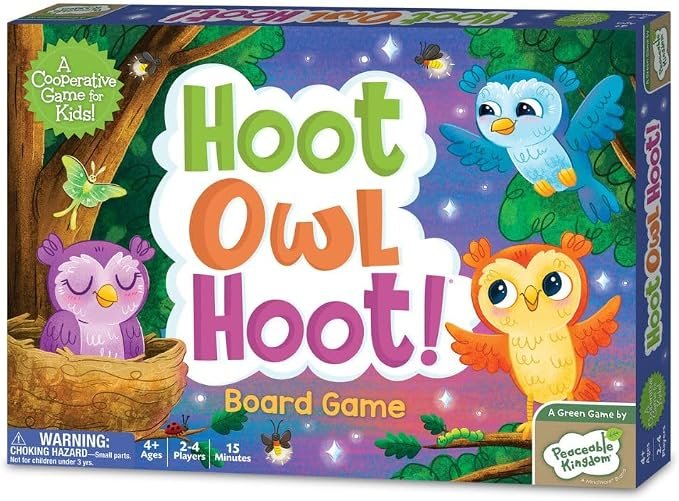
1. Peaceable Kingdom Hoot Owl Hoot – Cooperative Matching Game For Kids (Ages 4 and up)
Peaceable Kingdom, a leader in cooperative play, created Hoot Owl Hoot! which is considered one of the best first strategy games for preschoolers. Players cooperate to fly a parliament of baby owls home to their nest before the morning sun.
The mechanics are all about color: players have a hand of colored cards, playing one to send any owl forward to the next matching colored place on the winding board. If there is another owl on that color, the flying owl hops over it to teach early tactical foresight and cooperative coordination. Kids learn about communicative problem-solving and mutual encouragement free of competitive pressure as players retain their cards face-up and talk through movements collectively.
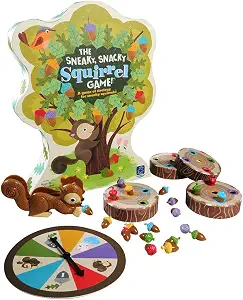
2. Educational Insights Sneaky, Snacky Squirrel Game (3 years+)
Pediatric occupational therapists everyplace rave about The Sneaky, Snacky Squirrel Game for its ability to transform a basic forest foraging concept into a fantastic fine motor practice. The object is to get five matching colored acorns onto your own tree trunk log before your opponents.
The heart of the game is the big plastic Squirrel Squeezer tool, designed to be an ergonomic training tongs. Kids spin the spinner and use the squeezer to collect the matching colored acorn from the forest floor and place it in the corresponding hole in their log. The squeezing motion directly strengthens the web space of the hand and develops the deep intrinsic muscles essential for pencil hold and scissor control. Built with sturdy cardboard logs and a clean tree box base, this is a lasting developmental standard.
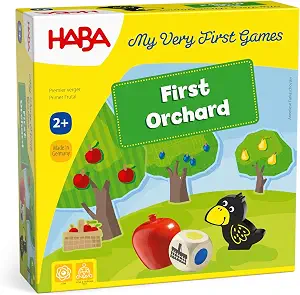
3. HABA First Orchard (Ages 2 to 4)
HABA’s First Orchard is a classic, heirloom quality German game designed as a first organized game for children. Made of sustainably collected solid European beechwood and coated with non-toxic water-based dyes, this cooperative game challenges players to gather huge wooden apples, pears and plums from cardboard trees before the sly raven reaches the end of the stone road.
The fruit pieces and rolling dice are large enough to prevent choking dangers and to fit easily in a clumsy toddler grip. The children take turns rolling the die and either put a fruit of that color in the shared wicker basket or, if the die lands on the bird, move the wooden raven one space forward. It’s a tactile, screen-free format that offers early turn-taking, color awareness and communal teamwork that withstands generations of play.
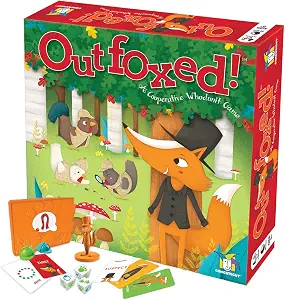
4. Outfoxed! by Gamewright (Ages 5 and up)
Outfoxed! is a fun tabletop whodunit for older preschoolers who are ready to move on to cooperative deduction and early mystery solving. Players work together as detective hens to collect clues and find out which cunning fox stole Mrs. Plumpert’s prize pot pie before the culprit gets away down the foxhole.
Players travel around the board trying to uncover suspect cards and put actual clue tokens into a plastic Clue Decoder. The decoder provides hints about whether the guilty fox is wearing various items (such as a hat, scarf or monocle) and aids players in ruling out candidates by comparing evidence. It’s a real mystery adventure, with the format of a real mystery adventure, that teaches deductive thinking, probability tracking and collaborative logic.
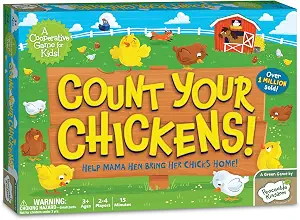
5. Count Your Chickens! by Peaceable Kingdom (Ages 3+)
Count Your Chickens! turns numbers into a fun, cooperative farm rescue effort. Mama Hen is in need of aid to get forty baby chicks that have walked off from the coop and spread all over the farmyard board.
Players spin a spinner, move Mama Hen along the path and then count how many squares Mama Hen moved. The player then takes that many small yellow baby chick tokens off the board and puts them in the central barnyard coop. There are no losers as all the players have one aim (to get all forty chicks into the coop before Mama Hen reaches the finish) which makes for an empowering, zero-frustration introduction to one-to-one numerical correspondence.
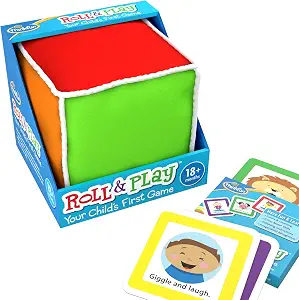
6. ThinkFun Roll & Play (18 Months to 4 Years)
ThinkFun’s Roll & Play offers structured game concepts through gross motor, full-body play for active younger toddlers who have trouble sitting still around a standard tabletop. The game’s central component is a large soft fabric cube with sides of different colors and a deck of activity cards, also color coded.
The child throws the soft cube across the room, sees the color on top and chooses a card of this color. The card tells children to do something simple and fun. “Moo like a cow,” “Make a happy face” or “Touch your toes.” It teaches turn-taking, color matching and sequential directions while recognizing a toddler’s natural need to move, squirm and giggle, making it a perfect bridge into structured play.
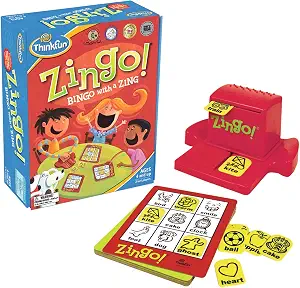
7. Zingo! By Think Fun (Ages 4+)
Zingo! is the fast-paced picture-matching game based on the popular game of Bingo that developing readers love. The core of the game is the patented Zingo Zinger, a plastic mechanical tile dispenser that slides back and forth revealing two picture tiles at a time with a pleasant clack.
Players check their respective double-sided cards to determine whether the revealed tiles match an image on their grid and yell the word aloud to claim the tile. The game has two levels of play. The green side is for younger children with simple images while the red side is competitive word recognition for older youngsters. It hones visual scanning, quick reaction time and early sight word mapping in a sturdy, well-contained framework.
Practical Habits: Keeping Games Organized Without a Playroom Full of Clutter
If your living area is cluttered with missing pieces, damaged boxes and scattered dice, your board games can be the visual clutter.
Four practical habits will help you keep your tabletop collection organized and accessible:
1. Pack Components in Mesh Zipper Bags
Paper board boxes take a beating from preschoolers, who typically shred the corners trying to force the lids shut. Transfer game boards, wood parts and cards to A4 size sturdy clear mesh zipper bags. Attach the cutout or photo of the original game title to the front of the pouch. The pouches are stored vertically in an open basket or magazine file . This saves shelf space and keeps all of the parts contained.
2. Keep a “Three-Game” Open Rotation
Resist the temptation to fill open shelves with twenty different board games. Choice paralysis and game-box dumping are a result of too many alternatives. Put only two or three age-appropriate games on low, accessible shelves and store the remainder in an upstairs storage closet. Change the titles every few weeks to maintain interest and avoid games from languishing on the shelf unused.
3. Do the “Piece Count” Before Latching
After game nite, make it a team effort to pack up. Count the wooden fruits or tokens with your child before storing away a game. This two-minute cleanup routine emphasizes counting practice, ensures that no pieces are left under the sofa to be swept up, and leaves the game complete and ready for the next play session.
4. Create A Special, Uncluttered Play Surface
Don’t play organized board games on deep, high-pile living room carpets where the pieces wobble and tumble over. Arrange games on a solid floor play mat or a low wooden activity table for kids. The smooth, defined surface creates a visual focus, steadies the wooden tokens and signals to the youngster that it is time for focused, collaborative participation.
Fostering Joy & Social Connectedness
A preschool board game is a lot more than just fun; it’s an attractive social setting where young children learn how to interact with others, develop fine motor coordination and experience the warmth of their family’s full presence. The perfect game respects your child’s developing emotional limits, eliminates the irritations of rule obstacles and turns routine afternoons into moments of wonderful connection.
Focus on cooperative dynamics, tactile wooden pieces, visual signals that don’t require text and a clean game shelf to provide your child with a fundamental play medium that fosters social resilience and cognitive confidence for years to come.
This week, take some time to clear off the coffee table, set out a fun cooperative game and enjoy the shared laughter of rolling, matching and playing together as a team.
You don’t have to make decisions on early childhood equipment or family life techniques by yourself. Cozy Parents is your go-to for honest product reviews, developmental frameworks and minimalist house solutions for purposeful, grounded parenting.