
The toy aisle for a new parent can be so intimidating. Everywhere you look are plastic gizmos that flash lights and sing robotic songs and promise to turn your child into a small genius overnight.
The danger is to imagine that greater stimulation is more learning. But watch a 6 month old infant with a singing plastic toy and you will see that they will often push the button and stare blankly and zone out soon.
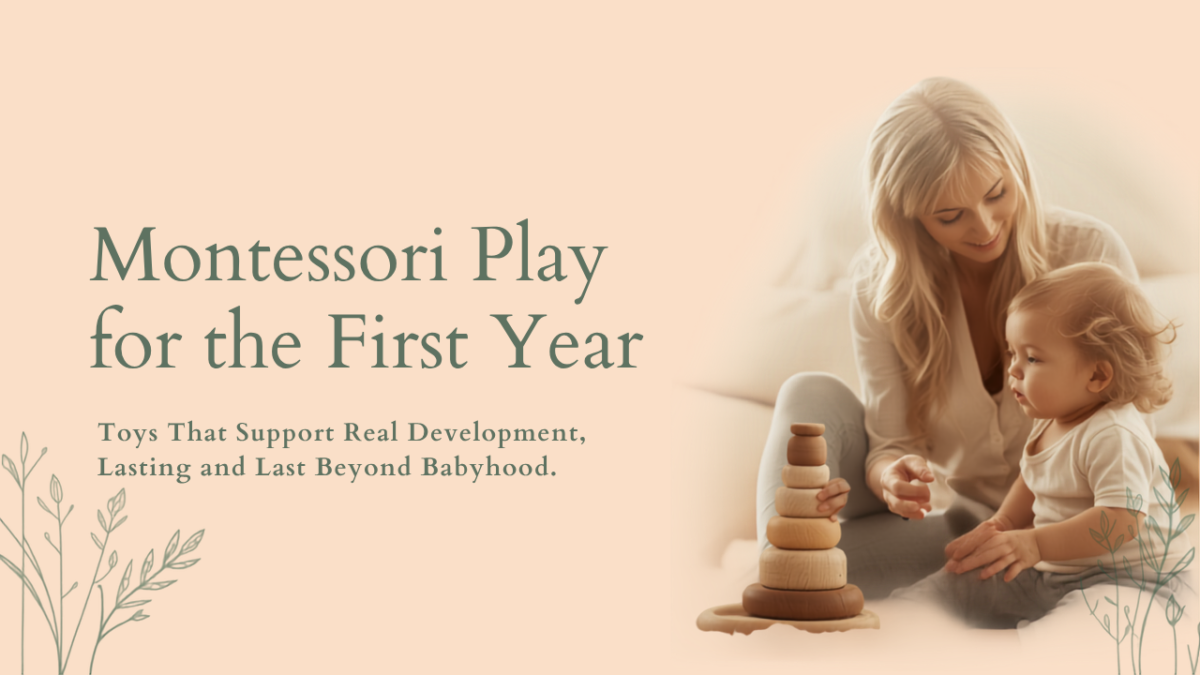
The Montessori philosophy is a very different approach. It encourages us to slow down, to simplify, and to see the world through our baby’s budding senses.
Play is a baby’s important work from a Montessori perspective. Infants do not need a toy that passively entertains them; they need one that actively allows them to study the real rules of nature.
Purposeful, high-quality materials with natural textures will give your little one distinct and unambiguous sensory input.
At Cozy Parents we understand that you want to offer your child the greatest possible start without flooding your living room with plastic junk. For more realistic and stress-free strategies to create a peaceful home atmosphere that organically motivates your infant’s milestones, check out the resources at our website.
The Flashy Toy Paradox Problem Discussion
To create a rich, minimalist play space, however, we first need to understand why most modern baby toys aren’t very good at fostering cognitive growth.
- The Over-Stimulation Trap: Toys that blink, talk, and move on their own can overwhelm an infant’s vulnerable neural system, often leading to unexplained irritation and narrower focus windows.
- The Drawback of Single Action: When a toy simply requires a baby to click one button to achieve a loud reward, the learning path stops almost instantly and the baby loses interest within days.
- Sensory Uniformity: Plastic things mass made feel the same in weight, texture and temperature and hence deny the brain rich tactile feedback.
- The Disposable Life Span: Many commercial infant products have a short age window, so parents cycle among products that end up in landfills within months.
Solutions
The most empowering adjustment you can make is the shift from a lifestyle of “entertainment play” to a philosophy of “functional exploration.”
Look for materials that your infant has to *do things with* rather than toys that *do* things for your baby.
You buy less, you promote actual physical milestones and you maintain your house feeling gloriously serene by focusing on simplicity, natural weight and open-ended design.
Implementation
The beauty of incorporating a purposeful Montessori play framework into your child’s first year is that it’s really low-stress when you make these easy changes daily:
- When you have your baby on the floor, only have 4 to 6 toys out at a time on low, reachable shelves your infant can see and reach easily.
- Choose toys of natural materials like as real wood or organic cotton, metal, and silicone that provide rich and accurate sensory feedback.
- Pick one talent per toy, e.g. a toy that is just for grabbing should not also create loud animal sounds.
- Store away objects that are not being played with on a regular rotation schedule of toys to keep the room very appealing and tidy.
First Year Milestones
Let’s go through the three key stages of the first year and discover how simple, open-ended Montessori objects feed directly into your baby’s physical and mental development.
Months 1 to 4: Visual Tracking and Direct Reaching
In the first few weeks a baby’s vision is blurry and most of his hand motions are involuntary reflexes. Montessori activity is at this point stunning visual mobiles slowly moving above their movement mat, properly suspended.
They find their hands. Lightweight wooden grasping rings are introduced to practise purposeful clutching and bring things safely to the mouth.
Months 5-8: Cause-and-Effect Investigation
Once a baby can sit up and has mastered the two-handed transfer, they become concerned with figuring out how things operate. They want to know: “What if I release this? “What does this texture feel like?
Plain wooden instruments that merely produce a sound when you shake them, or a wooden ball that rolls down a little track, provide instant and uncomplicated lessons in cause and effect.
9-12 Months: Fine Motor & Spatial Problem Solving
By your baby’s first birthday she will have the fine pincer grasp and will be crawling or cruising. Now they want to test the bounds of space.
They are great for challenging their hand-eye coordination and spatial reasoning by having children drop a ball into a hole or stack a wide ring on a thick post.
If you want a broader perspective on how to pick the correct milestones to focus on without falling into the minutiae of checklists, check out the tips on newborn care at Cozy Parents for a clear, stress-free roadmap.
Parents Micro-Services Strategy
When considering lifetime value, the benefits of investing in high-quality, open-ended Montessori products are seen throughout four different areas of development.
1. Natural Attention Span & Focus
Montessori objects have no automatic distractions, allowing a baby to enter a state of deep and natural attention. A baby who is practicing putting a wooden peg into a cup will often do the same thing twenty times in a row. This continuous repetition prepares the cognitive ground for continuous attention and tenacity in academics later.
2. High Level Fine Motor Dexterity
Your baby’s tiny wrist and finger muscles have to constantly make adjustments to move things of different weights, sizes and forms. Learning to switch from a wide wooden block to a thin string helps develop the fine coordination needed for self-feeding, scissor skills and later writing.
3. Spatial and Mathematical Background
In the physical play they do, your child will love mathematics long before they see it in a schoolroom. These are the basic ideas about maths. We think of these when we feel the roundness of a ball, know that a block does not roll over, or know that a big thing does not fit through a small hole. This tactile logic provides their brain with a physical sense of reality.
4. Long-term financial sustainability
The biggest secret to true Montessori infant toys is that they are designed to grow *with* your child. At six months, you can do sensory water pouring with a simple set of nesting cups, tower building at one year, colour sorting at two years and dramatic kitchen play at age three. This adaptability saves your family money and keeps your home free from transient toy clutter.
Traditional Plastic Fun vs. Meaningful Montessori Play: What’s the Difference?
A little knowledge of the key differences between your typical retail baby products and a thoughtful Montessori collection will help you make conscious purchase decisions to help maintain your peace of mind.
- Source of Action: With traditional baby goods, the activity takes place in the toy and the baby becomes a passive spectator. Montessori play puts the activity totally in the hands of the baby and makes the baby the active scientist.
- Sensory Quality: Plastic toys have one dull sensory weight. Natural wood and metal toys have different weights depending on size and change temperature when held, providing a rich terrain of authentic tactile data.
- The Longevity Factor: Bright electrical toys are often designed for one particular specific developmental milestone, and quickly lose their lustre. These wooden, open-ended materials offer endless reinterpretation as your child’s creativity develops.
- Clutter Busting: Traditional toys are so narrowly defined you need dozens of them to keep a newborn occupied. Montessori play offers hours of high-value inquiry with a small number of flexible items.
Plus, taking this simple, grounding approach to your baby’s first year takes the pressure off of pursuing every seasonal toy craze. For ongoing support, community validation and expert child development content visit our website by your side as your valued partner in parenthood.
Items Recommended for Parents
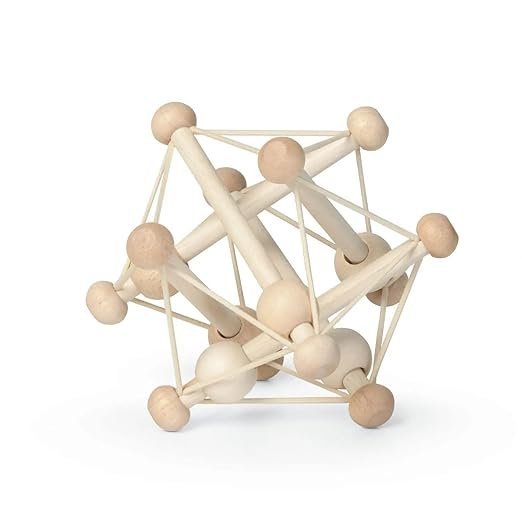
Manhattan Toy Skwish Classic Rattle & Teether Toy
This distinctive wooden rattle is made from sustainable rubberwood and tied together with strong elastic strings. It can be squished flat and will spring back into shape spontaneously, giving infants an amazing introduction to spatial physics. This unusual form is great for early two-handed grasping and safe teething.
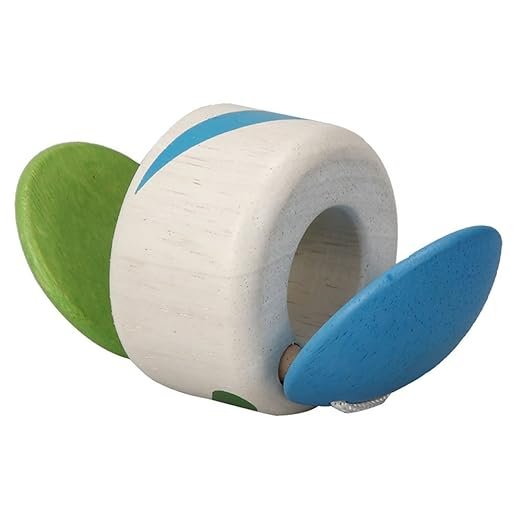
Wooden Clapping Roller by PlanToys
A soft, gratifying wood-on-wood clapping sound is made when this sustainable wooden roller is rolled across the floor. This simple device invites babies to slide, reach and crawl forward during tummy time, delivering an absolute masterclass in cause-and-effect reasoning without a hint of artificial noise.
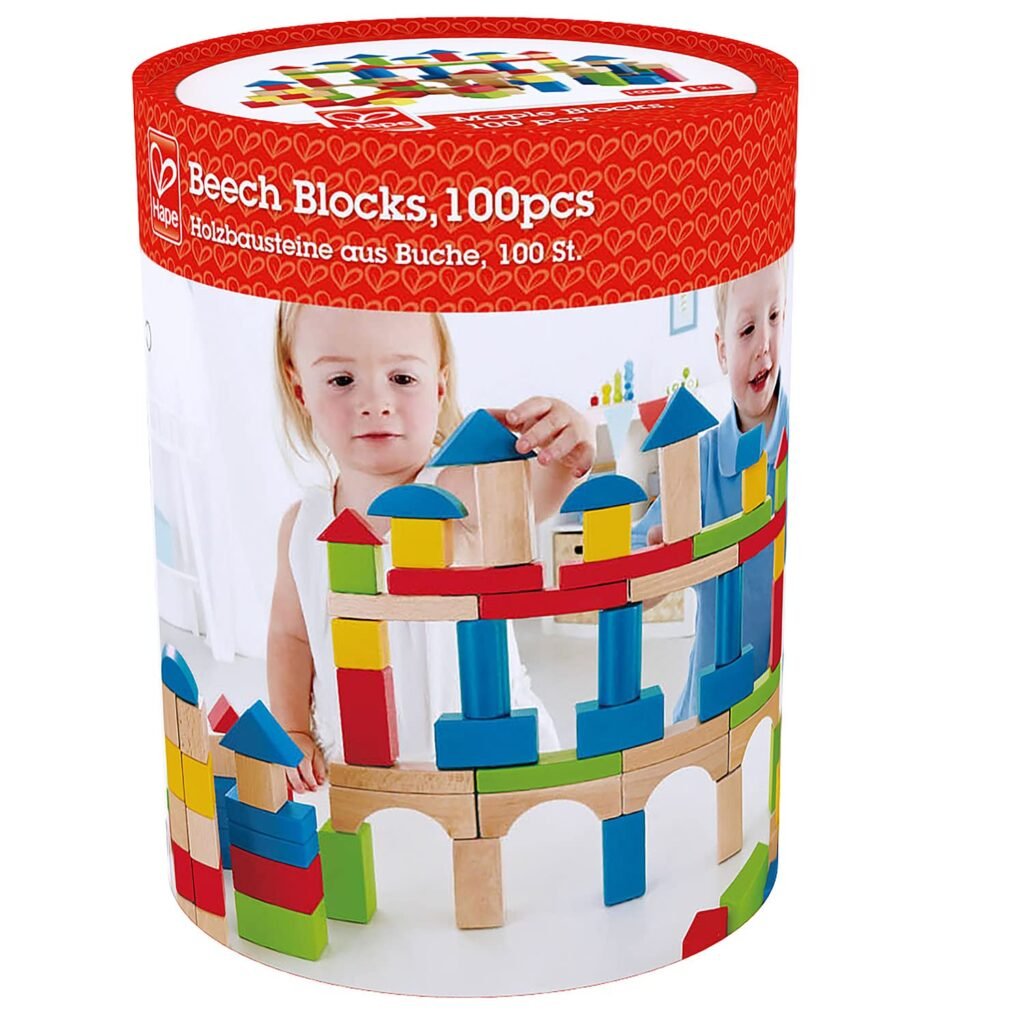
Hape Nesting Blocks Shape Puzzle Wooden
A gorgeous set of wooden boxes with open ends that nest perfectly inside one another or stack into a tall tower. It has simple geometric cutouts for shape-sorting play, so as your baby moves into toddlerhood, this one toy will grow with them, transitioning from early motor practice into advanced spatial problem-solving.
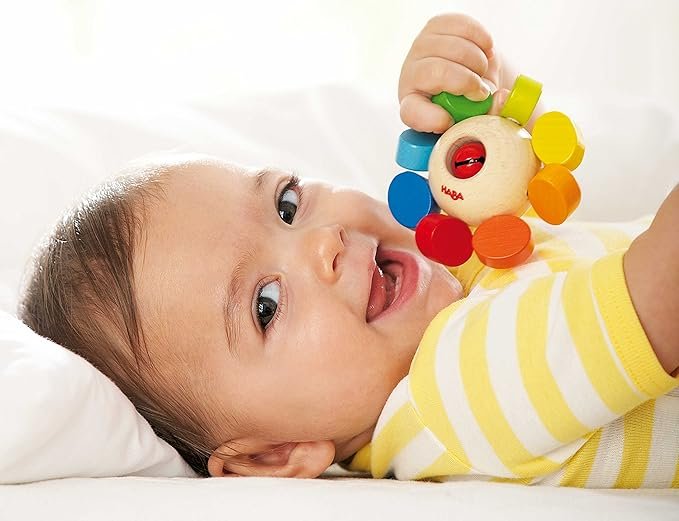
Haba Magic Grabbing Toy
This flexible gripping toy is made in Germany from sustainable beechwood, and has colourful wooden balls strung firmly on a heavy quality elastic band. It twists, spins and moves effortlessly in the hands of an infant, and helps older babies to practise finger isolation, wrist rotation and precise grip changes through tactile play.
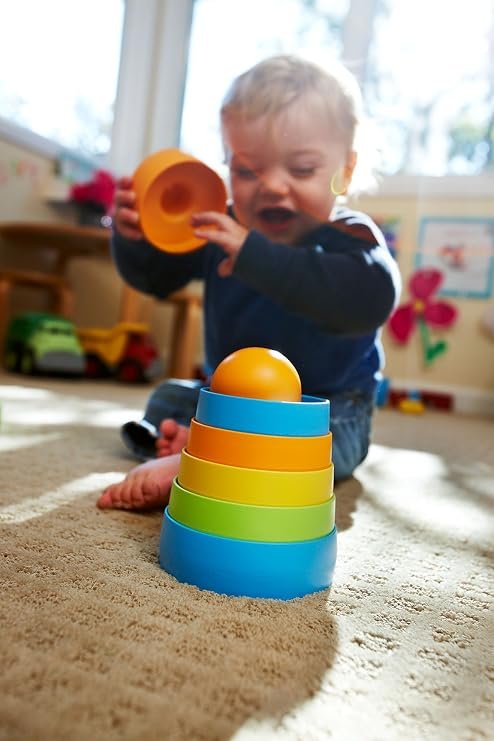
Rainbow Stacking Tower by Melissa & Doug
A traditional wooden stacking toy with strong wood base and eight vividly coloured, smooth rings. It helps babies learn early principles of size sequencing, spatial proportions and colour matching. With its robust, basic design, it readily withstands years of rough play and makes a great addition to a toddler’s room.
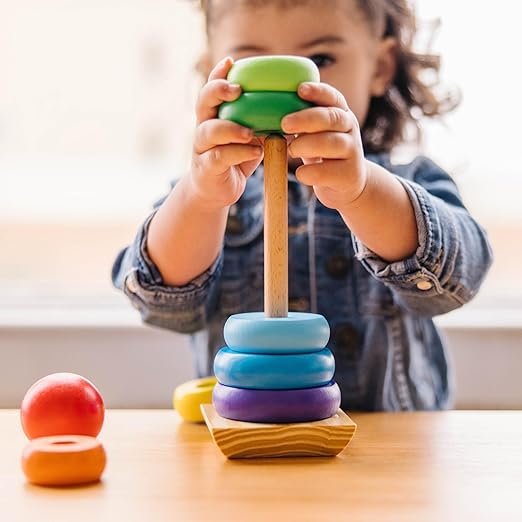
First Stacker Set by Green Toys
Made right here in the USA from 100% recycled plastic milk jugs, this post-free nesting and stacking star set is totally safe for the smallest of babies. It promotes hand-eye coordination and spatial reasoning and because it has no central peg it may also act as a highly durable water play during bath time rituals.
Invest in the Process of Growth
In the end, your kid does not care about brand names, price tags or dazzling commercials. They don’t require a living room stuffed with plastic gadgets to meet their physical and mental milestones. What they really need is a safe area to move in, some good tools to test out, and a parent that trusts their natural timing.
Stepping into this lovely first year with a purposeful, Montessori-inspired mentality creates a tranquil refuge where actual learning happens very organically. You never have to make these early child development choices in isolation.
Take a deep breath, clear the lower shelves, and prepare to be delighted as your little scientist uncovers the amazing wonders of the physical world.