
Walk into a toy store or browse online and you’ll see that practically every product marketed to toddlers and preschoolers has the same label: “Promotes fine motor skills.”
It’s become a catch-all marketing term that covers anything from elaborate hardwood puzzles to basic plastic stacking cups.
But as parents, this generic designation doesn’t really assist us out. It makes us wonder what exact physical mechanisms are formed while our toddler plays.
The truth is that fine motor development isn’t one single isolated milestone. It is a very complex matrix of individual muscle and neurological achievements.
A toy that increases raw grip strength is doing fundamentally different physiological work than a device that hones wrist rotation or finger isolation.
To build a truly helpful play place we need to move past the marketing buzzwords. We need to learn how to read our child’s playroom, matching particular toys to the precise micro-skills their hands are striving to perfect.
At Cozy Parents we strive to take the guesswork out of the playroom with powerful, practical knowledge. For realistic ideas to match your child’s home activities to their natural physiological milestones, look at our websites that can help you with simple, therapist-backed toolkits to make your day-to-day easier.
The Playroom Mismatch
We often inject unintentional friction into our child’s growth by purchasing toys on the basis of general labeling, rather than mechanical function.
The Over-Saturation of Basic Grasping: Most commercial infant and toddler toys concentrate on whole hand grabbing and do not address higher level finger actions.
The dissatisfaction Peak: A toy that needs sophisticated finger isolation (like tiny lacing beads) before a kid has mastered wrist stability quickly leads to dissatisfaction and abandonment.
Passive Interaction Fatigue: Toys with hefty electrical components tend to reward a single, clumsy finger tap with a loud noise which doesn’t help increase hand endurance or muscle memory.
The Missing Link of Core Strength: Playrooms tend to isolate hand play at a flat table, overlooking the reality that fine motor control is physically dependent on shoulder and core stability.
The “Muscle – to – Activity” Handbook
Let’s go through the four key pillars of fine motor mechanics and match them directly to the home activities and toys that build them, to help you crack the code of your playroom.
Pillar 1: Intrinsic Hand Strength (The Power Base)
The muscles inside the palm need to be strong enough to stabilize the hand before the fingers can do precise movements like buttoning or writing. This power base allows kids to sketch or cut without their hands becoming tired quickly.
Activities that increase this strength need genuine opposition. Squeezing thick play dough, spraying plants with spray bottles and opening hefty plastic container lids are all great exercises. These actions increase the structural arch and stamina of the palm.
Pillar 2: The Pincer Grasp & Finger Isolation (The Fine Motor Network)
The “pincer grasp” using the pads of the thumb and index finger together is the absolute foundation for grasping a pencil, using a fork and fastening small zippers. Finger isolation is the capacity to move one finger independently of the others.
Toys with small pegs, push-buttons or sliding latches are directed at this very network. You need to squeeze and independently pull with your fingers to pull painter’s tape off a table, or extract little objects out of a resistant bin.
Pillar 3: Bilateral Coordination (The Two-Handed Dance)
Bilateral coordination is the brain’s capacity to utilize both hands together in order to complete one task. Typically one hand is the “lead” worker and the other hand is the “stabilizer”.
Lacing activities. Cutting paper with safety scissors. Unscrewing jar lids. These are typical examples of this two-handed dance. The other hand has to hold the paper or jar steady . The other hand does the precise mechanical movement .
Pillar 4: Wrist Stability and Extension (The Spatial Anchor)
Many parents just pay attention to the fingers but finger control is fully governed by the posture of the wrist. To get optimal dexterity, the wrist should be slightly extended up, not hooked down.
The best approach to build this stability is to work on vertical surfaces. Drawing on an easel, putting magnetic pieces on a refrigerator, or playing with suction toys on a window, all drive the wrist into a healthy extension, strengthening the forearm muscles.
To get a better understanding of tracking these particular bodily changes without stressing over milestone checklists, check out the newborn care guidance and developmental roadmaps at Cozy Parents for a clear, comforting path forward.
Parents’ Strategic Micro-Services
Understanding the direct mechanical link between certain toy designs and physical development provides four important long-term lifestyle benefits for your family.
1. Writing Readiness without Frustration
When a child comes into preschool or kindergarten with good hand strength and wrist stability, the leap to formal handwriting is very easy. They don’t have to worry about their own physical tiredness or about holding a crayon, so they can use all their mental energy on learning the letters and expressing thoughts.
2. Fast Real Independence
A youngster who has gained the pincer grasp and bilateral coordination through play is able to get dressed fast, get his or her own shoes on, and open his or her own lunchbox containers.
3. Improved Cognitive Mapping and Reasoning
Fine motor toys are seldom a simple physical workout; they are packed with cognitive problem solving. Putting a puzzle piece into a hole , organizing pegs by size or designing the path of a building block track demands the brain to synchronize spatial awareness with muscle control which hones analytical thinking .
4. Natural Emotional Self-Regulation
Resistive hand exercises such as tugging putty or squeezing stress balls are common occupational therapy techniques used to anchor children who are overstimulated. Well-designed fine motor toys call for repetitive, focused muscular effort, which lowers cortisol levels, a natural emotional reset for challenging afternoons.
The Differences: Passive Mainstream Entertainment vs. Active Fine Motor Materials
Knowing how generic retail toys differ mechanically from specific fine motor materials will save your dollars and maximize your child’s developmental progress.
The Muscle Load: Mainstream electronic toys demand one finger, with little effort. Targeted fine motor materials require different types of grasp, physical resistance and continued muscular control.
The Point of Completion: Endless loops of generic toys provide constant enjoyment and can lead to overstimulation. This fosters task completion and mental closure.
Sensory Authenticity: Mass-produced plastic objects provide a singular, non-controversial sensory experience. Using wood, felt, metal and silicone, high grade materials give the brain correct feedback about weight and balance.
The Autonomy Factor: Flashing indications draw the child’s attention to electronic toys. The fine motor tools are fixed and the youngster needs to take the physical and mental initiative to solve the challenge.
This exact, structured method to play eliminates the ambiguity about how to support your child’s milestones.
Products Recommended for Parents
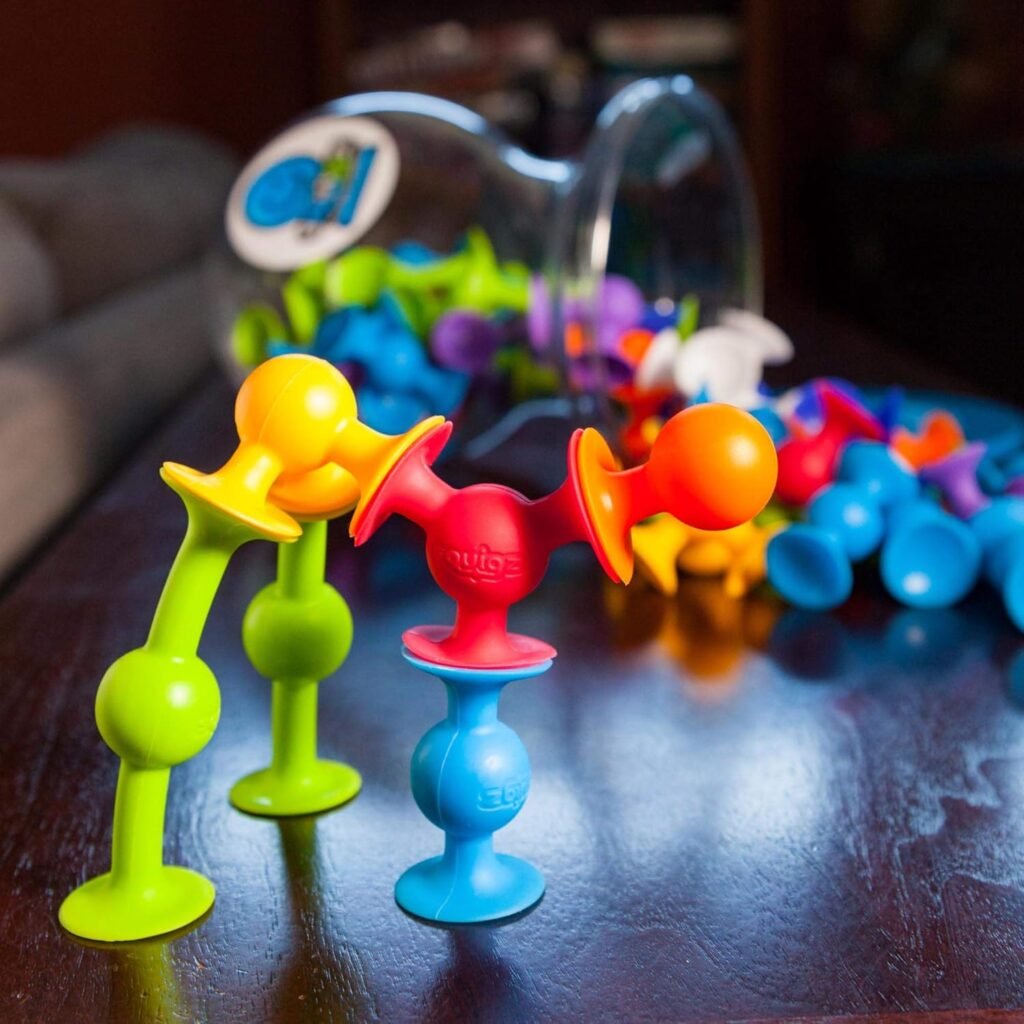
Fat Brain Toys Squigz Toobz Set
This new building set is made from flexible and bendable silicone suction tubes that cling to any smooth surface. It is the ultimate wrist-stability and forearm-extension instrument because kids have to apply real downforce against vertical surfaces like windows or mirrors to link and pop them apart.
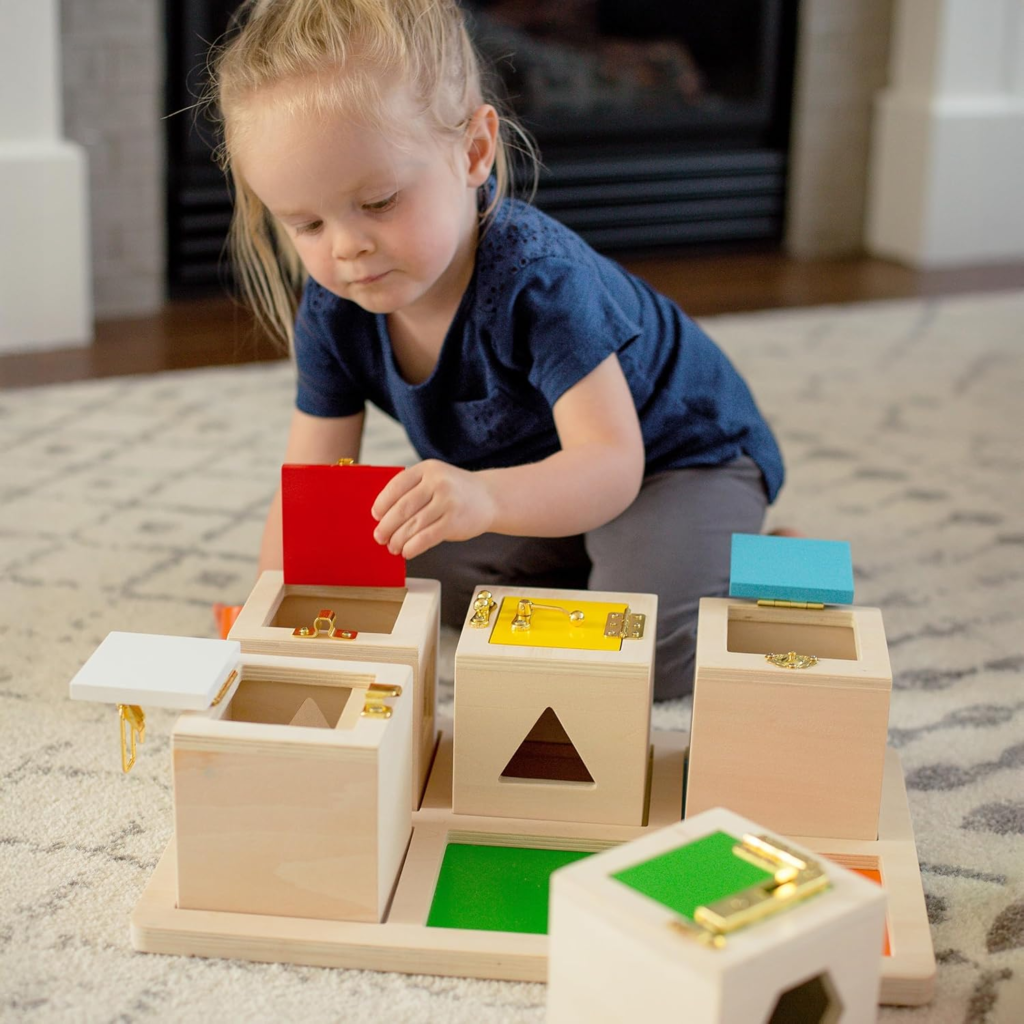
Guidecraft Peekaboo Lock Box Set
A premium hardwood developmental toy with six separate boxes each with a different metal latch, lock, hook or key mechanism. It solves the problems of finger isolation, accurate pincer control and wrist rotation, and turns a curious toddler’s need to experiment with genuine hardware into a safe problem-solving activity.
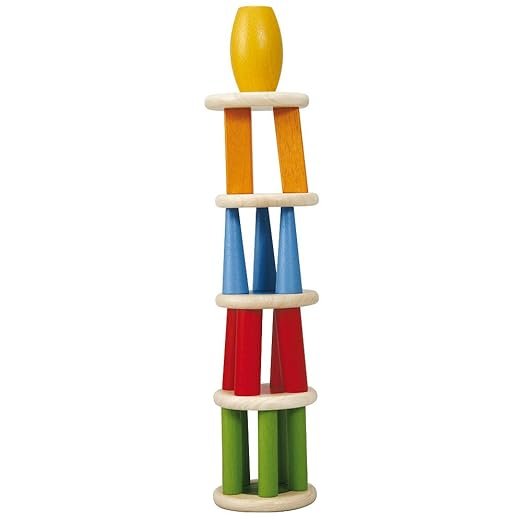
PlanToys Wooden Punch and Drop Tower
This traditional activity is made from sustainable, chemical free rubberwood. Children use a small wooden mallet to send balls tumbling down a hidden structural ramp. This is a great exercise for wrist control, grasp stability and specific hand-eye coordination, therefore great for older infants and toddlers.
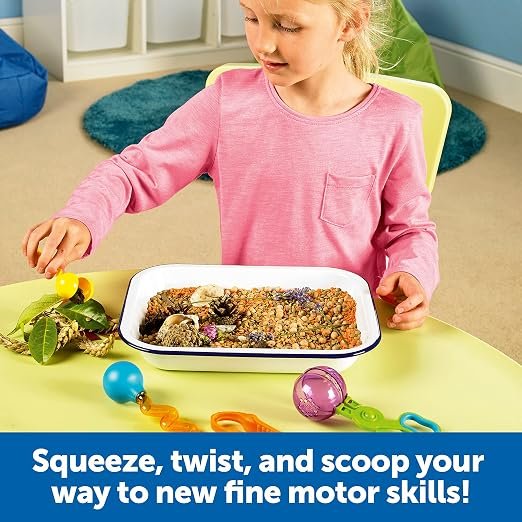
Helping Hands Fine Motor Tool Set from Learning Resources
A customized set with 4 kid-friendly instruments like a squeezy tweezer, a scooper and a twisted liquid dropper. Transforming typical sensory bins or water play trays into a targeted fine motor gym, developing the particular muscle groups required for pencil grips and scissor use later on.
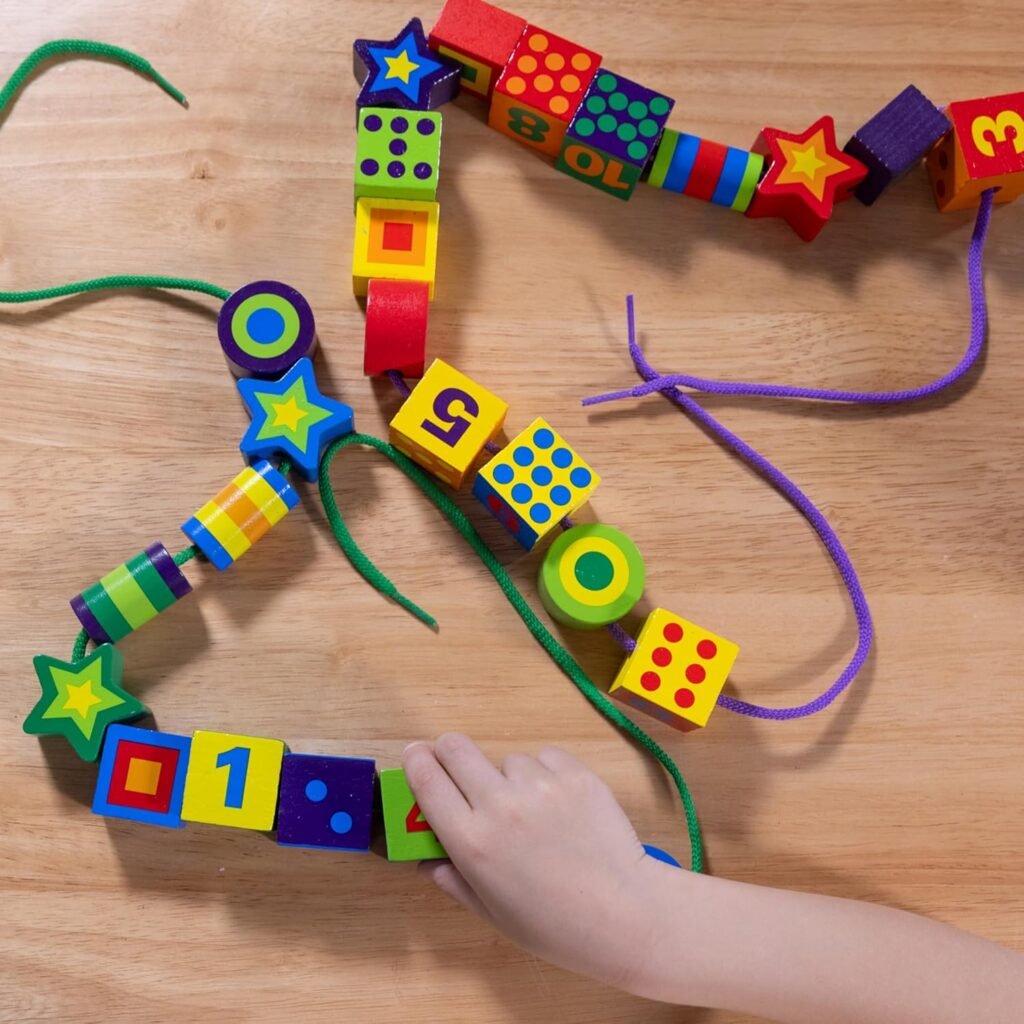
Melissa & Doug Classic Wooden Lacing Beads Set
A beautifully crafted set of large multi shaped wooden beads and thick durable laces. Stabilising a bead with one hand while directing a string into the centre with the other is an outstanding masterclass in bilateral coordination, spatial planning and sustained separate attention spans.
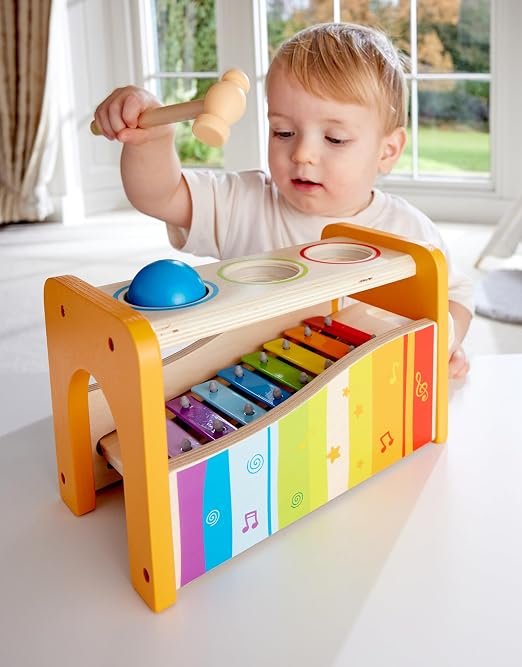
Hape Pound & Slide Out Xylophone Tap Bench
This award-winning wooden musical toy has a strong bench for children to pound colorful balls through smooth rings with a little wooden mallet, cascading them over a slide-out xylophone below. The repeated hitting motion develops grip stability, forearm strength and accurate hand-eye coordination. It is an excellent instrument for introducing early rhythm and purposeful cause-and-effect reasoning.
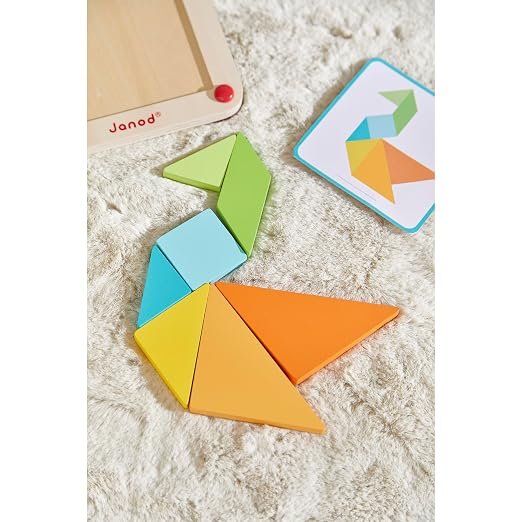
Janod Magneti’Book Geometric Tangram Puzzle
This book-style storage box unfolds into a big magnetic work space where youngsters may place geometric tiles to copy colorful pattern templates. It works fine motor accuracy, spatial reasoning and visual-motor integration to a high level and is a great screen-free activity for older children.
One Intentional Grip At A Time
You have a house full of dozens of bins of generic toys and your kid won’t meet their physical milestones. You don’t have to make play into a dry academic drill. Simply by learning to look past the surface labels and understanding the basic mechanics of how your child’s hands are working with their environment, you open a world of natural growth.
Just give them the proper tool for the right mechanical necessity and their intrinsic drive for mastery will do the rest. You don’t have to walk those developmental layers alone. For a continual stream of kid development info, practical parenting tips and warm peer validation, remember that our website is always here to walk beside you on your family’s journey.
Set up the easel, give them the playdough, choose the next meaningful object and watch with pride as those little hands construct a strong, capable foundation for the future.