


Every parent with a curious kid has experienced the traditional holiday or birthday problem. Your child is absolutely fascinated by how things operate, enjoys taking the backs off TV remotes and is often asking how electricity goes through the walls. You want to nurture that scientific interest but you also want to avoid buying a very complex kit that ends up on a shelf because it’s too irritating to work out.
Welcome to the Elenco Snap Circuits Jr. Kit. SC-100 Electronic Exploration Kit. This bright-coloured box has been a powerhouse in the Science, Technology, Engineering and Math (STEM) toy market for years, winning many awards from both educators and parents. It promises to give students a real, hands-on exposure to electrical engineering without a single drop of solder or a single specialised tool.
But is it really all that it’s cracked up to be? Is it really safe, fun and worth adding to your home learning library or will the novelty wear off after the first weekend? In this comprehensive analysis, we’ll cut through the marketing claims to give you a real look at what’s in the box, how kids actually use it and if it really offers authentic long-term benefit to your family.
What is Snap Circuits Jr and How Does It Work?
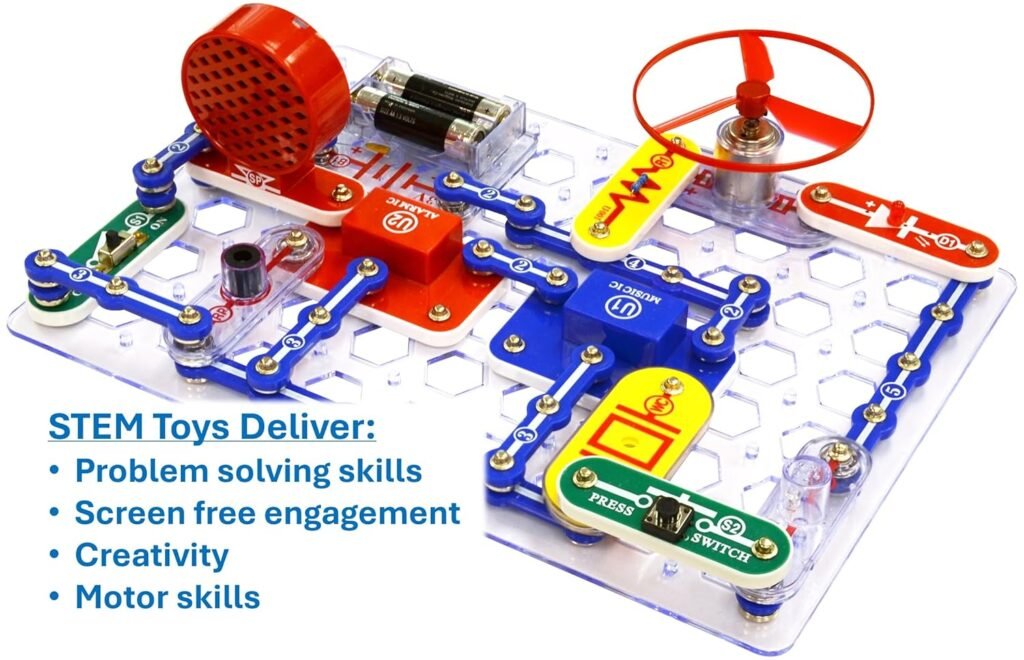
Snap Circuits Jr. is a small engineering laboratory that makes difficult electrical ideas as easy to understand as snapping plastic blocks together. The kit has more than thirty separate electronic parts, all of which are installed on a sturdy plastic module. Now, kids link the pieces together with heavy-duty metal snaps, instead of fighting with confused, exposed wires or delicate breadboards.
The entire system is supported on a clear plastic grid baseboard. This grid is like an architectural blueprint. Children assemble the parts according to the project descriptions, snapping them straight onto the grid and onto one other to create full, working circuits.
The genius of this concept is the immediate feedback loop. When a circuit is assembled correctly, the project works immediately: a fan turns, a red LED lights, an alarm sounds or a little speaker plays a digital tune. If you miss a connection, nothing happens. This basic mechanism makes troubleshooting a fun puzzle that encourages individual problem solving without always needing adult help.
SC-100 Unboxing: What Parents Need To Know
Upon opening the package you are presented with a tidy tray of colour-coded, well-numbered pieces. The parts that are included with the junior edition are quite varied, allowing kids a lot of different variables to play around with.
In the kit you will find:
Slide switch, button switch (push)
A battery holder that holds 2 AA batteries
An electric motor and plastic fan blade
A loudspeaker and an integrated alarm circuit
A music integrated circuit and a light sensitive photoresistor.
Jumper snap wires, of different lengths, to hook everything up
But the most crucial thing in the whole box is the full-color, detailed instruction booklet. It offers more than a hundred separate projects in a gradual progression of difficulty. Project One explains the bare basics, teaching a child how to connect a battery, a switch and a light bulb to make a working torch circuit. When they get to the end of the handbook, they are building voice-controlled lamps, sound-activated alarms and a flying saucer mechanism that throws a plastic fan into the air.
If you are a family seeking to spark curiosity and logical thinking without making playtime feel like a dull school lecture, there are great extra guidelines on sites such as cozyparents.com on how to smoothly introduce science topics at home.
Assessing the Actual Educational Value

Snap Circuits Jr. is a masterclass in experiential learning from a developmental perspective. Many conventional textbooks start teaching electronics with abstract math symbols and complicated schematic images that can easily alienate a young mind. But this kit turns that dynamic around so that kids can watch and feel electricity move.
As your youngster works through the manual, they aren’t just blindly snapping plastic together, they are learning basic ideas of physics and electrical engineering. They learn the difference between a series circuit and a parallel circuit. They get to experience first hand how a resistor can slow down current to dim a light bulb and how a photoresistor can use ambient light to modify the volume of an alarm sound.
The projects are intended to foster intense cognitive focus and attention to detail. If a child interprets a numbering sequence wrong and puts in a three snap wire where a two snap wire should be, the circuit breaks. This is a built-in control of error, making the child stop, re-examine their blueprint and trace the path of the current. If you’re a parent looking for more methods to encourage this type of critical thinking and analytical attention through play, the community at cozy parents has some wonderful recommendations for developing a growth mindset at different ages of childhood.
Age-Appropriate and the LongevityFactor
The company officially recommends Snap Circuits Jr. for children between the ages of eight and one-hundred-and-eight. Eight years old is mostly a pretty accurate beginning point. At this age most kids have the fine motor accuracy to click the snaps together effortlessly and the reading comprehension skills to comprehend the multi-layered schematics on their own.
That said, a lot of the parents of slightly younger kids, six and seven or so, have discovered the kit can be a great tool when used together. Parents who go through the first few simple projects with young children can enjoy the sensory benefits of the spinning fan and musical sirens, while carefully teaching the laws of polarity and connectedness.
What about long term replay value? That’s where Snap Circuits really trumps cheaper, one-time-use science kits. Once a youngster has completed the one hundred projects in the handbook, the toy doesn’t become obsolete. The open-ended nature of the components encourages kids to stray from the instructions and start creating their own bespoke systems. Or they can compete to make an alarm that only goes off when the closet door opens or a bespoke sound board.
Elenco also made sure that the whole ecosystem is totally upgradeable. If your kid gets the hang of the junior set and wants more of a challenge, you don’t need to buy a whole new system. The SC-100 can be turned into the more advanced SC-300 or SC-500 models using inexpensive upgrade kits that add new components such as AM and FM radio tuners, digital screens, and solar panels.
Safety and durability
It’s easy to see why safety is the #1 concern of moms, dads and carers when it comes to electricity in children’s toys. Snap Circuits Jr. is extremely safe, operating on only low voltage DC power, provided by two common AA batteries. Playing on your own is very safe as there is no chance of hazardous electric shocks.
The modules themselves are made from high quality impact resistant polycarbonate designed to endure the usual drops and bumps of a busy playroom. The metal snaps are firmly incorporated inside the plastic, so tiny hands never come into contact with raw, jagged wires or sensitive soldering points.
The only slight caveat parents should be aware of is the loudness of some of the audio. The alarm and music ICs are very powerful, so they can be very loud when connected straight to the speaker without the resistor. If a quieter house is more your style, you may easily show your child variations of the project that replace the speaker with the LED light bulb, or encourage them to use the kit in a designated play area. For tips on reducing noise levels during sensory play and organizing little technological components so they never get stomped on, go to cozy parents to find real-world, relatable solutions for family harmony.
The Verdict: Is It Worth Your Cash?
If you’re looking for a toy that crosses the gap between pure fun and deep educational progress, the Snap Circuits Jr. The SC-100 is a good value. Few products deliver a child’s natural desire for action and excitement, while gently teaching them the physical building pieces of modern technology.
Unlike digital apps or screen-based coding games, it offers a tactile, physical experience that hones hand-eye coordination, deductive thinking and patience. It turns passive toy buyers into engaged makers and engineers.
As you work through the process of adding STEM learning to your everyday routine, remember that consistency and curiosity go hand in hand. Discover websites like cozy parents for innovative parenting tips, insights into child development and a community of families dedicated to nurturing curious and confident children.
Products recommended for parents
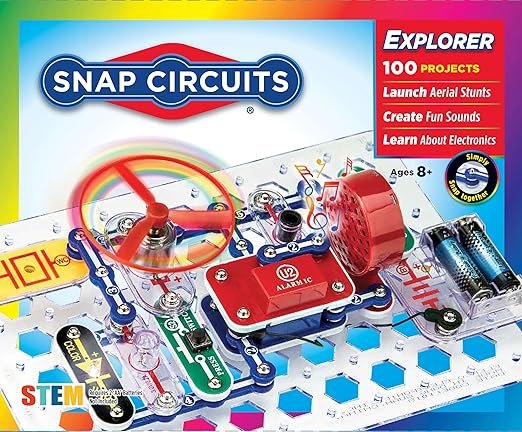
Elenco Electronics Snap Circuits Jr. SC-1000
The basic introductory electronics kit with over 30 snap-together components and a diagrammed handbook with 100 projects. It offers a completely secure, wire-free environment where youngsters may learn the basics of currents, switches and basic electrical engineering. Best for inquisitive kids aged between 8 and 12 years old.

National Geographic Double Microscope Science Kit
A great companion tool for young scientists to extend their exploration from engineering to biology and materials science. This high grade microscope has dual lighting for viewing three dimensional objects as well as standard slides. Students may develop their abilities of observation and scientific inquiry. Best for ages six and up.

ThinkFun Gravity Maze Marble Run Logic Game for Ages 8 [Game of the Year]
A wonderful marble-logic game that tests a child’s spatial reasoning, critical thinking and planning skills. Players build a route via translucent buildings to move a marble to its destination, mimicking the logical flow of designing an electronic circuit. It is best for children ages eight to fifteen.

A hands-on environmental engineering kit for kids to construct their own tiny water purification and desalination plant. It teaches the science of filtration, distillation and ecological conservation by safe physical experiment. Ideal for inquisitive minds ages eight and up.
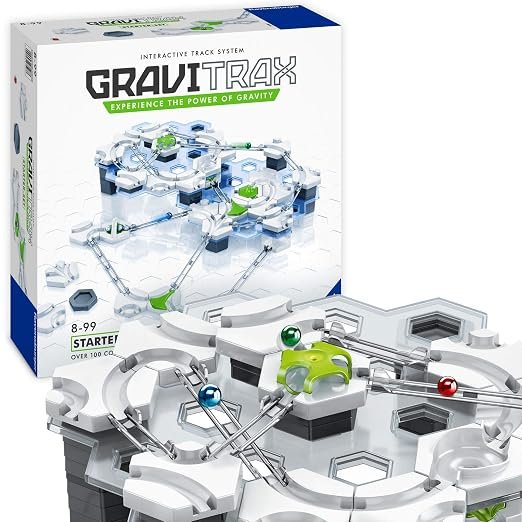
Ravensburger GraviTrax Starter Set Marble Run
An innovative, modular track system that allows children to create and construct their own race circuits while exploring gravity, magnetism and kinetics. The open-ended building method allows older students to have full creative control over physics-based experiments, inspiring hours of independent engineering. Ideal for children 8+