
Whether you’re on a six-hour cross-country flight, doing a rainy-day shopping run, or just attempting to jump on a brief work call while your kid is listening to an audiobook in the next room, there comes a point when everyone in the family needs a reliable pair of toddler headphones.
Audio tools can be a wonderful, calming border when a little child is overwhelmed by a noisy setting or wants to focus on an early learning programme. They create an instant bubble of personal space that is expected, letting your youngster relax without the entire house or aeroplane cabin having to hear the same nursery rhyme on loop twenty times in a row.
But picking out a pair for a kid is a whole different ballgame than buying grownup equipment. You’re not only looking for deep bass or slick wireless connection.
You’re dealing with a genuine safety concern: The inner ear structure of a toddler is extremely fragile and exposure to loud volumes can cause irreversible, cumulative hearing loss before they’re old enough to tell you the sound hurts.
At the same time, they must be small enough to stay on a wiggly head, light enough not to cause neck fatigue, and durable enough to be bent backwards, stepped on, or crammed inside a packed diaper bag. So let’s look at decoding loudness restrictions, fit architecture and lifestyle considerations to find the optimal acoustic match for your small listener.
At Cozy Parents we see childhood milestones and travel routines through the lens of thoughtful simplicity. We want to assist you in crafting a tranquil, low-stress daily rhythm that honours your child’s physical health.
For more practical, expert-approved tips for tranquil travel days and intentional playroom routines, the step-by-step recommendations at Cozy Parents provide a clear, soothing way to move forward.
The Auditory Danger Zone
The major difficulty with regular consumer audio devices is they do not have any hard internal restrictions on loudness. An ordinary adult tablet, smartphone or aeroplane seat-back screen can easily produce audio levels of 100 to 115 decibels (dB).
Audiologists warn that a young child’s growing ears can suffer lifelong hearing loss over time from exposure to 100 dB of sound for just fifteen minutes a day. To put that into perspective:
Many common mass-market children’s headphones’ marketing emphasises their ‘safety’ with a rudimentary 85 dB limit. For school-age children, the usual norm is 85 dB, while paediatric health organisations advocate keeping noise exposure closer to 70 or 75 dB for younger toddlers under the age of four, whose ear canals transmit high frequencies considerably more severely.
The Flight and Road Trip Dilemma
The average constant ambient roar of engine noise within the cabin of a commercial aeroplane is about 80 to 85 dB. You subject a toddler to this roar when you put him or her aboard a commercial aeroplane.
If you use a simple pair of headphones with a stringent 85 dB hard limit, the surrounding noise will nearly totally drown out the cartoon or audiobook plot. Your youngster will naturally struggle to hear, become angry and keep pulling the ear cups off their head;
To avoid harmful volume spikes, parents should opt for premium pairings that bring in internal multi-mode volume limitations and active isolation to tackle this precise structural contradiction on family flights.
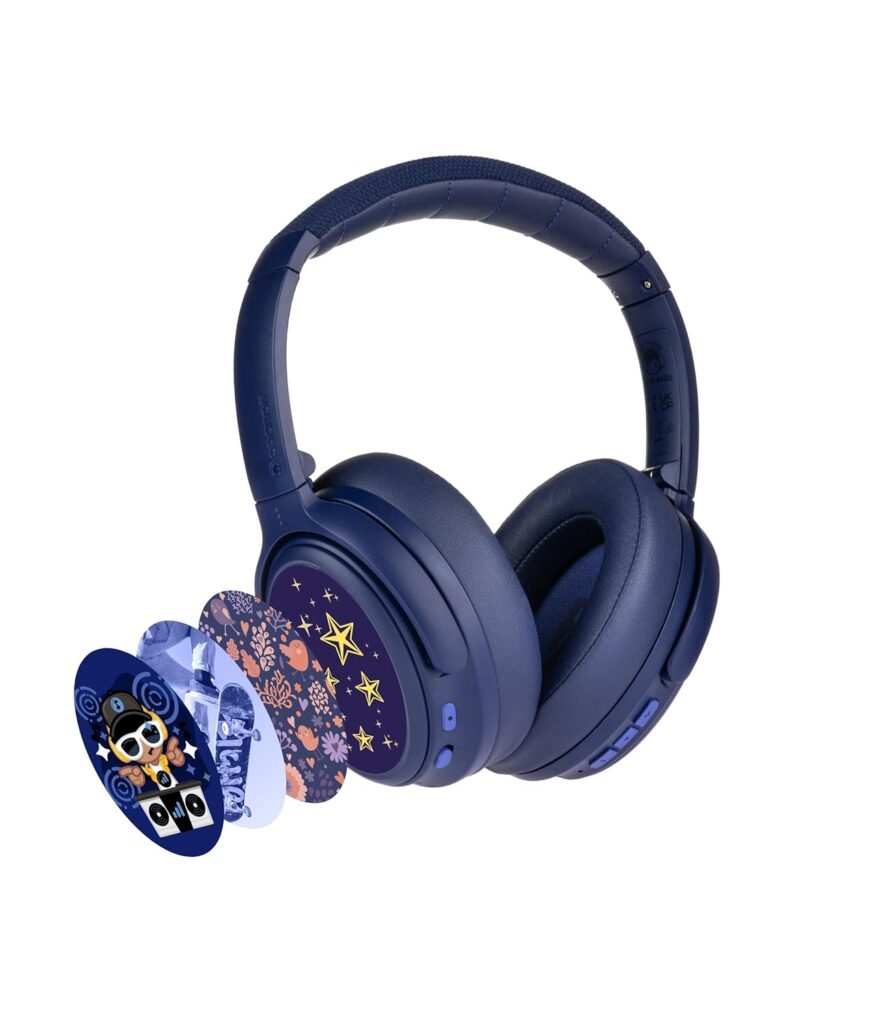
★ The BuddyPhones Cosmos Fun handles this difficult travel scenario with aplomb with a dedicated child-safe lock that lets you switch between a super-safe 75 dB Toddler Mode (for quiet living rooms), an 85 dB Kid Mode and a special 94 dB Inflight Mode designed to cut through roaring plane engines safely.
Its strong, supple plastic frame collapses into a small hard case, which makes it a remarkable engine for high-altitude journeys.
ANC or active noise cancellation is the ultimate upgrade if you want something that actively cancels out the background hums of the aeroplane using active technology instead of just thick plastic barriers.
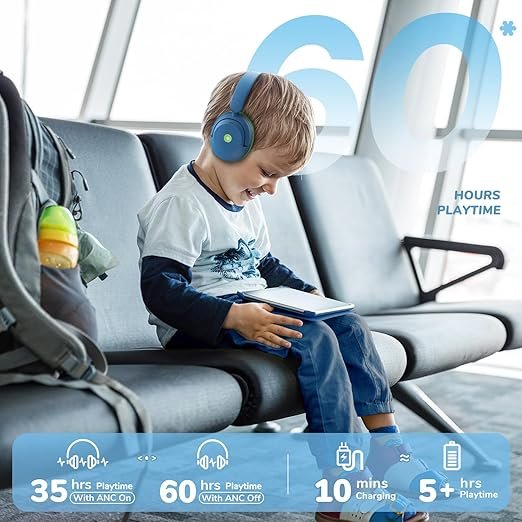
A great bargain selection in this category, the ★ iClever BTH20 has very responsive built-in circuitry that samples and blocks out low-frequency cabin noise. This innovative headset greatly quiets the backdrop environment making it possible for your baby to stream their instructional audio clearly at much lower, safer volume levels helping to keep them deeply relaxed despite long waits.
Durability for Playroom & Everyday Learning
When you require quiet time at home, remote preschool lessons on your own, or video calls with grandparents, your goals change from cancelling engine noise to regulating cord safety, battery longevity and structural drop resistance. Cords can be a rapid tangling threat for a squirmy three-year-old, but wireless options mean you have to keep up with charging schedules.
But for a conventional, plug-and-play wired connection that never requires batteries or pairing screens, you need a cable that can hold up to constant twisting and yanking.
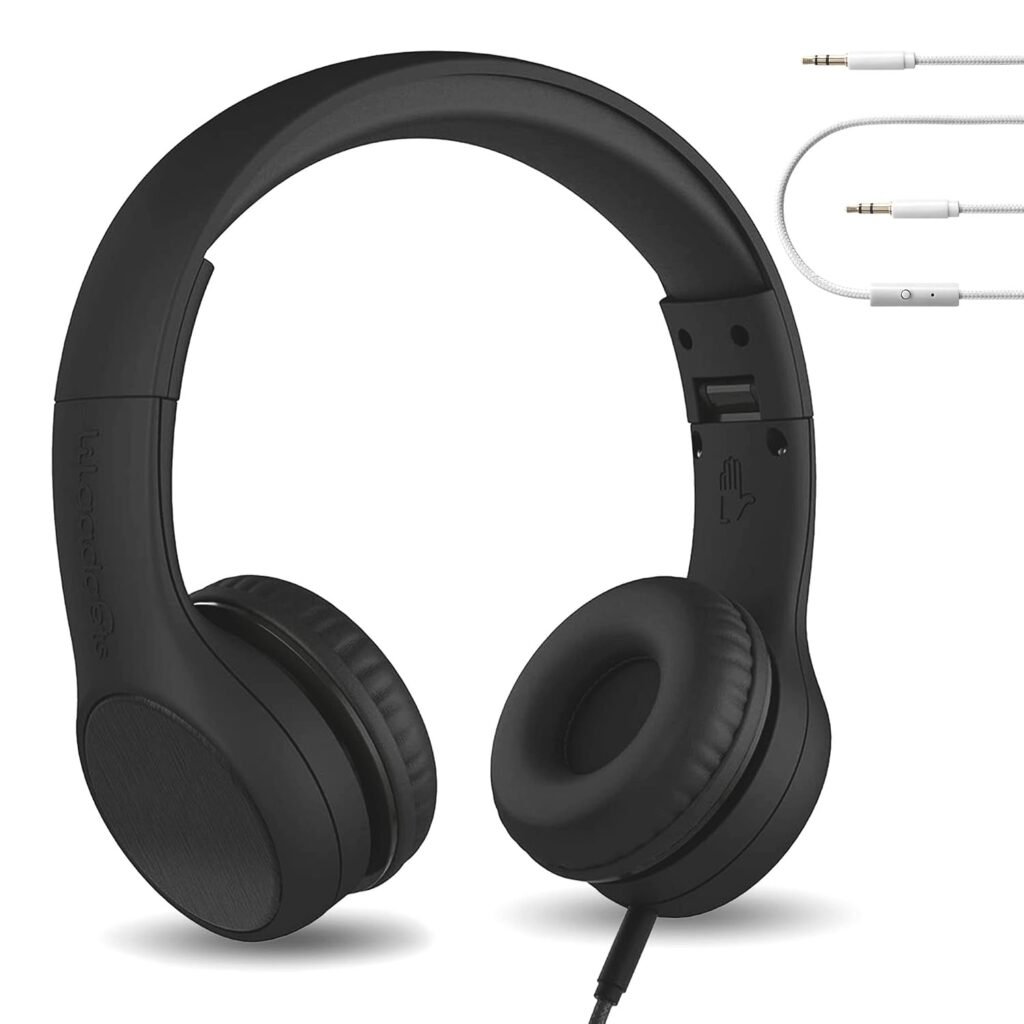
★ LilGadgets Connect+ is a great beginner wired alternative for young children, with an extremely durable tangle-free fabric cable and an integrated SharePort system. This built-in audio splitter lets two siblings link into the exact same tablet at the same time, no awkward plastic adapters and ordinary playroom squabbles are instantly solved.
For older children who don’t want to sit still at the table and prefer the flexibility to dance or stretch during their audio books, an agile wireless set-up is significantly more feasible.
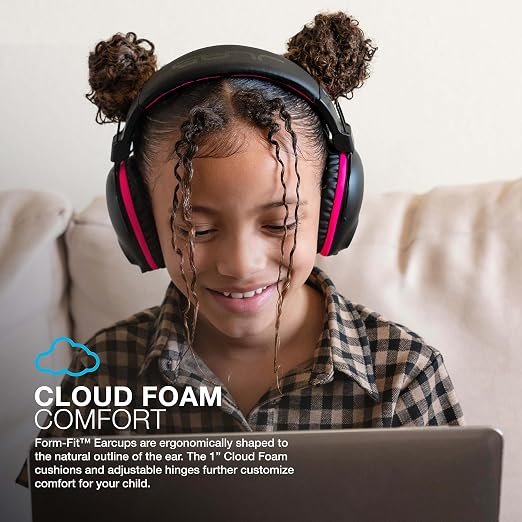
★ JLab JBuddies Pro Wireless meets this active lifestyle necessity with a whopping 35 hours of continuous battery life on a single charge.
the cloud-foam ear cushions nestle gently against sensitive skin and it hides the high-volume override switch deep under the fabric lining of the ear cup so curious small fingers can never unintentionally push the sound levels above safe parameters. Additional ideas on how to employ these concentrated audio routines in your daily screen free milestones can be found in the huge parent resource databases at Cozy Parents.
The Alternative Architecture & The Sensory Comfort
Each toddler has their own sensory profile. Some kids just hate the feeling of hard plastic pressing on their temples or the feeling of being confined with traditional over-ear cups that cut off all environmental context. Kids can become behaviorally resistive very quickly.
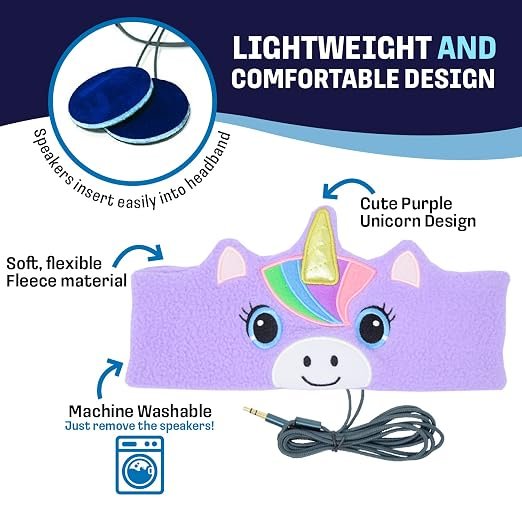
★ CozyPhones Toddler Headphones entirely re-engineer its physical structure by replacing the hard plastic bands with a soft, elastic, 100% washable fleece headband. The speakers are ultra-thin and foam-padded, fitting flush inside the fabric band to keep the headphones comfortably in place without any direct pressure on little earlobes, making them the ultimate cosy choice for sensitive toddlers who love to listen to lullabies while lounging or napping in their car seats.
If your kiddo is ready for a more grown-up look but still needs a lightweight frame that won’t trap sweat, an ergonomic on-ear profile is the happy medium.
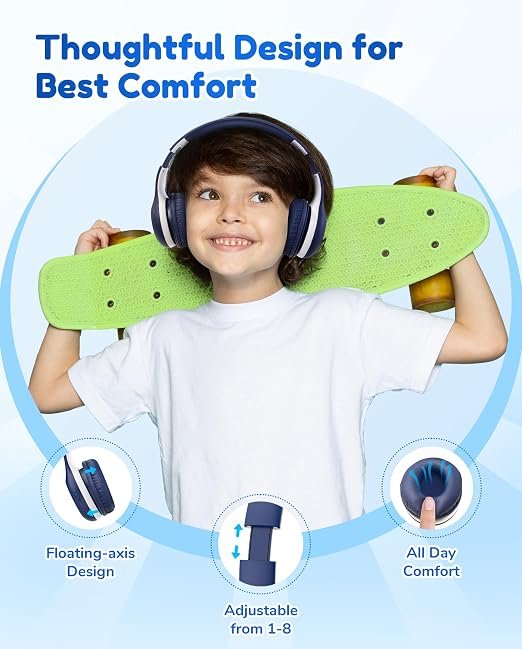
★ EarFun K2 Kids comes with a sleek, very modern design, providing rich, balanced sound clarity and dual-level volume controls at an extremely budget-friendly price range.
Finally if you are seeking for the absolute premium gold standard of acoustic engineering and ear health protection then investing in expert grade safe tuning is worth every penny.
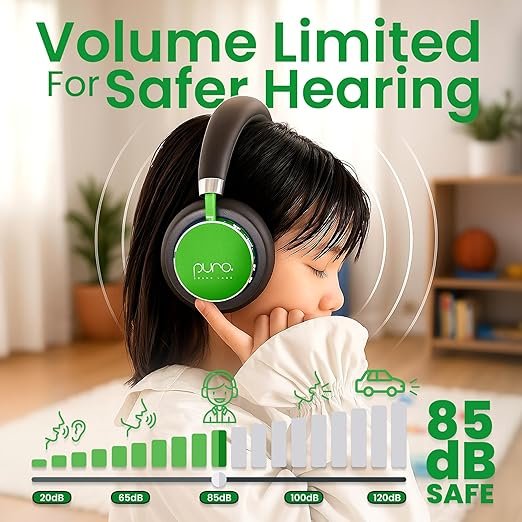
★ The Puro Sound Labs BT2200-Plus has studio quality audio drivers that maintain an extraordinarily clear, flat sound character even at its rigors 85 dB safety limit. The crystal clear and incisive vocal quality means that the toddlers don’t get the muddy audio that makes them crank up the volume, resulting in a genuinely pleasurable, fatigue-free quiet hour.
Finding the Balance of Safety and Serenity
Choosing the best toddler headphones is really about matching your family trip itinerary with your child’s own personal physical comfort levels. By prioritising a hard hardware-level volume constraint, choosing lightweight, drop-proof materials, and tailoring the fit style to their sensory preferences, you may turn a potentially stressful change into a tranquil, focus-building routine.
Check the routes you will be soon travelling, get the actual head circumference of your toddler and invest on a secure and reliable tool that helps them discover their favourite stories in utter comfort.
You don’t have to experience these early kid growth phases by yourself. So for a continuous diet of expert baby care advice, practical home design ideas and honest product reviews, keep us tucked in your bookmarks as your trusted digital village.