
Few outdoor sensory tools generate as much impassioned debate among parents as the sand table versus water table choice. Families are out on patios, decks and backyards in warmer weather and a dedicated raised activity table becomes a top priority. Both provide hours of screen-free, self-directed play but they engage your child’s growing brain and fine motor abilities differently.
It’s not just about choosing whether you like sand or water best. It’s about looking closely at the physical layout of your home, how much mess you can tolerate and your child’s developmental stage.
Sand play emphasises malleable texture, resistive excavation, and structural spatial construction. Water play, on the other hand, is about fluid dynamics, cause-and-effect mechanics of splashing and immediate feedback of temperature.
But choosing the wrong media for your unique living situation can turn an exciting outdoor setup into a burden of daily maintenance. Sand can easily be walked onto hardwood floors or clump when exposed to unexpected rain and open water basins need to be drained and cleaned regularly to prevent algae buildup.
So, to help you make an informed investment that will improve your backyard space without the added stress, let’s compare the sensory mechanics, maintenance realities and functional features of both options, along with hybrid solutions that offer the best of both worlds.
At Cozy Parents, we assess early childhood equipment through a rigorous lens of spatial clarity, physical safety, developmental utility, and clutter-controlled minimalism. We believe your outdoor play zone should be a purposeful extension of your home and a place where your child’s focus can naturally widen.
For more of these expert-vetted plans and minimalistic approaches to designing tranquil, deeply engaging play areas for your growing family, check out our website will connect you to practical, therapist-backed tools built for real daily living.
The Sensory Mechanics: Fluid Dynamics vs. Mouldable Resistance
Understanding the developmental differences between sand and water play helps clarify which tool best supports your child’s current motor goals. Both mediums offer rich tactile feedback but they push a toddler’s muscles and nervous system in very different ways.
The Case for Sand: Resistance, Moulding & Proprioception
Sand creates tactile resistance – you have to work to scoop, pack, flatten and dig. When a toddler presses a plastic shovel into a heavy bed of play sand, the muscles of her wrist and forearm are working against real weight. This deep muscle feedback provides powerful proprioceptive impulses to the brain and helps children anchor their sense of space and hone their physical strength.
Also, sand introduces toddlers to the concept of structural changes. Dry sand pours between fingers like liquid but mix in a little water and it becomes a solid, mouldable substance.
They fill buckets with sand, turn them over to make towers and watch how the structure holds up as the sand dries, getting a first sense of architectural logic.
Case for Water: Fluid Dynamics, Splashing & Temperature
Water offers a completely distinct sensation of fluid movement, buoyancy and instant feedback. Water has no definite shape and so it flows freely to fill the shape of any container in which it is poured.
You have a toddler pouring water from a wide pitcher into a narrow funnel. They get to see fluid dynamics in action, observing gravity accelerate the stream and testing how liquid reacts when blocked by spinners or water wheels.
Water play also provides instant temperature feedback. Cool water on a warm afternoon wakes up the nerve system that says, “Let’s splash around, let’s explore with high energy.”
Water also provides an opportunity to explore the concept of buoyancy by dropping different objects into the basin and seeing which float and which sink.
Maintenance & the Realities of Home Design
Each medium has distinct advantages in development but for busy households the daily upkeep is typically the determining factor. How each table fits into your daily routine will be dictated by how each table interacts with your patio flooring, indoor entryways and weather patterns.
Maintenance Measures for Sand Table
Indoor Tracking: Sand sticks to damp skin, socks and shoe soles, so toddlers can easily track grains across clean floors indoors.
Weather: Rainwater filters through exposed sand easily, creating a heavy, muddy substance that may take days to dry out in the sun. A strong, watertight cover is important to keep moisture in and neighbourhood outside pets out.
Need for Refill: As you dig with gusto, sand will also invariably pour over the edges, therefore it will need to be topped up with fresh, non-toxic play sand on a regular basis.
Water Table Management Metrics
Draining and Cleaning: If water is left in an open basin for more than a day, it might collect leaves, dust and insects. The basin should be drained regularly and air-dried to keep it clean and hygienic.
Spill Dynamics: Water on sun-heated decks and stone patios dries naturally, leaving no gritty film.
Instant Reset: It takes just minutes for a regular garden hose to refill the water table so you can reset for new play sessions whenever you choose.
Speciality Stations v/s Hybrid Stations
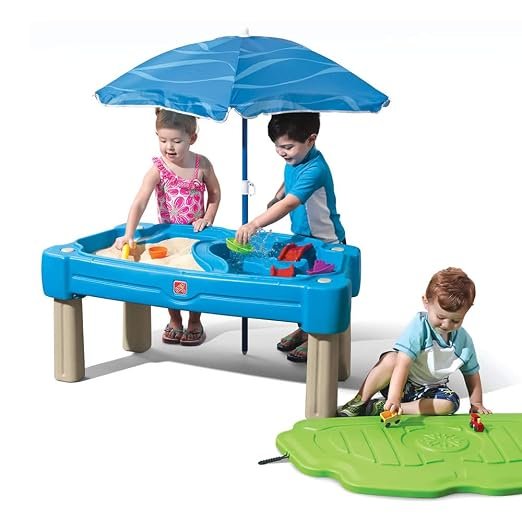
We will audit seven top-rated, structurally sound solutions in each category to help you choose the greatest fit for your home layout, including space-saving hybrid models that provide both media in a single footprint.
1. Step2 Cascading Cove Sand & Water Table
This dual compartment model is a good example of a balanced hybrid setup. There is a central roadway bridge separating two separate moulded basins so you can fill one side with play sand and the other side with clean water.
Built-in elastic tie-down cords clasp firmly over the top of the heavy-duty, moulded plastic cover to keep rain and outdoor pets out while not in use.
The accompanying adjustable shade umbrella helps shield sensitive baby skin from direct sun exposure making it a good choice for open decks or patios without shelter.
2. Step2 Naturally Playful Sand Table
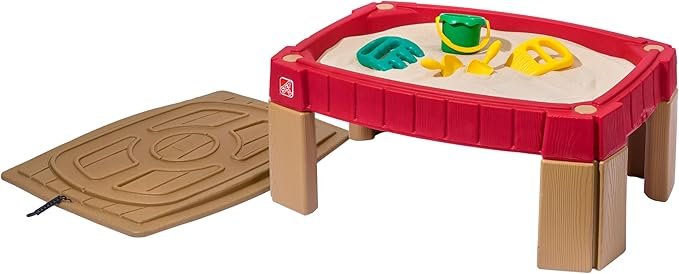
The hybrid station features a neutral wood-grain texture and two large side-by-side compartments that blend seamlessly into landscaped backyard spaces.
The sand basin can carry up to 20 pounds of sand, so there’s enough of weight to keep the table firmly anchored against unintentional nudges.
Its durable lid is designed with moulded roadways on its top surface, which turns the covered table into a flat play surface for toy cars when sensory play is done for the day.
3. Step2 Dino Dig Sand & Water Table
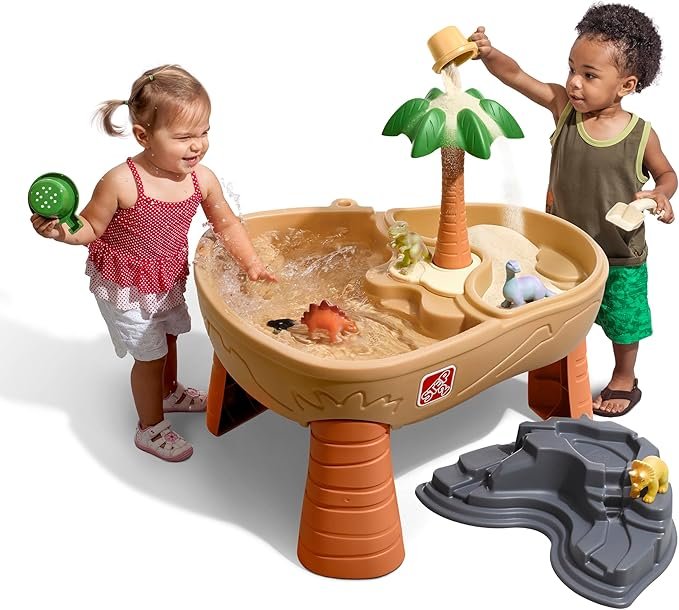
This large activity station has a fun prehistoric theme and has a raised sand digging area that sits right next to a deep water lagoon.
It has dinosaur figures and a double-sided shovel/rake tool and has a moulded palm tree waterfall tower.
Preschoolers enjoy to dig out the plastic dinosaur figures from beneath the sand layer with their rake tools, and then transport them over to the water basin to wash them clean. Narrative storytelling blends perfectly with fine motor mechanics.
4. Step2 Water Table Rain Showers Splash Pond
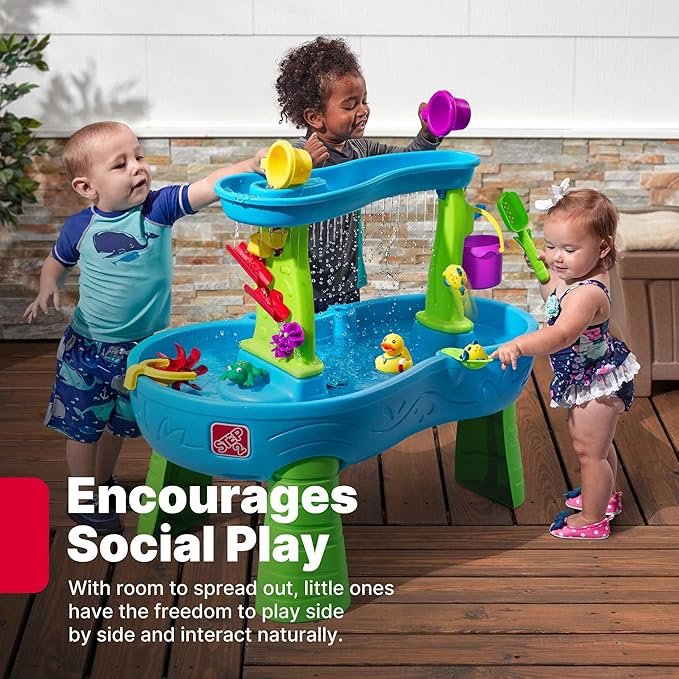
If your family is all about water play, this multi-tiered model provides a great kinetic experience. Toddlers scoop water from the wide bottom basin and pour it into the top tray to trigger a realistic rain shower into the pool below.
The falling water activates a host of customisable maze ramps, spinners and scoops, offering kids rapid visual and audio feedback to reinforce cause and effect learning.
5. Little Tikes Spiralin’ Seas Water Park Water Table
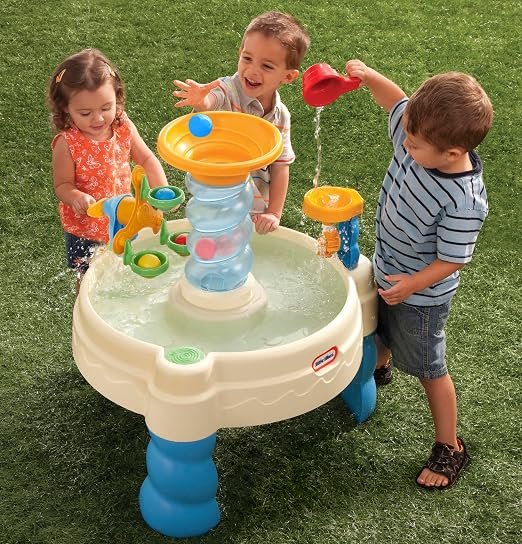
This specific water table is based on trajectory tracking with a central clear spiral tower and an interactive water wheel assembly.
Toddlers drop small toy balls down the spiral tube to see them spin down into the main water basin below.
Turn the hand-powered water wheel to create a gentle current to keep the floating squirt figures moving smoothly around the perimeter. Great practice for visual tracking and fine motor hand strength.
6. Simplay3 Tidy Water Cascades Table
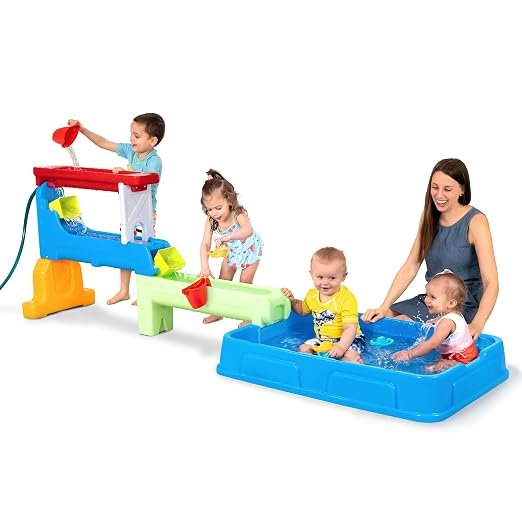
This space-saving, 3-tier stacking table is designed specifically for urban balconies, small decks or tight patios where space is at a premium.
During play periods, these three independent nesting basins rotate outwards on heavy-duty hinges to form a multi-level cascade of water and then neatly fold back over each other for convenient storage.
Each tier is slightly higher or lower than the next, assisting in teaching toddlers that water pressure and flow rates shift from one layer to the next.
7. Step2 Archway Falls Water Table
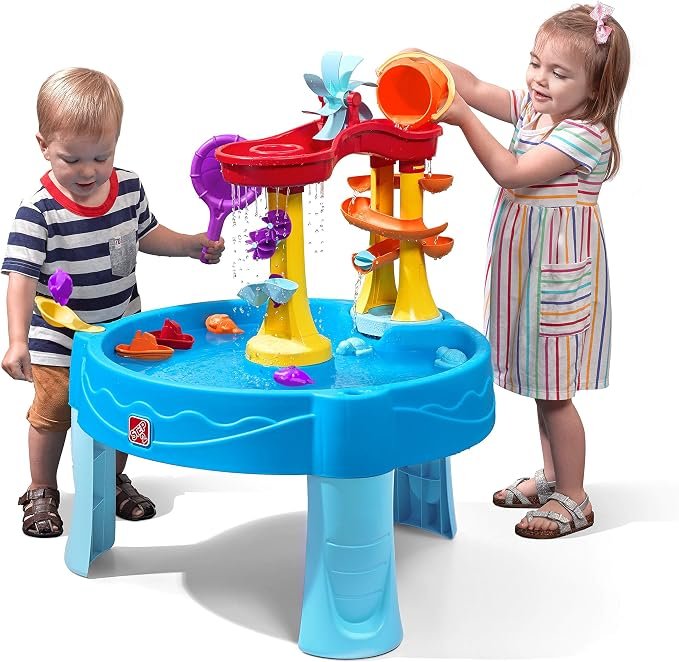
This specialised water table boasts a dynamic vertical flow design and a prominent central archway with snap-in water maze channels.
Kids pour water over the top archway to make twin waterfalls that turn two separate spinner wheels at the same time.
The main basin boasts a high capacity of five gallons of water that provides a solid, low center of gravity anchor that stays stable during energetic group play.
Which Play Table Should You Get?
When comparing sand and water tables, the best choice depends on your main goals for clean-up and play value:
Get a Water Table if: You want quick cleanups, little mess, little outdoor storage. Decks and stone patios shed water neatly and the basin can be emptied, washed and reinstalled in minutes. This is your best option for short outdoor play sessions on warm afternoons.
Purchase a Sand Table if: You want a super calming, grounding sensory tool that will hold a toddler’s attention for long periods of time. Sand play is good for slow, careful digging and moulding, so it works well if you have a designated garden or lawn area where any stray grains of sand won’t be a problem.
If you purchase a Dual Sand and Water Hybrid: You want maximum play versatility and have room for a little bigger footprint. With hybrid tables, your kid can engage with dry, damp and totally submerged textures side-by-side, giving growing toddlers the greatest sensory experience possible.
Designing a Welcoming Outdoor Environment
One of the best ways to promote screen-free, self-directed play outside is by adding an elevated sensory table to your setup, whether you choose a dedicated water table, a sand station or a hybrid model that does both. Select a well-engineered, solid table that fits your patio footprint and your maintenance routine to establish a calm environment for your youngster to freely investigate physics, hone fine motor skills and develop independent play habits.
Now take a look around your current outside space, pick out a structurally sound table that meets your household demands and step back and let your youngster lead their own sensory discovery.
You’ll never have to make these early childhood equipment choices or home setup decisions by yourself. To see a steady stream of helpful development frameworks, decluttered playroom ideas and honest gear reviews, keep reading at Cozy Parents your trusted guide at your fingertips