
Play mats are one of the most used pieces of gear in every young family’s home from the earliest belly time sessions to first rolls, unsteady crawls and exuberant toddler gymnastics. It defines the physical boundary of your child’s play space, and protects soft knees, wrists and heads from harsh hardwood or cold tile floors.
But parents shopping for the appropriate play mat are rapidly overwhelmed by a bewildering number of material choices: Foam (single piece or interlocking puzzle tiles), Fabric (quilted or organic cotton) or Foldable (hinged accordion mats).
Every material format offers benefits and tradeoffs in terms of cushioning density, ease of cleaning, portability and fit with interior design:
- The single piece foam mats offer the best seamless shock absorption and watertight cleanup but they do take up a lot of dedicated floor space.
- Interlocking foam puzzle tiles provide variable sizing and beautiful tile arrangements, however liquid spills can seep through the gaps between tiles.
- Fabric play mats provide comfortable, machine-washable organic cotton softness for infants but lack robust impact protection for busy toddlers.
- Foldable accordion mats can be folded away in seconds for tiny living rooms or travel but have conspicuous folding seams which trap crumbs.
At Cozy Parents, we examine early childhood gear through the exacting filters of spatial clarity, physical health, developmental utility and clutter-controlled minimalism. We believe your house should be a tranquil oasis where your child’s milestones unfold naturally, without unwanted friction or visual noise.
If you are eager to discover additional therapist-backed frameworks, home organization tactics, and expert gear reviews for growing families, visiting Cozy Parents will connect you with practical resources created for intentional daily living.
Padding, Toxins and Physics of the Floor
To choose the correct play mat format for your house, it is vital to examine materials through the dual lenses of pediatric physical development and indoor air safety:
1. Impact Protection and Joint Support
During the first two years of life, children undergo rapid gross motor changes. Tummy time is hard, stable ground resistance for head control, not soft plush. A soft mat will sink beneath the chest of the infant making it hard for them to push up with their arms.
By comparison, tumbling is rather common as toddlers can sit, push up and take their first steps. High density thermoplastic polyurethane (TPU) or cross linked polyethylene (XPE) foam provides “rebound resilience”, the perfect blend of hard surface resistance for stability and deep shock absorption for falls.
2. Chemical safety EVA or TPU or XPE or Natural Cotton
Babies spend hours on their backs on play mats, often with their face, mouth and hands pressed against the surface, therefore material purity is a non-negotiable.
TPU (Thermoplastic Polyurethane): The gold standard in non-toxic foam mats. All hypoallergenic, non-toxic, formamide, phthalates, BPA & PVC free. Memory foam like.
XPE (Cross-linked Polyethylene): Lightweight, waterproof and intrinsically non-toxic, very robust. Often used in foldable play mats.
EVA Foam ( Ethylene Vinyl Acetate): This is a common material used to create interlocking puzzle tiles. It is lightweight and inexpensive. Must be free from phthalates and formamide as determined by a third party testing laboratory.
100% Organic Cotton Fabric: 100% natural fabric, no synthetic petro-chemicals, great for sensitive infant skin but requires frequent washing.
3. Waterproof Seals & The Reality Of Maintenance
Infant play is messy. Spit-up, drool, spilled milk, smashed crackers are all part of the daily grind. A playmat with a waterproof, non-porous membrane can be cleaned up in 5 seconds with a moist cloth. Fabric mats are soft yet liquids get absorbed right away and they require a complete laundry cycle after each spill.
7 Best Play Mats For Babies & Toddlers
To assist you decide on the best mat format for your home, we will review 7 different highly rated play mats that are now active and available on Amazon US.
1. Little Bot Ofie Play Mat (Single-Piece Reversible TPU Foam)
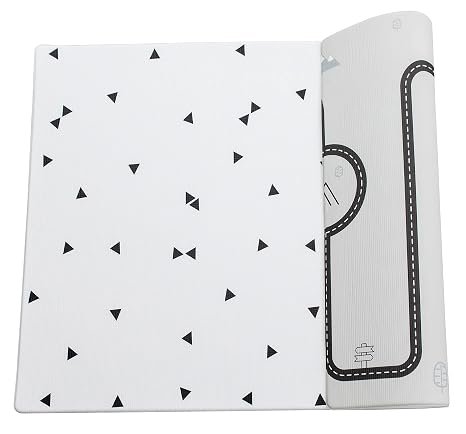
The Ofie Mat is the gold standard in current aesthetic play mats It is a huge, single piece foam mat that is luxuriously 0.6 inches thick and measures 6.5 feet by 4.5 feet Made of high quality non-toxic TPU foam. 100% PVC, EVA, lead, BPA and formamide free.
The mat has two reversible sides with subtle minimalist motifs (think Zen Line geometric patterns or Country Road play maps) that easily complement adult living room decor.
The non-porous & seamless surface is 100% waterproof & vacuum safe. Easily wipe clean with hot water or baby wipes without letting liquid spills seep to the hardwood floors.
2. Skip Hop Playspot Foam Floor Tiles (Interlocking)
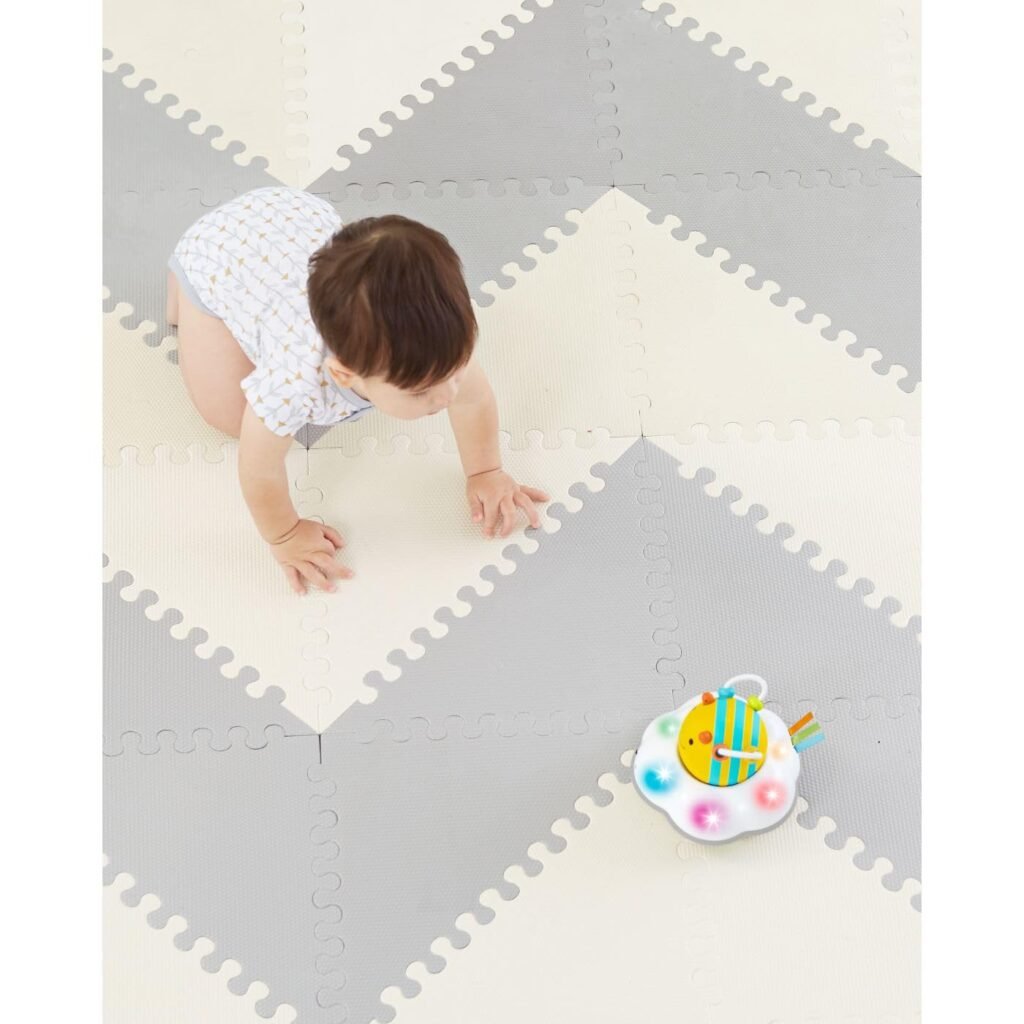
For families looking for configurable sizes to fit specific space proportions, the interlocking puzzle tile system from Skip Hop is a flexible and elegant choice. This kit has 40 triangle tiles and 32 edge pieces that lock together to create a large cushioned play area of 70” x 56”.
The tiles are made of high-density EVA foam tested to be free of phthalates and formamide and feature an elegant geometric design of triangles in neutral grey, cream and grain tones.
The tiles are modular so parents can arrange them in unique squares and rectangles to fit into tight places and the design allows for simple repair of broken tiles.
3. Toddlekind Classic Puzzle Playmat (Premium EVA Foam Tiles)
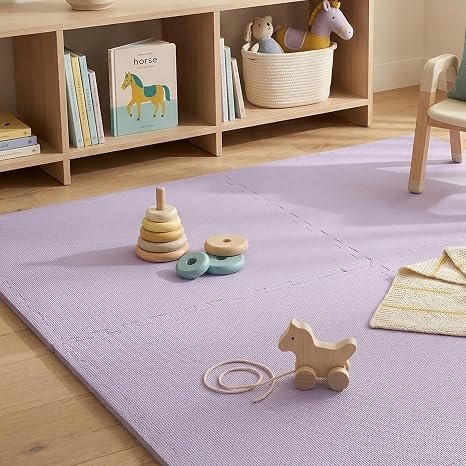
Toddlekind’s puzzle playmats bring luxury interior design to baby gear by combining the chic beauty of an oriental rug with the practicality of a foam mat. Each set consists of 9 thick interlocking tiles (17” x 17” each) with seamless scalloped edging to form a finished 4.3 ft x 4.3 ft square mat.
Made with 0.47 inch thick non-toxic EVA foam, this exceeds US and EU requirements for child safety in heavy metals & chemical emissions.
Multiple tables can be linked together to cover large floorspaces in the living room for a soft surface that is easy to clean and enhances the room’s decor.
4. Mats Organic Cotton Fabric Play Toki
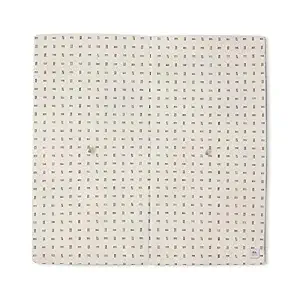
If you’re a parent who wants to avoid synthetic foams and instead prefers natural organic fibers, Toki Mats has a premium fabric option for newborns and toddlers. The mat offers detachable cover of 100% GOTS certified organic cotton over natural plant-based foam core.
The generous 40″ by 40″ or 50″ x 50″ of soft, dense cushioning creates a comfortable, chemical-free haven for tummy time, chest lifts and peaceful reading sessions.
The cover is made from organic cotton and unzips in seconds and is 100% machine washable making it a great alternative for babies with sensitive skin or eczema.
5. Parklon Pure Soft Baby Play Mat (Single Piece PVC/TPU Rollable)
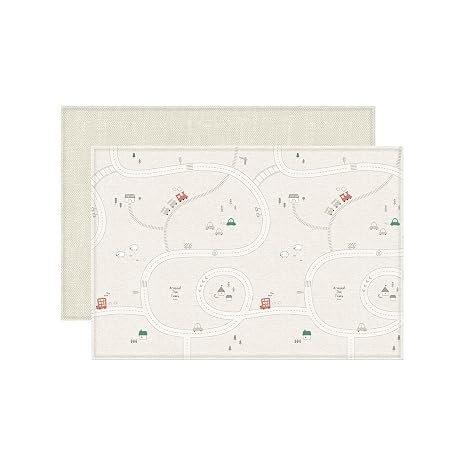
Renowned for its heavy-duty density and durability, Parklon’s single-piece play mat features a proprietary high-density foam blend that gives deep cushioning for energetic toddlers. Its huge 75” x 51” size and 0.4” thickness absorb heavy impact and are ideal for homes with hard tile or polished concrete floors.
The double-sided water-resistant surface boasts two printed designs a fun educational design on one side and a delicate Scandinavian rug print on the other.
It is a thick material that is totally flat, does not curl up at the corners and resists punctures from pet claws and heavy play equipment.
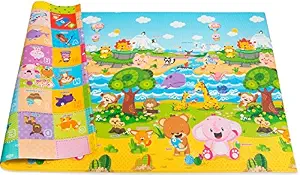
6. Baby Play Mat Reversible Baby Care Mat (Large Foam)
Engineered for energetic toddlers and huge play spaces, the Baby Care play mat covers a massive 82″ x 55″, providing many children room to roll, stack, and tumble together. Constructed from high-density, non-toxic foam material, its soft embossed surface features microscopic anti-slip vacuum pockets that give traction for early walkers.
The double-sided waterproof layer prevents liquids, milk stains and food debris from penetrating through to the inner foam core.
Residents of higher-floor apartments like it because the sound-dampening density helps to reduce the noise from footfalls and things falling.
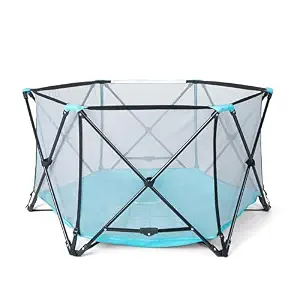
7. Regalo My Play Portable Folding Play Mat (Accordion Fold XPE)
This lightweight accordion style mat is perfect for small flats, holidays away and trips to the grandparents and folds down to a tenth of its size in around five seconds. The mat is made from non-toxic, high density XPE foam, is a large 71” x 71” when unfurled and folds up into an accompanying zippered travel bag (with shoulder straps).
The waterproof XPE surface wipes clean easily and insulates against wet grass or cold tile floors.
Its light weight and folding hinge design allows parents to store the mat beneath a sofa or in a closet when not in use, making it the best space-saving play mat for small households.
How to Create a Low Clutter Play Space at Home
A confirmed playmat is a great first purchase but it’s the strategic placement of the mat in your home layout that will sustain spatial order and daily convenience.
Here are 4 practical ways to create a calm, clutter-controlled play area:
1. Secure the Mat to Define the Playing Space
Place your play mat in a high traffic, central location in your main living space or nursery. Call the mat the “play boundary” so your toddler knows that toys, blocks and books belong on the mat, minimizing dispersal on the floor across walking paths.
2. Select the correct mat for your living area
Tiny Apartments: Select a folding XPE mat or modular puzzle tile set that can be stowed away or downsized to fit small areas of a room.
Big Open-Plan Living Rooms: Choose a huge one-piece TPU foam mat for a permanent, appealing alternative to an area rug.
Nursery & Newborn Nook: Tummy time is comfy & cozy on an organic cotton cloth mat.
3. Keep toys low and near
Pair your play mat with low-profile, eye-level wooden shelves or soft woven storage baskets along the edge of the surface. Categorized toys within reach of toddlers’ arms allow them to select their own activities without getting off the cushioned surface.
4. Daily Wipe-down Reset
Have a quick two minute clean-up routine to end each day: Sweep lost toys into nearby baskets and wipe the surface of the play mat with a wet towel or baby wipe. And by wiping off the mat every night you maintain that non-toxic surface film and keep the living room feeling fresh and quiet for adult hours.
Foam, Fabric and Folding Play Mats
Let’s consider the functional trade-offs across all three formats to help you decide which format will best fit your family’s lifestyle:
1. One-piece foam mats and puzzles
Best For: Daily floor play, active crawling, tumbling toddlers and permanent living room situations.
2. Fabric & Organic Cotton Mats
Best for babies, tummy time, cozy reading nooks, sensitive skin or allergies
3. Accordion-folded mats
Best for: small apartment, multi-purpose space, outdoor park, travel.
A Safe, Peaceful Playground
The ideal play rug for your little infant or toddler is a compromise between your child’s existing motor milestones and your home’s spatial arrangement and cleaning preferences. Choose from a high-density TPU single piece mat, a modular puzzle set, a soft organic cotton pad or a travel-friendly foldable mat to create a safe, comfortable and artistically outlined haven for your child’s early development.
Take a moment today and review your present play space. Upgrade hard or slick surfaces with a certified non-toxic play mat. Place a few categorized toys nearby and you can sit back and let your small one explore their environment with total physical confidence.
You’ll never have to make decisions on your own on early childhood equipment or home set up. Check back often to Cozy Parents for a steady stream of helpful development guides, tips on organizing a minimalist home and no-nonsense reviews of products.