

The first years of a child’s life pass in the blink of an eye. One week your baby is discovering his hands and the next he’s climbing up furniture, naming animals and tearing through the living room with abandon. This rapid neurological and physical evolution comes with an overwhelming market of products, each promising to “fast-track” milestones, accelerate literacy or guaranty genius-level development. To the intentional parent, this commercial landscape can feel like a minefield of plastic noise, flashing lights and single-purpose gadgets that promise the world but deliver clutter.
Take away the aggressive marketing, and a child’s playroom is not a miniature classroom; it is a laboratory for the soul. The toys we bring into our homes are the building blocks of a child’s growing mind. A toy that is too advanced creates frustration and learned helplessness. If it is too simple, it results in boredom and behavioural dysregulation. The art of mindful parenting is knowing where to draw the line in choosing toys that are exactly in a child’s current developmental window.
At CozyParents, we believe the best toys are a bridge to connection and independent discovery, not a barrier of distraction. We believe in “intentional play” choosing durable, hands-on, open-ended supplies that support the serenity of a minimalist, screen-free home. This guide will take you through the developmental milestones of infancy and toddlerhood, how to create a toy ecosystem that supports those stages and review seven stand-out products that respect both your child’s growth and your home’s visual peace.
Developmental Foundations: The Science of Play at the Right Age
To select the appropriate tools for your child, we first need to learn how a young brain makes sense of the physical world. Child development and occupational therapy principles tell us that learning is stage based and that each stage requires specific types of sensory and motor engagement.
1. Sensory Integration and Schema Exploration (0-12 months)
An infant is an active sensory scientist from birth until the end of the first year of life. They learn with their mouth, their hands, their skin. Babies learn about their world through “schemas” repetitive patterns of behaviour such as mouthing, banging and rotating objects or dropping them. At this age, toys don’t need to have batteries or pre-programmed sounds. They must give rich, authentic sensory feedback: the cool heft of smooth wood, the soft texture of organic cotton, the contrasting high-contrast patterns that help wire the visual cortex. This provides infants with age-appropriate items to stimulate neural pathways without overwhelming their sensitive nervous systems.
2. Motor Planning (12-24 Months)
As babies turn into active toddlers, their understanding of agency explodes. They start to see what they do has consequences. ” I push this car and it rolls. If I let go of this block, it drops.” This is the golden age of cause and effect toys and gross motor exploration. Toddlers need things they can push, pull, stack and nest. Their emerging vestibular and proprioceptive systems are screaming for movement, balance and tactile manipulation. We foster real cognitive mastery and physical confidence by providing open-ended toys that respond to the child’s physical effort rather than doing the work for the child through electronic buttons.
3. Symbolic Play and Executive Function (24 – 36+ Months)
In the second and third year of the child’s life, imagination starts to take the lead. Children play symbolically or “pretend.” They can assign meaning to objects (e.g., use a block to stand for a phone, or a silk scarf to stand for a river). This cognitive leap requires advanced executive function working memory, emotional control and cognitive flexibility. In this stage, open-ended, age-appropriate toys become blank canvases that children can use to write their own stories, solve complicated spatial problems and practice social-emotional empathy through role-play.
The Product Roundup: 7 Purposeful Toys for Babies and Toddlers
The key when selecting toys that fit within these critical developmental windows is to choose toys that are durable, non-toxic and open-ended in design.
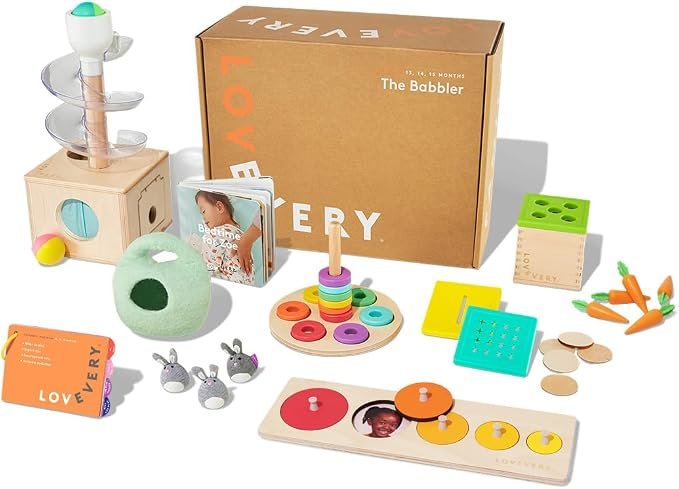
1. Lovevery The Babbler Play Kit
Description: A box of developmental toys based on Montessori principles, designed for babies around 7-8 months. There are things like a solid wood spinning drum, organic cotton ball drop sets and high contrast perception cards made from sustainable, non-toxic wood with water based finishes.
Benefits: This kit takes the guesswork out of age appropriate selection by pairing perfectly with a baby’s developing need for object permanence and cause and effect discovery. The nursery aesthetic is based on natural wood construction, but the minimalist design prevents the senses from being overloaded. The compact pieces fit neatly into the wooden storage box provided, helping to keep the floor clear.
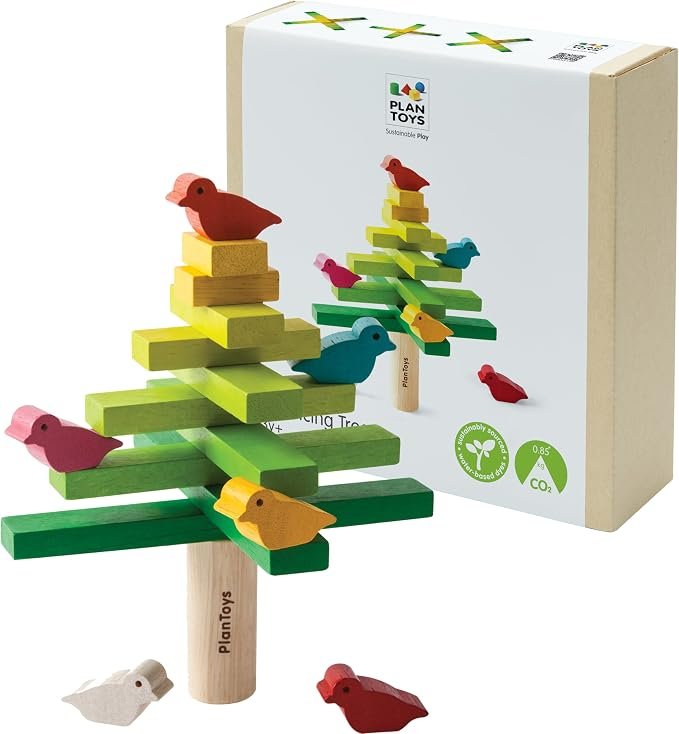
2. PlanToys Solid Wood Oval & Round Stacking Toy Set
Description: A classic, sustainably made rubberwood stacking toy with smooth, ergonomic wooden rings in soft, organic colours on a flexible, safety-minded rocking base.
Benefits: This stacker is great for older babies and young toddlers (12-18 months) and teaches spatial awareness and fine motor coordination. Flexible centre dowel, instead of rigid plastic rods that could be a hazard if you fall, safe for play. Once playtime is over, its warm wood texture and minimalist silhouette look beautiful on display on an open shelf.
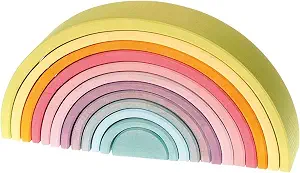
3. Grimms Small Rainbow Stack & Nest
Description: An internationally recognised Waldorf toy, open-ended, made of solid linden wood and finished with non-toxic, water-based colour stains that allow the natural wood grain to shine through.
Benefits: The ultimate longevity toy, this easily transforms from a sensory object for baby to a tunnel, bridge or cradle for toddler. Because it is not designed for a specific function, it can grow with the child through many stages of development. The arches fit tightly together in one compact crescent shape that takes up little space in a minimalist playroom.
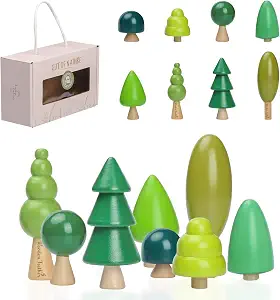
4. Raduga Grez Wooden Forest Stacking Blocks
Description: These blocks are made from solid linden wood in Russia and shaped like abstract trees and boulders and finished only with natural flaxseed oil and no chemical paint or varnish.
Benefits: Organic shapes provide irregular balancing challenges, instead of standard geometric blocks, requiring toddlers to carefully calculate weight distribution and fine motor placement. It’s a calming, naturalistic play environment without bright primaries and the wooden storage tray teaches the kids independent cleanup habits.
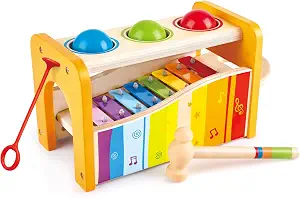
5. Hape Pound and Tap Bench with Slide Xylophone
Description: A clever multi-functional wooden toy with a hammer and ball drop mechanism and removable musical xylophone, made from Baltic birch and finished with child safe water based paints.
Benefits: Suitable for toddlers 18-36 months, it addresses several developmental areas at once: hand-eye coordination, cause and effect reasoning and auditory discrimination. Solidly constructed from wood to withstand enthusiastic toddler hammering, it has a slide-out xylophone for independent musical exploration without the digital noise.
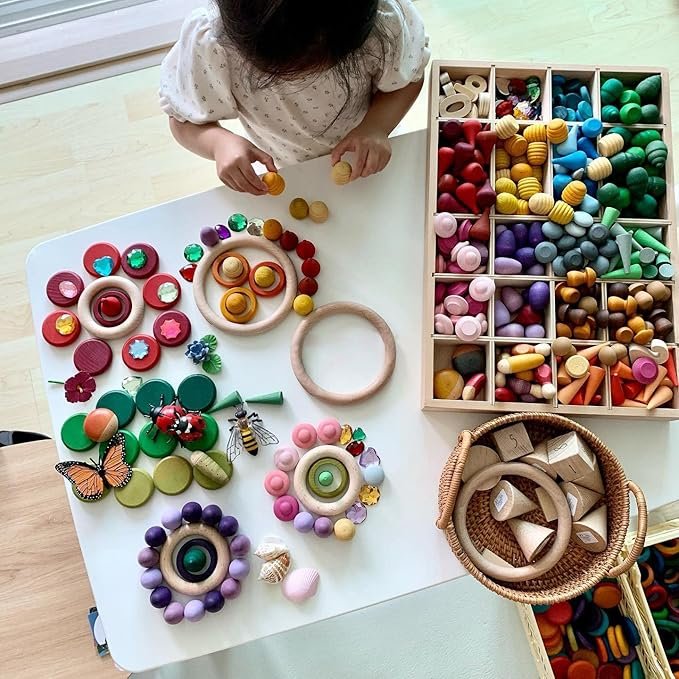
6. Grapat Loose Parts Wooden Mandala
Description: A set of small beautifully turned solid wood objects (such as little cones, mushrooms and coins) stained in rich muted earthy tones with non-toxic stains in a sustainable wooden sorting tray.
Benefits: “Loose parts” are the ultimate in open-ended play and are perfect for older toddlers and preschoolers (3+ with adult supervision at first). They encourage sorting, counting, patterning and imaginary world-building. The whole set can be easily stored in its compartmentalised wooden tray, an exercise in spatial order.
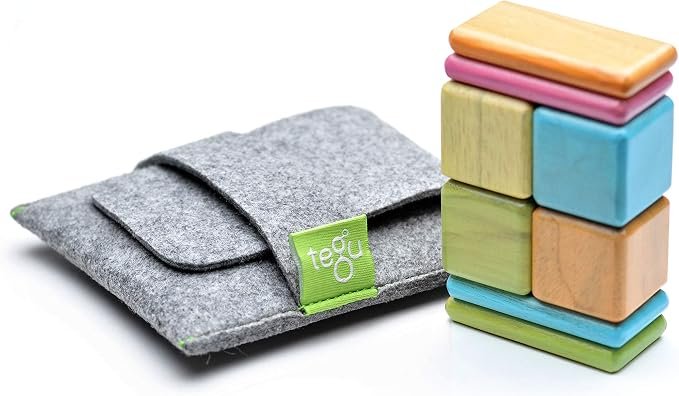
Description: For building vertical structures that defy gravity, these blocks are made of smooth, sustainably harvested Honduran hardwood with safe, internal magnets.
Benefits: These blocks fill a gap between toddler stacking and advanced structural engineering. The hidden magnets also produce a magical “click” that leads to sustained focus with tremendous tactile satisfaction. They pack up nicely into a small felt pouch making them the perfect travel companion for screen free entertainment on the go.
Practical Advisory: Constructing a Low-Friction Toy Ecosystem
Curation of age-appropriate toys is only half the battle. How you manage and introduce them within your living space dictates how successfully your home maintains its peace.
1. Montessori toy rotation approach
Children thrive in a non-overcrowded environment. If you have fifty toys, don’t show them all at once. Choose 6 to 8 age-appropriate items that correspond to your child’s current developmental focus and store the rest in a closet or storage bin. Replace the collection every three to four weeks. An old toy, when it reappears, is regarded with the fierce curiosity of something brand new. This greatly extends the life of the toy and keeps the clutter of toys off your living room floor.
2. Low-Shelf Accessibility and Independence
Swap out deep toy boxes for low, open wooden shelves for your child’s toys. Toys at eye level that are visible and accessible allow the child to choose what they want to play with and importantly, where they will put it away when they are finished. This aids executive function, promotes a sense of ownership and instills respect for the home environment.
3. Look Before You Buy
Before purchasing a new toy, observe your child’s natural play patterns for a week. Are they crazy about dropping things now? They need ball drops or gravity toys. Are they buying up household goods like books and cans? They are ready for wooden balancing blocks or nesting arches . Moreover, when you allow your child’s natural developmental schema to govern your purchasing choices, you will avoid impulse buying and ensure that each item in your home has a true purpose.
Comparative Review: Premium Intentional Toys vs. Mass Market Toys
Parents who are buying toys for babies and toddlers often have to choose between high-grade sustainable toys and cheap mass-market plastic alternatives. When you look at these choices along certain dimensions, you can see why intentional gear is an important investment for your family.
Premium sustainable wooden toys and organic materials are durable enough to last for a multi-generational lifespan and easily withstand the heavy dropping, mouthing and active play of early childhood. Mass-market plastic toys, in contrast, tend to crack, hinge fatigue and fade and are often broken and thrown in landfills within months.
Purposeful toys are purposefully designed with minimalist spatial harmony for functional storage and integration into the home. They come with nesting profiles, compact wooden boxes and neutral aesthetics that integrate into home decor. The cheap plastic alternatives tend to have weird bulky shapes and all over the place colour schemes that take over the room’s sightlines creating unavoidable visual clutter.
High-grade toys are made with non-toxic, water-based finishes, organic beeswax and smooth, rounded edges that are gentle on a child’s sensitive skin and developing immune system, all with ergonomics and safety in mind. Mass-market knock-offs can sometimes use untested chemical plasticisers, harsh paints or brittle plastics that splinter under pressure.
From a sensory standpoint, natural wood, cotton and silk provide grounded, organic textures and natural scent profiles that soothe a child’s nervous system. Synthetic plastics can have cold, slick surfaces and electronic toys can have loud, high frequency artificial sounds that can overstimulate a young infant’s sensory processing abilities.
Intentional toys are essentially open ended in that they adapt creatively as a child grows from an infant exploring textures to a toddler constructing elaborate structures. From a developmental and therapeutic standpoint, The cheap, single-use or character-branded electronic toys have pre-programmed functions that provide a short-lived hit of dopamine and then the child loses interest.
The Lasting Benefits of Play on Purpose
Selecting age appropriate toys for your baby and toddler is an act of deep environmental and psychological stewardship. By choosing products that honour where your child is developmentally, you are giving them the exact tools they need to develop physical confidence, emotional resilience and cognitive clarity, all without the disruptive noise of modern commercialism.
Here at CozyParents, we believe everything in your home should serve a purpose, help you grow or create a moment of peace. By curating a thoughtful, sustainable collection of toys, you’re not just tidying up your living room; you’re teaching your child how to focus, how to wonder and how to engage deeply in the world around them.
We invite you to continue your journey through CozyParents for more minimalist parenting wisdom, expert-validated gear roundups and intentional strategies to restore calm to your family’s daily rhythm. Are you currently implementing a toy rotation system in your home or are you looking to curate your child’s play space this week? Let us know in the comments! We love to hear how you create peaceful, intentional spaces for your growing family.