
The modern parenting industry is a dazzling blur of flashing lights, synthetic noises, and disposable contraptions. Walk down any toy aisle and you’ll find things designed to do everything for the child: they sing the alphabet, flash primary colors at the push of a button, and dictate the exact narrative of play. But any parent who has watched a toddler choose to spend forty glorious minutes stacking empty cardboard boxes over a pricey electronic toy has seen a profound psychological truth: Toys with limited functionality create short-lived engagement, while open-ended toys invite endless exploration.
When an object is given to him with a pre-programmed script, the role of the toddler is reduced to that of a passive consumer. Open-ended toys, in contrast, are a blank canvas. They have no destination, no instructions powered by batteries, no right answers predetermined. A wooden arch is a bridge today, a cradle tomorrow, a mountain pass the day after. This infinite versatility is not just a clever way to keep a living room clutter-free; it is a critical driver of neurological development, executive function, and creative resilience.
Here at CozyParents we believe the toys we invite into our homes are the building blocks to a child’s developing mind. We believe in the power of “intentional play” choosing durable, tactile, open-ended resources that respect the peace of a minimalist, screen-free home. In this guide we’ll walk through the developmental milestones that open-ended play supports, how to curate a toy ecosystem that scales with your child’s growth and seven stand-out products on Amazon US that respect both your child’s evolving imagination and your home’s visual peace.
The Psychology Of Infinite Play
To grasp the enduring strength of open-ended toys, we need to think about the ways a young brain makes sense of the physical world through play. Occupational therapy and child development principles tell us that real cognitive growth is nurtured when children are forced to bridge the gap between their own imagination and physical reality.
1. Problem-Solving: Creativity and Divergent Thinking
Traditional toys promote “convergent thinking” there is only one way to push the button, fit the shape or listen to the song. But open-ended toys demand “divergent thinking.” When a toddler plays with loose parts, stacking blocks or wooden silks, they are always asking, What else can this be? How do I balance this? I combine these two things and what do I get . This trial-and-error experimenting fosters high-level cognitive flexibility, teaching children that problems can have multiple correct answers a crucial skill for later academic and emotional success.
2. Abstract Representation and Symbolic Thought
From late infancy through toddlerhood and into the preschool years, children make a giant cognitive leap. They learn symbolic representation. They begin to realize that an object can stand for something else entirely. A stack of wooden disks turns into pancakes a silk scarf turns into a flowing river Open-ended play speeds up this process by taking away literal representations and pushing the child’s brain to create abstract narratives from whole cloth. It helps with working memory, learning languages and structuring stories.
3. Internal Drive and Extended Concentration
When play is driven by electronic sounds or strict rules, kids get a quick hit of dopamine and get bored quickly. Open-ended play, by its very nature, is intrinsically motivated. The child sets their own goals, they make their own rules and they assess their own success. This self-directed agency greatly extends attention spans allowing toddlers to enter into deep uninterrupted states of flow that are relaxing to the nervous system and promote deep emotional regulation.
The Product Roundup: 7 Meaningful Open-Ended Toys to Grow Young Minds
Durability, natural non-toxic materials and simple design should be prioritized when selecting toys that will grow with a child’s mental and physical skills. Here are seven great options that fit the CozyParents philosophy and are available on Amazon US.
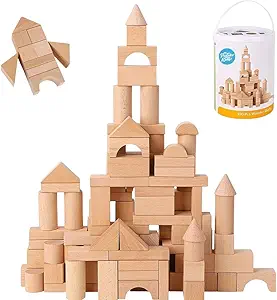
1. Grimm’s Large Building Block Set 100 Pieces
A gorgeous set of solid lime wood geometric building blocks, stained in deep, muted watercolor colors that emphasize the natural grain, is housed in a sturdy wooden storage frame.
Benefits: This is the undisputed king of open-ended play. It grows up with your child. A 14-month-old will practice simple stacking and dumping; a 2-year-old will build towering structures and roads; a 5-year-old will engineer elaborate architectural wonders and mathematical patterns. It has no instructions, so its play value is practically infinite. All 100 pieces are neatly corralled on the low shelf in a natural wooden frame, keeping spatial order in a minimalist living room.
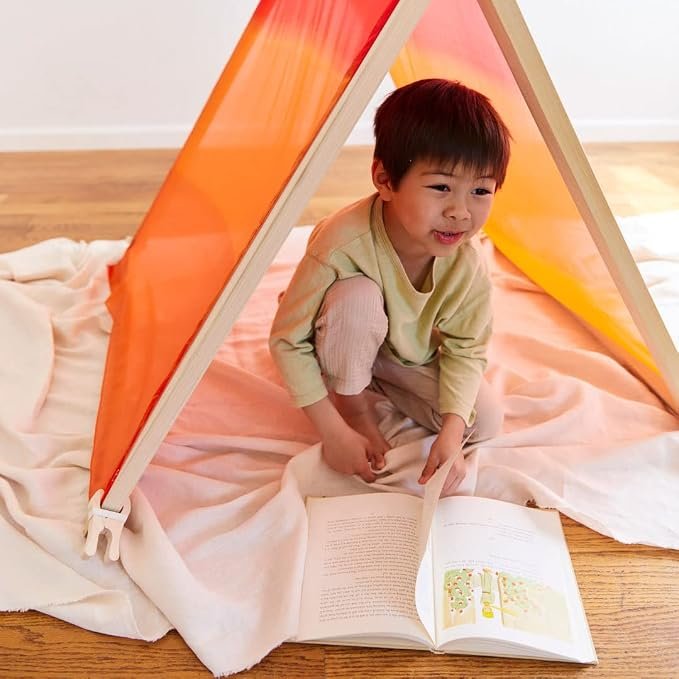
2. Giant Play Silks from Sarah’s Silks
Large squares, hand-hemmed in 100% pure mulberry silk, hand-dyed in nature-inspired, organic colorways using non-toxic, eco-friendly dyes.
Benefits: Silks are the ultimate shape shifters in the playroom. They weigh almost nothing and fold down to the size of a postage stamp. One minute it’s a superhero cape, the next it’s a baby doll swaddle, a picnic blanket or a dancing prop. Zero visual clutter . Pure silk tactile sensory experience grounds an overstimulated child . Effortless storage profile .
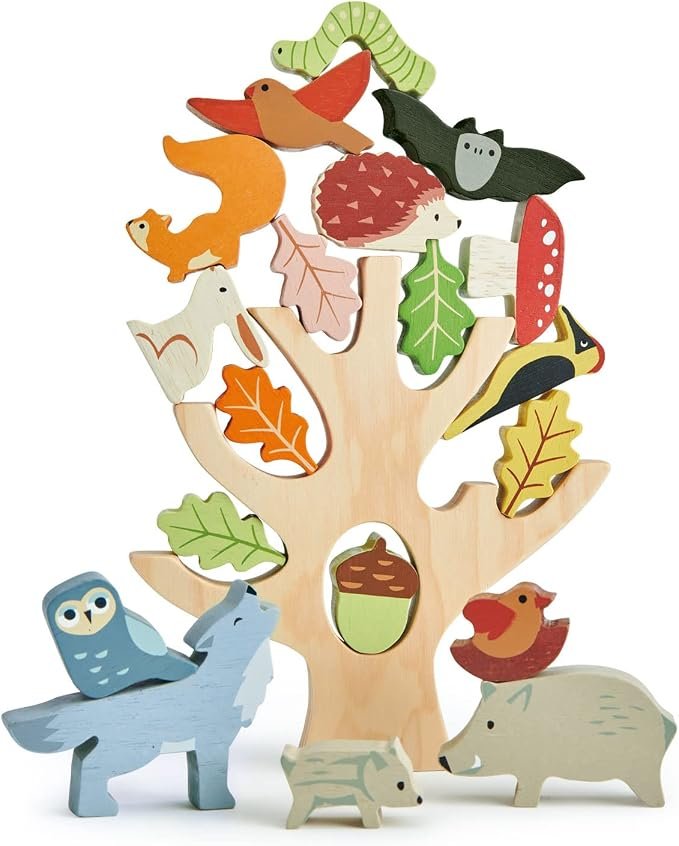
3. Raduga Grez Forest Stack Tower
Made by hand from solid linden wood, these minimalist geometric shapes and abstract tree forms are finished with natural flaxseed oil only, without chemical paints or varnishes.
Benefits: These organic shapes offer a subtle balancing challenge requiring fine motor precision and spatial awareness as opposed to regular primary-colored sorting towers. The play environment is more calming and naturalistic without the bright artificial colors. The organic scent of wood gives a grounding sensory connection to nature indoors.
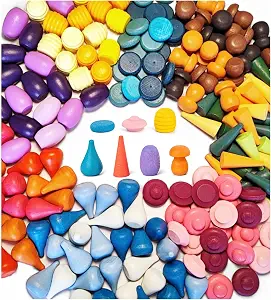
4. Grapat Mandala Small Coins and Rings
A selection of small, beautifully turned solid wood loose parts in rich earthy tones in a compartmentalized wooden sorting tray.
Benefits: Intended for toddlers and preschoolers (early stages require supervision), these loose parts encourage sorting, counting, pattern making and imaginative world play. They can be coins in a pretend store, petals in a sensory bin or windows in a block castle. The whole set fits nicely into its wooden tray, so cleanup is a matter of knowing where you are in space.
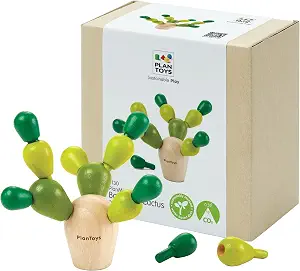
5. PlanToys Solid Wood Balancing Cactus
Smart balancing game in organic rubberwood with a weighted central base and various curved arms like branches of different sizes and weights.
Benefits: This toy provides children with a practical, in-depth introduction to the physics of weight distribution and balance. There is no “ right ” way to put the branches together. Children play around with gravity and structure endlessly . Its compact, sculptural silhouette makes a bold statement sitting on an open shelf when playtime is over.
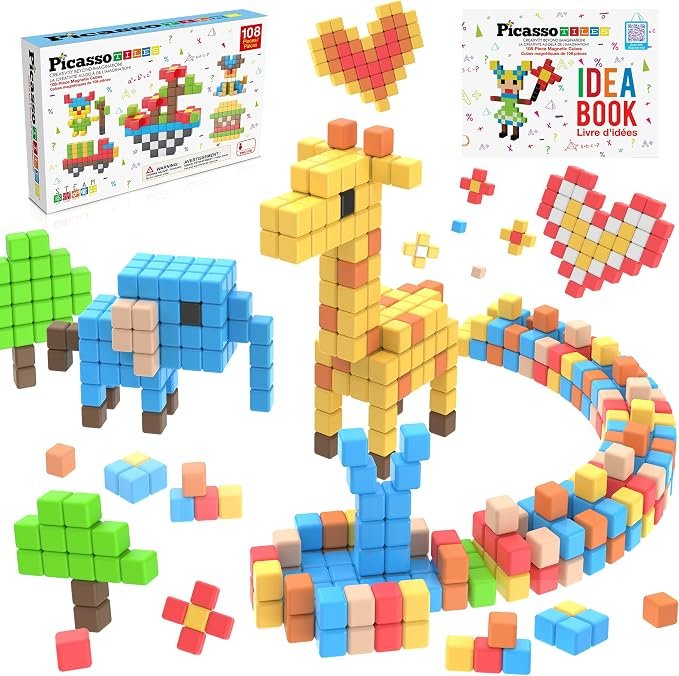
6. PicassoTiles 108 Piece Magnetic Cubes, 1 Inch STEM Building Set for Kids 3+
A collection of smooth, sustainably harvested Honduran hardwood blocks embedded with safe, internal magnets that enable children to manipulate polarity and build gravity-defying structures.
Benefits: These blocks close the gap between toddler stacking and advanced structural engineering. The magical ” click ” of hidden magnets is hugely satisfying to the touch and encourages long focus . They fit snugly into a compact felt pouch – perfect for screen-free engagement on the go.
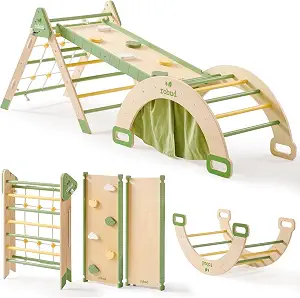
7. ROBUD 7 in 1 Pikler Triangle Set, Foldable Wooden Climbing Toys
Crafted from eco-friendly FSC-certified birch plywood, this multi-purpose set boasts gentle curving arches and a reversible slide-and-climb ramp, all finished with a clear, non-toxic lacquer.
Benefits: Multi-functional design masterclass. The big arch is a cradle that rocks, a tunnel where you crawl, a counter where you shop, a bridge. Paired with the ramp, it becomes an indoor slide or balance beam. Its neutral, minimalist esthetic blends seamlessly into modern home decor, while supporting heavy gross motor development.
Developing a Low-Friction Open-Ended Ecosystem
Having open-ended toys is only half the battle. It’s how you manage and introduce them into your space that will make for a successful peaceful home.
1. The Power of Intentional Spread
Kids are naturally curious, but a toy buried at the bottom of a deep bin rarely sparks the imagination. Instead of assigning a task, borrow from the philosophy of “strewing” and present open-ended toys as a quiet invitation. When your toddler is in bed, set up some wooden arches and a silk cloth on a low wooden table or play mat. When your child wakes up, and sees this prepared environment, their intrinsic desire to play with the materials is immediately ignited and they will play for hours on their own.
2. Accessibility of Low Shelf and Categorized Basket
Store open-ended components like blocks, loose parts, silks, etc. in low, open wooden trays or shallow canvas baskets, not opaque plastic bins. Materials are visible and sorted at the child’s eye level so they can choose independently what they’d like to work with and, importantly, where to put it back when they’re finished. It enhances executive function, cultivates profound senses of personal autonomy and instills respect for the home environment.
3. Use the “Less is More” Rotation Strategy
Ironically, too many open-ended pieces available at once can stifle creativity by overwhelming you. If you have a large collection of blocks and loose parts, show 30% of that collection at a time and store the rest in a closet. Rotate selection every four weeks. When a favorite toy returns after a month away, it’s as exciting as a new treasure, keeping playtime fresh and not cluttering up your living space.
High-End, Purpose-Built Toys vs. Mass-Produced Alternatives
Regarding open-ended toys for toddlers, parents face the dilemma of choosing between high quality sustainable toys or cheap, mass-market plastic ones. Looking at these decisions through certain lenses points out the value of intentional gear as a key family investment.
Regarding durability, premium sustainable wooden toys and organic materials are designed to last for generations, easily withstanding the heavy dropping, mouthing and active manipulation of early childhood. Mass-market plastic novelty toys, in contrast, are often prone to cracking, hinge fatigue and fading, and often wind up broken and discarded in landfills within months.
Intentional toys are designed with minimalist spatial harmony in mind for functional storage and home integration, with nesting profiles, compact wooden storage frames, and neutral esthetics that blend seamlessly into home decor. Cheap plastic versions are often clumsily shaped and oversized with loud primary colors that take over the sightlines of a room creating unavoidable visual clutter.
In terms of ergonomics and safety, quality toys are made with non-toxic, water-based finishes, organic beeswax and smooth, rounded edges that respect a child’s sensitive skin and developing immune system. Sometimes mass-market knock-offs use unsubstantiated chemical plasticizers, rough paints, or brittle plastics that will shatter under pressure.
From a sensory perspective, natural wood, cotton and silk provide grounding, organic textures and natural scent profiles that calm a child’s nervous system. Synthetic plastic and electronic toys often have a cold and slick surface and make loud high-pitched artificial noises that can overwhelm a young toddler’s sensory processing capabilities.
Finally, in terms of developmental and therapeutic value, open-ended toys change flexibly as the child grows from a toddler exploring basic physical stacking to a preschooler building complex abstract worlds. Cheap, character-branded or one-off electronic toys have pre-programmed functions that deliver a brief dopamine hit before the child quickly loses interest.
The Long-Term Effect of Intentional Play
Selecting open-ended toys for your toddler is an act of profound environmental and psychological stewardship. Select pieces that honor your child’s ability to imagine and you are giving them exactly what they need to develop cognitive flexibility, emotional resilience and creative confidence, all without the jangled noise of modern commercialism.
At CozyParents we believe that everything in your home should have a purpose, support growth or spark a moment of peace. By curating a thoughtful, sustainable collection of open-ended toys, you’re not just cleaning your living room, you’re teaching your child how to focus, how to wonder, how to invent their own narrative in an increasingly pre-packaged world.
We hope you’ll return to CozyParents for more minimalist parenting ideas, expert-backed gear roundups and intentional strategies to restore serenity to your family’s daily rhythm. Do you have an open-ended toy rotation system going on at your house right now or are you planning to do some play space curation this week? We’d love to hear how you create peaceful, intentional environments for your growing family in the comments.