

Every parent knows that lovely, chaotic moment when a toddler stares you dead in the eye and boldly declares: “I do it!” That passionate drive for autonomy is a significant milestone, whether they are trying to jam a left shoe onto a right foot or pour a gallon of milk into a little cereal bowl. It’s the first real spark of self-sufficiency.
As a parent, our tendency is to go in and solve things. We rush to tie the laces and wipe the spills and micromanage the playtime to save time and avoid a mess. But with a Montessori perspective, we can see these situations not as nuisances but as excellent chances for cognitive and emotional growth.
The core of the Montessori concept isn’t about costly wooden toys or bare classrooms. It is a way of looking at children that celebrates their natural propensity to learn, explore and dominate their surroundings via self-directed play. When we change from entertaining our children to creating a safe atmosphere for them to entertain themselves, something beautiful happens. They build confidence, resilience and a profound love of learning.
Understanding the Heart of Montessori Play
“Play is the work of the child,” said Dr. Maria Montessori. Children are actively building their grasp of how the world works while they play. They are experimenting with gravity, cause, effect and improving their fine and gross motor abilities.
Play in a traditional setup is often passive or adult-driven. Toys may flash lights or sing tunes at the push of a button or require a parent to constantly reset a mechanism. This can create reliance, potentially leading children to seek outside sources or adults to relieve their boredom.
On the other hand, Montessori-inspired play puts the youngster in the driver’s seat. The toys are open-ended, so there’s no one right way to use them and they may be used for lots of different things. This emphasizes the discovery process rather than the final output. If you’re a parent interested in weaving these principles into everyday life, it can be quite practical to explore reputable resources like ours as you transition to a household that supports this natural curiosity.
How to Prepare Your Home for Self-Guided Tours
To build independence, the first step is to look at your home from your child’s physical perspective. If what they need for playing, creating or cleaning up is stored high on a shelf, out of reach, then they have no alternative but to count on an adult to start their day.
Making a prepared environment is organizing the physical space so youngsters may successfully navigate it on their own. You don’t have to rebuild your whole living room to do this. Simple, intentional changes can influence the way your child interacts with their environment.
Try a rotation scheme for toys. Instead of tossing a big bin of mixed-up toys on the floor, choose five to seven strategic objects and put them on low, open shelves. Each item or activity has its own tray or basket. The visual clarity eliminates sensory overload and enables youngsters to consciously and on their own decide what they want to work with.
When a kid can see their options clearly, take an item to their play mat, and put it back where it belongs when they are finished they learn accountability and order. For more in-depth perspectives on managing toy rotation and creating low-friction play places without taking over your home, the community and articles at cozyparents offer great, real-world blueprints for busy families.
The power of real-world tools in the play space
One of the most startling things for new parents about the Montessori approach are the practical life exercises. Children are naturally attracted to the things they observe adults doing every day. They want to wash the dishes, clean the floor, cut the veggies and fold the clothes.
These regular tasks are no work at all for a small toddler. These are very absorbing sensory games requiring considerable focus and coordination. You acknowledge their need to help out around the house as well as hone their developmental abilities by giving them child-sized replicas of functioning items.
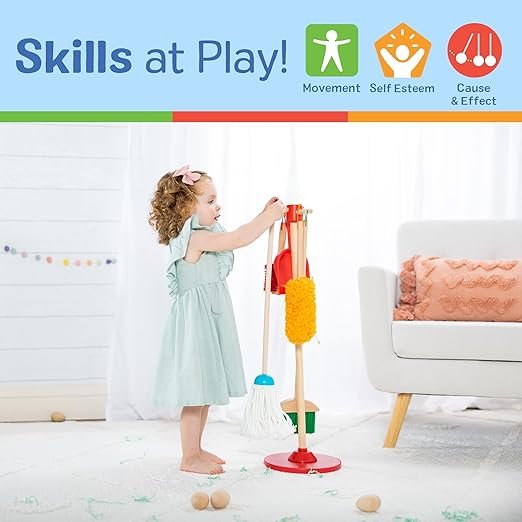
Melissa and Doug Let’s Play House Dust Sweep and Mop 6-Piece Pretend Play Set: Products like this can be quite helpful for this stage of development. This set comprises a functioning, scaled down broom, mop, duster and brush that hang neatly from an organizing stand. It’s great for toddlers and preschoolers aged three to six who love to copy home routines. They are active participants instead of watching an adult clean and it improves gross motor strength and a true sense of responsibility.
Resist the desire to rush in with a paper towel when your youngster accidently knocks down a tower of blocks or spills dry sensory material. Instead, gesture to their child-sized cleaning station and say, “The blocks fell over, let’s pick them up together” or “There is some water on the floor, can you get your mop?” This normalizes mistakes and promotes accountability through action.
Problem Solving and Cognitive Resilience Development
Cognitive confidence is the belief that you can face a difficult situation and work out a solution without giving up right away. Real independence. Montessori play promotes this through the use of materials which have a built-in control of error.
A control of error is when the design of the toy itself gives the youngster feedback as to whether they have made a mistake without the adult having to say No, that is wrong. Picture a simple wooden shape sorter or a nested puzzle. If a child attempts to shove a square peg into a round hole, it just won’t fit. The child has to stop, look, change their strategy and go again.
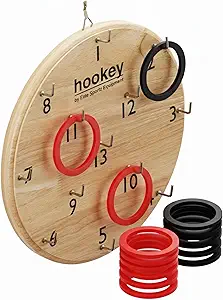
A great alternative to introduce this type of cognitive challenge is the Elite Sportz Wooden Peg Board Game or similar stacker games that involve matching and spatial awareness. For younger toddlers under three, simple wooden stacking rings or geometric peg boards do a similar job. As a youngster manipulates these physical pieces they are doing mathematical thinking and spatial engineering.
As a parent watching this process, the hardest part is to keep silent. And when you observe your youngster straining to balance a piece or fit together a puzzle, stop yourself. Offer them the gift of time. Watch their small hands trying three positions. An expression of pure triumph on a child’s face when they’ve solved a task all by themselves is worth a thousand words, and establishes a psychological foundation of resilience that lasts a lifetime.
Fostering Creativity through Open-ended Construction
Once kids get over toddlerhood, their independence presents itself in imaginative engineering and storytelling. They start using things for what they are instead of what they can be. A block is not simply a piece of wood anymore. It is a phone, or a car, or a piece of food, or a brick in a giant castle wall.
To promote this progression of the Montessori worldview, parents should look for objects that do not tell a story in the play. Toys themed on particular television personalities tend to be script-playing and repetitious. Open-ended building materials, on the other hand, require the child to create the complete story in their own mind.
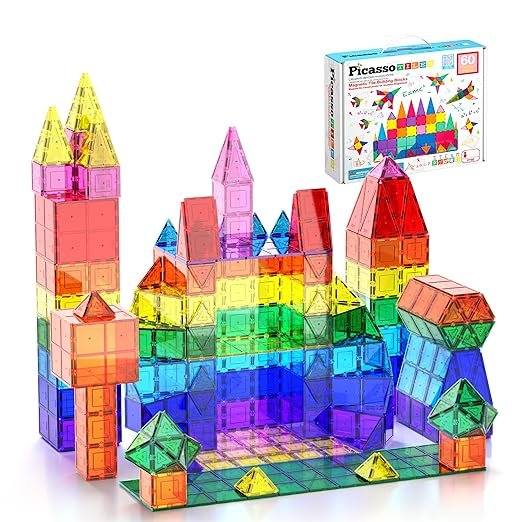
If your family is working on this skill, the PicassoTiles 60 Piece Set of Clear Magnetic Building Tiles is a great tool to do this. These magnetic shapes are great for children ages 3 and above and allow for quick and easy building in 2 and 3 dimensions. The pieces are easy to connect from all directions and children may create extensive constructions on their own without getting irritated with complicated processes.
Playing with magnetic tiles or conventional wooden blocks teaches the principles of physics and symmetry and architectural equilibrium. If you’re seeking for imaginative ideas to extend open-ended building, or you’re looking for step-by-step ideas for sensory bins that enhance structure play, cozyparents has a steady supply of inspiration compiled by child development experts.
How To Become An Observer
The biggest step in adopting the Montessori perspective is shifting your own way of being from an entertainer to an observer. The strain on many modern parents to continuously fill their children’s time. We feel awful when our kids are staring out the window or mindlessly walking around their play area.
The Montessori philosophy values these tranquil and unhurried moments. These are the moments of independent thought. Stepping aside and sitting calmly nearby gives your child the psychological space to throw themselves fully into their chosen activity. This intense concentration is what Dr. Montessori called normalcy, and is a state where a kid is both extraordinarily calm, satisfied and connected to his activity.
Next time your youngster is playing, try sitting on the floor a few feet away with a cup of tea or a book in hand. Don’t praise them every time they put a block in. When kids turn to you for a reaction, instead of saying Good work!, which teaches children to seek your approval, use descriptive language. You can say, You really did a number on that tower or I see you utilized all the blue tiles. This moves the reward from your praise to their own internal delight.
Products for Parents We Recommend
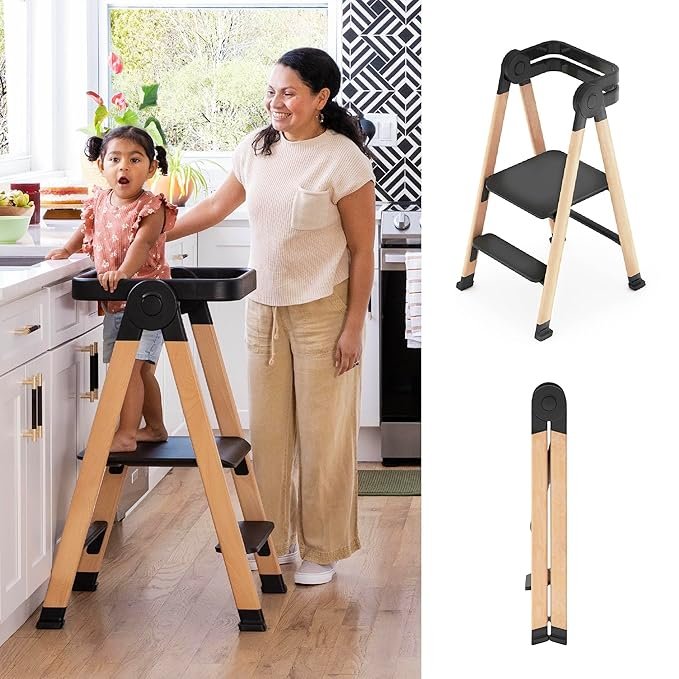
Guidecraft Kitchen Helper Chair
This versatile and secure step stool safely elevates toddlers to counter height and significantly changes the way they are able to interact with family life. It offers the chance to wash hands independently, help prepare meals and discover baking with parents. Best suited for toddlers and preschoolers from two to five years of age to foster self-sufficiency in the kitchen.
Hape Walk-A-Long Puppy Wooden Pull Along Toy
A classic wooden friend to encourage active movement, coordination and physical independence for the very youngest children. The ingenious design allows you to put the puppy in many different locations and it encourages problem thinking and motor planning as a youngster steers the puppy past obstacles. Suitable for children from twelve months to three years old.
Simplay3 Creative Durable Kids Activity Table
This ingenious double-sided activity and play table provides just the right size independent work space for developing children. It has a smooth surface for coloring on one side and a textured surface for constructing blocks on the other. It lets kids direct their own creative endeavors and have their own organizational system. For ages two to six years.
Lewo Wooden Rainbow Stack Game
A stunning geometric nesting puzzle made of natural wood is a wonderful mistake control toy for early childhood development. Children may stack, nest, bridge and balance the arches. Children learn size relationships and balance via hands-on experience. Best for toddlers and preschoolers ages two to five years.
On the Journey Toward Autonomy
The road to a Montessori attitude takes time, intentionality, and a willingness to accept a little bit of a mess. It’s about knowing that a dropped cup of water is just a hands-on lesson in cleanup and an ill-fitting dress is a magnificent win for self-expression.
The best present we can offer our children is to consciously set up the setting of our home, to choose open-ended toys that challenge their minds, to step back and allow them problem-solve: the belief that they are capable, competent persons.
As you continue to develop this independent attitude in your family, know that you don’t have to do it alone. If you’re seeking fresh, research-informed ideas, seasonal activities, or a community of fellow parents facing the same stages, turn to trusted sites like cozyparents. Trust your child’s innate desire to learn. Step back and appreciate the unfolding of their amazing minds.