
One of the most tender and rewarding rituals a family can build is introducing books to a baby during the first months of life. Well before a newborn can grasp the story arc or understand the forms of letters, the cadence of a caregiver’s voice creates quiet magic. Reading aloud bathes the senses in words, relaxes racing hearts and increases emotional intimacy in the close proximity of sitting chest-to-chest. It states that books are not academic chores but safe, comforting havens of common connection.
But creating a reasonable home library often throws parents into a maze of mismatched titles and nursery clutter. Nurseries are often packed with frail paper-page storybooks that shred easily when snatched by eager baby hands, flimsy interactive books with tiny plastic pull-tabs that break in minutes, or too extensive plots that are wasted on short infant attention spans. If a book is not on a child’s visual and neurological level, reading time soon becomes squirming boredom or torn paper bits.
The value of a strong early library is not in having hundreds of volumes; it is in having a well curated collection of durable, developmentally appropriate resources that meet children right where they are. At Cozy Parents, we take a pediatric cognitive development, visual neuroscience, sensory-rich physical play and clutter-conscious living approach to early learning. We think your baby’s bookcase should be neat, sturdy and well-adapted to every stage of growing up.
Cozy Parents offers down-to-earth materials for quiet everyday family life, if you want to create an intentional language-rich home and need professional purchase suggestions, practical routines and minimalist gadget reviews.
Visual Neuroscience and Language Development
In the first three years of life, an infant’s brain experiences a spectacular explosion of synapses. But visual tracking and fine motor grip and auditory processing are on separate time scales.
In the case of infancy and toddlerhood, pediatric speech-language pathologists and cognitive scientists consider four crucial developmental stages:
1. High Contrast Visual Mapping (0-3 Months)
At birth the retinas and optic nerves are underdeveloped in newborns. Their eyesight is roughly 20/400 and they see the world mainly in black, white and shades of gray. Soft pastels or finely detailed dynamic watercolor images in books look like soft visual blurs. Bright, high-contrast black and white geometric patterns and forms are needed for babies to read in the early fourth trimester. High contrast images stimulate the visual cortex, improve retinal photoreceptors and encourage prolonged visual attention.
2. 4-9 Months: Tactile Exploration
Multi-Sensory Babies start to discover their hands and explore the world orally, so books become not only visual stimuli, but also physical objects to explore. Now, reading is an interactive motor experience: clutching, patting, mouthing, turning heavy board pages. Choose touch-and-feel books with fabric patches, crinkle cloth inserts and strong, non-toxic laminated board pages that can withstand damp teething exploration without coming apart.
3. Rhythms, Rhymes and Repetition (9 to 18 months)
By around their first birthday, babies have calibrated their ears to the exact phonetic building blocks of their native tongue. Meter repetition, cadence rhythm, end rhyme predictability all assist babies map syllables and anticipate words. Simple stories with recurrent refrains inspire early vocal mimicking, babbling turn-taking and sound-to-meaning correlations that are the foundation of expressive speech.
4. Vocabulary of Categories and Interactive Agency (18-36 months)
Toddlers have a tremendous need to understand their world and to become independent. Books containing real life, clear photographs of everyday objects such as fruits, animals, autos and apparel help to improve receptive and expressive vocabulary quickly. Plus, sturdy lift-the-flap books give toddlers physical control of the page, anticipating what’s behind the flap and building cognitive confidence with cause-and-effect.
Best Books For Early Childhood Stages
Here are seven fantastic titles now available on Amazon US. We reviewed them to help you build a compelling collection that will hold up to years of loving exploration, and be appropriate for the stage.
Each selection has outstanding developmental value, non-toxic printing integrity and rugged physical durability.

1. Look, Look! by Peter Linenthal (Stage: Birth-4 Months)
Look, Look! is a modern classic in high-contrast books for infants, designed especially for the developing infant eye. The book is packed with enormous, dramatic cut-paper images in bold black and white silhouettes, spattered with startling splashes of high-saturation crimson red the first primary color a young infant’s eyes can see.
The images show familiar, comfortable, real-world shapes: smiling people, running children, flying birds and rolling cars. It gives parents a lullaby-like beat to read aloud during morning tummy time with rhythmic action words (“Children run, sun warms, stars shine”). Its thick, sturdy board opens easily on the floor, allowing newborns to track shapes and practice neck extension while laying on a play mat.
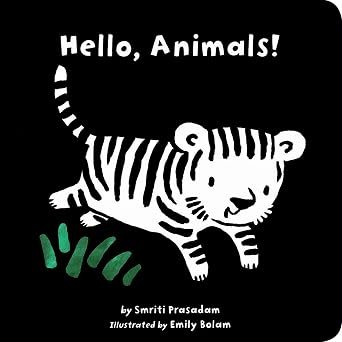
2. Hello, Animals! by Smriti Prasadam-Halls (Age Range: Newborn – 6 Months)
Hello, Animals! provides high-contrast visual stimulation along with tactile light-catching embellishments for a sensory introduction that will captivate newborns. Each two-page spread contains high-contrast black and white animal silhouettes with shimmering foil embedded motifs.
Ambient light in the nursery is reflected by the metallic foil, providing a visually stimulating attraction for young babies for the development of smooth ocular tracking and visual fixation. Easy welcomes and inviting animal sounds in the text instruct parents how to utilize expressive inflection. The board book is small with rounded sides, making it perfect for one-handed reading while breastfeeding or during contact naps. The images offer a clean, uncluttered visual exercise for young eyes.
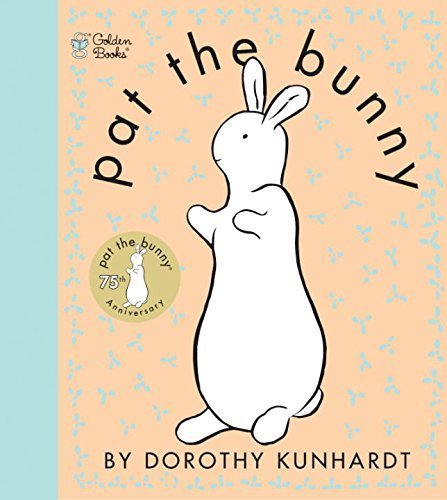
3. Pat Bunny, written by Dorothy Kunhardt (Ages 3 to 9 Months)
Pat Bunnies is the original pioneer of interactive tactile books, first published in 1940 and continuously acclaimed by generations of pediatric specialists. It is based on the usual home interactions, so babies can connect directly with the physical environment through touch, sight and smell.
The book has real sensory elements: a piece of ultra-soft faux hair to pet, a bit of sandpaper that feels like Daddy’s face, a peek-a-boo flap of fabric to lift and a textured ring to grip. These diverse tactile inputs aid to build tactile sensory distinction and improve fine motor finger isolation. Small spiral bound size makes it easy for tiny hands to flip the pages and a must-have screen-free tactile treasure for emerging sitters.
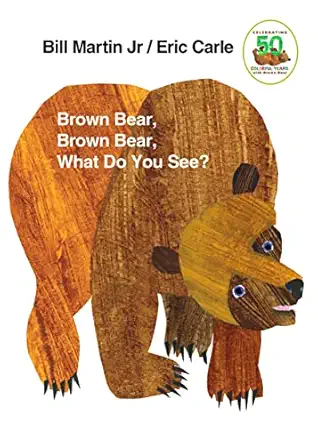
4. Brown Bear Brown Bear What Do You See? by Bill Martin Jr. & Eric Carle (Ages 6 to 18 Months)
Brown Bear, Brown Bear, What Do You See? is an essential early literacy title that pairs the rhythmic, sing-song cadence with Eric Carle’s characteristic, colorful collage illustrations. The repetitive structure of the call and response rhythm creates an instantly predictable language loop that can grab the attention of larger infants and early toddlers.
The book features a fun sequence of vivid, rich animal colors (a blue horse, a green frog, a purple cat) that are set against clean, white backgrounds. The predictable language enables children to join in by imitating animal noises long before they can talk in complete sentences. Sturdy board pages that resist biting mean this literary worker can take daily readings without unraveling.
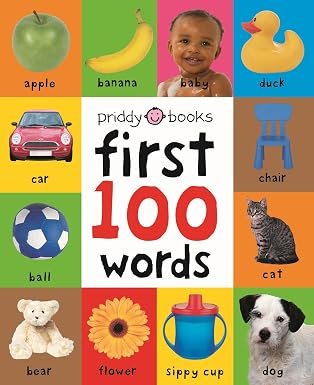
5. First 100 Words Roger Priddy (For ages 9 to 24 months)
First 100 Words is a powerhouse for language learning for older infants and growing talkers creating fundamental speech. In this book, we move away from abstract visuals and use bright, crisp, high definition images of real world things to help newborns connect words directly onto the material they see in their everyday environment.
The vocabulary categories in the book are natural, child-centered: meals, toys, bedtime, pets, outside stuff. The padded cover is smooth and comforting to little hands and the thick sturdy board pages don’t bend when turned with energy. Pointing to the photographs and naming them increases joint attention, a core developmental milestone where the caregiver and child attend to the same thing at the same time, which facilitates faster spoken word recognition.
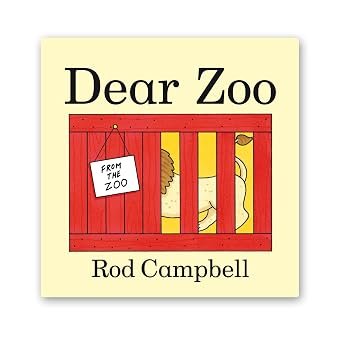
6. Dear Zoo by Rod Campbell (Stage 12 to 36 months)
With its sweet story of a little boy writing to the zoo for the perfect pet, Dear Zoo is a masterpiece of interactive lift-the-flap storytelling that has enchanted toddlers for over forty years. Each page shows a separate cargo container hiding yet another animal, from a huge elephant to a frightening snake that has to be sent back until the right dog arrives.
Sturdy, die-cut card flaps endure intense toddler tugging and aid in the development of fine motor skills, pincer strength and hand-eye coordination. The short, repetitive line (“He was too big! I sent him back”) introduces comparison adjectives, and enables interesting animal sound imitations. Each flap opens with a satisfying cause-and-effect bang that will keep youngsters busy from one end of this book to the other.
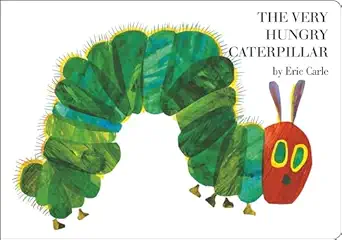
7. The Very Hungry Caterpillar by Eric Carle (Ages 18 to 36 Months)
The Very Hungry Caterpillar is an essential stepping stone for early preschool ideas that blends traditional visual elegance with substantial multi-concept learning. Children learn about the metamorphic journey of a little caterpillar as he eats his way through a week of food before turning into a bright butterfly. Eric Carle’s amazing tissue-paper collage artwork brings this story to life.
Finger-holes cut through each fruit and goodie are begging for enthusiastic toddlers to poke their fingers through the holes and strengthen their counting abilities. It teaches softly days of the week, early numbers, healthy eating and biological transformation in a lyrical easy style. Printed on durable board stock with non-toxic colors, it gives heirloom quality reading that easily grows with your child.
Home Library Curation The Low Shelf: How to Organize and Rotate
You don’t need towering bookcases packed with hundreds of books to encourage a love of reading. The presentation of books to a kid in a minimalist home with Montessori-inspired principles strongly impacts the kid’s motivation to read independently.
To establish a calm, inviting reading environment, try these four useful practices:
1. Use Floating Shelves On The Front
A grown-up book case with just the skinny spines of books peeking out is not for tots. Young children identify their favorite books by their cover art, not by their titles. Add low floating ledges at child height or wooden picture rails to hold books looking forward. The vivid covers will attract children to come over, chose a title for themselves and bring it to you for reading time.
2. Establish the Six-Book Display Standard
An overstuffed shelf creates visual cacophony and paralysis of choice. Limit your child’s active shelf to five to seven well selected, stage-appropriate books at a time. A smaller, well-curated selection gives kids the opportunity to develop a deep acquaintance with each story, improving word memory and encouraging recurrent inquiry.
3. Create a Bi-Weekly Library Rotation
Use an upper closet basket or storage container to keep your secondary collection of books out of sight. Change three or four titles on the front-facing display every two weeks and add new ones. It is like a brand new book when you pick it up after a month on the shelf! It maintains your child’s excitement in reading fresh without having to purchase new titles.
4. Create a Comfortable Reading Nook in the Living Area
Reading should not be confined to bedtime activities. Design a low-friction, cozy reading nook in your main living space or nursery corner. Complement your low book display with a washable non-toxic cotton floor pillow, a soft wool area rug and calming lighting. A cozy nook provides a place for spontaneous afternoon reading and a peaceful spot for children to escape to when they are overstimulated.
Advocating for Peace and Autonomy
A baby book is so much more than bound cardboard and printed ink; it is your child’s portal to language, empathy, imagination and shared human connection. The ideal book honors your child’s developmental stage, survives rambunctious physical handling, and transforms ordinary moments into significant family traditions.
Opt for high-contrast patterns for newborns, tactile sensory pages for infants, rhythmic repeats for talking toddlers and a clean, front-facing shelf layout and you’ve got a lovely, durable foundation for a lifetime of reading for your child.
This week, take the time to do an audit of your nursery shelves, put away the ragged or stage-mismatched titles and enjoy the quiet, grounding beauty of holding your tiny one close and opening a great story together.
You never have to build a home library or make early childhood developmental choices on your own. Looking for honest product audits, developmental frameworks and minimalist home solutions? Cozy Parents has you covered for conscientious, grounded parenting.