


Usually, the start of designing a minimalist, purposeful nursery is picking a gorgeous wooden cot, a comfortable organic bedding set or a calming sound machine. But the most important investment in that space is unseen, beneath the fitted sheet: the cot mattress.
Newborns and infants may sleep as much as sixteen hours in a day. In the early hours, the body undergoes rapid biological changes such as the soft and pliable skull bones, evolution of spinal curvatures from a primary foetal curve to balanced secondary curves and maturation of involuntary respiratory reflexes. A cot mattress is never just bedding. It’s a dynamic support system for development.
Selecting the proper mattress involves moving beyond marketing phrases such as “cloud-like comfort” or “plush luxury” and assessing products based on developmental biomechanics, precise dimensional tolerances and clean material science.
The Importance of Firmness, Fit & Airflow
We have to look at early musculoskeletal anatomy and respiratory physiology to grasp what makes an infant sleep surface genuinely safe.
1. Spinal Alignment & Cranio-Mold
Adults instinctively gravitate toward mattresses that gently conform to the hips and shoulders. But to a newborn a soft or yielding surface represents an acute structural hazard. The neonatal musculoskeletal system lacks the muscle tone and ligamentous tension necessary to stabilise the spine on an uneven, soft plane. The firm, unyielding surface offers the stiff base necessary for the right elongation of the spine and the free micro-adjustments of the motor during sleep.
Also, the cranial sutures of a child are not fused yet, so that the pressure on the occiput is unevenly concentrated when the infant rests on a conforming surface and positional plagiocephaly (flat head syndrome) is accelerated. A firm mattress properly distributes pressure across the head and also supports the natural alignment of the airway.
2. Preventing Suffocation & The “Two-Finger” Dimensional Fit
The core idea underlying infant sleep safety regulations is to prevent mechanical suffocation and entrapment. When babies begin rolling, often before they have developed the upper body extensor power to lift their chest off the bed, a soft surface can mould around their nose and mouth, producing a pocket of trapped carbon dioxide. Nasal passageways kept open by tight sleep plane that never collapses.
At the same time the fit of the physical elements in the cot frame must be correct. Federal safety standards require that a mattress in a normal full-size cot be no more than 6 inches thick, and at least 27 1/4 inches wide and 51 5/8 inches long. If you can fit more than two fingers between the edge of the mattress and the crib slats, the space is an entrapment hazard where the baby’s head or limbs could become stuck.
3. Temperature Regulation & Flow Dynamics
The autonomic thermoregulatory system of the infant is undeveloped. They produce a lot of metabolic heat in a short time. They are limited in how much they can lose through sweating. Traditional dense foams trap heat against an infant’s back, increasing core body temperatures and disrupting sleep and causing physiological stress. Modern breathable mattresses use open-air polymer matrices, ventilated inner cores or channelled 3D spacers to allow airflow under the infant, draw away excess heat and promote passive air penetration.
Crib Mattresses You Need For An Intentional Nursery
Here are seven vetted, top-rated cot mattresses on Amazon US that provide rigorous structural safety, clean certifications and intended lifespan.
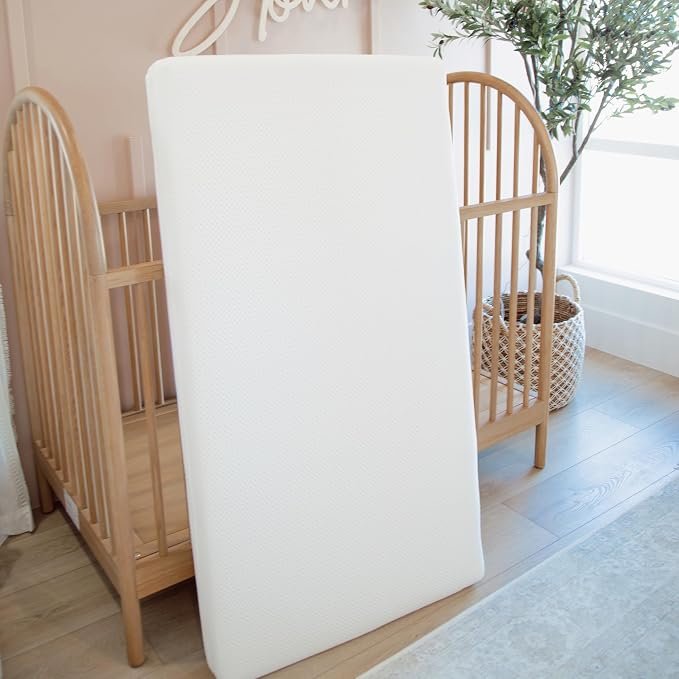
1. Newton Baby Waterproof Essential Cot Mattress
TAn open-matrix Wovenaire polymer core and dual-sided cover that zips off for machine washing make this mattress 100% breathable and glue-free.
Unlike traditional foam mattresses that use chemical adhesives and polyurethane blocks, the Newton core is 90% air and 10% food-grade polymer. Should a newborn roll over on his face during the nite, air will flow directly through the core to remove suffocation hazards. If a nappy leaks, you can take the entire inside core into the shower and wash it out with soap and cool water.
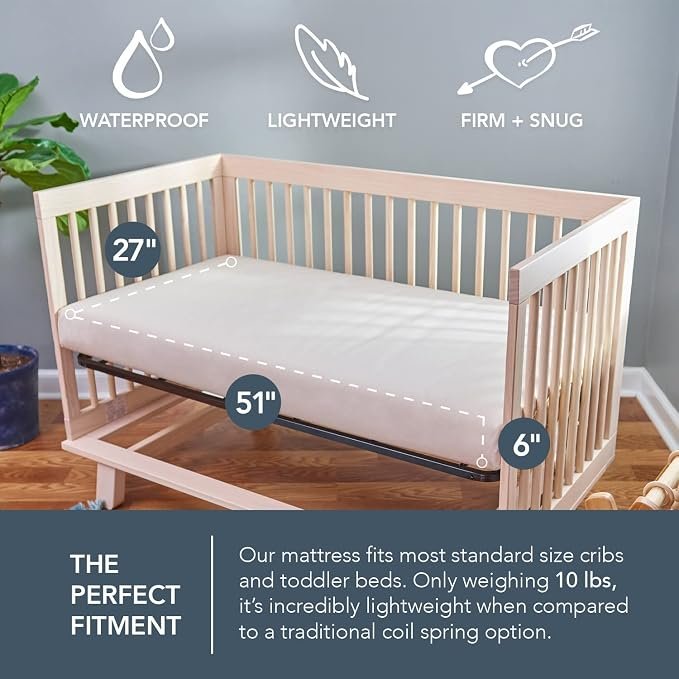
2. Naturepedic Ultra Breathable 2-Stage Organic Crib Mattress
A handmade mattress featuring dual firmness, GOTS-certified organic cotton batting, a waterproof barrier made from plant-based sugarcane and a removable 3D airflow surface layer.
Naturepedic has no room for polyurethane foam, vinyl or chemical flame retardants, opting instead for certified organic cotton and non-GMO plant ingredients. It’s double-sided, so the infant side is extremely solid to keep your baby from getting a dent in it and the toddler side is a little cushioned to help support growing joints when you convert the cot to a toddler bed.
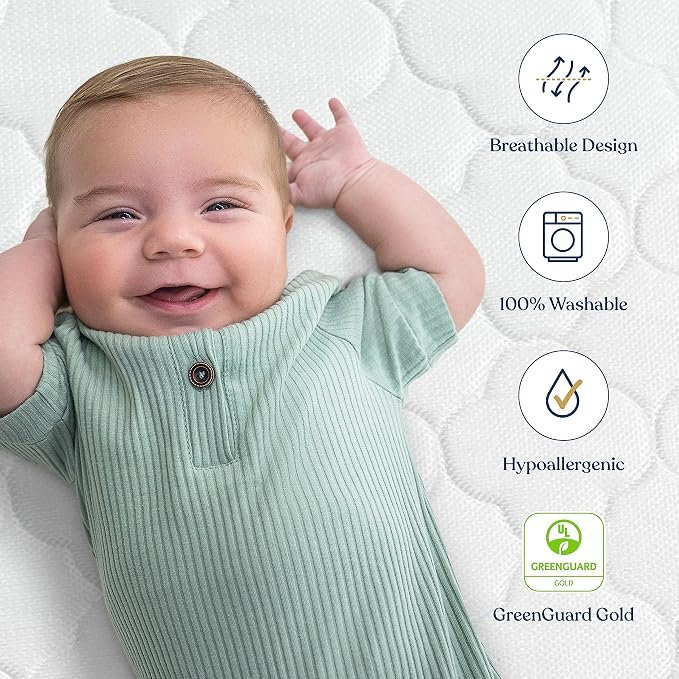
3. HALO DreamWeave Crib Mattress Breathable
A two-sided cot mattress with a food-grade polymer mesh core, a machine-washable 3D quilted cover and a built-in waterproof toddler barrier.
The HALO DreamWeave has an open-air polymer core that is akin to premium breathable alternatives but at an affordable price. The infant side is designed to allow free air circulation from cover to core, while the reverse side includes a waterproof barrier to preserve the mattress during toddler toilet training.

4. Moonlight Slumber Little Dreamer Crib Mattress
A light weight mattress with two levels of firmness, made from an environmentally friendly plant-based CertiPUR-US foam and finished off with a medical-grade water-resistant woven fabric cover.
Weighing only eight pounds, the Little Dreamer makes 2:00 AM sheet changes a breeze, compared to the heavier steel-coil systems. It has separate infant and toddler sides, side-stitched fabric binding to prevent liquids from leaking into the core and a hazardous flame retardant-free, phthalate-free and PVC-free interior.

5. Lullaby Earth Breeze 2-Stage Breathable Cot Mattress
A super-lightweight, non-toxic mattress with a firm, wipeable waterproof core and a removable, machine-washable 3D honeycomb ventilation cover.
Developed by the organic sleep experts at Naturepedic, Lullaby Earth has a novel hybrid design: the core is 100% waterproof to prevent mould, mildew and bacterial growth, while the top mesh pad allows air circulation right under the baby. It weighs only seven pounds, therefore it is quite easy to lift and change the fitted sheets.
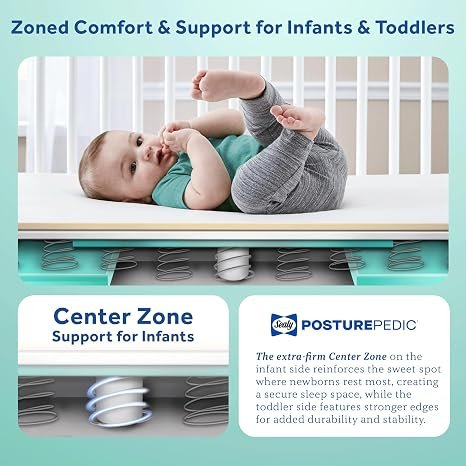
6. Sealy Baby Posturepedic Grow 2-Stage Cot Mattress With Innerspring
This is a classic heavy-duty innerspring steel mattress with targeted core zone lumbar support and an anti-sag perimeter border rod system.
If you’re a parent who prefers the robust structural longevity of American-made steel coils over foam, the Sealy Posturepedic Grow uses 204 posture-supportive coils. The baby side directs the stiffness just under where the newborns are put, in the center of the mattress. The toddler side adds the contouring cotton layers for comfort.
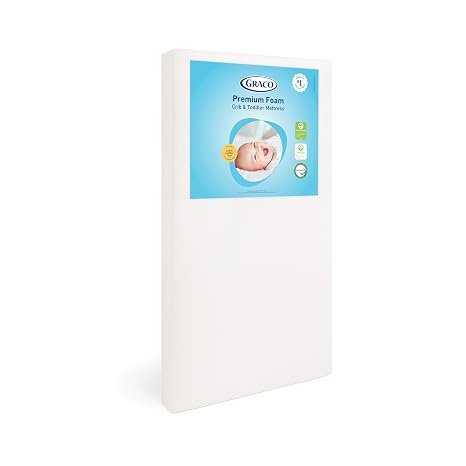
7. Graco Premium Foam Cot & Toddler Mattress
A practical, wallet-friendly high-density foam mattress that’s CertiPUR-US and GREENGUARD Gold Certified and comes with a removable, water-resistant cover.
The Graco Premium Foam mattress shows you can have uncompromising newborn firmness without the luxury price tag. This is a non-toxic, safe staple for any regular cot, including a breathable, perforated foam core for consistent edge support without drooping and a zip-off cover that is machine washable in cold water.
Installation, Maintenance & Bedding Home Protocols
Only when it is installed and maintained with accuracy can a luxury cot mattress be safe. Essential nursery guidelines you need to follow:
1. The Two Finger Rule
Before putting bedding on the mattress, visually inspect the inside of the empty cot:
- Push the mattress tightly into one corner of the cot frame.
- Place your index and middle fingers in the gap between the other side of the mattress and the wooden slats.
- If you easily get more than two fingers in, the mattress is too small or the cot frame has non-standard internal measurements. It should fit snug enough that you have to push down a bit to get it to sit on the spring or slat support base.
2. Criteria for Sheet Selection and Tension
Never place an intended infant mattress under plush cushioned mattress toppers, fleece blankets or quilted sheets:
- Use only fitted sheets made of 100% organic cotton percale or lightweight cotton jersey with deep, full perimeter elastic bands.
- The sheet should lie flat on the mattress, with no edges turned up, no bunches of extra material.
- Follow American Academy of Paediatrics (AAP) safe sleep recommendations and keep the cot totally bare: no pillows, bumpers, plush animals or loose quilts.
3. Core Cleaning & Hygiene Protocols
Diaper leaks, spit-up and dampness are everyday occurrences of early motherhood. Your mattress architecture is the sole determinant of hygiene maintenance:
- Open polymer-matrix cores (Newton and HALO). Remove outer cover and wash on a regular machine cycle in cold water with a mild, fragrance-free detergent. Place the inner matrix into the shower and rinse it with cool water and mild dish soap. Allow it to air dry entirely standing upright on its short edge before re-assembly.
- For waterproof fabrics and medical grade covers (such Naturepedic, Moonlight Slumber, and Sealy), just wipe the surface down with a clean cloth and mild soap with warm water or a gentle 50/50 blend of white vinegar and water. Don’t use powerful bleach or other abrasive solvents which dry down waterproof coatings and create microscopic cracks.
Finally, in terms of family peace of mind, a mattress that has been chosen for firmness, exact fit and proven ventilation helps parents to lay their infant down with confidence. Parents may rest easy rather than anxiously hovering over a baby monitor each time an infant turns onto their stomach knowing their nursery sleep surface is designed to protect clean breathing, spinal development and natural slumber.