
There is a certain hypnotic silence that descends upon a room when a toddler finally plunges their hands into a basin of smooth wooden beads, cool water, or warm sifted oats. If you have ever watched a two-year-old spend thirty uninterrupted minutes scooping, pouring, sorting, and feeling, you have seen the unadulterated, pure power of tactile engagement. It’s easy to assume that in a modern, commercial marketplace replete with flashing plastic electronics, automated toys and one-trick novelties promising to accelerate early learning, digital stimulation or complex battery-powered playthings are the way to catch a child’s attention. But these new loud things often disrupt a child’s attention, trading in rich sensory and cognitive processing for a quick, scrabbling dopamine hit.
Parents looking for ways to channel this boundless tactile curiosity are often presented with oversized chaotic commercial plastic bins plastered with neon colors, artificial synthetic fillers, and cheap plastic figurines that end up scattered all over the house. These products claim to foster sensory development but more often overstimulate a child’s fragile sensory processing system and create visually and physically overwhelming clutter in the home.
At CozyParents we believe a child’s playroom should be a sanctuary for focused, independent thinking and meaningful work. We believe in “intentional play” selecting high quality, tactile, thoughtfully designed resources that honor a child’s developing nervous system and a home’s visual harmony. This comprehensive guide will explore the complex developmental milestones supported by toddler sensory bins, how to build a low-friction play ecosystem and seven exceptional sensory bin products and curated base kits available on Amazon US that respect your child’s developing mind and your home’s esthetic peace.
The Fine-Motor and Neurological Mechanics of Sensory Bins: Developmental Foundations
So why do sensory bins have such educational power over generations? It’s helpful to know how a young brain and hand makes sense of the physical world. Occupational therapy and child development principles tell us that sensory integration, fine-motor dexterity and cognitive focus are not static academic drills, they are dynamic, multi-sensory experiences based on motor planning, spatial awareness and neurological regulation.
1. Proprioceptive feedback and Tactile Desensitization
Sophisticated neurological processing is required to manipulate a variety of natural materials such as smooth river stones, dried organic grains, soft felt balls, or moist sand. The skin of the human body is lined with mechanoreceptors that continuously transmit signals to the central nervous system. When children sift, pour, squeeze and bury their hands, they are activating their tactile and proprioceptive systems. This deep sensory work is extraordinarily grounding and organizing for the brain. It’s a natural nervous system reset for overstimulated, anxious or hyperactive children to calm down and it promotes deep emotional regulation in quieter moments.
2. Bilateral Integration and Tool Control
Sensory bins are the best labs for mastering fine-motor tools. Or a toddler using wooden tongs to pick up a tiny seed, or a small stainless steel scoop to move beans into a narrow funnel is working on advanced bilateral integration and hand-eye coordination. One small hand stabilizes the container or scoops material while the other hand must accurately grasp, pivot and release. As babies develop into toddlers their grasp switches from a clumsy, whole hand grasp to a refined, deliberate 3 finger pincer grasp. This develops the strength for writing independence later on.
3. Sustained Focus and Open-ended Creative Exploration
One of the most important psychological benefits of a traditional sensory bin is its inherent, unhurried open-endedness. A sensory bin is totally self-directed. Electronic screens assault the senses with rapid-fire scene changes. The child decides the pace, the emphasis, and the direction of the investigation. This builds deep emotional resilience, frustration tolerance and executive function. Children learn to ground their attention in physical work, rather than seeking entertainment from an electronic device, fostering deep self-reliance and emotional regulation during challenging tasks.
The Product Roundup
Durability, naturally non-toxic materials and simple design are central to sensory bins that can transition smoothly as a child’s cognitive and physical skills develop.
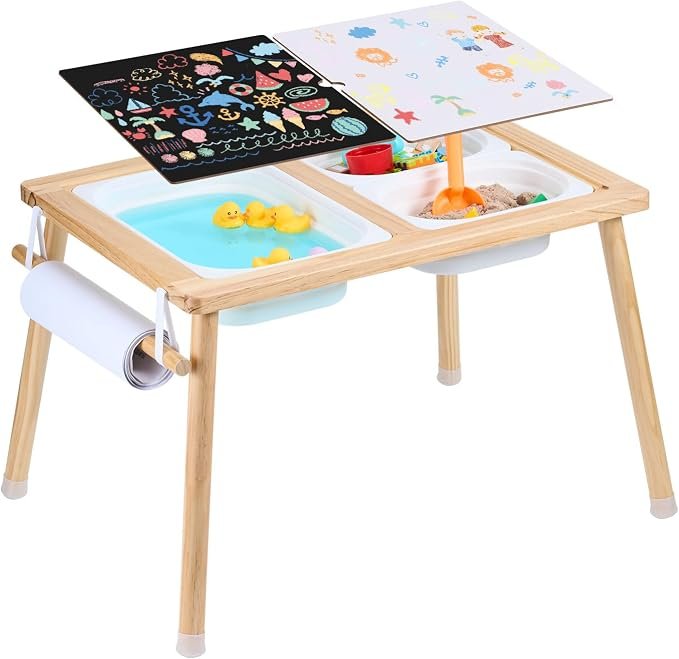
1. VEVOR Sensory Table for Toddlers
Description: Sensory tray in sustainably grown rubberwood with smooth rounded corners, non-toxic water-based finishes and shallow basin for early tactile exploration and loose parts management.
Benefits: This classic wooden tray is perfectly aligned with a toddler’s emerging need for contained tactile discovery, removing the guessing from age-appropriate presentation. The natural rubberwood construction anchors the nursery esthetic and the minimalist design avoids sensory overload. It’s small enough to sit nicely on a low shelf, keeping the floors clear.
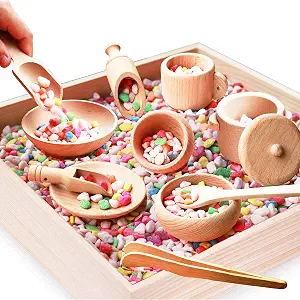
2. Piccalio Montessori Wooden Sensory Box with Lid
Crafted from FSC-certified birch plywood, this minimalist sensory bin features a snug-fitting wooden lid that converts the play basin into a flat workspace or low table when playtime ends.
Benefits: This natural wood bin, free of all artificial neon plastics, provides a pure, grounding sensory link to nature. It’s heavy enough to stop it sliding around during energetic play, and its classic design means it’s a lovely decorative object for an open nursery shelf after playtime.
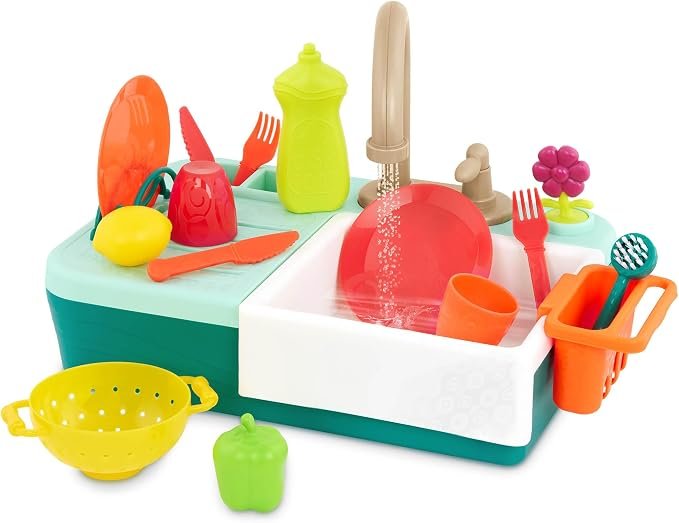
Description: This heirloom-quality sensory and activity station is handcrafted from North American hardwoods with precision milled wooden edges finished only with natural, non-toxic oils and no chemical paints or varnishes.
Benefits: The lack of artificial colors provides a soothing, natural play space, and the organic wood scent provides a grounding sensory connection indoors. The open basin design permits endless combinations of natural fillers such as grains, water or smooth stones, and promotes hours of independent exploration.
4. Sensory Table Natural Wood Mini Bin
A compact, sustainably sourced wooden box designed for portable fine motor and sensory sequences, with fitted wooden lids and smooth rounded handholds.
Benefits: These pieces fill the gap between large play tables and active tabletop manipulation. They fit nicely on low shelves or inside storage baskets, making them a great companion for screen-free fun that respects the home’s esthetics.
5. Kidoozie – Sand ‘n Splash Activity Table
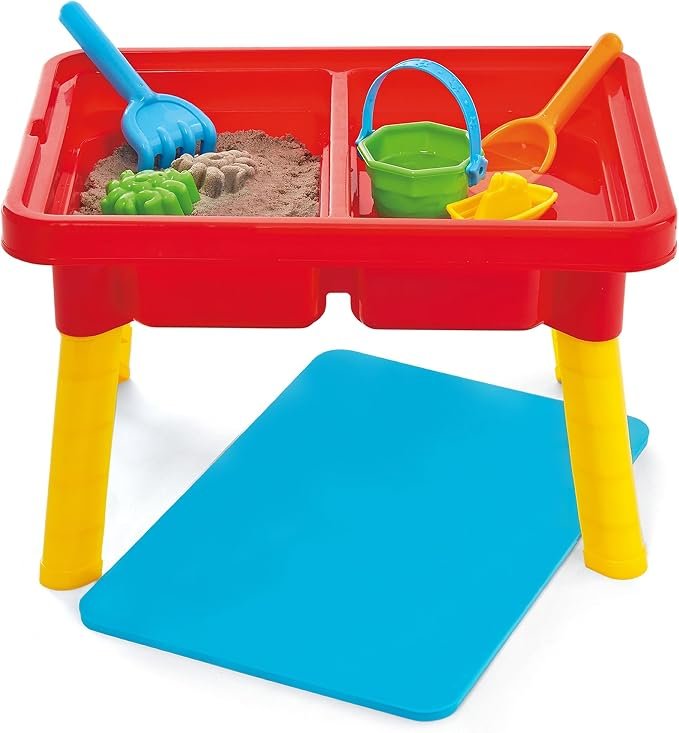
Description: Sand ‘n Splash table is the perfect toy to bring the beach to your back yard. Your kids can play in the sand and in the water with all kinds of beach toys, just like if they were there.
Benefits: Excellent for toddlers 24 to 48 months. Addresses many developmental domains simultaneously: fine-motor precision, hand-eye coordination and thematic storytelling. Its solid construction will cope with enthusiastic daily handling, keeping the play screen free and quiet.
6. Guidecraft Jr. Tabletop Sensory Station
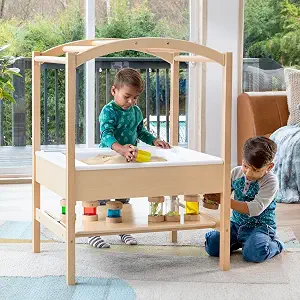
Description: Multi-dimensional sensory station for the wooden tabletop made of Baltic birch and finished with child safe water-based coatings. It combines removable transparent or wooden bins with sturdy frames.
Benefits: Perfect for families who want to keep messy sensory items out of the main floor space. The sturdy wooden construction ensures it can withstand enthusiastic daily use, while its clean, minimalist silhouette integrates effortlessly into modern home decor.
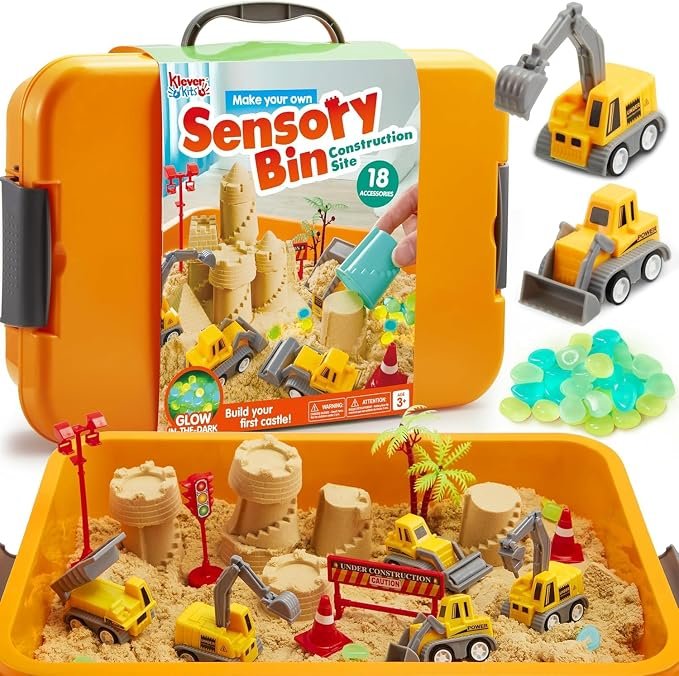
7. OVA Klever Kits Construction Sensory Bin for Kids with Glow in The Dark Stones
Description: Beautifully crafted fabric and wood soft sensory set with organic cotton textures, safe wooden sorting pieces and interactive natural materials in a lightweight, portable design.
Benefits: This beautifully designed fabric-and-wood hybrid is a calming, natural-based entry into tactile matching and sorting, without the plastic overload. Thick and durable, the organic textiles can hold up to repeated use, making it a quiet, comforting companion for travel or bedtime wind-down routines.
Practical Advisory: Creating a Low-Friction Sensory Ecosystem
Setting up sensory bins is only the first step. How you handle them and introduce them into your living space will determine how well your home stays peaceful and organized.
1. The Tray and Containment Method
Give a toddler with no boundaries loose fillers such as dry beans, oats or water and you’ll have a mess in your living room in no time. Always use a larger, low-rimmed wooden tray or a special easy-to-clean play mat for your sensory bin. It gives a physical boundary to the play space and teaches the children where the materials go . It allows for a clean up that is effortless and independent .
2. Low Shelf Access & Closed Storage
Store your child’s sensory bins and filler containers on low, open wooden shelves or in labeled canvas baskets at the child’s eye level. When things are out in the open and easy to get to without grown-up help, children can select what they want to work on themselves and, equally important, where to put it back when they’re finished. This develops executive function, engenders a profound sense of personal autonomy and instructs respect for the home environment.
3. Use the “Less is More” Filler Rotation Method
Paradoxically, having too many sensory fillers and toys at the same time may prevent engagement due to choice fatigue. For two weeks rotate one sensory base like dry lentils and then switch to river stones or water play the next month and store the rest in sealed glass jars or cloth sacks. You’ll look at an old filler the same intense way as a brand new one when it’s been a month since you last saw it, thus extending the life of the toy without adding to the clutter in your home.
Premium Intentional Sensory Bins vs. Mass-Market Counterparts
Parents often face a dilemma regarding toddler sensory bins. Do they go for high-grade sustainable items or cheap, mass-market plastic? Breaking down these decisions into specific dimensions makes it clear why deliberate gear is such a worthwhile investment for your household.
In terms of durability, premium sustainable wooden sensory trays and reinforced bins are built to last a lifetime, easily handling the heavy scooping, splashing and active manipulation of early childhood. Conversely, mass-produced plastic storage tubs are notorious for cracking, warping and fading, often broken and tossed in the landfill within months.
Minimalist spatial harmony is the focus of intentional toys in terms of functional storage and home integration: clean wooden lids, stackable profiles, and neutral esthetics that blend into home decor. The cheap plastic alternatives are typically awkwardly shaped and bulky with chaotic primary color schemes that take over sightlines in a room and create visual clutter that can’t be avoided.
In terms of ergonomics and safety, high-grade bins are constructed of non-toxic, water-based finishes and secure, flush-mounted hardware with a smooth, rounded edge that won’t irritate a child’s sensitive skin or developing immune system. Sometimes mass-market knock-offs use untested chemical plasticizers or brittle plastics that splinter under pressure.
Sensory-wise, natural wood, organic cotton and matte finishes provide a grounding, organic texture and natural scent profiles that calm a child’s nervous system. Synthetic plastics and electronic novelty toys are often cold and slick to the touch and emit loud, high frequency artificial sounds that can overwhelm a young child’s sensory processing abilities.
Finally, developmentally and therapeutically, intentional sensory bins are generally open-ended, creatively adapting as the child progresses from a toddler exploring basic object permanence and pouring to a preschooler engaged in elaborate imaginary small-world play. Cheap novelty toys have pre-programmed functions that give a little dopamine hit, and the kid quickly loses interest.
The Long-Term Payoffs of Deliberate Play
Selecting a sensory bin or activity station for your toddler is a significant act of environmental and psychological stewardship. Choosing items that speak to your child’s developmental stage means you’re giving them exactly what they need to build strong fine-motor skills, solid problem-solving skills, and cognitive clarity without the din of modern commercialism.
We at CozyParents believe everything in your home should have a purpose, foster growth or create a moment of peace. By curating a thoughtful, sustainable collection of developmental toys, you’re not just tidying your living room, you’re teaching your child how to focus, how to wonder and how to be present with the world around them.
Stay tuned for more minimalist parenting insights, expert-backed gear roundups, and intentional strategies to bring serenity back to your family’s day-to-day on CozyParents. Do you already have a sensory rotation system in your home or are you looking to create your child’s play space this week? We love hearing how you create peaceful, intentional environments for your growing family, tell us in the comments.