

And there is a certain, magical silence that sweeps over a room when a toddler finally finds an object that is worthy of their relentless focus. To witness a two-year-old devote twenty minutes of sustained attention to the close examination of a working zipper, the testing of a brass latch, or the turning of a smooth wooden gear, is to witness the raw, unmediated power of tactile engagement. The modern marketplace is a riot of flashing plastic tablets, high-volume electronic consoles and disposable novelties promising to accelerate early learning. It is easy to assume that digital stimulation is the key to holding a child’s attention. But these noisy novelties often destroy a child’s attention span, sacrificing deep cognitive engagement for a momentary, frenetic hit of dopamine.
When parents seek ways to channel that endless curiosity, they are often presented with oversized, chaotic sensory boards festooned with a dizzying array of neon plastics, battery-operated lights and loose metal hazards. Although these products claim to promote dexterity, they often bombard a child’s sensitive sensory processing system and create overwhelming visual clutter in the home.
At CozyParents we feel that a child’s playroom should be a sanctuary for focused, independent thought and purposeful work. Our philosophy is based on “intentional play” which means we select resources that are durable, tactile and well thought out, to honor the child’s developing nervous system and visual harmony of the home. In this detailed guide we will explore the complex developmental milestones supported by toddler activity boards (sometimes called busy boards), we will review how to assemble a low-friction play ecosystem and we will showcase seven outstanding activity board products on Amazon US that honor your child’s growing mind while maintaining your home’s esthetic tranquility.
The Fine-Motor Mechanics of Activity Boards
To understand the enduring educational power of activity boards across generations, we must explore how a young brain and hand interact with the physical world. As occupational therapy and child development principles show, fine-motor dexterity and cognitive focus are not static academic drills but rather active, multi-sensory experiences based on motor planning, spatial awareness and neurological control.
1. Bilateral Integration & Fine-Motor Pincer Precision
Manipulating ordinary mechanical parts such as sliding latches, turning keys, or snapping buckles and unlatching hooks requires complex hand-eye coordination and bilateral integration. One small hand has to hold the wooden board firmly in place while the other has to accurately grasp, twist, pull or slide the target mechanism. This requires complex spatial calculations and muscular control. Babies, as they develop into toddlers, change from an awkward full-fisted grasp to a more refined and purposeful three-finger grasp. Good quality activity boards present just enough physical resistance and tactile feedback to develop those tiny hand muscles without causing frustration.
2. Problem Solving & Cause-Effect Reasoning
Activity boards are the best labs for cause and effect reasoning. When the toddler pushes on a light switch and sees a physical result, or turns a gear and sees nearby cogs turning in unison, they are learning the most basic principles of physics and mechanics. This experimentation through trial and error develops high-level cognitive flexibility. Children learn that physical actions have predictable, logical outcomes, which develops an internal locus of control and a deep-seated belief in their own problem-solving skills.
3. Emotional Regulation & Maintaining Attention
Perhaps the most remarkable psychological aspect of a regular wooden activity board is its intrinsic unhurried feedback loop. An activity board is entirely self-paced, unlike electronic screens that assault the senses with rapid scene changes. The child determines the pace, the concentration, the course of the exploration. This builds deep emotional resilience, frustration tolerance, and executive function. Children learn to focus themselves in physical work, developing deep self-reliance and emotional control in the midst of complex tasks, rather than depending on an electronic device to distract them.
7 Activity Boards With Purpose For Toddlers
When selecting activity boards to complement the developing cognitive and physical abilities of a child, it is important to prioritize durability, natural non-toxic materials and minimalistic design.
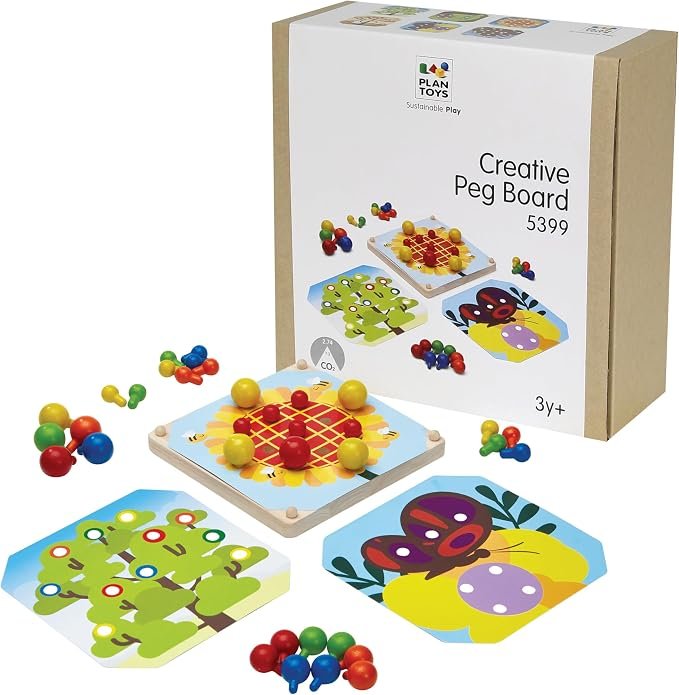
1. PlanToys Solid Wood Activity Board
Description: sustainably made rubberwood activity board with smooth rounded corners, non-toxic water-based finishes, and a hand-picked collection of mechanical parts for early fine-motor discovery.
Benefits: This ageless activity board takes the guess work out of picking age-appropriate items, perfectly complementing your toddler’s growing need for cause-and-effect discovery. The natural rubberwood build anchors the nursery esthetic and the minimalist design avoids sensory overload It’s small pieces take up a small spot on a low shelf to keep clutter off the floor.
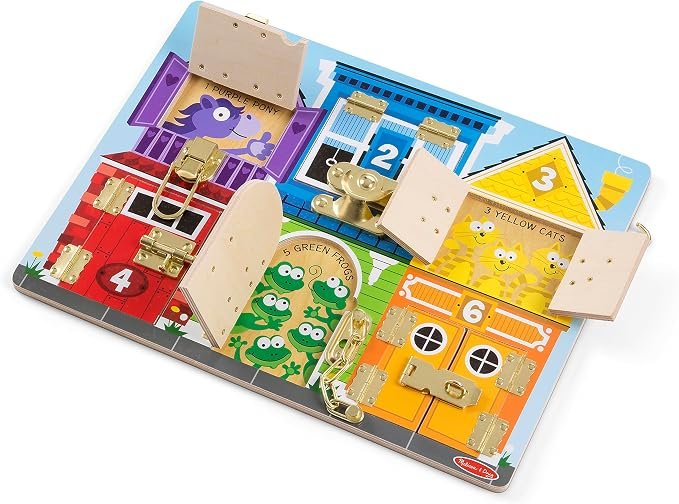
2.Melissa & Doug Latches Board Wooden
Description: Classic green wooden play board with various working latches, hooks, bolts and snaps mounted on a smooth natural wood background with a hidden picture behind each door.
Benefits: This is a staple to early child development. The hardware is large enough to be easily grasped and manipulated by small fingers. Behind each latch are hidden surprises and enough to keep one curious and occupied for some time. Heirloom durability with solid wood backing.
3. Montessori Busy Board for Toddlers
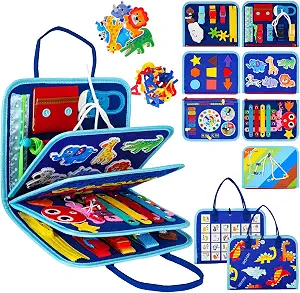
Description: Made from FSC-certified birch plywood, this minimalist activity board is thoughtfully finished with tactile elements such as wooden gears, locks and zippers, all coated with a clear, zero-VOC natural lacquer.
Benefits: This uncompromising wooden board, free of all artificial neon paints, offers a pure, grounding sensory connection to nature. It’s heavy enough not to move around during rough play and its classic design makes it a lovely decorative object on an open nursery shelf when playtime is done.
4. Joyreal Busy Board with 17 LED Switches, Montessori Toys for 1 2 3 Year Old
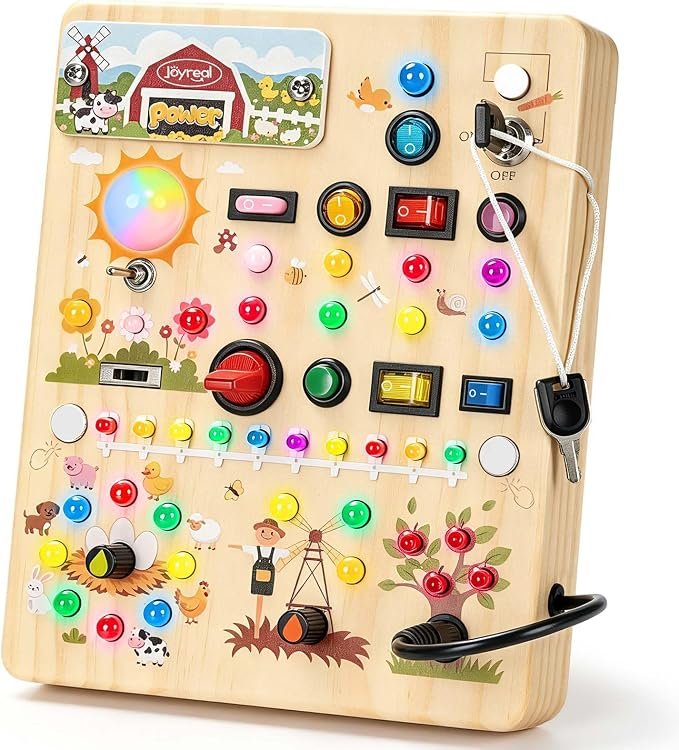
This sensory and activity station is a hand-crafted heirloom quality product made of North American hardwoods with precision milled mechanical parts finished only with natural, non-toxic oils and no chemical paints or varnishes.
Benefits: No artificial colors for a calming, naturalistic play environment Organic wood scent provides a grounding sensory connection for indoors The distinctive, tactile challenges bring about advanced spatial mechanics that require finer motor calculation and patience than standard commercial plastic boards.
5. Montessori Busy Board, Portable Wooden Sensory Activity Board with 8-in-1 Learning Activities
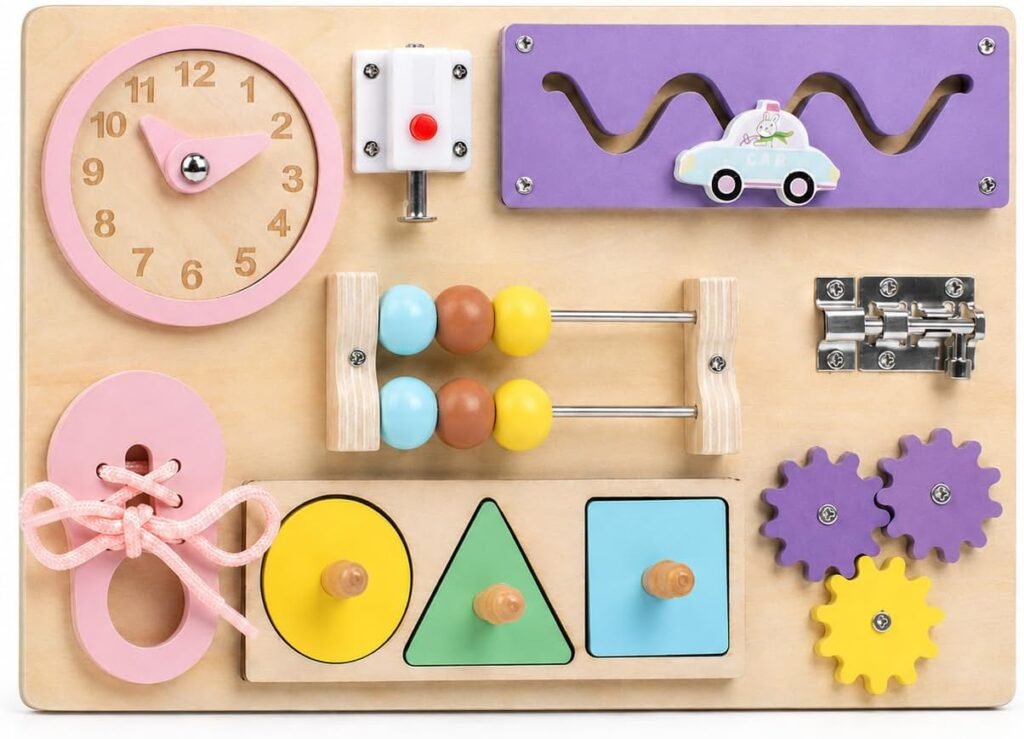
Description: Designed with 8 engaging activities in one compact wooden board, this pink Montessori busy board lets children explore clock learning, shape matching, abacus counting, gears, maze tracing, shoe lacing, switches and latch activities. A hands-on sensory activity board that encourages curiosity, independent play and early learning.
Benefits: Each activity helps strengthen important developmental skills through play. Children can practice finger control, hand-eye coordination, problem solving and concentration while moving gears, matching shapes, tracing paths and completing everyday skill activities.
6. Match-and-Learn Mechanical Activity Board
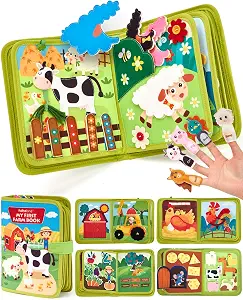
A multi-dimensional wooden activity board made from Baltic birch with child safe, water based paints, features interlocking gears, sliding mechanisms and color matching.
Benefits: Great for the toddler 18 to 36 months, it works on more than one developmental area at the same time: fine-motor control, hand-eye coordination and mechanical reasoning. Sturdy wood construction means it will withstand plenty of enthusiastic daily handling, and keep the play screen-free and quiet.
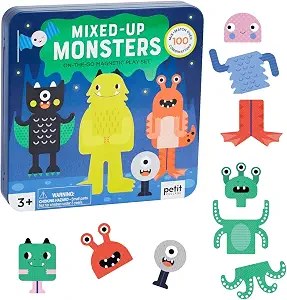
7. Petit Collage Organic Cotton & Wood Activity Booklet
Description: Beautifully crafted activity board in fabric and wood with soft organic cotton textures, safe wooden buttons and interactive closures, all in a lightweight, portable design.
Benefits: Plastic overstimulation-free, this artistic fabric-and-wood hybrid provides a gentle, nature-inspired introduction to everyday fasteners such as zippers, buttons and snaps. The heavy, long-lasting organic fabrics can withstand repeated use, so it’s a quiet, comforting companion for travel or bedtime wind-down routines.
Pro Tip: How to Build a Low-Friction Play Ecosystem
Making activity boards for your living space is not as important as managing and displaying them; your home’s peace and order will depend on how you do this.
1. Progressive complexity strategy
When shown a complex activity board with a lot of locks and small fasteners, a 12-month-old infant is instantly overwhelmed and frustrated. Instead, practice gradual simplification. For younger toddlers, start with a simple board with only two or three basic elements, such as a large wooden zipper and a simple sliding bolt. After your child has mastered those concepts easily, introduce boards with complex latches and interlocking gears. It builds their confidence, shields their attention span, prevents them from becoming frustrated and encourages steady cognitive growth.
2. Wall Mounted and Low Shelf Accessibility
Set your child’s activity boards on low open wooden shelves, or hang them securely at the child’s eye level on a wall in the playroom. Toys are visible and accessible without the need for adult intervention, allowing children to decide independently what to work with and crucially where to put it back when finished. It encourages executive function, builds a strong sense of personal autonomy and encourages respect for the home environment.
3. Use the “Less is More” rotation strategy
Too many sensory and activity toys available at one time can actually hinder engagement due to choice fatigue. Rotate one activity board out and keep the others in a closet or storage bin. Change selection every four weeks. Coming back after a month away, a favorite board is greeted with the eager curiosity of a new discovery, extending the toy’s life without cluttering your living space.
Comparison: Luxury Intentional Activity Boards versus Commercial Alternative
Parents often have a choice to make between high grade sustainable activity boards for toddlers or cheap, mass market plastic solutions. Taking a few different perspectives on these decisions will help you see why intentional gear is such an important investment for your family.
The premium sustainable wooden play boards, with their reinforced hardware, are built to last generations, easily withstanding the rigorous pulling, twisting and active manipulation inherent in early childhood, as they are considered in longevity. But mass market plastic busy boards are plagued by snapping plastic latches, peeling stickers and hinge fatigue, often ending up in landfills, broken and discarded within months.
Intentional toys offer a minimalist spatial harmony with clean wooden backings, wall-mountable profiles and neutral esthetics for home integration with functional storage. Cheap plastic alternatives are often awkward and bulky and sport chaotic primary color schemes that dominate the sightlines of a room and create unavoidable visual clutter.
High-grade boards are finished with non-toxic, water-based finishes for ergonomics and safety, and are equipped with secure flush-mounted hardware and smooth, rounded edges that are gentle on a child’s sensitive skin and developing immune system. Sometimes mass-market knock-offs will have untested chemical plasticizers, sharp exposed screw tips or brittle plastics that will shatter under pressure.
On a sensory level, natural wood, organic cotton and matte finishes provide grounding, organic textures and natural scent profiles that soothe a child’s nervous system. Synthetic plastics and electronic novelty boards have a slick, slick surface and are combined with loud, high-frequency artificial sounds that can overwhelm the sensory processing abilities of a young child.
And lastly, from a developmental and therapeutic standpoint, activity boards are frequently designed to be intentionally open-ended, morphing creatively as the child grows from a toddler discovering basic object permanence to a preschooler mastering complex mechanical locks. Cheap novelty toys have pre-programmed functions that provide a short dopamine hit before the child quickly loses interest.
The Enduring Worth of Intentional Play
Selecting an activity board for your toddler is a profound act of environmental and psychological stewardship. By choosing toys appropriate for your child’s developmental stage, you provide them with the precise tools they need to sharpen their fine-motor skills, develop their problem-solving abilities and enhance their cognitive clarity, all without the noise of contemporary consumerism.
We at CozyParents believe everything in your home should have a purpose, foster growth or create a moment of peace. By curating a thoughtful, sustainable collection of developmental toys, you’re not just tidying your living room, you’re teaching your child how to focus, how to wonder and how to be present with the world around them.
Keep checking CozyParents for all things minimalist parenting, expert curated gear roundups and intentional approaches to help restore calm to your family’s everyday flow. Are you doing a toy rotation at home right now, or planning to do a play space purge this week for your child? Let us know in the comments we love hearing how you create peaceful, intentional environments for your growing family.