
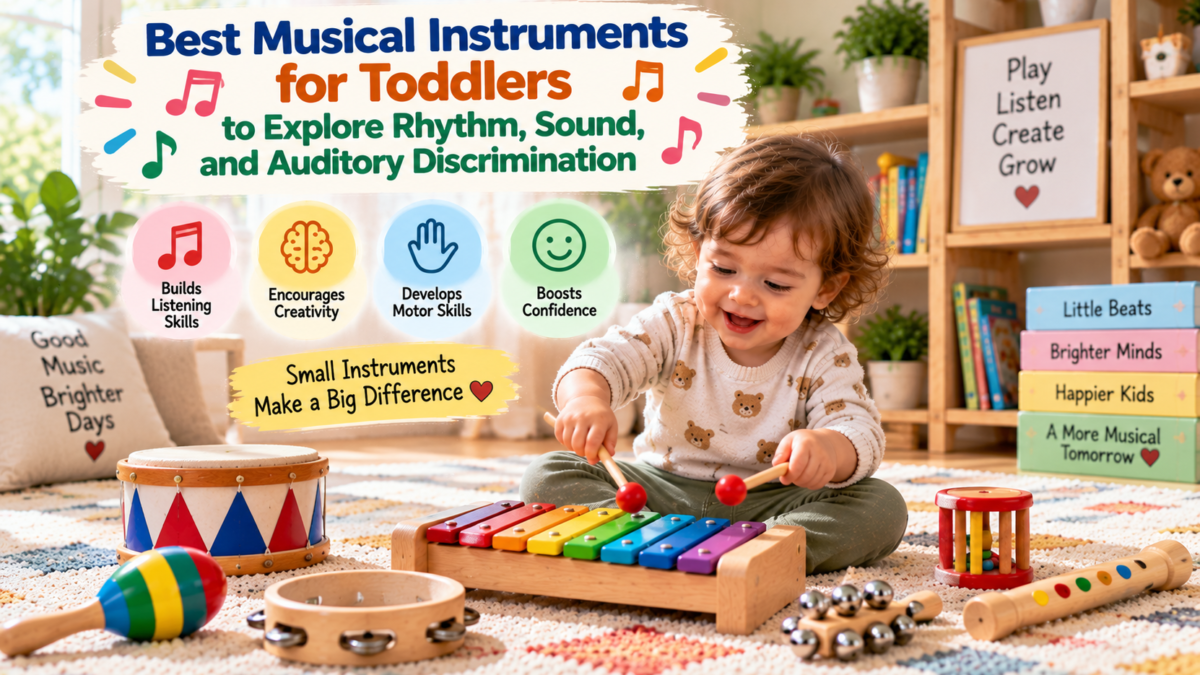
An eighteen-month-old has a quiet, spellbound look on her face the first time she hits a wooden drumhead with her hand. The child stops, listening intently to the deep, humming thud that goes through the wood, then strikes it again with deliberate, experimental force this time. Look closely and you can see them making connections between movement and sound in their mind: a soft tap makes a soft murmur, a full arm swing results in a sharp crack and an open palm pressed against the skin stops the vibration immediately.
In that very simple exchange an ordinary living room rug becomes an acoustic laboratory.
But for many modern parents, introducing music into the home is an invitation to sensory chaos. The toy aisles are stuffed with an abundance of plastic, battery-operated keyboards and electronic sound consoles. The new gadgets flash disorienting sequences of LED, play compressed digital tunes at fixed volumes, trigger synthetic applause at the tap of a button. Instead of encouraging active listening, these devices turn toddlers into passive button-mashers. The kid is not learning about the relationship between physical force and sound. They are just flipping electronic switches for a cheap dopamine hit.
At CozyParents we believe in “intentional play” that the things we bring into our homes should have a clear developmental purpose, not overstimulate a child’s senses, and help maintain the visual and acoustic calm of the home. Real acoustic musical instruments are the perfect embodiment of this philosophy. In this detailed guide we look at how early rhythm and auditory discrimination functions neurologically, provide realistic models for dealing with musical play without household headache, and review seven proven, highly rated instruments and percussion kits available on Amazon US that treat your toddler as a true explorer of the acoustic world.
Developmental Foundations: Acoustic Instrumentation of the Early Brain
To understand how acoustic instruments can contribute to early childhood development in ways electronic toys cannot, we need to examine how sound waves interact with the brain of an infant or toddler. Early childhood neurology, pediatric speech-language pathology, and occupational therapy all agree: Musical engagement is a whole-brain workout.
1. Auditory Discrimination, Phonemic Awareness and Speech Processing
Before the toddler understands the semantic meaning of words, speech is heard as pure music: rhythm, pitch, cadence and timbre. Auditory discrimination, the ability to perceive minute acoustic differences, is foundational to early language acquisition.
When a toddler plays tuned acoustic percussion (eight-note glockenspiel, wooden tone blocks), the auditory cortex is busy categorizing acoustic inputs:
Pitch Discrimination: The ability to tell apart a high-frequency chime from a low-frequency drum resonance is a direct exercise for the ear to detect variations in vowel sounds and vocal inflection.
Timbre Recognition Distinguishing the dry scraping friction of a wooden guiro from the warm metallic ring of a brass triangle puts neural auditory filters to work. The brain uses this ability to distinguish human speech from ambient background noise.
Attack and Decay: The length of time a chime rings after it’s been struck helps children understand sound envelopes, a cognitive basis for identifying the beginning and ending consonants of spoken words.
2. Sensorimotor Synchronization and Rhythmic Entrainment
Humans are biologically hardwired for rhythm. In developmental neurology, “rhythmic entrainment” refers to the ability of the motor system to synchronize with an external auditory pulse. When a toddler claps along to a song, or shakes a maraca to the beat of a parent’s voice, their brain is building important bridges between the auditory cortex and the motor planning centers of the cerebellum and prefrontal cortex.
It has been consistently demonstrated that toddlers’ ability to synchronize rhythmically is associated with better bilateral coordination, more efficient gait mechanics, and higher levels of executive functioning. Playing a drum or hitting the sticks of rhythm demands graded muscle control: the child must control force, calibrate speed and modulate hand-eye coordination in real time.
3. Dynamic Proprioception and Acoustic Effect
Battery-powered toys remove the cause-and-effect link entirely: a whisper-light touch on a button brings forth a booming, prerecorded orchestral fanfare. This mismatch short-circuits an infant’s proprioceptive calibration.
But acoustic instruments are physically honest in an absolute sense. If a toddler gently taps a wooden xylophone bar, the sound is a whisper. If the bar is tapped firmly, the sound is crisp and ringing. The child learns that volume, duration, and tone are the immediate physical effects of his own muscular exertion. This tactile-auditory feedback loop grounds high-energy emotional states, encourages deep spatial concentration and creates real self-mastery.
The Product Roundup: 7 Thoughtful Musical Instruments for Toddlers
To select instruments that can withstand the rigors of energetic toddler play and produce warm, pleasant acoustic tones, you need to choose solid hardwoods, precision-tuned metals, non-toxic plant-based lacquers and ergonomic grips. Here are seven validated, top-rated options on Amazon US that align with the CozyParents ethos.
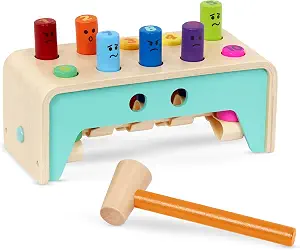
1. Battat Wooden Pounding Bench Toy with Mallet, Pound & Count Bench
Multi-purpose developmental wooden instrument with three colorful wooden balls that toddlers pound through cushioned rubber rings and watch them roll across an angled eight-note metal xylophone below. The xylophone also pulls out all the way for independent melodic play, with a wooden mallet included.
Why It Works for Child and Home: Hape is the gold standard in wooden toys for early childhood. The Pound & Tap Bench unites gross motor cause and effect with melodic exploration. The precise metal keys render clear, melodious tones, not the discordant tinny sounds of cheap xylophones. It has a tough Baltic birch frame that won’t dent even when hit with force, and the slide-out mechanism allows parents to stash the pounding bench and keep the musical instrument accessible on a low Montessori shelf.
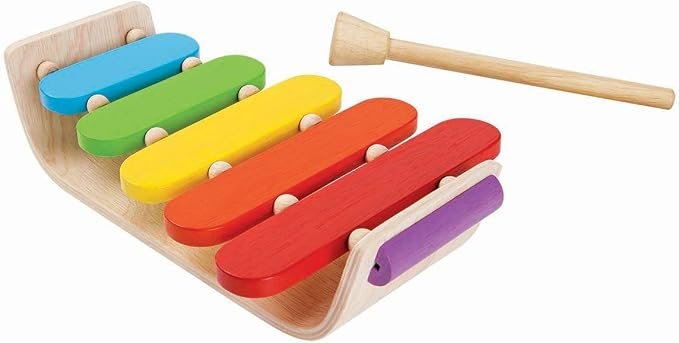
2. PlanToys Xylophone Solid Wood Oval
A simple green wooden xylophone made from sustainably harvested, chemical-free rubberwood, with five different curved wooden tone bars finished with non-toxic water-based vegetable dyes and a solid wood mallet.
How it works for child and home: If you want a visual and acoustic calm for your family, this PlanToys xylophone is a superb choice. Unlike metal glockenspiels that might ring loudly under toddler enthusiasm, these thick wooden tone bars produce soft, warm, rounded acoustic pitches that never overwhelm sensitive household ears. The soft Scandinavian earth tones blend in well with minimalist living rooms and the smooth-sanded edges make it safe for mouthing infants.
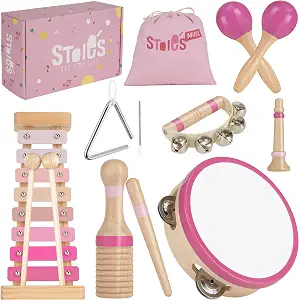
3. Stoie’s Eco-Friendly Pack Wooden Musical Instruments Drum Set
Natural wood and smooth metal hardware, plastic free set of rhythm instruments: handheld tambourine, 2 maracas, wooden castanets, hand-chime bar, tone blocks with guiro ridges, triangle. Cotton canvas drawstring storage bag.
Why It Works for Child and Home: Unlike just one novelty item, Stoie’s percussion kit delivers a full rhythm ensemble, scaled just for developing toddler grips. The different materials allow parents to model different acoustic actions – shaking, tapping, scraping and hitting. Natural timber with no paint to show off the warm grain. Comes with an organic canvas bag for easy rotation storage and cleanup.
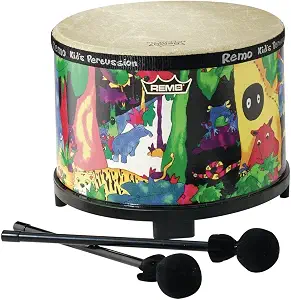
4. Remo Kids Percussion Floor Tom (or Gathering Drum)
Professional grade kid sized acoustic drum with Remo’s proprietary Acousticon heavy-duty recycled wood fiber shell and durable pre-tuned Skyndeep drumhead with vibrant textile fabric wrapping.
Why it works for child and home: Most toy drums are made with cheap plastic membranes that puncture in a week. Remo’s Kids Percussion series is a world leader in professional percussion, designed to withstand years of active use. The drum has three rubberized feet so toddlers can play with open palms or soft mallets while sitting on a rug. Its acoustic tone is deep and resonant, warm and grounded, offering rich proprioceptive feedback and no ear-piercing high pitched clatter.
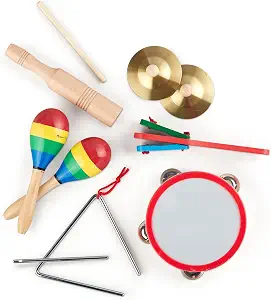
5. Melissa & Doug Clap! Band-in-a-Box Clang! Tap! (10-Piece Rhythm Kit)
Classic wooden ten piece rhythm set with 2 maracas, 2 cymbals, a hand held tambourine, a wooden guiro tone block with striker and a pair of wooden rhythm sticks (claves). Comes in a compact wooden storage crate.
Why It’s Good for Child and Home: Melissa & Doug is a great start for family rhythm circles. The cymbals and tambourine have rolled, with safe metal edges to prevent pinching, and the solid wood claves teach foundational metric pulse and turn-taking. All the instruments fit on one low toy shelf and the wooden tray with the tray halves separated keeps stray rhythm sticks from scattering around the living room.
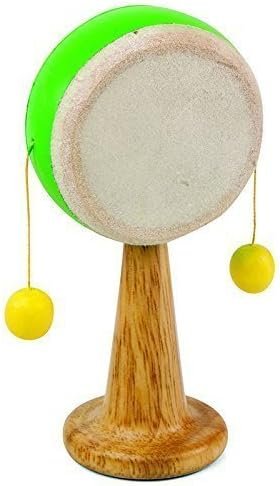
6. Green Toys Drum Set with Musical Sounds
USA-made percussion kit is lightweight and durable. Constructed from 100% recycled food-grade HDPE milk jugs, it’s free of BPA, phthalates, metal rivets or external paint coatings. Includes a double-headed drum with two soft-tipped drumsticks and two removable maracas.
Why It Works for Child and Home: Green Toys has a reputation for its nearly indestructible eco-friendly engineering. If you have an energetic toddler who loves to bring instruments out into the backyard or water table or mud kitchen, this is the best set around. There is no wood to warp or metal to rust so you can hose down the whole drum set after playing outdoors, or sanitize it in the top rack of your dishwasher.
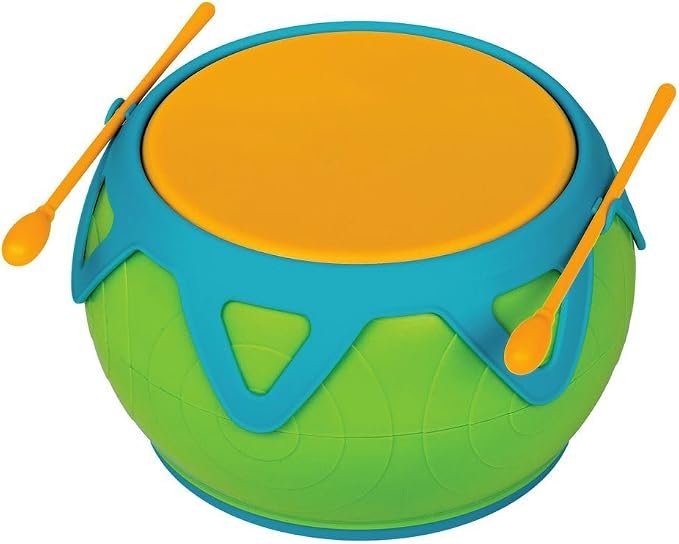
7. Halilit Early Years Ocean Drum (Baby / Toddler)
A sealed, clear, round, hand-held frame drum with hundreds of tiny, colorful microbeads that slide smoothly over an acoustic textured membrane, mimicking the gentle whoosh of ocean waves when you tip, tilt or shake it.
Why It Works for Child and Home: The Halilit Ocean Drum is an excellent tool for sensory regulation and visual-auditory tracking. When you tilt it slowly , the beads cascade creating a white-noise wave with a low frequency . It is soothing and can help ground an overstimulated toddler during evening transitions . Toddlers can also experiment with percussive attacks of their fingers on the taut clear skin. The fully enclosed, sonic-welded ring keeps tiny beads from escaping into the home.
Practical Advisory: Creating a Low-Friction Musical Ecosystem
Getting real musical instruments into a home requires care with organization, acoustic boundaries and presentation. In the absence of clear boundaries, musical play can rapidly descend into chaotic banging and parental fatigue.
1. The “Two-Instrument Shelf” Rotation Strategy
Leaving a whole basket of ten percussion instruments within easy reach is the quickest way to sensory overload. A toddler’s instinctive response to a random assortment of bells, drums and scrapers is to upend the container, bang on everything indiscriminately for half a minute and walk away from the pile.
Instead, practice disciplined rotation:
Choose one striking instrument (like a wooden xylophone or a drum) and one shaking/scraping instrument (like a pair of egg shakers or a guiro) to place on your low montessori play shelf.
Store any remaining collection in an opaque closet container.
Change the instruments every 2 weeks. Less active options means less cognitive noise, allowing for a deeper examination of each acoustic profile and keeping cleanup under sixty seconds.
2. Shared Tempo Call-and-Response Ceremony
Acoustic instruments aren’t meant to be left on a rug and banged on by themselves. They’re a great medium for human connection. Set aside five minutes each afternoon to play a simple game called Call and Response:
Sit on the floor cross-legged facing your toddler, each with a wooden rhythm stick or maraca.
Tap… play a slow, clear two-beat pattern Tap… Pause.
Make eye contact, smile and say, “Your turn!”
Celebrate whatever pace they offer and then reflect that pace back to them. This game exercises auditory working memory, encourages conversational turn-taking, and channels limitless physical energy into cooperative concentration.
3. Create Clear Acoustic Boundaries with Soft Play Rugs
The loud, percussive clatter of bare hardwood floors can be acoustically jarring. Always begin the musical exploration on a special low-pile wool rug, a padded cork play mat or an organic cotton blanket. The soft textile takes the edge off high frequency transients, softens the attack of falling mallets and delineates an intuitive spatial zone for musical work.
Honoring the Musician Within
Choosing meaningful musical instruments for your toddler is much more than just keeping their hands busy. It is a deep auditory care. Real acoustic tools that respond to the honest physics of touch turn noise into meaningful exploration, nurturing early speech, motor planning and emotional regulation.
By moving away from plastic, battery-powered consoles you create an acoustically peaceful home where your child can listen deeply, express their internal rhythm, and engage with the world at an unhurried pace.
At CozyParents, we believe everything in your home should have a function, strengthen the family bond and contribute to a peaceful home environment. What are your child’s favorite ways to explore rhythm and sound at home? How do you keep musical play organized and calm? Tell us about your experiences in the comments below and we love hearing how you create intentional and joyful spaces for your growing family.