
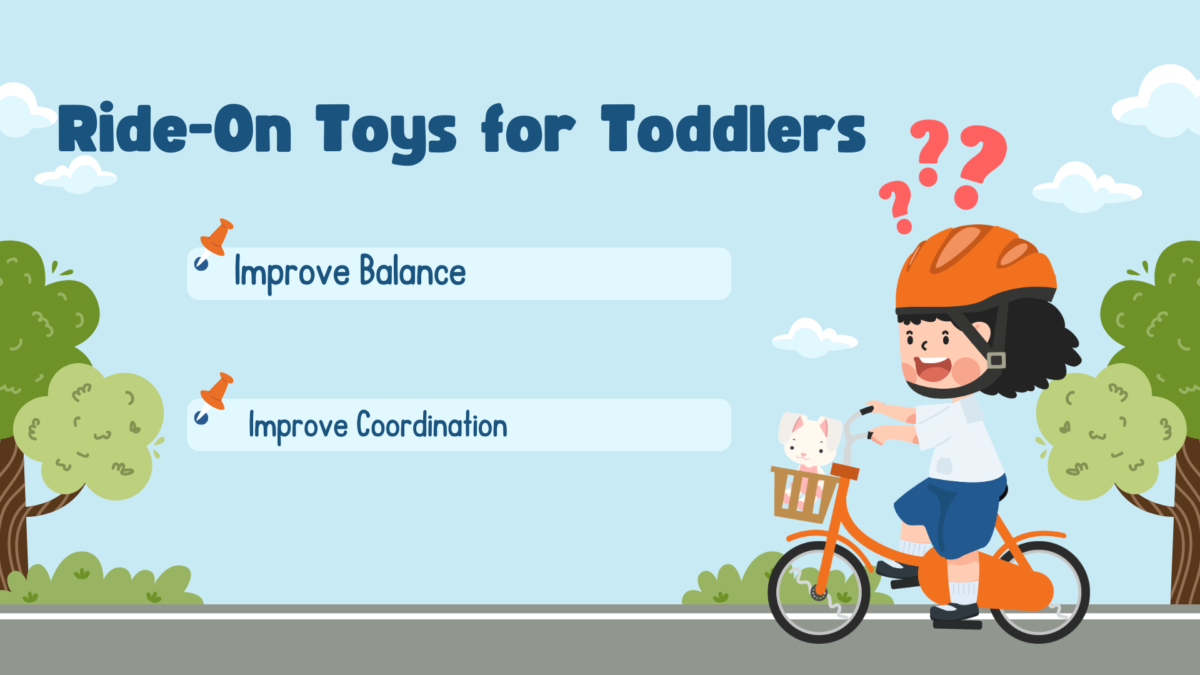
Step out on your neighborhood sidewalk any warm weekend morning and you will see a high-energy biomechanics masterclass. A two-year old balances on a low-slung, pedal-free bike frame, feet pushing off the pavement in rapid succession. They advance a few feet , adjusting their weight slightly to turn a corner , then they plant their feet flat to come to a smooth stop .
This energetic outdoor movement is not just a random burst of toddler energy. Ride-on toys are the ultimate gross-motor gym in the architecture of early childhood kinesiologic milestones.
Toddlers are hard-wired biologically to find out how fast and how far their bodies can go. The brain is working overtime to develop the core stability, spatial navigation and vestibular tracking of the ages one to four.
When a small child gets on a ride-on toy they aren’t just traveling down a driveway. They are actively monitoring their balance thresholds, coordinating cross lateral limb movement and building unshakeable physical resilience all screen free. But choosing the right ride-on framework calls for careful mechanical auditing. The toy landscape is not short of cheap plastic battery-powered vehicles with push-button automatic steering and flashing dashboard panels.
These automated options completely eliminate the intended physical workout from the child. Because the motor does all the work of the locomotive, the toddler is a passive passenger rather than an active builder of balance. Also, poorly calibrated wheel alignments on low-grade toys often result in sideways flips on minor cracks leading to rapid loss of confidence and sudden avoidance of active play.
Let’s sidestep the hyper-stimulating commercial gadgets and think about the true high-utility ride-on workhorses that respect your child’s developing physical limits. By investing in stable, mechanically responsive frames, you equip your little mover with the best tools to master spatial tracking and lay claim to their physical independence.
At Cozy Parents, we see baby gear through the lens of spatial clarity, motor safety and clutter-controlled minimalism. We believe your home and yard should be a purposeful haven where your child’s focus and physical confidence can grow naturally.
For more expert-vetted product audits, stress-free playroom strategies and practical parenting toolkits built for real family living, visit our website.
Anchoring Four-Wheelers for Beginning Cruisers
For a young toddler, say twelve to eighteen months, just moving from a steady crawl to an independent stand, the concept of balance is totally new. Their center of gravity is high in the torso so they topple easily if their feet get crossed.
At this early stage, a ride-on toy needs to offer a rock-solid, tip-proof platform on which they can work on the basics of leg extension and straddle positioning without triggering spatial anxiety.
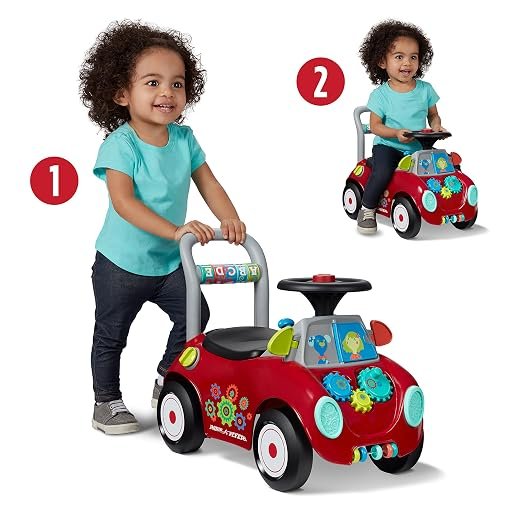
★ Radio Flyer Little Red Scooter and Ride-On Wagon is a spectacular, multi-functional transition tool for this early motor framework. It is built with a heavy and stable molded plastic body and a low-slung floor clearance. The physical structure of it makes it almost impossible to tip the scooter over on its side.
A low seat height allows an early cruiser to sit comfortably with both feet flat on the floor, for that all-important physical feedback to their brain. When a toddler is sitting on this grounded base and pushing backwards or forwards with their legs they are involved in **bilateral motor planning. With each cross of the living room rug, they learn to shift their leg strength to generate momentum, building deep core stabilizers and upper-body alignment.
The front handle has a controlled radius of steering that prevents the front wheels from locking sideways during sharp turns, keeping your toddler moving forward safely.
The Vestibular Masterclass: How Balance Bikes Work
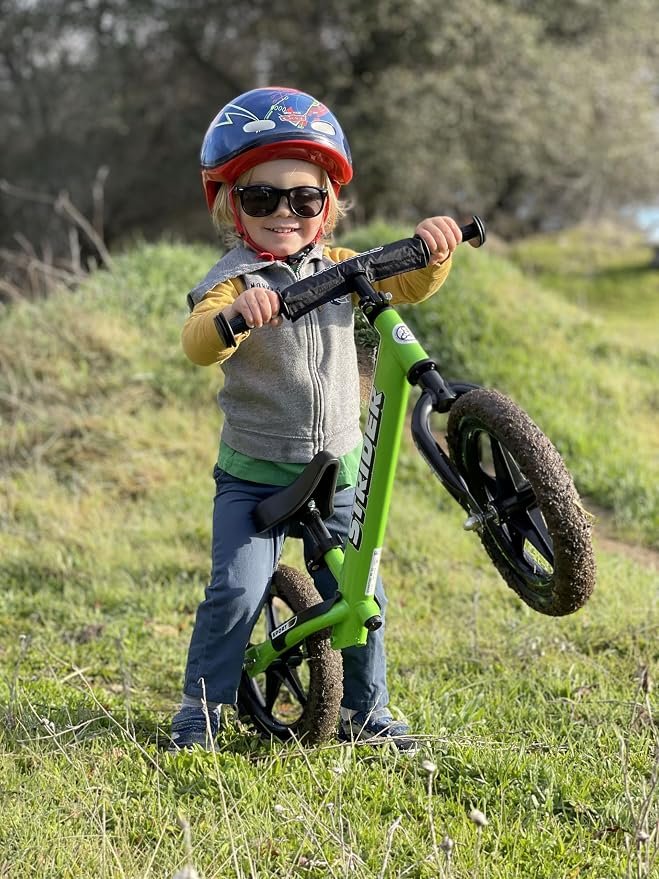
When your child passes the 2-year mark, their gross motor coordination makes a massive cognitive jump. They stop riding on toys and begin to use them as active platforms for real gravitational balance and scooting around on four wheels. This is where the deep developmental genius of the modern balance bike leaves traditional training wheel bicycles in the dust.
★ The Strider 12 Sport Balance Bike is the world’s ultimate gold standard engine of advanced vestibular training. The steel frame is ultra-light and weighs less than seven pounds. It eliminates the need for heavy pedals, chains and stabilizers, so your toddler can lift it, maneuver it and walk all by himself.
The safety feature is the killer combo of flat-free foam rubber tires and a hyper-adjustable seat post that drops down to a tiny 11-inch inseam.
When a toddler rides a balance bike, the brain learns the natural physics of leaning. On a training-wheeled bike, the child learns to lean away from a turn, relying on the artificial plastic support to stay up.
On the balance bike the child must lean into the curve, calculating steering angles and gravity adjustments in real time.
When they graduate to a proper pedal bike, the trickiest part of cycling, the unwavering balance is already second nature, meaning they can skip training wheels altogether.
Kinetic Steering: Scooter Mechanics That Lean-to-Steer
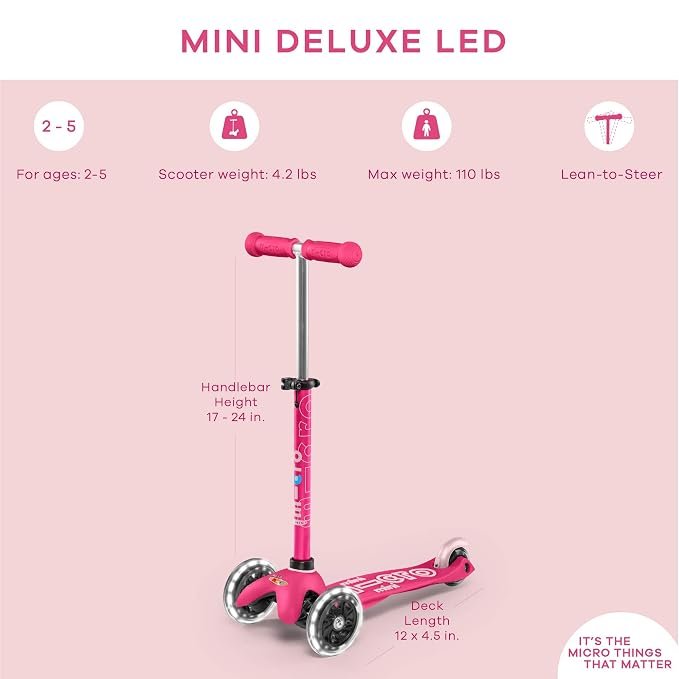
When a preschooler has mastered the two-wheeled stride tracking, the body is ready to take on an entirely different kinesiologic challenge: asymmetrical motor coordination. One foot is dynamically locked onto a flat deck to push a scooter, while the opposite foot makes intense rearward pushes to drive momentum.
★ Micro Kickboard Mini Deluxe 3-Wheeled Scooter redefines childhood outdoor mobility with a sophisticated Swiss-designed lean-to-steer mechanical deck. They have to lean their entire body weight to the left or right to tilt the front wheels . If they turned the handlebars to change directions, they would be very likely to overcorrect sharply at high speed and flip over suddenly .
This lean-to-steer movement is akin to the fluid physics of surfing or skiing and demands a high-level processing from the cerebellum in the brain. The child learns to coordinate the balance of inner ear fluid with deep ankle flexion, strengthening leg alignment and visual spatial tracking. Ultra low glass reinforced fiber deck prevents the standing leg ankle from twisting out on long block runs.
The Creative Alternative: Free Movement Modules
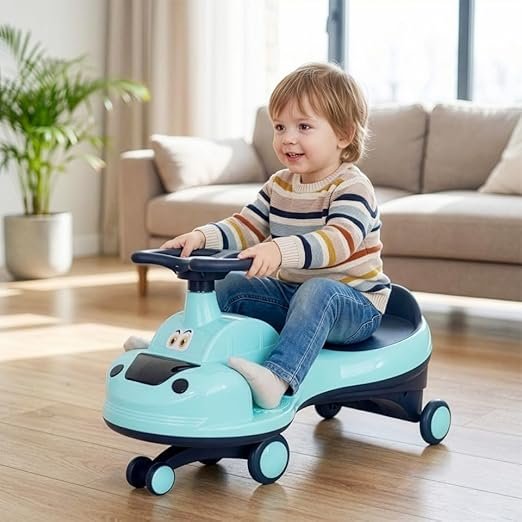
But the real play value is that a ride-on medium can change to totally different sensory arrangements around your home, seamlessly moving from structured outdoor track racing to fluid indoor imaginative pretend worlds.
This award-winning mechanical marvel has a clever gravity-powered drive system that needs absolutely no pedals, gears, batteries, or foot-pushing. Toddlers simply sit on the contoured seat, put their feet on the protective footrests and turn the steering wheel back and forth to create forward momentum. It takes constant centrifugal force and friction and turns it into movement, giving preschoolers an in-depth, hands-on understanding of physics while improving their upper body posture and shoulder stability.
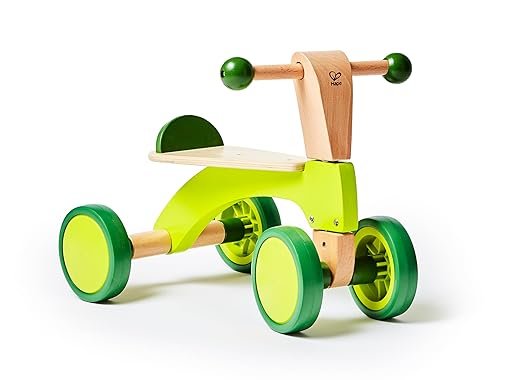
★ Little Drive Wooden Rider by Hape
This minimalist wooden ride on is made from sustainable timber and stained with soft, non-toxic water-based stains. A beautiful vintage four wheeled design. Little ones can load up blocks or haul their favorite stuffed animals around the house in the open cargo area under the seat. Its silent rubber-tired wheels roll smoothly across fine hardwood floors without leaving any track marks or noise.
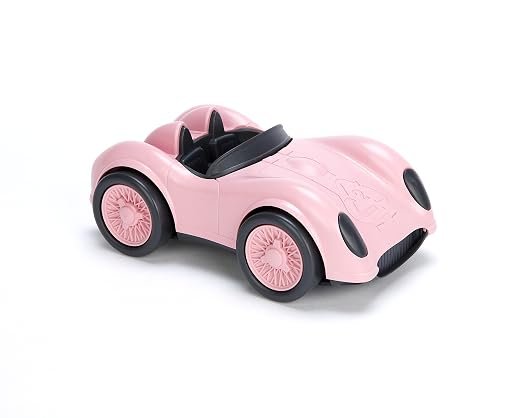
★ Green Toys Eco-Friendly Race Car Ride-On
This little low-pro vehicle is extremely rugged and built to take a beating. It is made in the USA from 100% recycled plastic milk jugs with zero metal axles or external paints. You can ride it through mud puddles, leave it out in the backyard rain or drag it through sandboxes and just hose it down clean in a matter of seconds. The thick seat has an ergonomic design that naturally places the toddler’s pelvis in the anatomically ideal position for healthy leg extension.
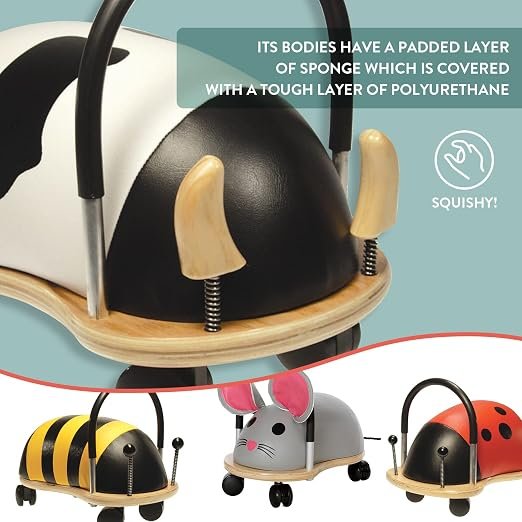
★ Prince Lionheart Wheely Bug (Style Bee/Cow)
This heirloom quality indoor ride-on has heavy-duty industrial caster wheels that spin in a full 360 degrees for a totally multidirectional set-up. Toddlers can slide backwards, spin in tight circles or move sideways across low-pile carpets by holding onto the secure aluminum handle loop. The padded sponge seat is covered in a tough polyurethane skin that is easy to wipe clean, a comfortable, resilient seat for hours of fluid movement indoors.
Building Kinetic Confidence One Step at a Time
The best investment you can make in your child’s growing independence is to bypass the flashing plastic electronic vehicles and instead fill your home ecosystem with high-value, child-powered ride-on essentials. Instead of the jarring noise of battery operated toys you get the rhythmic, focused hum of a child learning to navigate her body through space by emphasizing unshakeable wheel alignment, lean-to-steer physics and durable non-toxic materials.
Today, take inventory of your backyard and driveway tracking spaces, choose a top-rated active model that respects your child’s balance milestones, and step back to let your little mover carve their own path to unshakeable gross motor confidence.
You never have to go it alone through these early childhood growth stages, or wonder which play materials will really support your family’s daily peace. For a constant supply of expert child development frameworks, practical home audits and warm parental validation, stay tuned with your trusted digital village, close at hand, Cozy Parents.