
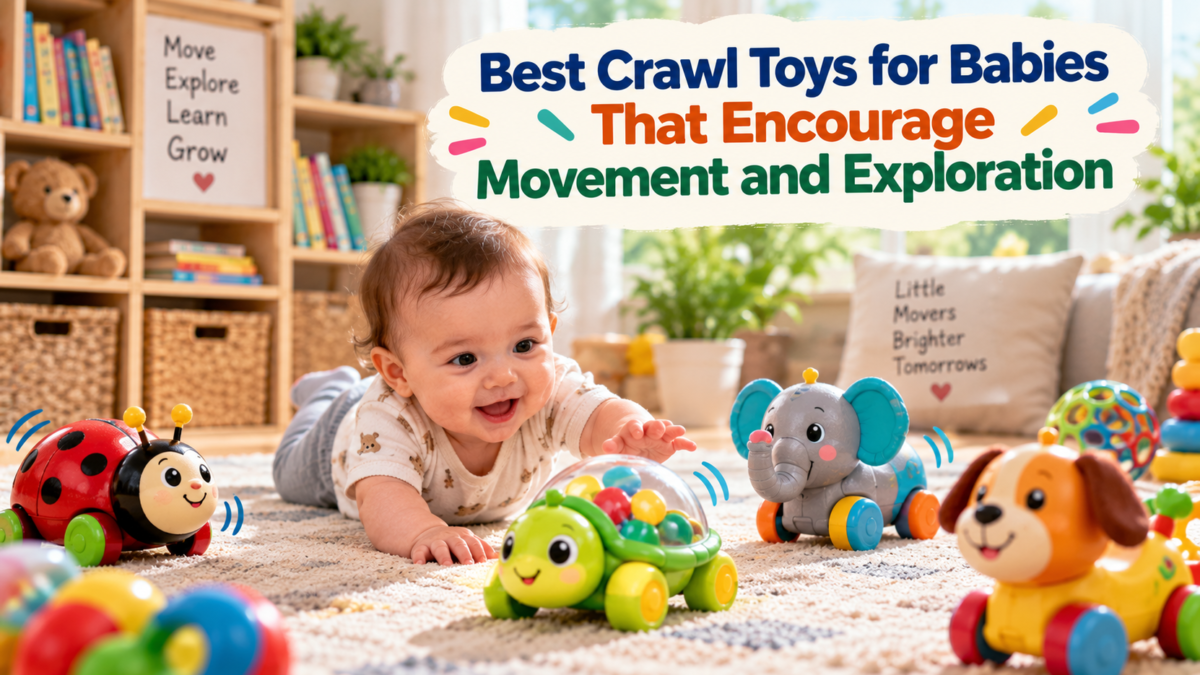
At the point of breathtaking suspense in the first year of an infant’s life, when curiosity finally wins out over gravity. A baby is doing a rhythmic, determined belly dance, lifted just off the floor, on hands and knees, back and forth. They clutch the weave of the rug with their fingers, they dig their toes in for purchase, their gaze locks on an object just beyond arm’s reach. You can almost hear the neural gears grinding as they consider the physical effort of lunging forward against the safety of remaining motionless. Then, with a tremulous shift of their weight and a sudden push of will, they make that big first lurch across the floor.
Crawling seems an instinctive prelude to walking for an adult. For a developing baby, however, crawling is the first experience of independent physical autonomy. For the first time in their lives, if they want to investigate a sunbeam dancing across the floorboards or examine a fallen leaf by the patio door, they don’t have to cry and wait for an adult to carry them they can transport themselves.
But when parents scour the modern baby gear marketplace for toys to encourage this transition, they are faced with a barrage of erratic, motorized gizmos. Plastic crabs that scuttle sideways to a high-pitched techno beat, robot balls that dart unpredictably under heavy sofas, and smartphone screens propped against baseboards are meant to “teach” babies how to crawl. In practice these chaotic novelties often bounce back. Motorized gadgets move too fast for a new crawler to predict, and a physical pursuit that should be empowering, becomes an overwhelming, startling, demoralizing ordeal. When the baby finds out that he cannot catch an escaped mechanical toy he gives up, falls down on the mat and cries.
At CozyParents we believe that the environment for a baby’s movement should be a welcoming space for focused physical effort and joyful self-control. Our selection of tactile, durable, well-paced resources is guided by a philosophy of “intentional play” that honors an infant’s developing nervous system and preserves the visual calm of a mindful home. In this guide, we’ll explore the developmental process of early locomotion, offer practical advice for setting up a low-friction, supportive floor play space, and showcase 7 fantastic crawl toys on Amazon US that will empower your baby to explore their physical world.
Developmental Foundations: The Physics of Early Locomotion
To select toys that truly promote non-stressful crawling, we need to know the biomechanics and sensory systems involved in early human locomotion. Pediatric occupational therapy, pediatric physical therapy and developmental neurology can attest to the amazing complexity of the whole body achievement of crawling that involves bilateral reciprocal patterns, dynamic spatial mapping, and emotional regulation.
1. Cross-Lateral Integration and Inter-Hemispheric Communication
One of the most important neurological milestones in early childhood is actual quadrupedal crawling which is the act of moving on hands and knees in a cross-lateral rhythm. Four-point crawling is different from army crawling (scooting forward on the stomach on mostly the upper arms) in that the limbs move contralaterally, the right hand moves forward with the left knee, then the left hand and right knee. This back-and-forth pattern has the left and right hemispheres of the brain talking to each other across the corpus callosum at rapid speeds. This cross-lateral wiring provides the foundation for higher level cognitive functions in later life such as two-handedness, visual tracking across the midline, spatial mathematics and fluent reading literacy. Toys that roll in a straight, predictable way encourage babies to keep up this rhythmic left-right reciprocal stride.
2. Vestibular Calibration, Visual Convergence and Depth Perception
As an infant moves from lying on their belly to lifting their torso on hands and knees, their vestibular system the balance system in the inner ear undergoes a major recalibration. The head must stay steady and upright as the body hurtles through space, with the brain constantly computing gravitational forces and the position of the head. At the same time, crawling is an intensive workout for the eyes. A crawling baby has to switch between looking down at its hands to navigate obstacles and looking up at its target across the room. This alternation of near-point and far-point focal planes increases convergence of the two eyes, trains accommodation, and lays the foundation for correct depth perception and spatial judgment.
3. Proprioceptive Grounding, Palmar Arch Development & Core Strength
Crawling is an intense proprioceptive experience, the sensory awareness of body position through the joints and muscles. On the floor, open hands support their own body weight, with the intrinsic palmar muscles extending to create the deep transverse and longitudinal arches of the hand. These physical hand arches are just what will allow your child to grasp a spoon, hold a crayon with a mature tripod grip, and button a coat years later. Plus, the stabilization of the pelvis and shoulder girdle against gravity’s pull builds core postural tone, spinal erector endurance, and pelvic stability all of which sets the stage for easy transitions to pulling to stand and cruising along furniture.
The Product Roundup: 7 Purposeful Crawl Toys for Babies
When designing crawl toys that promote natural exploration, designers should focus on predictable movement, organic materials, soothing acoustic feedback and tactile grasping surfaces. Here are seven great, verified options on Amazon US that respect your baby’s physical pace and fit the CozyParents philosophy.
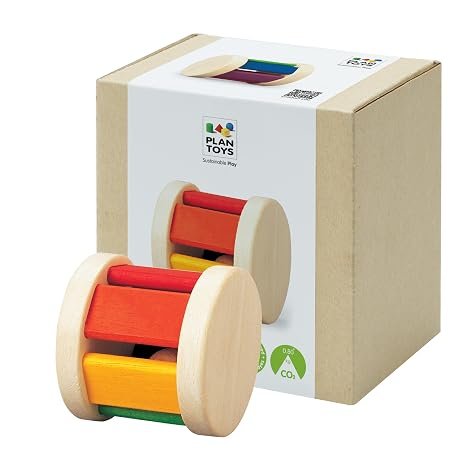
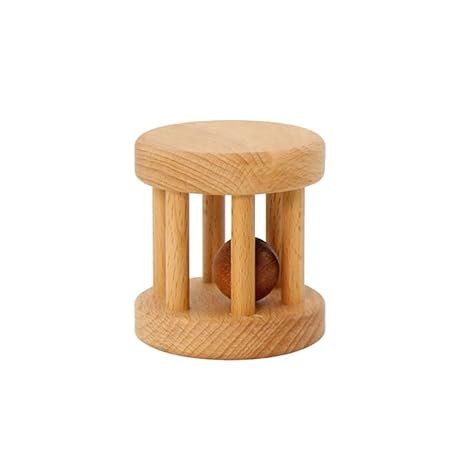
1. Plan Toys Wooden Baby Roller
Description: Wooden rolling cylinder of sustainable manufacture, made from chemical-free rubberwood and non-toxic water-based organic dyes. The smooth rounded dowels contain a colorful wooden ball that clicks softly as it rolls.
Benefits for Child and Home: The ultimate minimalist crawling toy. When a baby’s hand reaches out and taps the PlanToys Roller, it glides smoothly across hardwood floors and low-pile carpeting, rolling two to three feet before naturally stopping. This controlled momentum creates the perfect “target distance” far enough away to drive a crawl forward, but close enough that the baby senses the success is within reach. The soft organic clacking of the interior wooden ball provides pleasing acoustic feedback for movement without the need for harsh electronics. The warm wood look sits elegantly on any nursery shelf.
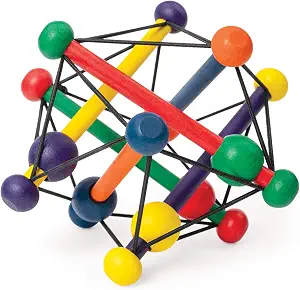
2. Manhattan Toy Skwish Classic Rattle & Grasping Activity Toy
Description: An iconic geometric grasping toy made of sustainable replenishable rubberwood dowels, durable elastic bands and freely sliding wooden beads finished with safe non-toxic water-based stains.
Child and Home Benefits: While the Skwish is most often known as an early grasping toy, it’s an incredible crawl motivator. Its open strut geometric structure means that when pushed across the floor, it bounces, wobbles and rolls in a lively but gentle arc. Once a baby finally gets it, the bendy dowels flatten under tiny hands and pop back into shape, offering deep proprioceptive pleasure. It is light because it is made in a latticed way and it is easy for an unsteady crawler to grab with one hand while balancing on the other three limbs, avoiding the frustration of toys that slip away when touched.
3. Hape Wonder Roller Roll & Rattle
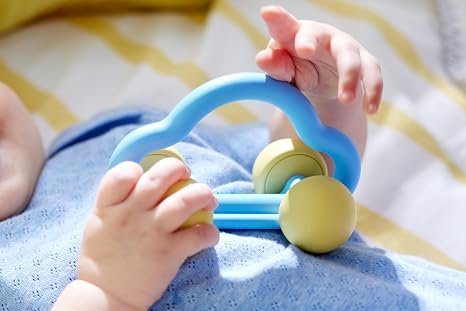
Description: Handcrafted wooden rolling cylinder made from FSC-certified timber containing bright wooden balls inside and a soft-chime bell that plays when rolled.
Benefits for Child & Home: Hape makes solid wooden toys that are good for developing an infant’s senses. The wooden dowels are wide gage and the perfect size for little fingers to wrap around, encouraging babies from batting the toy to picking it up. The chime moves along the rug as an acoustic lighthouse, leading the infant on and teaching them their auditory-visual localization skills. The natural hardwood edges are smooth sanded for complete safety if your infant rolls or tumbles against it on the floor.
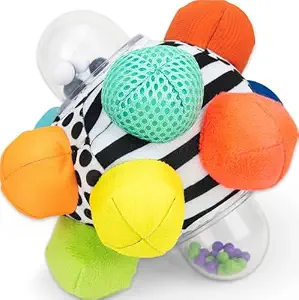
4. Sassy Bumpy Ball Sensory Development Ball
A high-contrast fabric ball with various textures, the fabric bumps are distinct and easy for little hands to grasp. The ball is filled with a mix of different materials including gentle crinkles, soft nubs and internal rattle beads.
Benefits for Child and Home: For babies just starting to push up on their forearms, traditional smooth balls can be deeply frustrating as they roll away too quickly on hard floors. The Sassy Bumpy Ball has chunky nubs that protrude and serve as natural brakes, stopping the ball from rolling out of arm’s reach of the child. The alternating high-contrast monochromatic patterns and bold textures are specifically designed to appeal to an infant’s visual preferences, providing them with a highly visible, irresistible anchor to crawl toward. When the baby comes, the big bumps make it easy to get a good hold with one hand.
Description: A classic heirloom style rolling toy made of solid hardwood with a brass chime ball inside that produces a gentle, resonance-rich sound as the wheel rolls across the floor.
Benefits For Child And Home: Heavily weighted with soft beveled edges, this chime roller glides with slow-motion inertia on heavy carpets and slick hardwood floors. The soft chime sound is like a gentle musical bell, providing a soothing auditory feedback that doesn’t overstimulate an infant’s developing nervous system. Solid timber construction means it can handle enthusiastic drops, throwing and mouthing, making it a durable, beautiful companion to pass down to younger brothers and sisters.
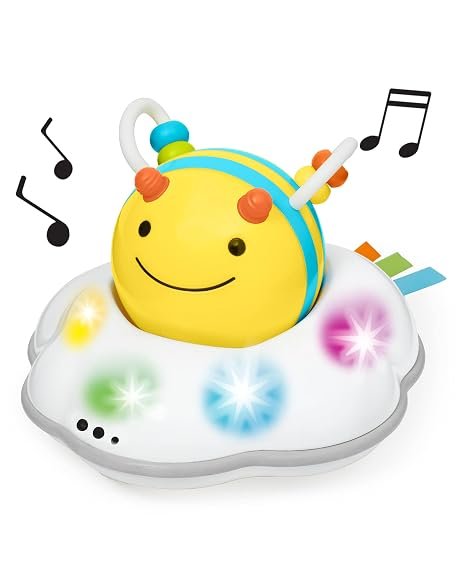
6. Skip Hop Explore & More Follow-Me Bee 2-in-1 Crawling Toy
Description: This is a two-stage developmental crawl toy. The toy has a removable sensory bumblebee rattle that sits on top of a rolling motorized cloud base with soft lights and low-volume musical tunes.
Benefits for the child and for the home: The intelligent, non-chaotic engineering makes this toy stand out even if it is battery assisted. In Stage 1 (Pre-Crawlers), the cloud moves in a small, predictable circle, keeping the toy right in the infant’s immediate visual field so they don’t have to strain or feel abandoned. In Stage 2 (for active crawlers) it moves in gentle, meandering random patterns, with built-in obstacle sensors that prevent it from getting trapped in furniture corners. The cloud can be completely disabled, allowing the tactile bee rattle to be used as a simple manual chase-and-grab toy.
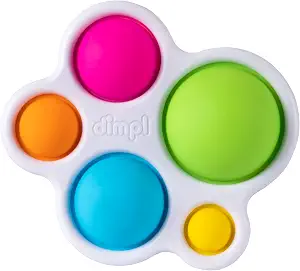
7. Fat Brain Toys Dimpl Wobbl Sensory Rollers
Description: A top heavy weighted sensory toy with an ergonomic silicone gripped base, a textured food grade silicone “dimple” bubble on top that pops back and forth and a weighted counter balance that wobbles and rolls.
Child and Home Benefits: The genius of the Dimpl Wobbl is its unpredictable physics. When a baby reaches out and hits it, it doesn’t fly across the room; it rolls a few inches, tips over and pops right back up with a soft, satisfying wobble. This kinetic feedback intrigues an infant, resulting in repeated lunges and shifts of weight. The silicone base is heavy and tactile, for a non-slip texture on slippery floors and the whole unit wipes down completely in seconds.
Practical Tip: Creating a Low-Friction Floor Play Environment
Great crawl toys are only the beginning. How you set up the physical environment and scaffold your infant’s daily floor time will determine whether crawling is a happy adventure or a stressful chore.
1. The Low Pile Traction Runway
And slick hardwood floors and slippery laminate are common, hidden obstacles for the budding crawlers. The infant pushes their knees against wood slick with sweat and their legs slide out into an uncomfortable split. They slip flat on their stomach in frustration. Plush, deep-pile shag carpets, in contrast, create too much physical drag, trapping small toes and making forward momentum exhausting. Designate a “crawling runway” using a firm, low-pile wool rug, a natural cork floor mat or a dense organic cotton play quilt. The solid grip gives little knees and naked toes the actual grip to confidently propel the body forward.
2. The Rule of Barefoot Traction
Keep your baby completely barefoot for floor play whenever indoor temperatures permit. The soles of an infant’s feet are populated with specialized sensory receptors that relay information to the brain regarding surface grade, friction and balance. Even regular socks, even those with tiny silicone grips, deaden these sensory signals and make the toes slide. Footwear, booties and even With bare feet, a baby can curl their toes and dig into the rug fibers, generating kinetic propulsion to pop up into an active four-point crawl.
3. Progressive Proximity Strategy
Don’t fall into the temptation of placing a crawl toy across the entire width of the room, hoping to inspire a marathon crawl. A baby sees a toy that is ten feet away, and their developing sense of space sees an insurmountable mountain. This often leads to just giving up and crying. Try progressive proximity instead: only two to three inches beyond their outstretched fingertips. Celebrate their effort when they stretch and pivot and manage to touch it, let them explore the toy for a minute and then roll it another six inches away. This gentle scaffolding builds self-efficacy, teaches persistence and makes floor time an achievable game.
4. The Parent as a Horizon Anchor
Remember that no manufactured toy has the motivational power of a parent’s face and voice. Lie on your stomach on the rug directly across from your infant. Lie on your back, chin in your hands. Smile and gently roll a wooden rattle back and forth between your hands. For example, if an infant sees their caregiver interacting on the floor at their eye level, it creates a lot of psychological safety. They need your buoyant voice as the emotional jet fuel to take brave, wobbly physical risks.
Comparative Analysis: Premium Intentional Crawl Toys vs. Mass Market Motorized Gadgets
For your nursery’s crawling aids you have a clear choice: thoughtful, engineered, tactile toys that allow children to progress at their own pace, or cheap motorized plastic novelties. The choices become clearer when viewed through the prism of critical dimensions of operations as to why quality materials and simple physics lead to a better developmental outcome.
Kinematic predictability and infant empowerment Intentional crawl toys move only in response to the infant’s physical input or simple gravity directly. When a baby hits a wooden roller it rolls a short distance in a predictable way and stops . Teaching real world cause and effect. Cheap motorized plastic novelties like frantic battery-powered crawling crabs or screaming mechanized balls are autonomous and run at high speeds, often bumping into walls, reversing suddenly and screeching loudly. This unpredictable movement is frightening to infants, destroys their sense of agency and prevents them from continuing with motor behaviors.
The high-end crawl toys are made of durable, chemically sound solid beechwood, natural rubberwood, organic textiles and food-grade silicone finished in non-toxic water-based stains or plant oils. Babies that are crawling are at the peak of mouthing infancy. Any toy they chase ends up in their mouth. Intentional toys are BPA, phthalates, heavy metals and brittle plastic seams free 100%. Cheap injection molded plastics are brittle and crack when they hit the floor hard, leaving behind microplastic dust, sharp edges and the smell of toxic chemical plasticizers. Disposable mass-market toys are based on these.
Intentional crawl toys, with a focus on sensory regulation and household peace, utilize natural acoustic resonance the warm click of hardwood beads, the soft ping of a brass chime, the gentle rustle of crinkle cotton. These organic sounds are a reassuring feedback loop that roots an infant’s nervous system. Mass-market electronic toys are loaded with blaring electronic chips, synthetic melodies that loop endlessly and flashing LED strobes that overstimulate delicate sensory filters, leading to crying fits, agitation and sensory fatigue.
Intentional toys are created with spatial harmony in mind, both from a functional storage and esthetic perspective. Their warm organic tones and tactile finishes, with their compact footprints, slip seamlessly into modern living rooms and are poised on low wooden shelves. Mass-market alternatives are packaged in giant plastic containers, garish primary neon colorways and bulky synthetic plastic eyesores that clutter the living space.
Finally, simple tactile crawl toys have great developmental longevity to grow with your baby. A wooden rolling chime that starts out as a tummy time visual tracking object, grows into a crawling chase toy, becomes a rolling bowling pin for a sitting ten-month-old, and finally becomes toddler small-world and block play. Gadgets with motors and a single purpose become quickly passé once your child learns to stand, ending up in the landfill.
Respect the Way of Movement
Selecting a genuine, purposeful crawl toy for your baby is an investment in their bodily confidence, their spatial inquisitiveness and their burgeoning sense of personal agency. You provide a serene, meaningful environment for early achievements to flourish with happiness and elegance by providing instruments that honor the subtle, mechanical charm of corporeal physics, absent the interference of electronic clamor.
At CozyParents, we believe that every item in your home should serve a clear developmental purpose, promote intimate family connection and encourage household serenity. But when you lay down on the rug with your baby and watch their eyes light up at a gentle wooden roller and see their little knees take those first, brave steps forward, you are doing far more than encouraging crawling you are watching them take their very first steps toward independent exploration of the world.
Continue your journey with CozyParents for mindful parenting initiatives, expert backed gear roundups and intentional strategies for your growing family. Is your baby on their hands and knees right now, or are they motoring across the floor of your living room? Share your tips in the comments below we’d love to hear how you create peaceful, intentional spaces in your home.