
When we think of early childhood education, our minds generally rush immediately to bright classrooms, little desks and expensive sets of flashcards. Do we have to buy the newest electronic learning tablet? Or subscribe to a monthly shipment of specialised plastic toys? However, if you watch a toddler attentively, you will soon see a curious pattern: they will tend to disregard the flashing, singing toy completely and opt to play with the cardboard box it came in, a metal whisk from the kitchen drawer, or your set of home keys.
This is not an accident or a behaviour quirk. Young children are biologically programmed to investigate their true surroundings. For the developing brain, domestic tasks, utilitarian objects are not simply household chores, utilitarian objects but the ultimate learning instruments. Simple plastic measuring cup illustrates ideas of volume and fractions. A wooden clothes peg builds up the identical finger muscles used to grip a pencil. If we take the opportunity for education from our usual circumstances, we may take the huge weight off ourselves to purchase our way into academic readiness.
At Cozy Parents, we want to make your parenting journey easier, yet still fulfilling. We think your house is the best classroom right as it is. To lean into these organic moments without burning out.
The Clutter Conundrum: Discussion of Core Problem
Understanding why modern playrooms so often do not promote deep, natural focus can help us better exploit the potential of ordinary things. What current toy marketing structures can do is create unforeseen barriers to young inquiry:
The Over-Stimulation Trap: A lot of commercial toys are packed with loud noises, flashing lights and automatic movements. Although these do grab a child’s interest at the start, they are passive entertainment and not active and this might lead to shorter attention spans.
Single-Purpose Limitations: A toy made to look like a specific cartoon character and do only one specific thing doesn’t allow much opportunity for inventiveness. Once the kid discovers out the button the learning potential goes down a lot.
The Clutter Fatigue: A room full of plastic parts can be visually and mentally overwhelming for a youngster, making it difficult to choose an activity and settle into focused play.
The Disconnection from the Real World: Children have a natural need to imitate the actions of the people caring for them. They miss out on important practical life lessons when their play environment is totally separated from real home life.
Comforting Parents Solutions
Strategic Solution
The most impactful change you can make is to go towards a “open-ended and real-world” mentality. Not how to entertain your child, but how do you safely invite them into your everyday rhythm? When you see household objects as multi-purpose learning tools, you eliminate clutter, save money and allow cognitive milestones to occur in a fully spontaneous fashion.
Implementation
You don’t need to spend extra hours arranging to incorporate everyday items into your child’s regular play routine. Think subtle, intentional changes to how you share your home spaces:
- Create a dedicated low kitchen cupboard for your youngster, loaded with safe materials like metal bowls, wooden spoons, plastic containers, and jar lids to stack and sort.
- Trade in ultra-specific toys for raw materials like cardboard boxes, paper tape and clean sponges that require your child’s imagination to establish their use.
- Add life skills to your morning and evening rituals. Let your youngster help wash down low surfaces, sort clothes by color or rinse veggies.
- Have a “tool basket” with genuine things (but in child-safe versions) such as a little magnifying glass, a real tape measure or a small spray bottle for watering plants.
Timeline of a Learning-Rich Day
Let’s look at a regular, intentional day from dawn to night, to discover how commonplace tools infuse knowledge into your daily routine seamlessly.
08:00 AM – Breakfast Maths & Physics
The kitchen is the ultimate lab of science. Adding milk to a small child-sized pitcher introduces early ideas about volume and fluid dynamics through trial and error.
01:00 PM – Afternoon Household Workout
Mid-day tasks might easily turn into an advanced coordination playground. Hand your child a set of metal kitchen tongs and have them move clean socks into a laundry basket. This develops great finger strength and wrist stability. Peeling a banana or using a blunt wooden spreader to butter toast, develops the precise pincer grip that will be needed for pencil work down the line.
04:00 PM – Senses and Problem Solving
As the afternoon energy changes, transfer your young one into quiet, structural play. Give them a set of clean sponges, a bowl of water and a couple measuring spoons. Filling a cup with a wet sponge by squeezing it adds weight distribution and motor planning. You have to keep at it and that promotes deep cognitive endurance .
07:00 PM – Bedtime Ritual & Language Structure
Winding down has built-in opportunities also. For bedtime stories with your child, let them flip the pages one at a time to develop finger isolation. When speaking of the warmth of the wooden block vs the coolness of the metal spoon while brushing teeth, a lot of rich contextual terminology is introduced which is deep in their cognitive memory.
If you are looking for a more balanced approach to navigating the developmental types without all the stress, check out the comprehensive family guide sections over at our website, where they can help you chart a clear, stress-free course through your child’s natural timeline.
Strategic Micro-Services for Parents
When we look more at the effect common instruments have on child development, the long-term benefits can be categorised into 4 specific domains of practical life.
1. Fine Motor Coordination – Advanced
While many parents are worried about pencil grasp and scissor dexterity such milestones are built on basic household activities. Turning a doorknob, twisting a jar lid, squeezing water out of a cleaning sponge, peeling a hard-boiled egg – all these activities require the same muscle areas that will be needed for academic writing down the road. Through functional repetition, these real-world difficulties naturally develop hand strength and finger isolation.
2. Language as a Function and Cognitive Mapping
The conversational atmosphere is changed from abstract queries to meaningful conversations when a youngster plays with you with real objects. Talking about how the metal spoon feels cold and the wooden one feels warm or how a pump bottle works, adds lots of contextual vocabulary. For families interested in weaving these vocabulary-building moments into their everyday routines, perusing the lifestyle archives at our wesbite can provide simple speech-support suggestions.
3. Executive Function and Perseverance on Tasks
Plastic copies can’t duplicate the care and attention that real tools demand. To pour real water from a little ceramic pitcher into a cup requires muscular control, spatial judgement and concentrated concentration. The repercussions are genuine (a small spill to wipe up) so toddlers learn to slow down, control their actions and keep going through a multi-step sequence to achieve a goal.
4. Emotional security and independence
When a youngster sees they are trusted to use real tools, there’s a psychological shift that occurs. It communicates to them that they are valuable members of the household ecosystem. This sense of autonomy fosters real self-confidence, minimises defiance in transitions, and develops a deep desire to autonomously tackle new learning difficulties.
Difference Between Specialised Educational Toys and Everyday Household Tools
When you know the ratio of commercial educational toys to everyday household goods, you can create a quiet, high-value learning environment, without breaking the bank:
The Direction of Play: Specialised educational toys often lead the play, pushing the youngster to press buttons or respond to a certain signal. Household tools are totally passive, the youngster should be in control and decide what to do.
The Age Range: A toy targeted to a certain narrow milestone is swiftly outgrown. A set of keys, a set of nested boxes or a set of wooden clips are examples of safe home objects that will be serviceable over a period of years as the child develops.
Sensory Realism: Plastic toys tend to be uniform in texture, weight and warmth. The real world, with its tools of metal, wood, silicone or ceramic, offers an astonishingly rich panorama of sensory data that helps the brain organise tactile feedback.
Ease of Maintenance: Speciality toys generally include several interlocking pieces that can easily be lost, rendering the set unfinished. Tools for the household are easy to replace, very durable and naturally fit into your already available storage.
This low-stress, high-impact method for early learning helps to take the strain off keeping up with the ever-changing trends in playroom design. If you want additional gentle guidance on how to survive these years of early milestones and keep your house serene and free of clutter, take a look at the developmental guidebooks over at Cozy Parents. They can provide you with a reassuring, realistic view.
Products we recommend parents
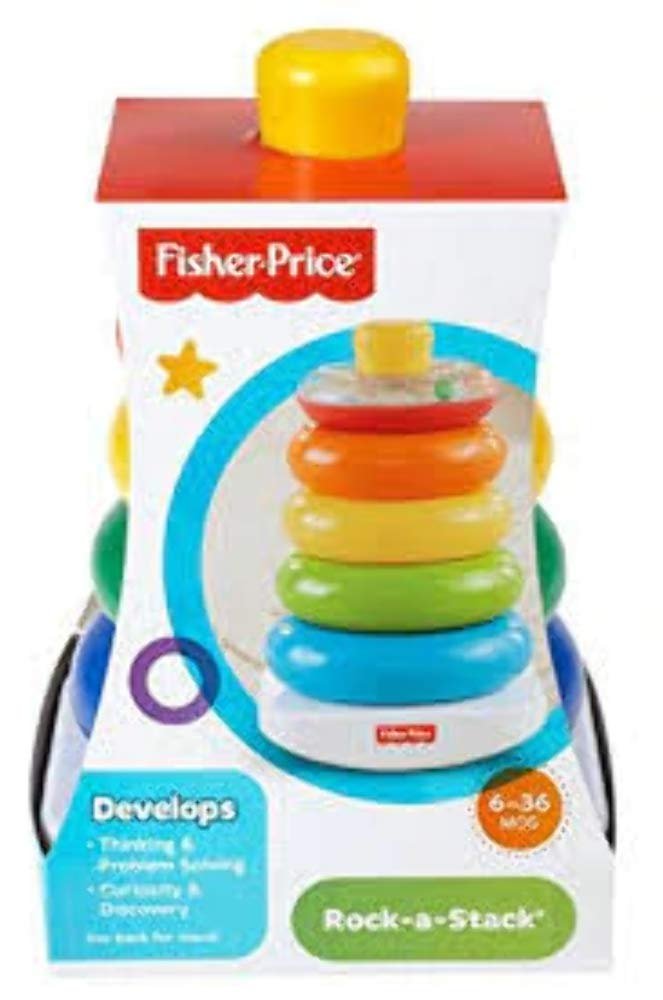
This popular, very approachable stacking toy contains five brightly coloured, tactile rings that go on a rocking base. Early conceptions of size sequencing, relative proportion and colour matching through tactile manipulation. Tough and sturdy, this is a great essential for early hand-eye coordination.
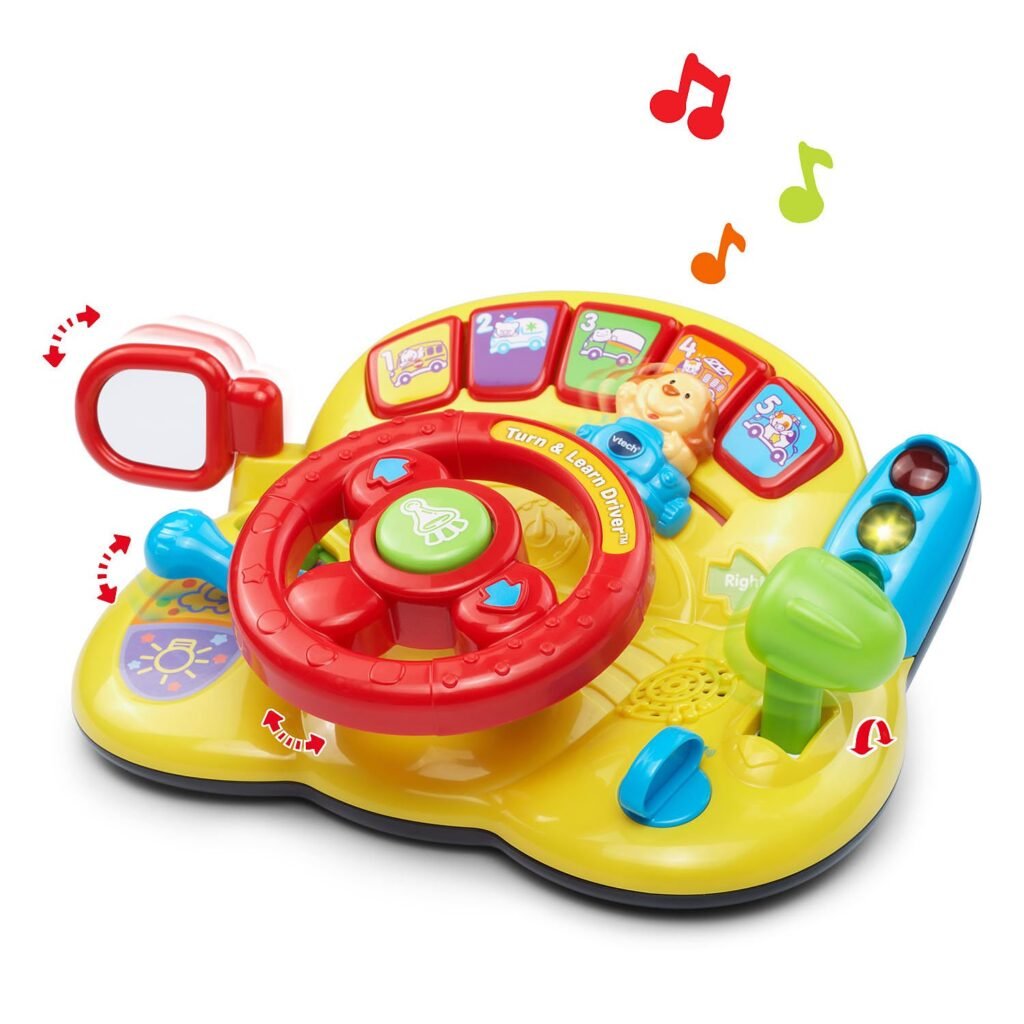
VTech Turn and Learn Driver
It’s an interactive steering wheel toy with a spinning wheel, gear shifter and signal levers that imitate the real gadgets that parents use in the car. Great for inquisitive infants 6-36 months, this fosters imaginative role play and introduces early animals, car sounds and basic direction ideas with responsive sensory feedback.
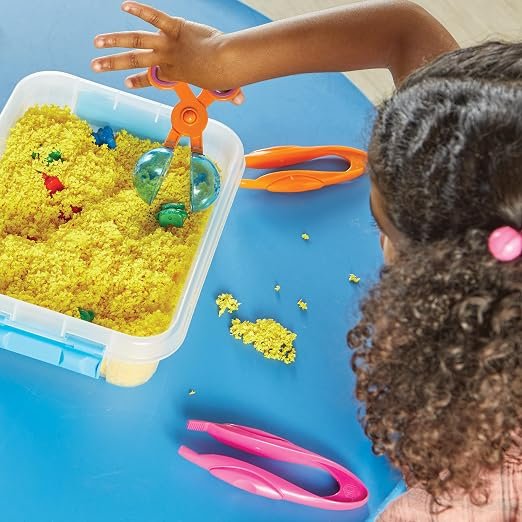
Helping Hands Fine Motor Tool Set Learning Resources
A special pack of four kid-friendly tools: a squeezy tweezer, a scoop and a liquid dropper. This turns ordinary kitchen or water play into a purposeful muscle-building workout. This helps children naturally learn the coordination patterns needed for scissor cutting and pencil writing.
Hape Geometric Wooden Sorting Board Toy
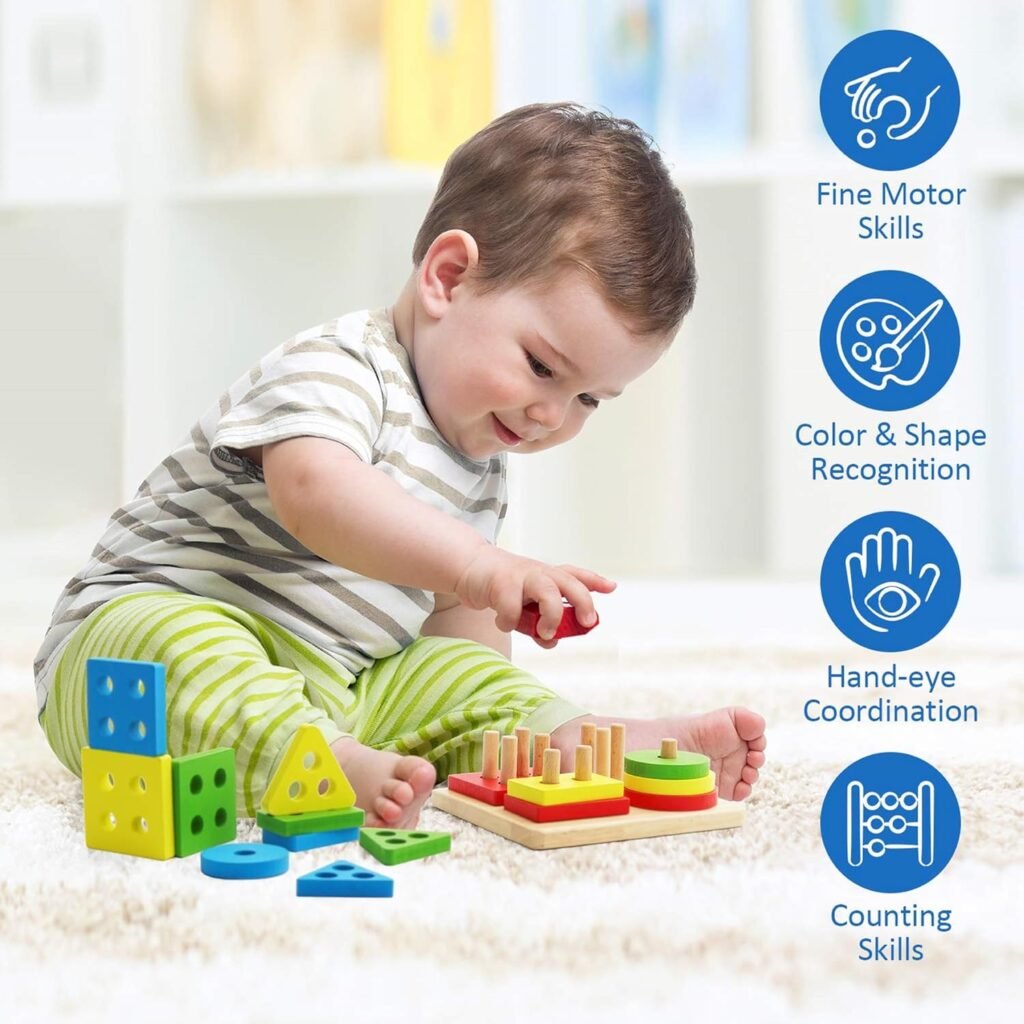
A lovely, minimalist sorting board made from sustainable wood, that pushes children to match forms to peg groupings. It introduces higher order thinking classification, early geometry and sorting logic and is a fantastic tool for solo silent workplace play.
Fat Brain Toys Dimpl Baby Sensory Toy Review
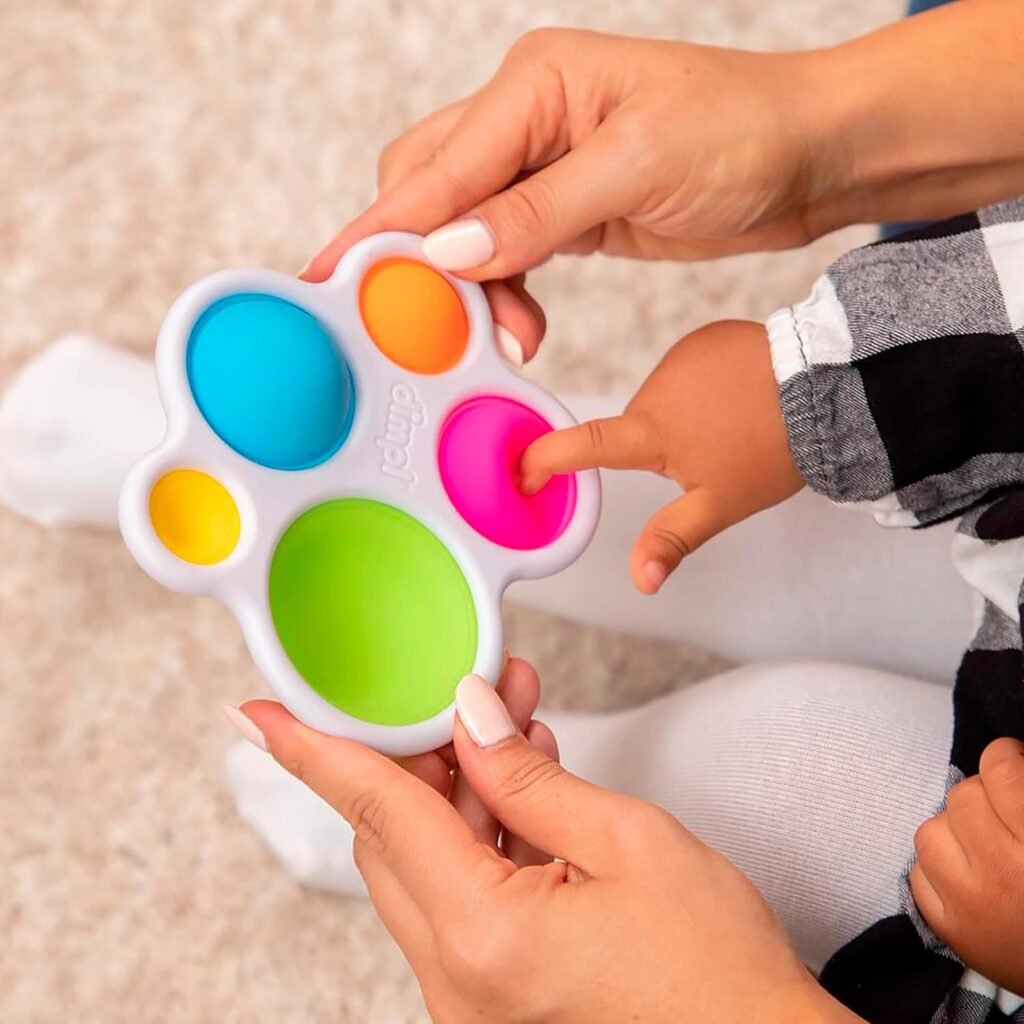
A novel, pocket-sized sensory item with colourful silicone bubbles set in a strong plastic frame. The simple, repetitive action of pushing the bubbles to either side provides great tactile input, aids in finger isolation and supports emotional self-regulation during daily transitions.
Green Toys First Stacker
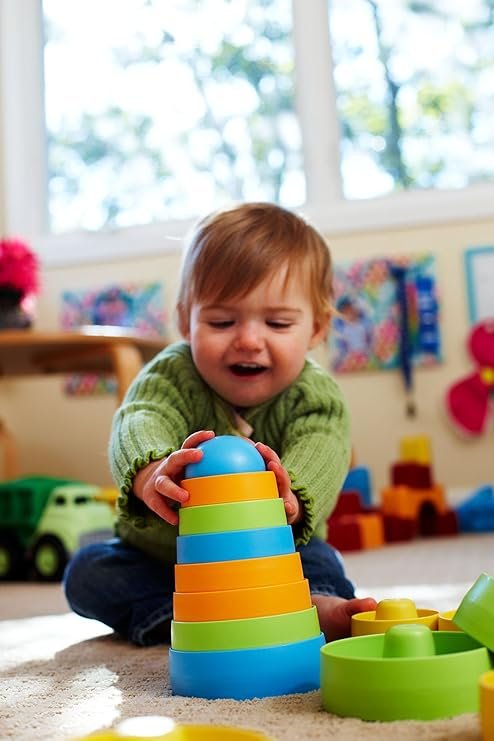
This nesting and stacking toy is made from 100% recycled plastic milk containers and is made exclusively in the USA. There is no central post so it is absolutely safe for younger toddlers. It develops spatial awareness, hand dexterity and early sorting skills and is super easy to sanitise after messy kitchen play.
Discover the Extraordinary in the Ordinary
After all, setting up a learning-friendly environment doesn’t mean turning your living space into an institutional preschool or spending a fortune on retail trends. Your child’s potential for cognitive, physical and linguistic development is already in your home – in the kitchen drawers, the laundry baskets and the backyard garden path.
By changing the lens through which we view the developmental brilliance in our day-to-day routines, we release ourselves from parental guilt and create a quiet, authentic environment for our children to flourish. There’s no need to make these early milestone decisions alone. Make sure to bookmark Cozy Parents as your favourite digital village for a never-ending supply of helpful family counsel, educational insights and friendly baby care information.
Open the cupboard, provide a wooden spoon, ask them to join in the daily routine and see the excitement when your small one finds that the whole world is a fantastic place to learn.