
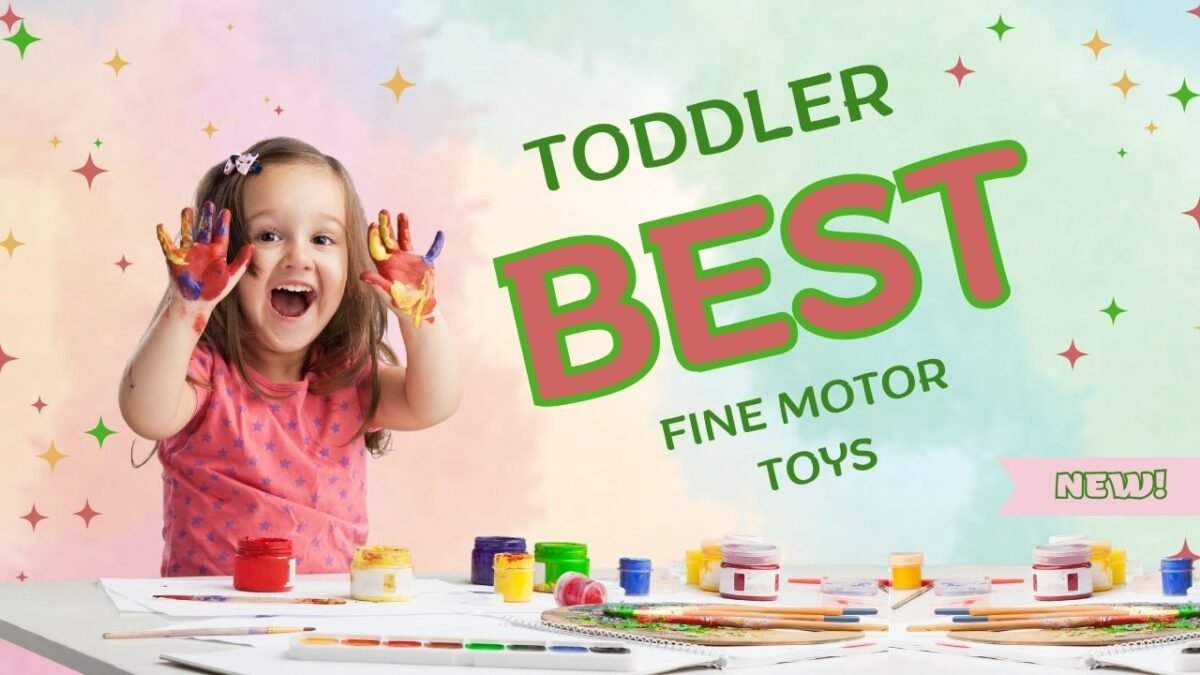
The early years of childhood are marked by an unquenchable drive to master the physical world. As we focus on gross motor milestones such as walking and running, there is a parallel and equally important revolution happening at the tips of your toddler’s fingers. Each time your child picks up a crayon, squeezes a pipet, threads a large wooden bead, twists a jar lid, a complex symphony of neurological planning, muscle coordination and sensory feedback is taking place. These delicate actions are what fine motor skills consist of precise control over the small muscles of the hands, fingers and wrists.
Today the commercial marketplace is awash in plastic gadgets that promise increased dexterity with flashing screens or complex mechanical buttons. But real manual dexterity doesn’t come from passively watching or swiping on a screen. It comes from actively touching and interacting with the physical world. These are the very neural pathways that will be needed for self-care in later life, for writing on your own and for spatial reasoning. Give a toddler a toy that involves pinching, pulling, buttoning, threading.
We at CozyParents believe that the best fine motor toys are a bridge to connection and independent discovery, not a barrier of digital distraction. Our philosophy is one of “intentional play”: choosing durable, tactile, open-ended resources that are respectful of the peace of a minimalist, screen-free home. In this detailed guide we are going to explore the developmental milestones of toddler fine motor control, how to build a toy ecosystem around these milestones and also review 7 amazing products on amazon US that honor your child’s development and your home’s visual peace.
Developmental Foundations The Science of Hand and Finger Skills
To choose the right tools for your child’s emerging hands, we first need to understand how fine motor control develops during the toddler years. We in occupational therapy know that hand-eye coordination and manual dexterity develop in a predictable, foundational progression.
1. Palmar Grasp to Pincer Precision (12-18 Months)
In late infancy and early toddlerhood, children change from grasping objects with their entire fist (the palmar grasp) to grasping with their thumb and index finger in opposition (the pincer grasp). This milestone is a monumental leap in cognition and physicality. At the moment toys do not require flashing lights or complicated mechanisms. They must deliver genuine tactile feedback: fat pegs fitting into wide holes, heavy shapes that require deliberate alignment, smooth wood pieces that respond to physical effort with gratifying spatial feedback. In this window, providing age-appropriate items helps develop small muscles without overloading an infant’s sensitive nervous system.
2. Bilateral Integration & Wrist Rotation (18 – 30 Months)
As toddlers enter their second and third years, they develop an understanding of agency that includes bilateral coordination, the use of both hands in complementary ways. One hand could steady a board and the other turn a bolt or drive in a peg. And this is the golden age of wrist rotation too. Toddlers need objects they can screw, unscrew, squeeze and lace. Their developing proprioceptive systems hunger for the resistance of safe tools. The open-ended toys we design are a direct response to the child’s finger and wrist dexterity, developing real cognitive mastery and physical confidence.
3. Precision Release and Pre-Writing Control (30 – 36+ Months)
By the time a child is approaching his third year, precision release becomes critical. Children learn not just how to pick up an object but precisely where and how to release it to complete a multi-step task. Such fine regulation requires high-level executive function, visual-motor integration and patience. During this phase, open-ended, age-appropriate fine motor tools serve as blank canvases for focus, helping children develop complex spatial problem-solving skills, self-regulation and prepare their hands for the physical demands of eventually holding a pencil.
Product Roundup: 7 Intentional Fine Motor Toys for Toddlers
Selecting toys that can be used through these important developmental windows means prioritizing durability, non-toxic materials and open-ended design.
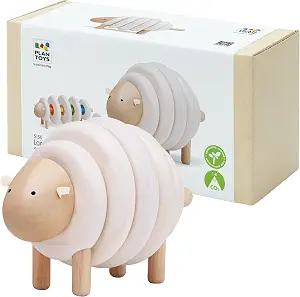
1. PlanToys Lacing Sheep Wood Solid
A lovely eco-friendly lacing toy made from rubberwood in the form of a sweet sheep with organic cotton threading cords and smooth ergonomic threading holes ideal for little hands.
Benefits: This traditional lacing toy takes the guesswork out of age-appropriate selection in that it is a perfect match for a toddler’s budding need for bilateral coordination and concentration. The natural wood construction grounds the nursery esthetic and the minimalist design prevents sensory overload. Its compact pieces nestle neatly on an open shelf, helping to keep the floor free of clutter.
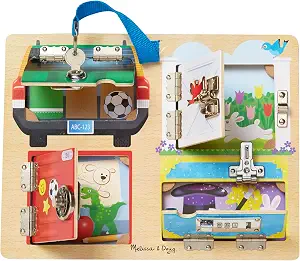
2. Melissa & Doug Latches Board Game
Classic manufactured wooden play board with a variety of working latches, hooks, bolts and snaps on a smooth, natural wood backing.
Benefits: Ideal for curious toddlers (18-36 months), this interactive board builds fine motor precision, finger isolation and problem solving. Made with sturdy wooden hinges and metal hardware for safe, long-lasting play unlike fragile plastic fasteners that break easily. Its warm wood texture and minimalist silhouette look beautiful on an open shelf when playtime is over.
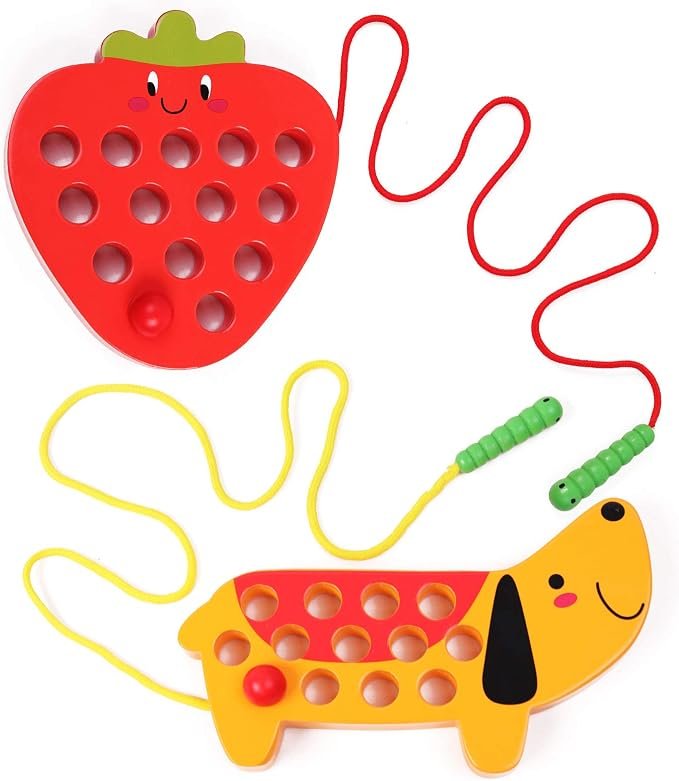
3. Grimm’s Wooden Buttons and Threading Game
Internationally acclaimed open-ended Waldorf toy made from solid linden wood, finished with non-toxic water-based color stains to allow the natural beauty of the wood grain to shine through.
Benefits: The supreme longevity toy, this goes easily from a simple sorting exercise to a complex patterning and threading challenge. It does not have any particular electronic function and therefore grows with the child through several stages of development. The smooth wooden disks tuck neatly into a compact, natural cotton storage pouch which takes up very little space in a minimalist playroom.
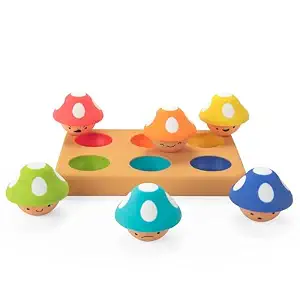
4. Raduga Grez Sorting Mushrooms
These mushrooms are made by hand of solid linden wood, with different thickness of the stem and different sizes of the cap. They are finished only with natural flaxseed oil, without any chemical paints or varnishes.
Benefits: The organic shapes offer more nuanced spatial challenges than classic sorting toys, as toddlers need to accurately assess where to place their fingers and how to rotate the mushroom to fit it into the correct base. No bright primary colors, giving a calming, naturalistic play environment and a wooden sorting tray to encourage independent clean up habits for children.
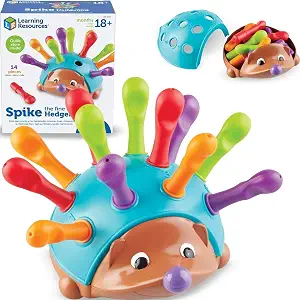
5. Learning Resources Hedgehog Spike Fine Motor Skills
This is a cute, multi-functional developmental toy. It has chunky, peg-like quills that you can insert into numbered holes on a smooth, high-density plastic hedgehog body.
Benefits: Great for toddlers 18-36 months, it targets multiple areas of development at the same time: pincer grasp development, hand-eye coordination, and color recognition. It’s sturdy enough for enthusiastic toddler handling and the hollow back means all the quills can be stored neatly inside so there’s no clutter.
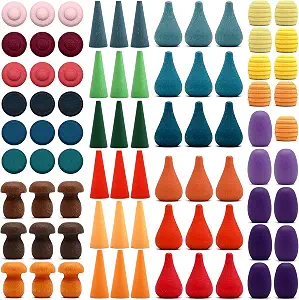
6. Grapat Wooden Mandala Loose Parts (Laceables)
Small, beautifully turned solid wood pieces in rich muted earthy tones of non-toxic stains in a sustainable wooden sorting tray.
Benefits: Fine motor components are designed for older toddlers and preschoolers (3+ years with supervision) and promote fine motor skills, precise grasping, sorting, counting and pattern-making. The entire set is presented in its compartmentalized wooden tray, making storage a simple exercise in spatial order.
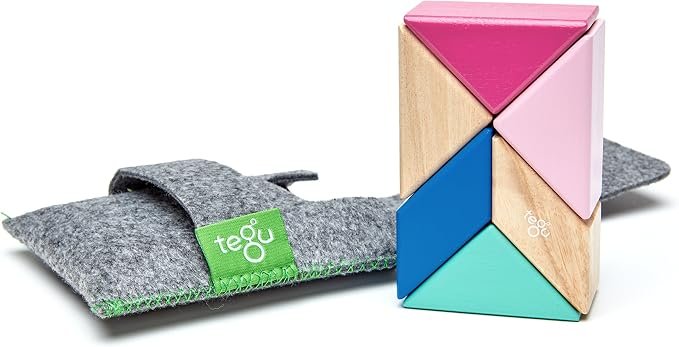
7. Tegu 6-Piece Pocket Pouch Magnetic Block Kit
A collection of smooth, sustainable Honduran hardwood blocks with safe, internal magnets to help children explore polarity and build complex small-scale structures.
Benefits: These blocks fill the gap between gross stacking and microscopic fine motor balancing. The magic “click” of the hidden magnets is so satisfying to the touch and keeps your fingers focused for a long time. Compact felt pouch for travel and screen-free play on the go.
Practical Advice: Creating a Low-Friction Toy Ecosystem
Fine motor toys aren’t enough it’s how you manage and introduce them into your living space that determines how well your home holds onto its peace.
1. The Montessori Toy Rotation System
Children do best when their surroundings are not too crowded. If you have fifty fine motor tools, don’t show them all at once. Choose 2 to 3 age-appropriate items that fit your child’s present developmental focus and put the rest away in a closet or storage tub. Rotate the collection every 3 to 4 weeks. When an old threading or lacing toy is brought back into play, it is met with the intense curiosity of a brand new discovery which dramatically extends the toy’s life span and keeps your living room floor free of clutter.
2. Limited Shelf Access and Independence
Store your child’s fine motor trays on low, open wooden shelves rather than toy chests. Having items visible and at child’s eye level allows them to independently choose what to work with and most importantly, where to put it when they are done. It encourages executive function, a deep sense of personal autonomy and respect for the home environment.
3. First look, then leap
Before you buy a new fine motor tool, spend a week watching your child’s natural hand movements. Are they now obsessed with opening and closing container lids? Latches, screw-top toys, they need Are they always trying to pass string through objects? They are ready for lacing cards and for threading beads. Let your child’s natural developmental schema be your guide for purchasing decisions so you don’t give into impulse buying and everything in your home has a true purpose.
Comparative Analysis: Premium Intentional Toys Compared to Mass-Market Alternatives
When parents shop for fine motor toys for toddlers, they are often faced with a dilemma: whether to buy high-grade, sustainable options or to go for cheap, mass-market plastic options. If you examine these options along certain dimensions, the reasons for intentional gear being a key investment for your family become clear.
Regarding durability, premium sustainable wooden toys and organic materials are built to last for generations, easily handling the heavy dropping, mouthing, and active manipulation of early childhood. Mass-market plastic fine motor toys, however, tend to crack, develop hinge fatigue, and fade. Usually they are broken and thrown into landfills within months.
Intentional toys are created with minimalist spatial harmony, nesting profiles, small wooden boxes and neutral esthetics to fit into home design in terms of function and home integration. Typically, cheap plastic replacements are awkwardly bulky in shape and have chaotic color schemes that take over the sightlines of a room, resulting in unavoidable visual clutter.
In terms of ergonomics and safety, high-grade toys are made with non-toxic, water-based finishes, organic beeswax and smooth, rounded edges that respect a child’s sensitive skin and developing immune system. Sometimes mass-market knock-offs use unsubstantiated chemical plasticizers, rough paints, or brittle plastics that will shatter under pressure.
Sensory-wise, natural wood, cotton and silk provide grounding, organic textures and natural scent profiles that soothe a child’s nervous system. Synthetic plastics and electronic toys often have cold, slick surfaces and loud, high-frequency artificial sounds that can overstimulate the sensory processing abilities of a young infant.
Finally, from a developmental and therapeutic perspective, purposeful toys are inherently open-ended, evolving creatively as a child grows from an infant exploring textures to a toddler building complex structures. Cheap, character-branded or single-use electronic toys that have pre-set functions, giving a quick dopamine hit before the child quickly loses interest.
Why Intentional Play Is Worth It in the Long Run
Selecting fine motor toys for your baby and toddler is an act of profound environmental and psychological stewardship. Selecting items that respect your child’s current developmental stage provides them with just what they need to develop hand strength, fine motor skills and cognitive clarity without the distracting din of modern commercialism.
At CozyParents we believe that every item in your home should be functional, help you grow or create a moment of peace. When you create a beautiful, sustainable collection of fine motor toys, you are doing more than just tidying up your living room; you are teaching your child how to focus, how to wonder and how to deeply engage with the world around them.
Feel free to explore the rest of CozyParents for more minimalist parenting wisdom, expert-backed gear roundups, and intentional strategies to bring serenity back to your family’s daily rhythm. Are you doing a toy rotation at home right now or planning to do a play space purge this week for your child? Tell us in the comments we love hearing how you create peaceful, intentional environments for your growing family.