
For the uninitiated, a child at play is a gorgeous expression of pure leisure. You witness your preschooler sorting toy cars by color, or your toddler building a wobbly edifice of cardboard boxes that topples to their absolute delight. Free, fun and easy. But if you could peep into their developing brain at these times you would see a spectacular display of neuronal fireworks.
Play is not a break from learning but the most complicated kind of learning available to young children. In the first few years of life, the human brain begins to form a million new synaptic connections per second. it builds these connections and for a young child it is wrapped in play. Play for children is a way to experiment with the laws of physics, learn language, navigate complex social-emotional boundaries and construct problem-solving frameworks that will serve them for the rest of their lives.
We believe that understanding the science behind your child’s regular play can improve the way you parent. It means you don’t need to set strict academic settings at home and you may discover the enormous education value in everyday enjoyable times. If you’re looking for some simple and practical ways to promote your child’s milestones without the stress, check out the resources at Cozy parents for some practical blueprints to guide your family to find its own way.
Science in Play
Parents instinctively know that play is good for children but modern family life has specific obstacles that get in the way of this fundamental engine of growth. To reclaim deliberate play, the first step is recognizing these barriers:
The Academic Pressures: There is tremendous cultural pressure to start “formal” academics with worksheets and flashcards earlier than ever before. Such shift often displaces the unstructured play which naturally cultivates flexible, creative minds.
The Digital Distraction: Passive stimuli is derived from screen-based entertainment and may inadvertently reduce the hours children spend exploring their real environments in an active, three-dimensional way.
The Over-Scheduled Day: Children’s lives are so regimented with planned activities and sports that there is little open-ended time to explore their own interests, get bored and invent their own play themes.
The Fear of Mess and Risk: A natural inclination towards neat surroundings and perfectly safe children can often limit sensory experiences such as mud play, water pouring, or creating precarious structures which provide vital cognitive input.
Cozy Parent Solutions
Strategy for Approach
We think of play and learning not as two different objectives but as a single interwoven entity. The answer is to evolve from directive adult management to intentional environmental designer. The correct materials, in and of themselves, give the physical space that naturally lures cognitive inquiry.
Operation
To best adapt this strategy to your daily life, focus on a few intentional environmental modifications. Don’t buy more, think about how you display the things you already have.
* Make predictable micro-zones in your home to give environmental cues for different levels of energy and different kinds of focus.
* Present open-ended multi-use items such as wooden blocks, fabric silks or cardboard boxes which your youngster must use their creativity to determine the use.
* Employ active narrative and not direct questioning. Narrate what your child is doing instead of asking them what color the block is. This will aid develop language without interrupting their flow.
* Make a basic toy rotation system to keep your child’s play space fresh, calm and free of the mental clutter that can cut attention spans short.
The Play Analytical Framework
To gain a sense of how these sorts of activities can directly activate the brain’s processing centers, one can look at the unique cognitive consequences linked with different types of play.
For example, symbolic and pretend play takes a young child into the abstract realm of cognition. For example, if a child picks up a wooden block and plays it is a phone, he’s learning the mental ability to understand that a combination of written symbols later in life represents real concepts.
On the contrary, constructive and structural play represent a physical laboratory for spatial cognition. As they move things, pile blocks up and build rails, toddlers receive lessons on weight, balance and gravity.
Finally, rule-based games are direct hits on executive function and working memory. Structured play teaches children about impulse control, remembering limits and changing course when surrounding events unexpectedly alter.
Parent Micro-Services Strategy
A detailed look at the impacts of play on cognitive development suggests that the advantages can be divided into four developmental categories.
1. Architecture of Executive Functioning
Play is the ideal training ground for the brain’s executive functioning network. When a child plays a self-directed game, he or she is actively using working memory, cognitive flexibility and self-regulation. Playing a chef or trying to solve the irritation of a crumbling block tower while staying on plot develops the prefrontal cortex more effectively than passive learning sheets.
2. Linguistic and development of language
The playground is full of vocabulary and opportunities to communicate. Children play with complex phrase structures and conversational rhythms when describing what they are doing or negotiating with their siblings and parents roles. Want to help families grow language naturally with minimum prep routines? Check out the educational archives at our website can provide simple and practical speaking frameworks for everyday occasions.
3. Structural and Mathematical Thinking
They learn their spatial ideas by doing, long before they acquire their math teachings. Pre-math abilities are basic and involve sorting objects by size, counting stones in a sensory bin and finding out how many small blocks make up the length of a large block. This 3-dimensional geometry gives youngsters an inborn comfort with numbers and spatial orientation that will serve them well into their school years.
4. Problem solving and cognitive resilience
Children are given ownership of their play tale and as like scientists they are always undertaking minor experiments. They test hypotheses, they run into unanticipated failures and they have to change their plan. When there are no real risks, youngsters develop strong emotional resilience and a growth mentality, learning to regard failures as data that will help them solve the problem on the next try.
Differences: Formal Education vs. Play-Based Learning
When it comes to shaping your child’s early years, it might be a proposition. But knowing the difference between a rigorous academic approach and an intentional play-based technique lets you prioritize what their brain really needs right now.
Motivation: External validation (stickers, grades, praise) is needed in structured academic settings. Play-based learning is motivated by internal curiosity alone, which helps develop a deeper, self-sustaining enthusiasm of discovery.
Skill Depth: Workbooks tend to focus on skills and emphasize rote memorization and distinct skills (such as tracing a letter). “Play-based exploration brings together many domains at once, weaving motor skills, language, spatial awareness and social logic into a single activity.
Stress Levels: Highly planned, sedentary jobs may often produce unhappiness or worry in young minds, especially if they are not developmentally ready. On the other hand, self-directed play automatically balances the cortisol levels, maintaining the brain in an optimal state to learn.
Creativity: Regular jobs have one right response. Open-ended play encourages divergence, showing kids that there are various ways to solve a problem, build a building or communicate an idea.
Recommended Products for Parents:
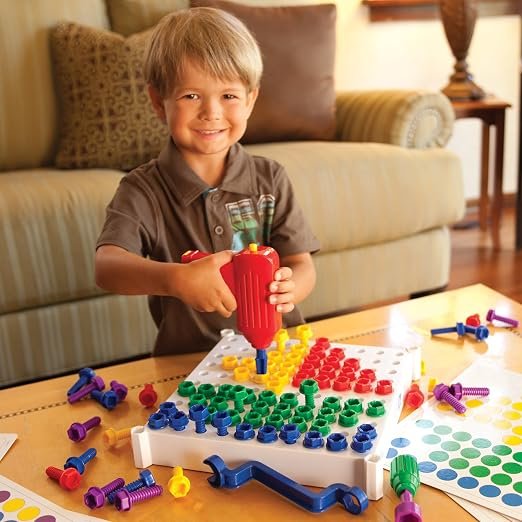
Educational Insights Design & Drill Activity Centers
The toy is interactive, with a child-sized power drill and multicolor plastic bolts that youngsters attach to a solid grid board. It’s a terrific primer on spatial design, pattern replication and early engineering thinking. Realistic mechanical action, very rewarding feedback keeps young minds engaged in problem solving.
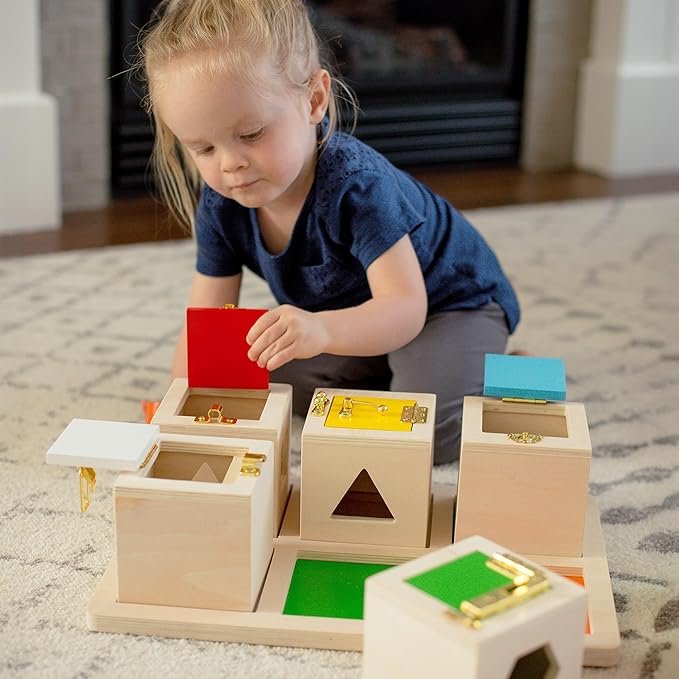
Guidecraft Peekaboo Lock Boxes
A set of 6 unique wooden boxes, each with a different type of metal latch, lock or door mechanism. The puzzle method challenges a child’s problem-solving abilities, memory and cognitive endurance as they discover how to unlock each box to reveal hidden rewards. This is an excellent tool to develop fine motor planning and critical thinking skills.
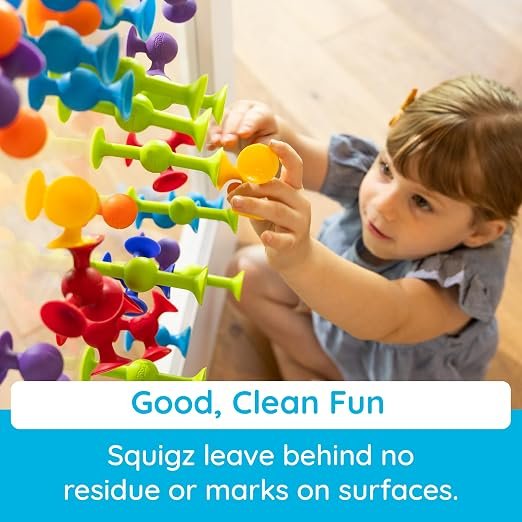
Fat Brain Toys Squigz Starter Kit
These innovative silicone suction construction blocks cling to one another and to any non-porous surface, and make a satisfying popping sound. They defy logic of space and physicality and allow for infants to build in whole new directions upside down on windows or on table surfaces expanding their sense of equilibrium.
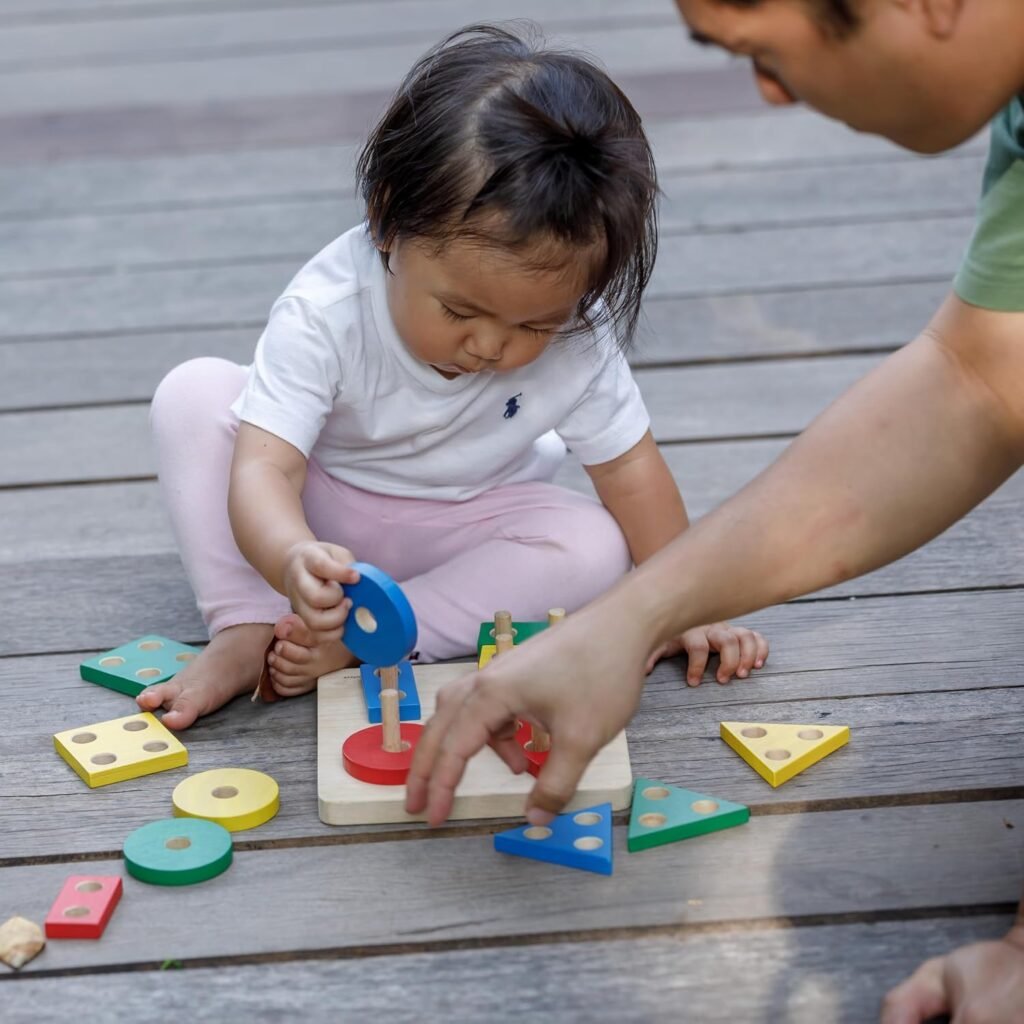
PlanToys Sorting Board Geometry
This classic form puzzle is made from eco-friendly, sustainable rubberwood. Kids will try to match blocks to the right pair of pegs. It provides early math classification, colour recognition and geometric sorting. Here’s a beautiful easy addition to an intentional home learning setting that inspires deep focus.
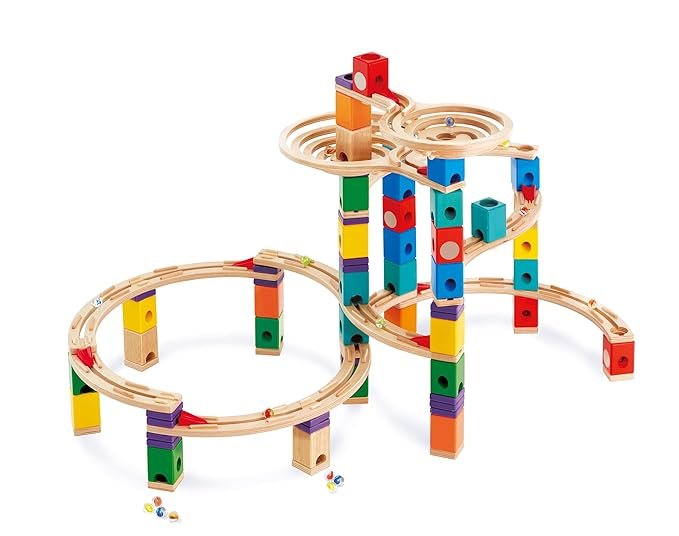
Hape Quadrilla Wooden Marble Run
Premium wooden marble run system with blocks, tracks and accelerators, allows kids to design complicated gravity defying courses. This is a good, practical lesson in kinetic energy, momentum and cause-and-effect logic. Great for older toddlers moving on to more complex architectural and logic games.
Learning Resources Gears! Gears! Gears! Superbuilding Kit
This open-ended engineering toy allows kids snap together bases and interlocking gears to create huge, moving mechanical creations. It demands a lot of logic and spatial organization and shows children how a system works by turning a single handle that makes their whole creation come alive.
Believe in The Power of Discover
The first few years of your child’s life should not be a race to academic benchmarks at the end of the day. The most significant cognitive advances happen when children have the time, space and permission to explore their world via the joy of play. By re-examining your home environment and saving these open-ended hours, you’re offering your little one a gift that text-heavy workbooks just can’t duplicate.
You don’t have to navigate these milestone changes alone. Get more baby care tips, community stories, and actionable child development facts at cozy parents, saved as your go-to parenting companion. Trust your child’s natural curiosity, enjoy the messy joy of discovery and watch their wonderful mind blossom, one playful experiment at a time.