

Walk into almost any home with small kids and you’re likely to see a familiar sight: toy boxes overflowing with a mishmash of plastic action figures, loose jigsaw pieces, wooden blocks and errant crayons. Many parents lose the toy war. Clean a room as often as you like and within minutes it will be back to chaotic floor debris.
But the problem is never that kids have too few storage containers, it’s how the toys are stored.
Large, cluttered toy bins visually overwhelm children and cause decision fatigue. When faced with a disorderly pile of objects, toddlers often throw out whole bins to find one piece and play with it for a little while, although restlessly, before moving on.
Children need the spatial order and deliberate categorization that require deep, prolonged concentration and self-directed play. When you organize your child’s toys into obvious functional divisions your child’s play room is transformed from a dumping ground of chaos to a quiet, inviting learning space.
All the resources are well-organised by kind and are easy to find so children can find what they want quickly, play imaginatively and meaningfully and feel proud in the end when they put things back where they belong.
At Cozy Parents, we analyze early childhood equipment through a stringent lens of spatial clarity, physical health, developmental utility, and clutter-controlled minimalism. Your home should be a calm safe haven for your child’s milestones, occurring organically, free of friction or visual noise. For more therapist-backed frameworks, home organization tips, and expert gear recommendations for growing families, visit Cozy Parents for practical tools for deliberate daily living.
Cognitive & Behavioral Foundations
To understand why grouping toys by category increases the quality of play one needs to explore how the pediatric nervous system interacts with its physical environment.
Child development experts and Montessori educators emphasize that a child’s external environment immediately reflects and shapes their internal mental state.
1. Cutting Visual Choice Overload
A child’s brain is still developing executive function skills, the capacity to organize actions, filter out background noise and maintain focused attention.
When faced with a disordered mountain of mixed toys , the visual brain is bombarded by competing sensory information . They separate toys into separate containers so each container has low density of toys so there is less visual noise and kids can focus on one thing at a time.
2. Assist in Developing Cognitive Schemas
Young children develop cognitive schemas, mental structures that they use to organize what they know about the world. Sorting objects into categories fits directly with this.
If a child finds all car toys in one basket, building blocks in another and pretend-play doctor instruments in a third, their brain promotes logical classification, spatial linkages and attribute grouping through rituals of play that happen every day.
3. Promoting Autonomy and Executive Function
Children are given entire independence by putting toys on accessible shelves at eye level and placing them properly.
No longer do they need to rely on the grownups to find the missing parts or to begin the activity. A complete play cycle, choosing a labeled basket, taking it to a play rug, playing with the contents and then returning the basket to its proper shelf space, encourages personal accountability and executive planning.
Step by Step Blueprint: The 5 Main Toy Categories
For a good category based system at home, initially you need to get rid of broken and incomplete sets. Then, categorize the remainder of your toy assortment into five major developmental categories:
Category 1: Building & Construction
Includes: Wooden unit blocks, magnetic tiles, linking cubes, interlocking bricks and stackers.
Storage solution: low wooden trays, open weave canvas baskets or modular shelf cubes. Keeps building systems separate so there is no frustration or confusion at the time of construction.
Category 2: Small World & Pretend Imaginative Play
Items in this category: Play food, doctor kits, dollhouse characters, wooden animals, toy cars, costume accessories.
Storage Solution: Medium fabric drawer bins or labeled canvas totes. Sort pretend play things by micro-theme (e.g., all food items in one basket, all wooden animals in another).
Category 3: Manipulatives, Fine Motor and Puzzles
Includes: Wooden Peg Puzzles, Lacing Beads, Shape Sorters, Counting Pegs, Pattern Boards
Storage: Upright on puzzle racks or flat wooden trays shelving. Vertically stacking puzzles avoids parts from becoming lost under heavier items.
Category 4: Sensory Arts & Expressive Art
Included Items: Washable crayons, beeswax sticks, tempera paint sticks, paper rolls, play dough tools and stamp pads.
Storage: Rolling utility carts or desktop caddies with handles. Having art supplies well organized in a mobile unit allows parents to limit access for smaller toddlers and allows for quick set up.
Category 5: Music and Large Motor Movement
Includes: Wooden drums, egg shakers, rainmakers, silk scarves, balance stepping stones and floor balls.
Storage: large floor baskets of cotton rope or deep cubby bins near open floor spaces.
7 Best Storage Organizers to Sort Categories
Here are seven well-rated organizational goods available on Amazon US. Let’s audit them to help you construct a clean, category-sorted system at home.
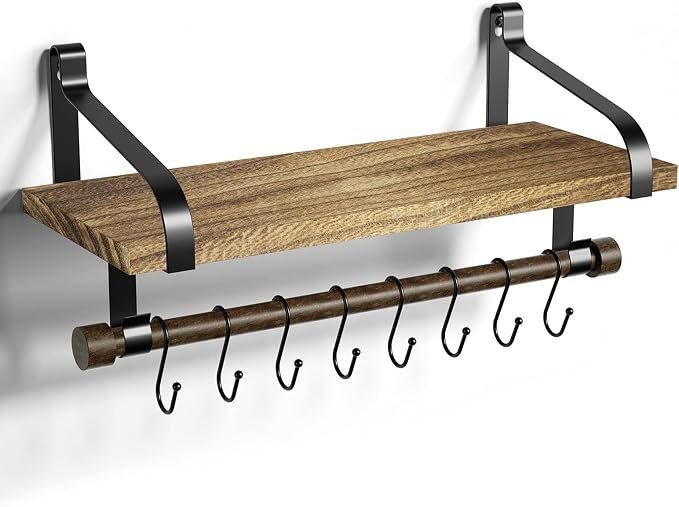
1. LOVE-KANKEI Floating Wooden Wall Shelf
Vertical wall space is critical for visibility of high priority categorized goods and to retain open floor space. This trio of floating wall shelves includes heavy sturdy metal brackets and a sleek, minimalist design.
Position these shelves at your toddler’s eye level to provide separate display areas for main categories such as rotating three wooden puzzles or showing off a small fleet of wooden vehicles.
The wood grain naturally gives architectural warmth to walls in a nursery or playroom and the wood ledge keeps things from falling off.
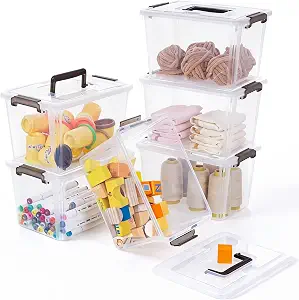
2. Citylife Clear Plastic Storage Latch Bins (6-Pack)
Clear stackable latch bins work well for small toy categories with dozens of small components, such as plastic building bricks, marble run parts or craft beads, for example. The bins are made from sturdy, BPA-free clear plastic, so children can see the contents of the container without removing the lids.
Heavy-duty ergonomic latch handles snap down firmly to help keep against inadvertent spills. The recessed lid design makes it easy to stack containers vertically inside closets or on deep shelving units.
The transparent design removes guesswork making it easy for parents and children to easily discover specific category groupings.
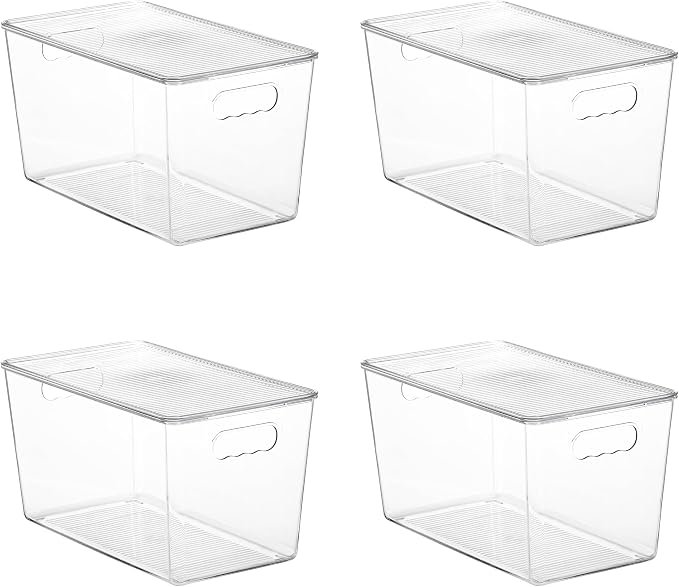
3. Vtopmart Open Front Stackable Storage Bins, 4 Pack
These are strong stackable bins, designed for use on low shelves and closet floors, with a broad slanted open-front access window. The open design makes it easy for toddlers to reach in and grab toy food or put wooden blocks away, even when the bins are stacked one on top of the other.
Made of shatter resistant food grade plastic Easy to clean with a moist cloth and mild soap.
The little rectangle fits nicely side-by-side in ordinary cube organizers for a simple, lid-free solution for pre-readers who are learning to clean up by category.
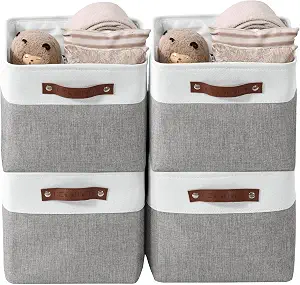
4. Decomomo Heavy Duty Fabric Storage Box (Set of 3)
Fabric bins in a neutral two-tone linen with a strong non-woven lining, a simple ornamental choice for shared family living areas. Reinforced with high density EVA foam walls and a metal top frame, these bins stay upright even when empty.
They move easily in and out of standard 13-inch cube storage systems, with sturdy faux leather grips.
The opaque cloth covers all the interior toy clutter, providing your living area a peaceful, sleek look and keeping categorized pretend-play sets at your fingertips.
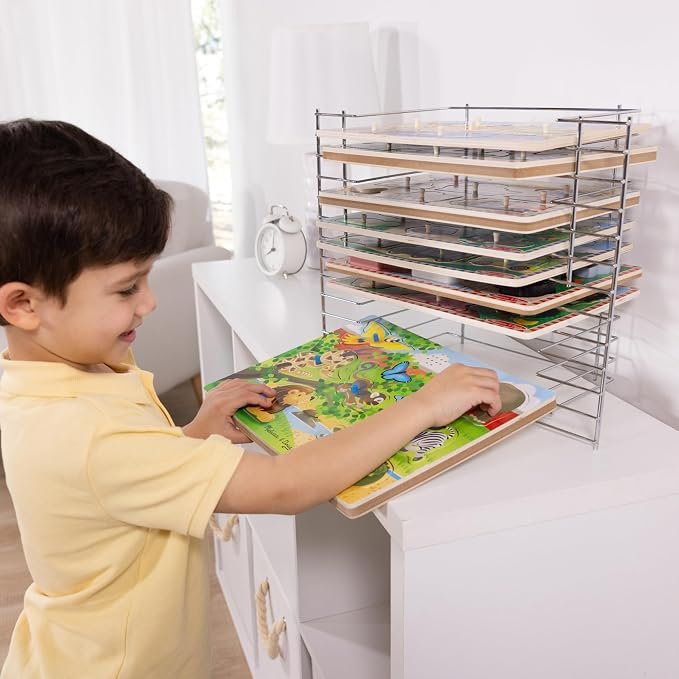
5. Melissa & Doug Deluxe Wire Puzzle Rack
Playroom dissatisfaction sometimes stems from disorganized puzzles with missing pieces. Constructed from heavy-duty metal wire, this storage rack stores up to 12 regular wooden peg puzzles or chunky board puzzles in a compact vertical layout.
Wooden puzzles slide horizontally into separate wire slots so kids can see all the puzzle covers at the same time no need to lift a large stack.
The solid steel wire frame has smooth rounded edges to prevent scratching furniture. This vital organizer will keep your cognitive manipulatives distinct and intact.
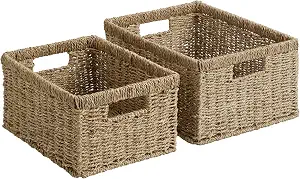
6. StorageWorks Seagrass Handled Woven Storage Bins (2-Pack)
Perfect for parents committed to plastic free, natural materials, these handwoven seagrass storage baskets provide organic texture and warmth to playroom organizing. The baskets are made from strong woven natural fibers and mounted on a solid metal steel frame, with side handles.
They are the perfect size to handle large wooden block sets, natural loose parts or musical instruments on low Montessori shelves.
They are durable enough to survive the daily handling of toddlers. The natural scent of straw and tactile texture add to the sensory experience of your home play place.
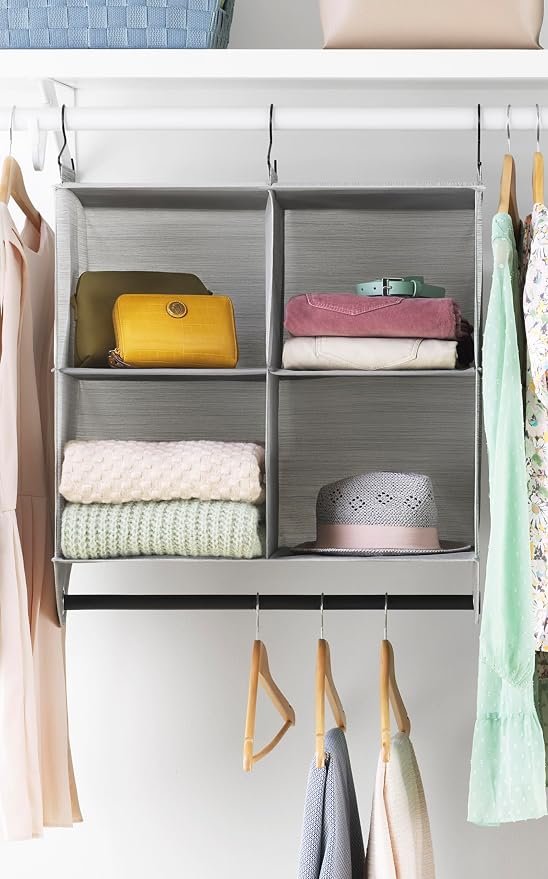
7. Whitmor 4-Section Hanging Closet Organizer with Drawers
Heavy durable hanging closet organizer turns unused closet hanging rods into a hang closet storage center when floor and shelf space are limited. Made of robust fabric and reinforced cardboard shelves, it has four large open compartments and two removable fabric drawers.
Parents can designate each hanging level to a different category such as board games on the top shelf, dress-up costumes in the middle level and soft cuddly animals in the bottom drawer.
The unit is hung such that the closet height is low enough for small children to access their categorized clothes or play sets unaided, and it entirely clears the floor area.
How to Create a Low Friction Category System at Home
Great storage organizers are a good first step but it’s the basic everyday practices that will keep your home peaceful and ordered over the long term.
Here are four practical pointers to help you design a successful category-based system:
1. Dual Picture and Word Labels for All Items
Label each bin or basket with a dual picture-word label (e.g., a photo of a wooden block next to the printed word “BLOCKS”) to help pre-reading babies succeed. Visual picture symbols help toddlers to know where things go on their own, while printed text supports early literacy and sight word recognition.
2. The “One Category At a Time” Rule
Create a particular household routine. Your youngster can take out any classified basket but they have to return it to its allocated shelf space before they’re allowed to open a different category basket. This modest border keeps toy sets from combining on the floor and clean-up sessions under 2 minutes.
3. Place Heavier Categories on Lower Shelves
Heavier categories, such as wooden unit blocks or hefty wooden train tracks, should be on the lowest shelf levels. It’s also easier on toddlers to slide bins out without exerting themselves and storing large containers close to the ground helps keep them from being dropped accidentally (and saves little toes).
4. Sort Evening in 5 Minutes.
Do a fast sorting sweep together for five minutes before you begin your child’s evening bath ritual. When you are done playing during the day, put everything back in its container. This helps keep your living area clean, organized and pleasant for the nighttime hours.
Important differences: Category Sorting Versus Traditional Bulk Toy Boxes
The assessment of toy organization systems shows distinct disparities between category sorting and traditional toy chests.
Engagement: Traditional large toy bins result in clutter and quick distraction and dump behavior. Small parts tend to settle to the bottom of bulk chests causing lost pieces and shattered toys.
Child Independence: Toddlers can pick and put away toys easily without help thanks to picture-label low-profile classified bins. Deep toy boxes need an adult to help shove things to the bottom.
Visual Harmony: Neutral-colored fabric bins and open shelves give shared living rooms an ordered, visually pleasant aspect. Overflowing toy chests are a constant visual noise, and they clutter up a room.
Clean-up efficiency: fast, methodical and intuitive if you categorize stuff by specific, smaller bins. A big bulk chest is a big job for parent and child to clean up.
Growing Up In A Supportive Environment
Sorting your child’s toys is more than simply cleaning up the house. It is a way of creating a calm and organized space that encourages self-focus, mental organization and self-reliance. Sorting toys into separate functional groups and then adding them to low profile, child-friendly organizers turns everyday play from a messy struggle with clutter to a peaceful, satisfying experience for your whole family.
Audit your child’s play area now for a few minutes. Collect a range of materials Sort into three or four large groups Put into clear boxes or baskets on a low shelf Watch your child revel in the thrill of purposeful play
You’ll never have to decide on early childhood gear or house setup on your own. Trust us when we say: Bookmark Cozy Parents for a steady stream of realistic developmental frameworks, minimalist home organization tips and candid product evaluations.