


As children enter their preschool years, their ability to focus inward, to think symbolically and to analyze visually changes dramatically. If you’ve ever seen a four-year-old find a missing shoe with ease or catch the smallest details in a picture book, you’ve seen their working memory and powers of observation develop rapidly. In a marketplace full of over-stimulating electronic matching games, with their flashing lights and digital reward sounds, it’s all too easy to assume that digital screens are the quickest route to cognitive mastery. But true mental stamina is created by tactile, physical contact with the real world.
When a kid opens up a poorly assembled set of flimsy cardboard cards, it doesn’t take long for the fun to fade away. The cards resist, stack up into unmanageable heaps, frustrate small hands and turn what should be a delightful exercise in concentration into a struggle against clutter and disorganization. For the intentional parent, curating a playroom means looking for tools that respect the child’s developing nervous system and the visual harmony of the home.
At CozyParents, we believe the toys we bring into our homes are the raw materials of an expanding mind. We believe in “intentional play,” and choose durable, tactile, open-ended resources that promote independent thought and the calm of a minimalist, screen-free home. In this comprehensive guide, we’ll discuss the developmental skills that matching and memory games foster, how to build an engaging ecosystem for play and review seven excellent products available on Amazon US that honor both your child’s budding intellect and your home’s esthetic tranquility.
Foundations of Development
To comprehend the enduring educational impact of matching games, we must consider how a young preschool brain processes visual stimuli and encodes information. As we know from child development and occupational therapy, memory is not a passive filing cabinet. It is an active, dynamic process based in sensory engagement.
1. Improvement of Working Memory and Cognitive Flexibility
Working memory is the mental workspace we use to hold, manipulate and update information in brief periods of time. In a typical memory matching game, a preschooler has to remember where a particular tile is, keep that coordinate in mind while other tiles are flipped over, and then retrieve that coordinate when a match pops up. Trial-and-error experimentation like that develops high-level cognitive flexibility. Kids learn that mistakes are data points, and they learn resilience and strategic thinking that translate directly into later academic success in math and reading.
2. Visual Discrimination and Attention to Detail
Observation is the basis of scientific inquiry and the arts literacy. This kind of progression from broad to fine distinctions is typical of preschoolers they can recognize differences between shades of color, subtle differences between animal patterns, or complex geometric orientations. High quality matching games encourage children to look beyond the superficial glance and engage in deep visual discrimination. They analyze the fine features of a piece to strengthen the neural pathways that allow them to recognize letters, spatial awareness and identifying patterns.
3. Emotional Regulation and Social Turn-Taking
Matching games, played with a parent, caregiver or peer, provide a low-stakes setting for learning important social-emotional milestones. They learn to wait, how to control the impulse to blurt out where a hidden match is, how to cope gracefully with the natural swings of winning and losing. This shared focus grounds the child’s nervous system, providing a predictable, quiet container for connection that nurtures deep emotional security.
The Product Roundup: 7 Purposeful Matching Games For Preschoolers
When selecting games that can grow with a child’s developing mind, durability, natural non-toxic materials and a minimalist design should be top priorities.
1. Petit Collage Little Woods Memory Game
Description: This is a beautiful set of matching tiles made from FSC-certified recycled cardstock and printed with vegetable-based inks. These tiles are housed in a durable keepsake box with a cotton pull-string.
Benefits: This is a minimalist’s wet dream. The sophisticated nature-inspired woodland illustrations stimulate a child’s visual system without the neon overstimulation of mass market brands. The heavy duty cardstock is up to the rigors of early childhood and the compact box keeps all the pieces neatly corralled, preserving spatial order in a minimalist living room.
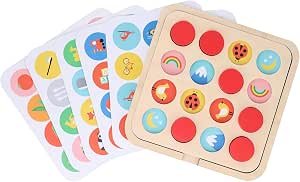
2. PlanToys Matching Pairs Solid Wood
Description: Made of sustainable rubberwood this memory game features smooth tactile wooden coins with crisp eco-friendly screen printed icons presented in a sturdy wooden tray.
Benefits: Rich proprioceptive feedback for a toddler’s fingertips, these solid wooden disks are a move away from flimsy paper. Each piece has some heft so they feel good to flip and stack and they encourage developing fine motor control along with memory building. Its warm wood texture and simple silhouette are lovely to rest on an open shelf when playtime is over.
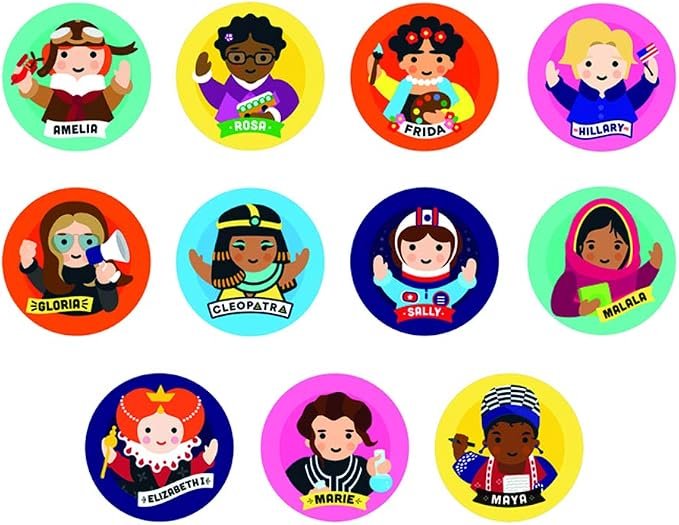
3. Little Feminist Memory Game by Mudpuppy
Description: A memory matching set with lovely illustrations of important women in history made from durable grayboard and packaged in a slide-out box.
Benefits: This game introduces preschoolers to inspiring people through gentle, artistic portraits, not caricatures. It promotes early history interest, and inclusive narratives but needs a sharp eye for specific clothing, hair and accouterments. The solid box encourages kids to clean on their own.
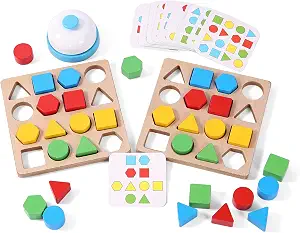
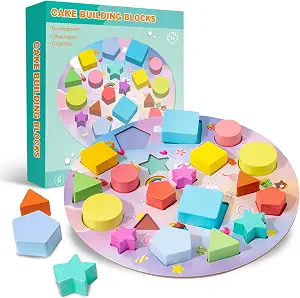
4. Raduga Grez Wooden Set for Color and Shape Matching
Description: Made by hand from solid linden wood, these minimal geometric shapes and abstract tokens are finished only with natural flaxseed oil, no chemical paints or varnishes.
Benefits: These three-dimensional wooden tokens offer subtle tactile matching challenges for spatial reasoning not found in flat cards. The non-bright artificial colors create a calming and naturalistic play environment and the organic wood smell provides a grounding sensory connection to nature indoors.
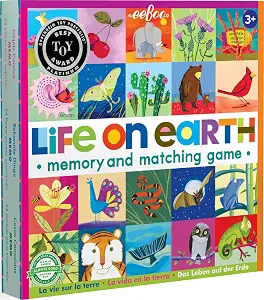
5. eeBoo Life on Earth Memory & Matching Game
Description: An old-fashioned square-tile matching game featuring award-winning whimsical illustrations of animals and plants from around the world, printed on high-quality recycled board with a matte finish.
Benefits: The matte finish is a nice touch, but an important one; it cuts down on the harsh glare you’d get under indoor lighting, making long play sessions easier on the eyes. The rich educational images allow for storytelling beyond just matching, giving parents and children the opportunity to talk about habitats, behaviors and geography.
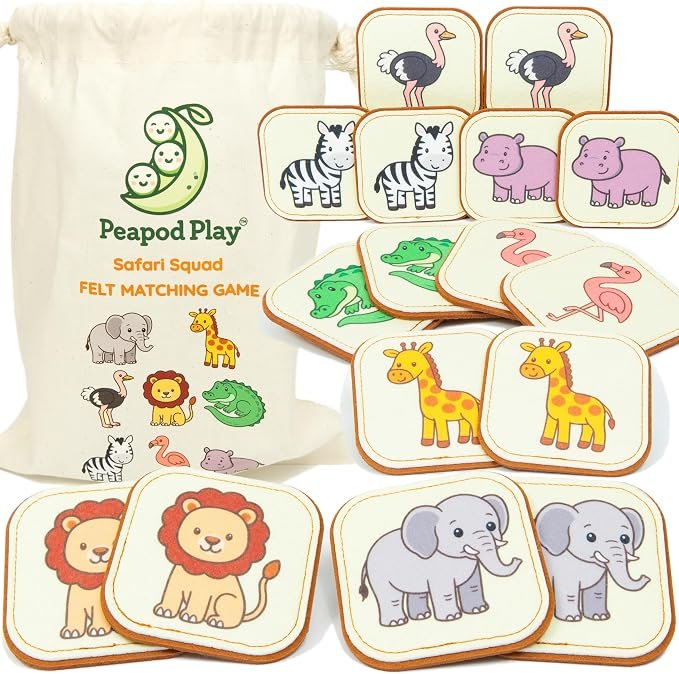
6. Grapat Wild Matching Loose Parts and Cards
Description: Deluxe learning set combines natural wood tokens with printed thematic matching cards. Stained in rich, earthy colors with non-toxic stains.
Benefits: This set balances the structure of game rules with the open-endedness of play. Besides matching the images, the wooden pieces can be used for sorting, counting and imaginative world building. It all nests neatly into its wooden storage tray and cleaning up is a snap of spatial order.
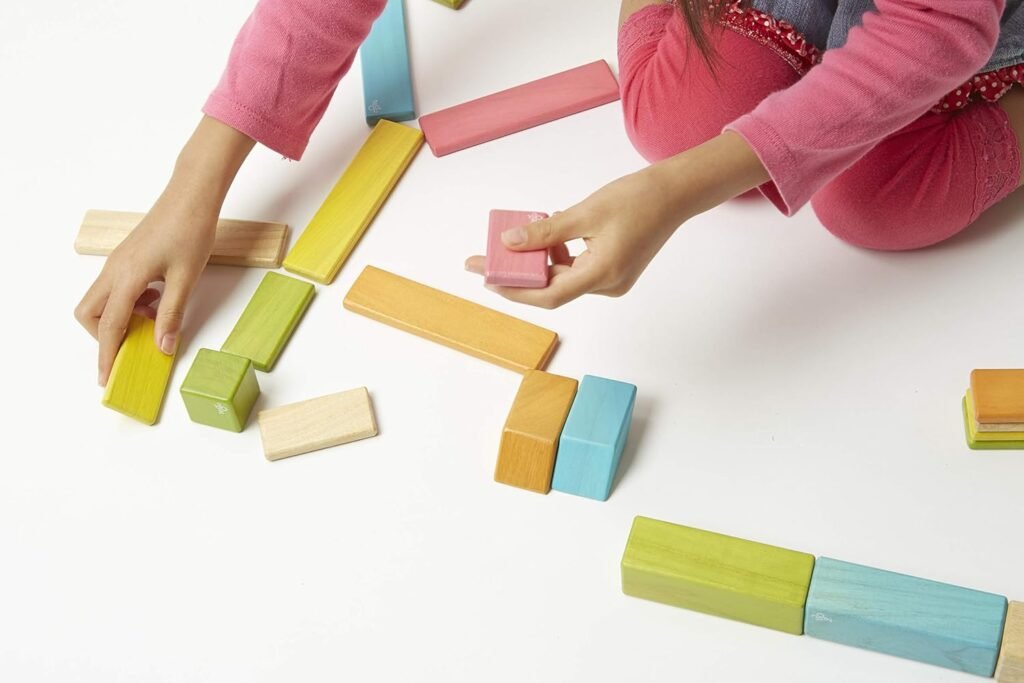
7. Tegu Pocket Pouch Magnetic Matching and Building Set
Description: Best known for blocks, Tegu’s compact travel sets can be adapted to creative matching and spatial replication games with magnetic polarity and geometric constraints.
Benefits: These pieces fill the gap between flat tile matching and 3D spatial engineering. The “click” of concealed magnets is magical and so satisfying to the touch and helps you stay focused for longer. They fit snugly into a tidy felt bag, making them a great travel companion for screen free entertainment on the go.
Practical Tips: Building a Low-Friction Matching Ecosystem
But managing and presenting memory games is only half the battle. How you manage and present them within your living space will be a deciding factor in how well your home preserves its peace.
1. The Progressive Deck Reduction Strategy
Introducing a brand-new 36-piece matching game to a three-year-old can cause immediate overwhelm and frustration. Instead of dumping all the tiles out at one go, practice progressive reduction. Select only 4-6 pairs (8 tiles total) with unique, high contrast images. Once your child can easily master that small subset, introduce 2 new pairs each week. This builds their confidence, protects their attention span and keeps the living room floor from looking like a chaotic sea of scattered cardboard.
2. Low Shelf Access and Classify Shelves
Keep your child’s matching games on open, low wooden shelves, not in deep toy chests or high closets. When games are in sight and within reach at the child’s eye level, children can select what they want to work with and, more importantly where they want to put it when they are finished. It strengthens executive function, fosters a strong sense of autonomy, and instills respect for the home.
3. Embrace the “Less Is More” Rotation Strategy
Ironically, having too many games available at the same time can actually reduce engagement, a phenomenon known as choice overload. Maintain two matching games in rotation and store the remainder in a closet or storage bin. Rotate selection every 3 weeks. A familiar game, coming back after a month-long absence, satisfies the insatiable curiosity of a brand-new discovery, extending the lifespan of a game without adding to the clutter in your home.
The Long-term Benefits of Purposeful Play
Selecting memory and matching games for your preschooler is a great act of psychological and environmental responsibility. By choosing items that respect your child’s current developmental stage, you are equipping them with the precise tools needed to hone visual observation skills, build a strong working memory and foster cognitive clarity all free from the intrusive noise of modern consumerism.
At CozyParents, we believe that every item in your home should serve a purpose, support growth, or spark a moment of peace. By thoughtfully choosing a sustainable collection of games, you’re not just cleaning up your living room, you’re teaching your child how to focus, how to wonder and how to deeply engage with the world around them.
We invite you to continue your journey with CozyParents, where you can find more minimalist parenting advice, expert-recommended gear lists and purposeful strategies to help bring peace back to your family’s everyday life. If you haven’t already implemented a game rotation system in your home, are you ready to curate your child’s play space this week? Tell us in the comments below. We love hearing about how you create peaceful, intentional spaces for your growing family.