
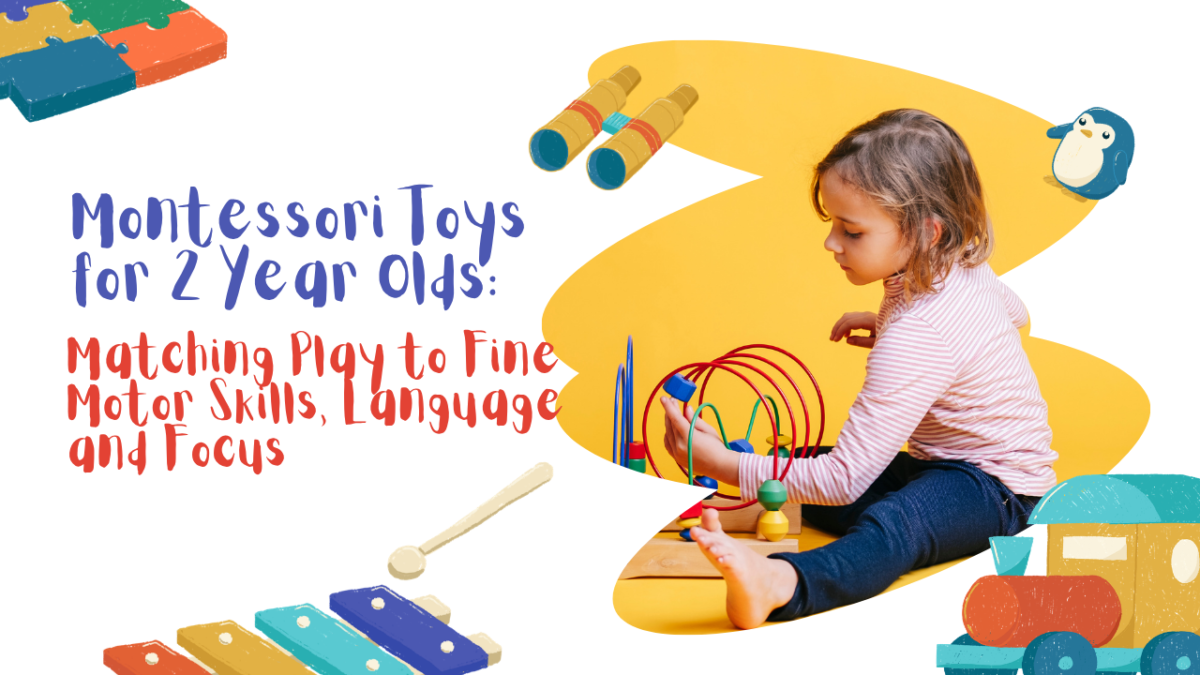
Two-year-olds are badly done by. Often referred to as the “terrible twos,” this stage is actually one of the most stunning, fast phases of human brain growth.
Your twenty-four month infant is going through a tremendous brain transition. Their physical dexterity is sharpening, their language is booming and their drive for independence is at an all time high.
A two-year-old is rarely frustrated or throwing a tantrum out of defiance. More often, it’s a sign of a mismatch between their tremendous developmental urges and the resources in their surroundings.
Montessori overcomes this friction by giving precise, intentional materials that correspond to a child’s present “sensitive periods.”
If you can give them the appropriate kind of structural toy to work with, you can change that chaotic energy into deep, quiet attention.
We believe the toddler years should feel like a delightful partnership, not a daily conflict, at Cozy Parents. If you want to create a stress-free environment at home where these quickfire milestones can thrive, check out our website for practical, research-based tools tailored for real family living.
Core Problem Discussion: The Toddler Play Gap
Before you start reworking your playroom, it helps to understand why most commercial toys marketed to two-year-old usually don’t keep their interest or aid with behavioural meltdowns.
The Entertainment Fallacy: Toys that sing, talk or move by themselves put the toddler in a passive observer stance which results in low engagement and early boredom.
The Lack of Challenge: Basic infant toys don’t provide enough challenge for a two year old’s sophisticated fine motor needs therefore they look for high risk objects around the house.
Vocabulary Overload: Electronic toy sounds, synthetic as they are can actually impede the development of real, conversational language in youngsters.
Visual Chaos: The mental overload of big plastic bins filled to the brim with mismatched toy parts makes it impossible for a toddler to settle down to an activity.
The 3 Developmental Sectors of the 2 Year Old Mind
To get a better understanding of matching toys to your toddler’s biological readiness, we can divide the day into three separate developmental sectors.
Sector 1: The Mechanical Playground (Motor Fine)
From 24 to 36 months the child’s hands want complex functional work. They are advancing from simple grasps to precise wrist rotations, tracking of objects and isolation of specific fingers. Toys that have them threading, turning screws or manoeuvring locking mechanisms are great to satisfy this deep physical drive.
Sector 2: The Word Warehouse (Language)
The language explosion at this point is really tremendous. Two-year-olds prefer to sort, labe, and categorise their physical reality. By providing accurate wooden copies or tactile materials they may chart out spoken words, relate nouns to physical forms and understand directional adjectives during interactive play.
Sector 3: The Sanctum of Order (Focus)
A toddler’s attention span multiplies when the activity has a distinct beginning, a visible middle and an obvious end. The mind enters a profound, self-directed flow state when a toy is self-contained and presents a single logical task to solve, which immediately soothes the general nervous system.
If you want a detailed guidance on how to follow these mental changes without the anxiety of milestone app-checking, then toddler development advice on Cozy Parents offers a straightforward, reassuring way forward.
Parents’ Strategic Micro-services
Investing in purposeful, open-ended Montessori play patterns produces benefits in four important areas of long-term childhood capability.
1. Logic and Self-Correction from Within
True Montessori toys contain a “built-in” control of error. For example, if a child puts a cylinder in the wrong hole of a pegboard, they will end up with one piece left over that doesn’t fit elsewhere. This mechanical feedback encourages them to solve problems on their own, without needing reprimand or praise from an outside adult.
2. Life Skills and Independence
Two-year-old are dying to do what you do. They also make real tools, but smaller, so they can really help take care of the household.”
3. Refinement and Classification of Sensory
A youngster learns by their senses before they learn abstract thinking. Sorting objects by precise weight, matching matching sound cylinders, or grouping objects by tiny colour gradients refines sensory processing. This spatial structure serves as a structural progenitor for later thought, mathematical and analytical.
4. Emotional Regulation and Stability
When a toddler is engaged in a self-chosen, developmentally appropriate level of challenge, their nervous system moves into a regulated, tranquil state. “Repetitive physical activity like scooping dry beans or stacking wooden blocks lowers stress hormones. It’s a natural antidote to afternoon behavioural meltdowns.”
Differences: Standard Mainstream Toys v. Intentional Montessori Materials
Knowing these major differences will help safeguard your household budget and save your playroom from needless clutter.
The Role of the youngster Mainstream toys do the action while the youngster observes. Montessori materials are passive until the child uses his own intelligence to drive the activity.
Realism vs. Fantasy Mainstream toys go toward cartoon themes Montessori emphasises realistic pictures and natural materials so that the toddler can develop a reliable understanding of the real world.
Durability Of Use, plastic electronic toys are easily discarded after the button sequence is learned. Open-ended Montessori materials grow with your child’s imagination and construction skills.
Aesthetic Harmony such as bright chaotic toys overwhelm a space visually. Montessori products are made from natural wood and soft colours to create a lovely environment that inspires peaceful focus.
Choosing toys with this careful, minimalist approach takes the guesswork out of your parenting journey.
Suggested Products for Parents
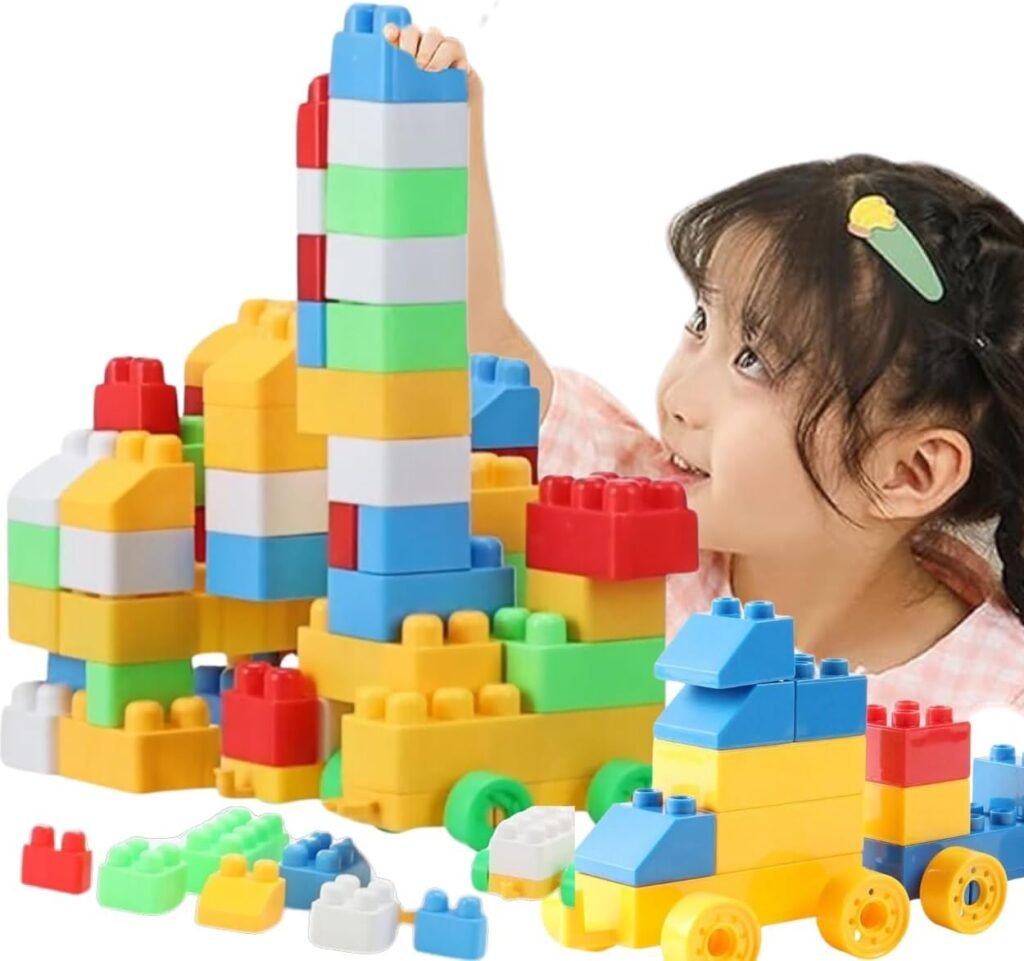
Humming Bird Kid’s Mega Sized Blocks Toys
This premium set of solid unprocessed beechwood blocks includes several geometric shapes, columns and arches. It educates older toddlers to structural balance, physics and architectural planning at a higher level. You have to line up your hands just so, with no magnetic or interlocking aid, providing a fantastic workout for independent spatial reasoning and fine motor tenacity.
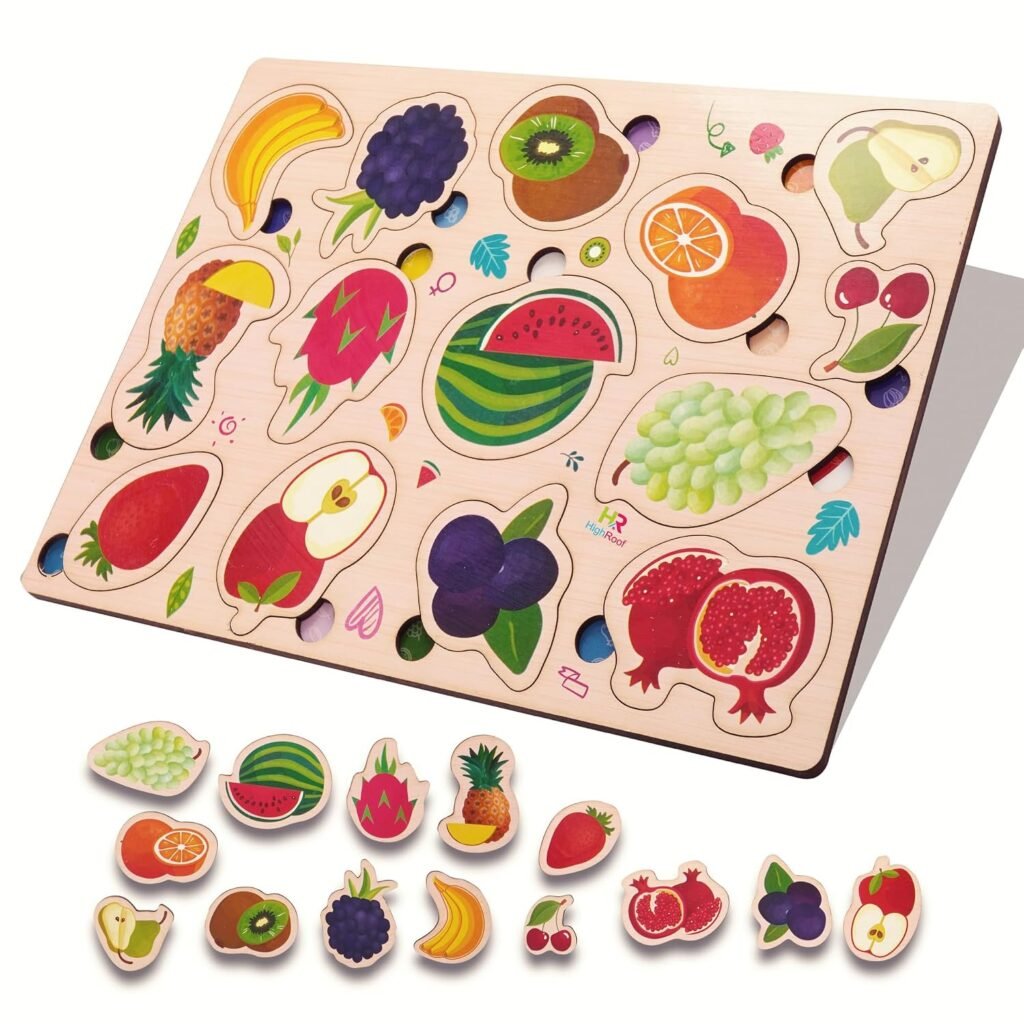
Guidecraft Wooden Fruit Puzzle Top
It is a three dimensional wooden sorting puzzle with layers. Children are challenged to stack realistic fruit segments according to their size and the layers of internal colours. It directly focuses a toddler’s fine motor planning and spatial judgement as they turn the pieces to match the pegs. It is an excellent tool for teaching spatial prepositions, descriptive adjectives and logical classification.
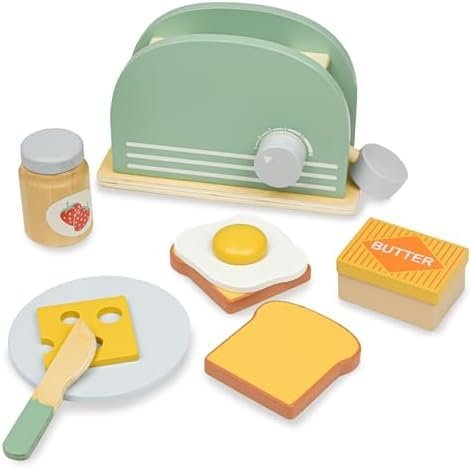
PlanToys Wooden Sorting Bread
Made from sustainable, chemical-free rubberwood, this smart pretend play set contains a loaf of bread that splits into separate geometric pieces held together by a light hook-and-loop fabric. Toddlers use a child-safe wooden knife to “slice” bread, establishing two-handed bilateral coordination and hand-eye precision while naturally introducing early ideas of fractions and volume.
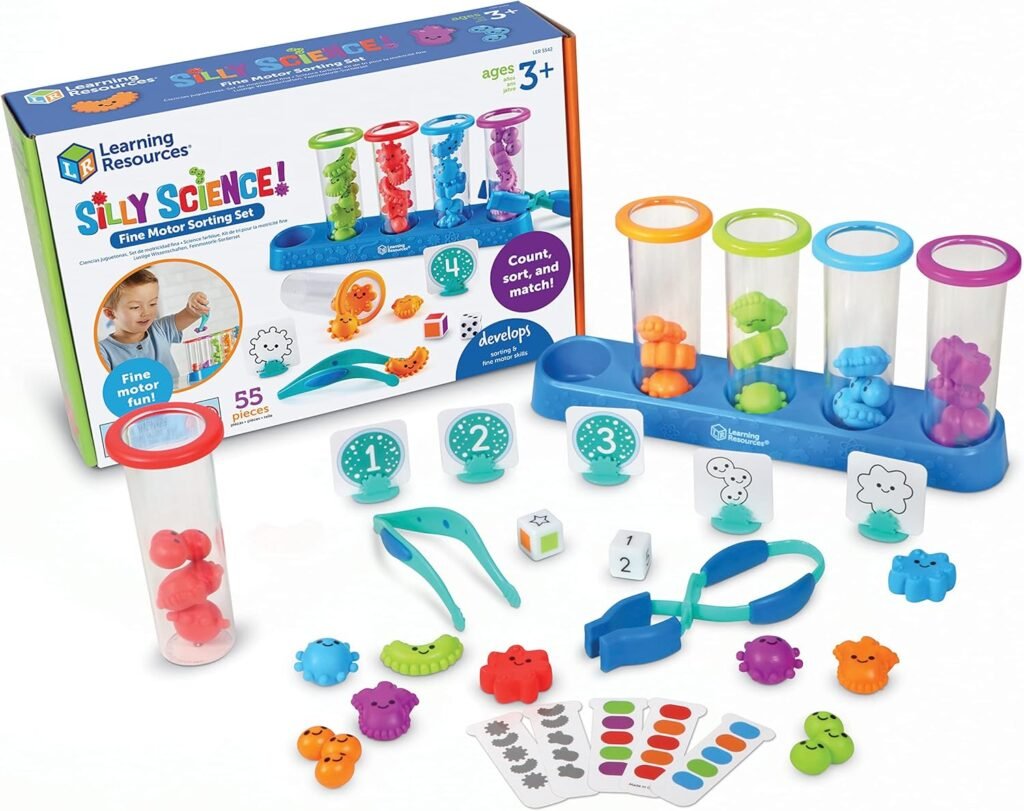
Silly science Fine motor sorters Learning resources
A fun sorting set with colourful plastic test tubes, a geometric sorting tray and interestingly shaped tweezers modelled after real laboratory equipment. This kit turns basic counting and classification into an active fine motor gym. Develops the major hand muscles, thumb-to-forefinger pincer strength and the endurance necessary for school preparedness.
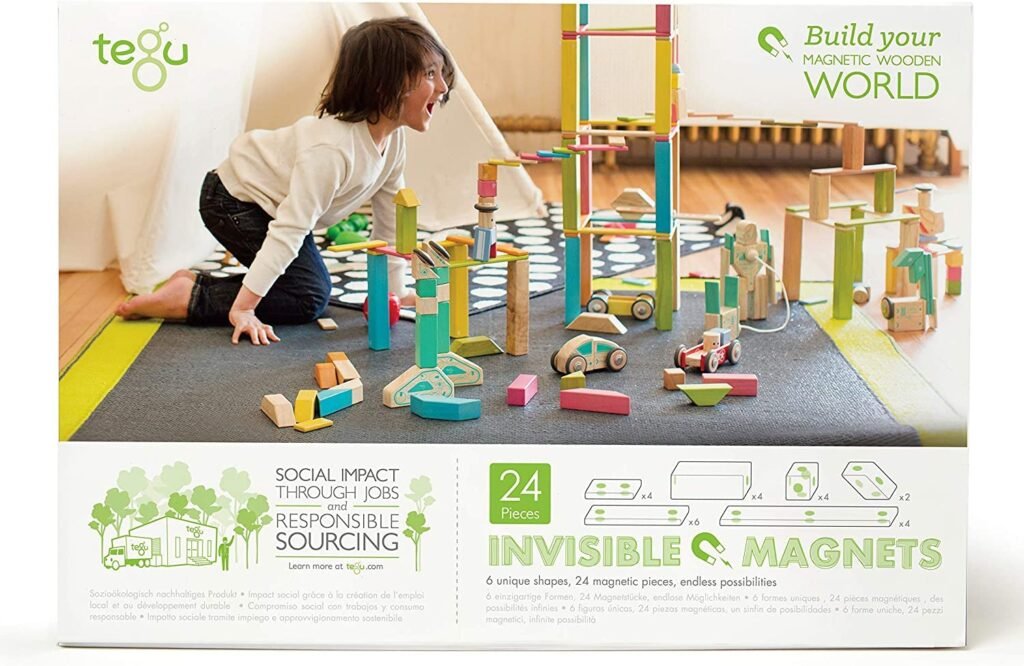
Tegu 24 Piece Magnetic Wooden Block Set
These heirloom-quality wooden blocks include entirely hidden, safely implanted magnets for gravity-defying, innovative construction projects. They combine the lovely tactile feel of natural wood with frustration-free mechanical connection, encouraging two-year-olds to explore early engineering principles, spatial balance and autonomous logic.
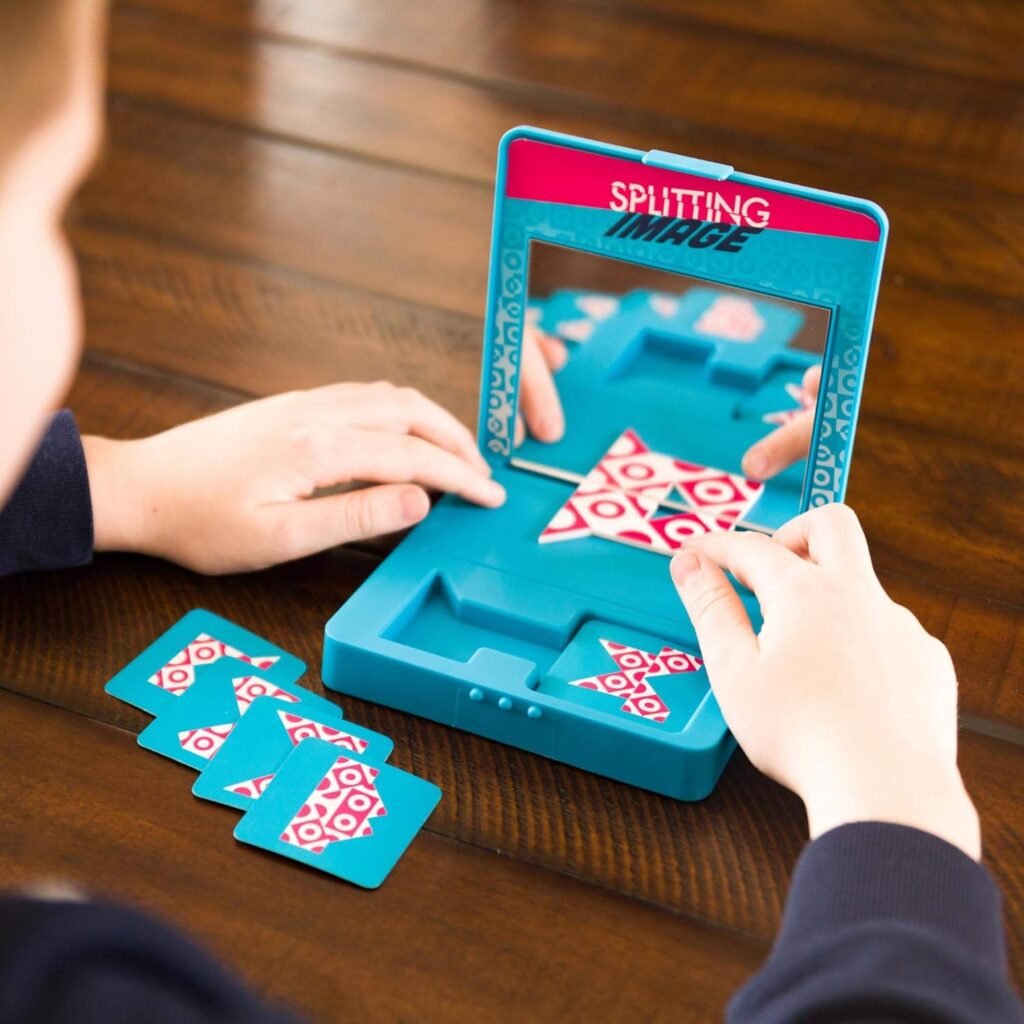
Fat Brain Toys PeekYou Familiar Faces Mirror Puzzle
A high quality wooden frame puzzle incorporating sliding panels where parents may insert actual images of family members, pets or familiar objects. Sliding, lifting, and matching the panels to uncover the concealed faces builds finger isolation and wrist stability. This practice is a great tool for quick language association, voice narration and emotional grounding.
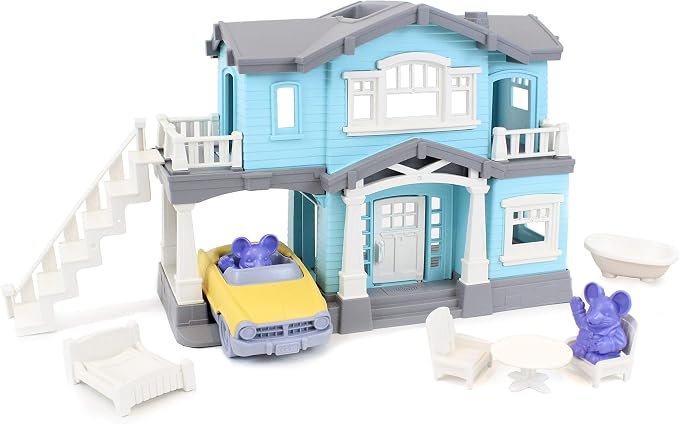
Green Toys House Playset
This minimalist, post-free toy house is made exclusively in the USA from 100% recycled plastic milk containers with simple characters, furniture and a practical handles for mobile play. There are no electronic buttons or lights so children are forced to utilise their own growing language and imagination to generate social stories and improve narrative cognitive abilities naturally.
Honouring the Toddler Brain
Your 2-year-old doesn’t need a playroom filled with pricey, noisy equipment to attain their fullest potential. They don’t need to be amused, managed, or diverted all the time. What their developing mind really needs is a peaceful atmosphere full with purposeful instruments that challenge their hands and honour their intelligence.
When you deliberately match their play materials to their emerging fine motor, language, and focus milestones, you are providing them with the keys to unleash their own confidence. You don’t have to make this growth journey alone. For a continual flow of child development insights, warm community support and practical parenting guidance, remember that Cozy Parents is always here to help your family through every milestone.
Open the shelf, present a meaningful challenge and step back and watch your incredible two-year-old focus, create and grow.