

A two-year-old, balancing a wooden carrot on a cutting board, pushing a toy wooden knife through its velcro seam, listening to the crisp, rhythmic crunch of it splitting in two, settles into a quiet, spellbound focus. If you have ever watched a toddler carefully carry an imaginary cup of tea across a rug without spilling a drop or systematically serve felt apple slices to a row of patient stuffed animals, you have seen symbolic thinking in its purest, most grounding form. In a marketplace full of beeping, lighting-up, pre-recorded recipe-spouting plastic kitchens, it’s easy to think it’s the digital noise that catches a toddler’s eye. But these mechanical gimmicks tend to crowd out what pretend cooking is meant to nurture: internal narrative, motor self-mastery and the imitation of adult life.
Parents looking for play food to satisfy this domestic curiosity often encounter cheap, hundred-piece novelty tubs of brittle, hollow polystyrene. These toy-aisle collections garish neon plastic burgers, flattened cardboard milk cartons that go flat within an hour, slippery synthetic things that roll out of reach frustrate small hands and turn the living room into a sea of plastic litter. Disposable sets are trod on, broken and left at the bottom of a toy box, far from the peaceful domestic role-play they are meant to inspire.
At CozyParents we believe a family’s playroom should be a peaceful sanctuary for focused, self-directed expression. We believe in “intentional play”, curating durable, tactile and well designed resources that honor a child’s developing nervous system and the visual calm of a peaceful clutter-free home. In this comprehensive guide, we’ll explore the developmental milestones that play food may unlock, offer practical advice for creating a low-friction home kitchen ecosystem and highlight seven amazing, well-tested play food sets on Amazon US that will treat your toddler like a real apprentice in the art of daily living.
The Body and Mind Mechanics of Play in the Kitchen
To appreciate the lasting therapeutic and developmental importance of play food across early childhood, we need to consider how the young brain handles imitation, tool use and social perspective-taking. Pediatric occupational therapy, speech-language pathology, and early childhood psychology have shown that the preparation of pretend meals is far more than an adorable pastime. It is an integrated exercise in bilateral motor planning, expressive language and emotional regulation.
1. The Mind Theory and Symbolic Representation
Children take a major cognitive step from functional manipulation to symbolic play from eighteen months to three years. A smooth wooden block is not just a piece of timber, a sprinkle of imaginary salt and it’s a steaming bowl of soup. When toddlers pretend to cook, they are practicing “Theory of Mind,” the cognitive realization that other people have unique desires, tastes and bodily needs. The child presents a wooden pear to a parent, asking, “Is it yummy?” The child must attribute an internal state to another person. This practice builds empathy, deepens emotional reciprocity and provides a safe, low stakes medium to work through mealtime trepidations or food aversions.
2. Two Handed Tool Control and Bi-lateral Integration
Sliceable wooden play food sets are the work horses of occupational therapy. A toddler will need to use a non-dominant hand to hold the fruit still, position the flat wooden knife and use a dominant hand to press down and slice a wooden apple that is fastened together with hook-and-loop. The movement needs high-level bilateral integration, a smooth transfer of information between the left and right sides of the brain. The proprioceptive feedback provided by the physical resistance of the velcro or magnetic connection is rich, strengthening the palm arches and building the dynamic finger stability needed for future self-dressing, scissor use, and pencil grasp and it engages the small muscles and joints of the hand.
3. Internal Sequencing and Pragmatic Language
The kitchen is the biological heart of the home and toddlers are eager witnesses of the routines that happen there. When children play kitchen they are practicing the basic sequencing of real life: gathering ingredients, washing produce in a bowl, stirring the pot, setting the table, and cleaning up after. This dramatic sequencing speeds up pragmatic language skills. Toddlers naturally use procedural words like “first,” “hot,” “pour,” “share” and “all done.” In telling the stories of their pretend cooking, they enrich their expressive vocabularies and anchor abstract concepts in familiar physical rituals.
Product Roundup: 7 Thoughtful Play Food Sets for Toddlers
If you want play food that can take the enthusiastic treatment toddlers give it but still be esthetically harmonious, look for solid non-toxic hardwoods, food-grade recycled plastics, non-fray stitching and good ergonomics. Here are seven top-rated and excellent options on Amazon US that are in tune with your child’s developmental capabilities and the CozyParents philosophy.

1. Melissa & Doug Food Groups Wooden Play Food Set – 21 Pieces
Description: Classic foundational food set with twenty-one solid wood food items in four sturdy wooden storage crates covering the main nutritional categories: dairy, produce, grains and proteins.
Benefits: Melissa & Doug is the gold standard for durable, foundational play food. The solid wood pieces are heavy, giving a satisfyingly tactile grounding in little hands. The painted wooden milk carton, cheese wedge and fish filet don’t dent like flimsy paperboard boxes and stand up to years of enthusiastic play. It comes with 4 wooden crates, making storage intuitive and visually organized. Sorting foods back into their corresponding wooden bins on a low Montessori shelf is how children learn early sorting skills.

2. PlanToys Assorted Fruit and Vegetable Set of Solid Rubberwood
Description: A sustainable slicing set made of chemical free, kiln dried rubberwood and non-toxic, water-based organic dyes. Includes five sliceable fruits and vegetables (including an apple, pear, orange, banana and carrot) and a wooden, child safe knife.
Benefits: PlanToys is the world leader in circular eco-conscious craftmanship. The velvety matte finish of natural wood grain offers a tactile alternative to slick plastic. Each fruit has a high-quality hook and loop patch attached, that provides just enough physical resistance when cut to encourage bilateral coordination without creating frustration. The warm organic earth tones flow into the neutral living space in harmony, removing the visual noise of a playroom.
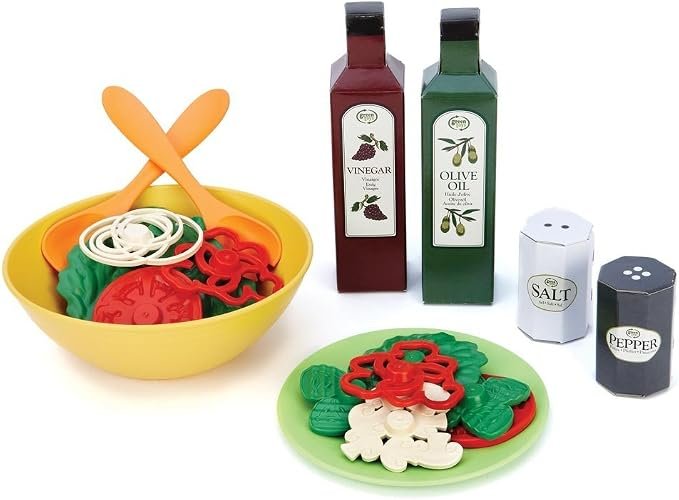
3. Green Toys 20 Piece Salad Set
Description: 20-piece pretend salad making set, made in the USA from 100% recycled food safe plastic milk jugs, BPA-free, phthalate-free, no outside paints or metal fasteners that can rust.
Benefits: While the toys are synthetic, Green Toys is the ultimate in environmentally conscious safety. The set features a large salad bowl, serving tongs, dressing bottles and stackable greens, cucumbers and tomatoes. This means the whole set is 100% food-contact safe and dishwasher friendly because there are no coatings or metal pins. It’s such a versatile bridge between pretend and practical life. Toddlers can use it with real water, sensory grains or even real cut vegetables during family meal preparation.
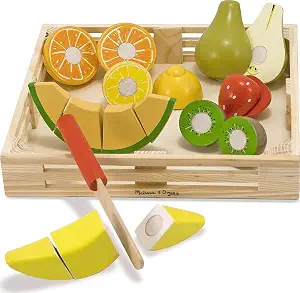
4. Melissa & Doug Fruit Cutting Set, Wooden Crate
Slice into twenty-five individual pieces of tasty fruit with this popular tactile fruit slicing set, which features seventeen solid wooden pieces that can be cut with the included wooden play knife, all stored in a compact wooden crate.
Benefits: The fruit segments are cut with a crisp, tactile crunch and the instant auditory and tactile feedback is very attractive to toddlers. Each fruit piece is decorated with familiar botanical features (such as seeds and core rings) that begin to introduce early biological parts-to-whole concepts. The heavy wooden crate neatly contains all the halves after playtime is over, keeping loose fruit pieces from scattering under living room furniture.
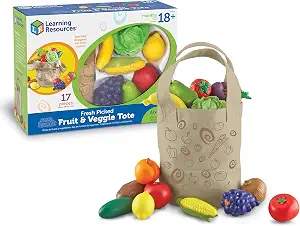
5. Learning Resources New Sprouts Fresh Picked Fruit & Veggie Bag
Description: 16-piece produce set made from soft, crush-resistant, non-toxic rubberized plastic Comes with a sturdy, flexible canvas tote bag with carrying handles
Benefits: New Sprouts toys are an excellent choice for families with younger toddlers (18 to 24 months) who may still put toys in their mouths or drop heavy items on delicate hardwood floors. The semi-flexible matte rubberized material gives way nicely to little fingers, providing a warm, non-slip grip that never clangs loudly when dropped. A soft canvas market tote makes clean up an easy, portable routine and encourages active gross-motor shopping trips around the house.
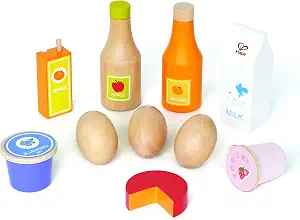
6. Hape Healthy Basics Wooden Play Food Set
Description: A delightful pantry essentials kit crafted in Europe from FSC-certified sustainable timber, featuring ten wooden kitchen essentials including milk, orange juice, strawberry jam, yogurt, cheese and a carton of eggs.
Benefits: Hape does a great job of making understated, modern designs that will appeal to design-conscious parents and their children. This set is built around the everyday pantry items that toddlers see their parents reach for every morning, rooting role-play in domestic life. The wooden bottles and containers have soft corners and are finished with zero-VOC water-based lacquers that resist chipping and are safe and their slender profiles fit neatly inside small toy cabinets or open baskets.
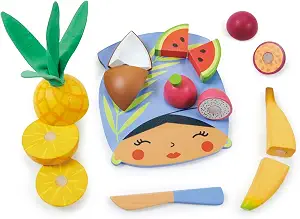
7. Tender Leaf Toys Fruity Wooden Chopping Board Set
This is a wooden chopping board set with a wooden knife and five sliceable fruits. This is an artisanal heirloom-grade toy. The fruits include an avocado with a removable seed, a kiwi, a strawberry and an apple. It is made from sustainable rubberwood and non-toxic water-based paints.
Benefits: Tender Leaf Toys embodies the artistic elegance of Scandinavia for early childhood role-play. Unique culinary items such as an avocado with an extractable stone contribute subtle fine-motor pincer challenges and reflect contemporary family eating habits. Its soft pastel and natural-wood palette seems like a deliberate handmade home decor piece, adding to the visual tranquility of any play space.
A Practical Advisory: Building a Low Friction Kitchen Play Ecosystem
Making beautiful play food is only part of the equation; the way you organize and present these items in your home will mean the difference between encouraging focused, long-lasting role-play or ending up with a cluttered floor.
1. Low Basket Market Stand Display
Don’t just throw all the play food in a single deep toy chest where the wooden carrots and plastic lemons become a chaotic, unappetizing mess. Instead, put four or five shallow woven seagrass baskets or open wooden crates on a low Montessori shelf at your child’s eye level. Or easily sort items with one basket for fruits, one basket for vegetables and one basket for bakery and pantry staples. Food left on shelves encourages children to “shop” purposefully and putting things back into the correct baskets becomes an intuitive, self-correcting sorting game.
2. Linking Pretend Play to Real Kitchen Prep
Toddlers need real contribution. Turn play food into a bridge to real-life kitchen experiences for your little one. While you cut real cucumbers or tear lettuce for dinner, put a child-safe wooden cutting board and wooden play food set on a low stool or kitchen learning tower next to you. While working with real ingredients, invite your toddler to “prep” their own wooden food with you. This addition satisfies their developmental need to mimic adult work, directs their physical energy into productive activity and avoids meltdowns at dinner time.
3. Practice “Daily Special” Rotation Strategy
With fifty pieces of play food available at once, it is often sensory overload and toy dumping. Keep the majority of your collection in a bin in the closet, and rotate 6-8 complementary items on the play shelf at a time. Make the selection the “Daily Special”—soup ingredients on Monday, breakfast items on Thursday, say. Rotate the food items every couple of weeks to keep your child’s curiosity alive, create new narrative combinations and guaranty that clean-up is less than two minutes.
Compare: expensive pretend food for playing with vs. cheap synthetic toys for the mass market.
When buying play food sets for their home, moms and dads are faced with a stark choice: heirloom-grade, ergonomically considered materials or cheap, bulk-packaged synthetic novelties. Looking at these options in terms of critical operational factors reveals how quality investment is a much better play experience.
In terms of durability and operational lifespan, premium solid wood, food-grade recycled plastics and reinforced textiles are easily able to withstand years of active biting, dropping, slicing and washing. Cheaper novelty food kits are constructed of thin blow-molded hollow plastic that collapses under toddler feet, shatters into jagged sharp shards, or cheap paperboard cartons that disintegrate when wet.
Intentional play food is meant to be integrated into living areas in terms of home integration and spatial harmony. With matte textures, natural wood grains and soft, realistic colorways it looks good in open woven baskets or low timber shelves. Big plastic barrels are the packaging for mass-market alternatives, which use garish fluorescent neon dyes that disrupt visual peace and add to household sensory clutter.
High-grade play food pieces are weighted to correspond to their scale from the perspective of ergonomic and physical feedback, providing grounded tactile resistance that trains hand strength and spatial control. Mass-market knock-offs are notoriously feather-light and hollow, with no sensory feedback, and tend to slip clumsily out of small hands, usually resulting in toddler frustration and erratic throwing.
Intentional sets are made with non-toxic, child-safe water-based stains, organic beeswax, or 100% recycled milk jugs with no BPA, phthalates, or PVC for the sake of hygiene, safety and chemical integrity. Cheap mass-market kits often have strong chemical plasticizer smells, peel toxic solvent-based paint chips under heavy mouthing, and have small glued components that pose serious choking risks.
Finally, for developmental and therapeutic value, intentional play food is an open-ended, non-prescriptive tool for life-skill modeling. It doesn’t tell the kid what to cook or sing stupid jingles at them. It celebrates your toddler’s ability to be a creative self-author, encouraging them to make up their own recipes, practice conversational hospitality and learn how to care for their family in the timeless language of food.
Creating Independent Children
Choosing good quality play food for your toddler is an investment in their physical dexterity, their communicative confidence and their emotional attachment to family rhythms. Give them tools that respect the simple beauty of everyday life without electronic noise and provide calm, purposeful space for their independence to take root.
At CozyParents, we believe that every item in your home should serve a specific developmental purpose, foster meaningful family connections, and contribute to a peaceful household. But sitting down beside your toddler, accepting an empty bowl, and graciously taking a pretend slice of wooden pear, you are doing much more than playing house, you are feeding their sense of belonging in the world.
We invite you to keep going with CozyParents where you’ll find mindful parenting frameworks, expert-approved gear roundups and intentional strategies built for your growing family. Does your toddler love to make a favorite pretend meal for you or are you setting up your first low-shelf play kitchen? We’d love to hear about your experiences in the comments below how do you create peaceful, intentional spaces in your home?