
When a cloth puppet is put on his or her hand, the person, be it an adult or a child, feels something very wonderful. A shy preschooler, one who doesn’t want to talk in full sentences or who is overwhelmed by eye contact, will suddenly be in an animated conversation. If you’ve ever watched a four-year-old whisper a secret into the soft ear of a stuffed animal, or donned a deep, theatrical growl to announce an imaginary adventure, you’ve seen the life-changing effect of expressive projection. It is tempting to assume that ‘passive listening’ helps children develop a vocabulary, with talking electronic characters, responsive voice assistants and animated cartoons doing all the talking for our kids. But these mechanical voices are not reciprocal interactivity. They don’t develop the subtle conversational cadence, pragmatic turn-taking and emotional self-authorship that preschoolers learn when they do the voice themselves.
Parents who want to nurture this natural impulse to tell stories often find themselves confronted by cheap novelty sets made from scratchy synthetic felts, lousy stitched seams that unravel with toddler handling, and large floppy designs that slip right off small hands. Cheap puppets will not stand up to extended dramatic play and will frustrate budding fine motor control. They will soon be tossed into the bottom of a toy box.
We think the family playroom needs to be a space of quiet, concentrated, self-directed expression. Our philosophy is based on “intentional play” choosing resources that are durable, tactile and well thought out, that support and respect a child’s developing nervous system and the visual calm of a calm and clutter free home. In this guide, we’ll go over all the developmental milestones that puppet play supports, give you some great tips for creating a low-friction storytelling theater at home and highlight 7 vetted, great puppet sets on Amazon US that treat your preschooler like a real author of their own stories.
Developmental Foundations: The Mechanics of Puppetry, Physical and Linguistic
But why are puppets so enduringly important in therapy and development across early childhood? To answer this we have to look more closely at how a young brain handles expressive language, motor mechanics and social perspective taking. Speech-language pathology, occupational therapy, and early childhood psychology all understand that puppeteering is far more than a humorous hobby; it is a confluence of pragmatic speech, emotional projection and fine-motor coordination.
1. Psychological Safety & Emotional Projection
To a preschooler, the world can seem huge, rigid and governed by grown-up rules. Emotional displacement , known as puppets , is a psychological buffer. The pressure of direct personal scrutiny is removed when a child is speaking through an animal or a character. The puppet provides a safe place to express anxieties about beginning preschool, frustrations with a new sibling, or lingering fears. A child who can’t say, “I’m afraid of the dark” will happily tell you, “The little owl is scared of shadows.” This externalization gives parents a direct and unfiltered look into the inner world of their child and a safe way for the child to deal with big feelings.
2. Pragmatic Language, Turn Taking and Story Support
Pragmatic language is the social rules of interaction: eye contact, reading physical pauses, matching volume of speech, respecting turns in conversation. In performing the dialog between two puppets , children are actively rehearsing the underlying architecture of human conversation. They have to adjust their tone, create questions, pause for a response, and sequence events from beginning to middle to resolution. This dramatic role-play dramatically accelerates expressive vocabulary, trains verb tense consistency, and builds foundational narrative comprehension that directly supports reading literacy.
3. Bilateral Finger Isolation and Speech Motor Synchronization
It turns out that running a hand or finger puppet takes surprisingly complex fine motor planning. To make a puppet look real, a preschooler has to keep his thumb and pinky finger apart to move the arms and use his index and middle fingers to move the head or working mouth. This degree of finger separation strengthens the intrinsic arch muscles of the palm and refines bilateral motor control. Critically, neurodevelopmental research shows that brain regions that control fine-motor finger dexterity are closely connected to those that control speech articulation. Speaking syllables while moving a puppet’s mouth provides physical rhythm and works at the same time on verbal pacing and motor planning.
7 Purposeful Puppet Toys for Preschoolers
Selecting puppet sets that can adapt gracefully to a preschooler’s physical grasp while retaining esthetic durability requires prioritizing skin-friendly natural fabrics, reinforced stitching, and balanced ergonomics. Here are seven great, highly-rated options on Amazon US that respect your child’s developmental capabilities and align with the CozyParents philosophy.
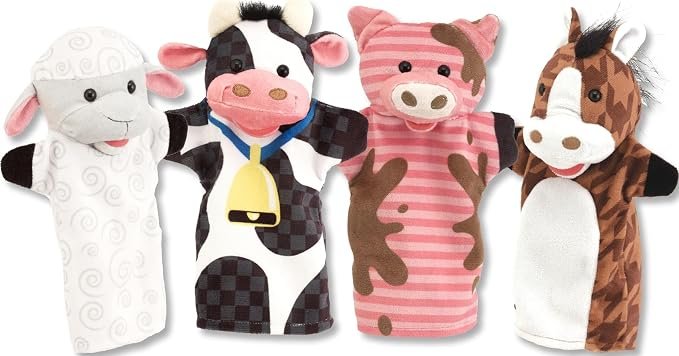
1. Melissa & Doug Farm Friends Soft Fabric Hand Puppets – Set of 4
Description: A set of four farmyard hand puppets, including a cow, horse, sheep and pig, made from soft, patterned, machine washable fabrics and plush-stuffed heads, suitable for children and adult hands.
Child Benefits: Melissa & Doug sets the bar for early childhood hand puppets with a fresh design that eliminates the rigid, frustrating mechanisms of the past. Each puppet has simple glove arms and an open body cavity that will fit a small preschool hand without slipping but still leaving enough room for a parent to slip their hand in for joint play. The fabric’s warm, inviting texture withstands repeated washings without fraying. Their uniform shape compacts neatly into a small canvas bin on a low Montessori playroom shelf.

2. Little Fox Hand Puppet by Folkmanis
Description: A heirloom quality woodland hand puppet, highly detailed with super soft faux fur, expressive glass like eyes, working animated mouth and an ultra flexible plush body scaled for smaller hands.
Benefits: Folkmanis is internationally acclaimed by speech-language therapists and puppeteers for realistic craftsmanship. The realistic detail of this fox, unlike the cheap cartoon novelties, inspires real biophilic empathy and natural curiosity. The flexible mouth mechanism is easy to operate with small palms and allows children to practice precise speech synchronization. It looks like a piece of artisanal decor rather than toy clutter with its deep auburn and cream tones.
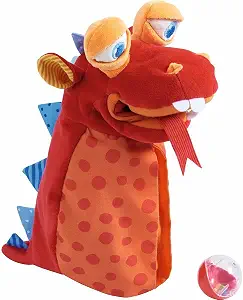
3. HABA “Eat It Up” Dragon Glove Puppet
An interactive plush dragon glove puppet with a fun bright design, moving felt wings, friendly embroidered features and a big mouth that opens to a belly pouch for “swallowing” little felt objects.
Benefits: Designed in Germany, this puppet is a master class in conversational engagement. The “eating” mechanic creates an immediate cause-and-effect dialog game: the dragon can “eat” letter cards, color tokens or tiny wooden blocks, turning vocabulary building into a physical, giggly exercise. This premium European plush is machine washable on gentle cycles, so you can keep it clean after messy preschool playtime.
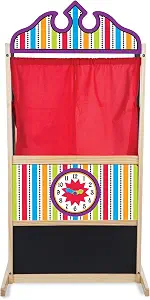
4. Melissa & Doug Deluxe Wooden Doorway / Tabletop Puppet Theater
Description: Strong solid wood tabletop and floor friendly theater with a roll-up velvet stage curtain, built-in analog clock with movable hands and double-sided chalkboard marquee for writing showtimes and titles.
Benefits: A dedicated performance frame gives the children an intuitive spatial boundary that anchors dramatic play. Kids who are shy will feel less performance anxiety when they are behind the raised wooden window and thus bolder with their vocal experimentation. The wooden frame is very stable and will not topple over, while the neutral natural-timber edges blend nicely into modern living spaces. The side panels, disassembled, fold flat against a closet wall.

5. The Puppet Company Animal Puppet Set (Long Sleeves)
Description: Thick tactile plush durable, extra long forearm glove puppet with fully articulated arms and a wide working mouth covering child’s arm to the elbow.
Benefits: The longer sleeve design is brilliant for theatrical immersion it conceals the child’s forearm completely, making the magical illusion that the puppet is an independent living creature. The extra-deep hand pocket can accommodate rapid growth throughout the preschool years and the soft-sculpted fabric construction means no hard plastic parts to scratch hardwood floors or pinch sensitive fingers.
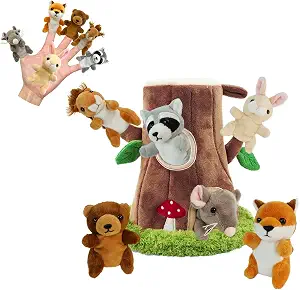
6. Manhattan Toy Camp Acorn Forest Friends Finger Puppet Set
Description: Cute set of mini woodland finger puppets made from organic cotton blends and textured sherpa fleece with a soft mushroom shaped fabric house for storage.
Benefits: Finger puppets have a unique developmental benefit: they separate the digits, demanding a fine level of fine-motor control and exact grasping. Little kids can animate multiple characters at once on both hands , creating fast-paced , multi-voiced stories. The fabric mushroom pouch is a creative prop and a self-contained organizer, with all the tiny pieces safely enclosed when storytime is over.

7. Melissa and Doug Jolly Helpers Career Hand Puppets 4-Pack
Description: Community-helper puppet set including doctor, firefighter, police officer and construction worker with detailed cloth outfits and realistic fabric headgear.
Benefits to Child and Home: Preschoolers have begun to make sense of the world around them, and community roles are a natural springboard for social-emotional learning. These puppets can be used to role play medical visits or community safety to help children work through medical anxiety and community roles. Constructed from tough, non-fraying fabrics, they are safe for energetic household role play and pose no small plastic detachment hazards.
Practical Tip: How to Create a Low-Friction Storytelling Ecosystem
Collecting lovely puppets is only half the battle. How you display and store them in your child’s physical environment will determine if they are trusted friends or forgotten junk.
1. The Impromptu Stage “Hidden Behind the Couch”
Lively puppet theater doesn’t need an elaborate, space-consuming wooden stage. Some of the most meaningful stories are told over the back of a living room couch, behind an open cardboard shipping box with a square cutout, or under a low coffee table covered with an organic cotton play sheet. By lowering the barrier to performance, storytelling can happen on a lazy afternoon with no real friction to set it up.
2. The Hanging Display: Low-Peg
Don’t put cloth puppets in deep, dark storage chests where their fabric faces will be squished and unattractive. Hang a light fabric shoe caddy or put up a simple low wooden peg rail at your child’s eye level. Keep your puppets wrinkle-free, visually pleasing, and instantly accessible, and store them upright on pegs. When a child can look across the room and make eye contact with their puppet characters, their intrinsic motivation to initiate independent imaginative dialog is greatly increased.
3. Practice the “Puppet As Mediator” technique
Parents can use puppets as gentle, non-authoritarian parenting partners. Use a friendly animal puppet to lend a hand when a preschooler doesn’t want to put their shoes on or doesn’t want to clean up their blocks. Children who resist adult requests will often happily assist a puppet in carrying out a task. A puppet to speak with takes away the resistance at bedtime or mealtime, turning everyday power struggles into shared moments of whimsy.
Comparison: Premium Intentional Puppets vs. Cheap Novelty Puppets
Parents are forced to pick between heirloom quality ergonomically designed puppets and cheap bulk packaged synthetic novelties. An evaluation of these options against key operational dimensions emphasizes the significance of quality.
Premium hand puppets are constructed with heavy gage cottons, double-stitched seams, and facial features embroidered to withstand years of stretching, vigorous mouth manipulation, and repeated washing machine cycles. Cheap novelty puppets are made of thin, glued synthetic felts, with unreinforced seams that come undone after minimal use, shedding synthetic fuzz and losing structural integrity within weeks.
Intentional puppet sets are designed to blend in with storage and home integration in living spaces. They have flexible cloth structures that fold flat, organic earthy color palettes, and charming canvas or wood organizers that nest harmoniously into open shelves. You can get mass-market bulk alternatives in awkward disposable blister packs full of garish fluorescent synthetic dyes that add to the visual playroom noise.
High-grade puppets are designed, from an ergonomic and safety point of view, to fit the developing palms of preschool children, and the adult hand, allowing for fluid, fatigue-free movement. The eyes are embroidered or securely attached to eliminate choking hazards. Mass-market knock-offs often feature hard, unyielding interior linings, scratchy tags and glued-on plastic eyes that come off easily with toddler biting or tugging.
Real natural-fiber puppets provide warm, comforting tactile feedback to ground a sensitive nervous system from a sensory and psychological perspective. They are receptive to slow, cuddly, empathetic interactions. The polyester novelties are flimsy, scratchy, static-prone and weightless, trivializing the emotional depth of the dramatic experience.
Finally, in a developmental and therapeutic sense, intentional puppets provide non-prescriptive blank canvases that are open-ended. There are no pre-recorded chipsets or catchphrases; your child writes all of their thoughts, voices and emotions from the ground up. Commercial plastic electronic puppets plunge children into passive button-pushing, which smothers the active verbal generation needed for early language development.
Giving Voice to Childhood Wonder
Good puppets are an investment in your preschooler’s expressive confidence, emotional resilience and love of language for life. Offering them tools that respect their ability to tell stories without the noise of electronics, you create a space where their inner thoughts can grow.
At CozyParents, we feel strongly that everything in your home should have a clear developmental purpose, invite meaningful family connection, and support household serenity. By putting a puppet on your hand and entering your child’s imaginary world, you are not just playing; you are listening to their heart.
We invite you to keep exploring CozyParents for mindful parenting frameworks, expert-backed gear reviews, and intentional strategies for your growing family. Is your child a fan of a favorite puppet character they love to talk to, or are you getting ready to put on your first impromptu living room theater? We love hearing how you nurture language and connection at home. Share with us in the comments below!