


Baseline skeletal alignment accounts for the difference in safety between a seated walker and a push walker. In a standard seated model, the infant is placed in the fabric harness and the pelvis is artificially suspended above the ground. Because the child cannot always get the seat height to suit their exact leg proportions, they will tend to reach down with their toes and use their tip-toes to push themselves forward. That is the only way they can move in the chair.
This frequent tip-toeing causes an unnatural walking posture. It creates a tight contraction in the calf muscles whilst under-developing the critical anterior tibialis muscles on the front of the shin.
Also the fabric crotch harness supports their weight so the baby does not have to use their deep abdominal core muscles or gluteal stabilizers. When they leave the frame they are often faced with a severe hip instability and a position of leaning forward which actually delays the independent walking.
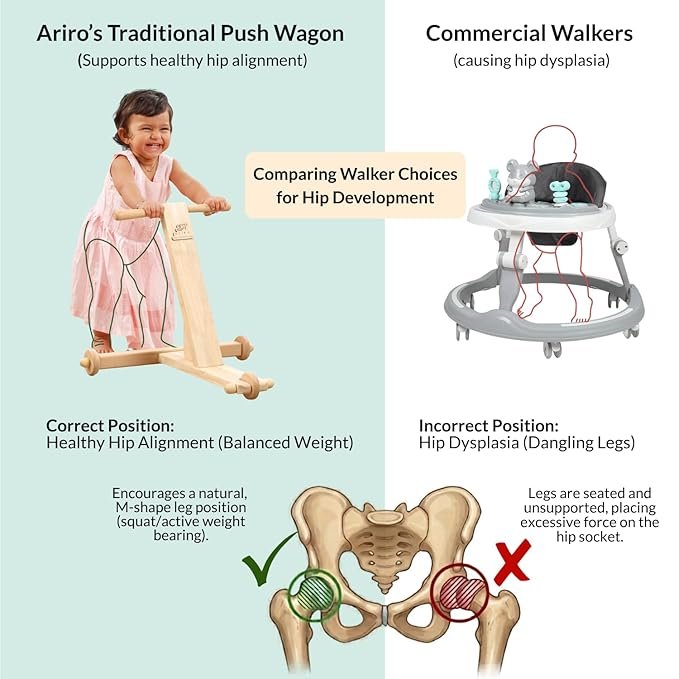
But a push walker turns that mechanical approach on its head, respecting your baby’s natural skeletal progression. The infant must be standing fully outside the device with feet flat on the floor and actively grasping a handle for the push toy forward.
This flat-footed alignment transmits deep proprioceptive data the body’s internal sense of spatial position, directly up through the ankles, knees, and hips to the brain. The baby learns just how to balance their center of gravity over their feet, using their core stabilizers every step of the way.
Postural Mechanics: Tiptoe vs Flat Footed Alignment
The basic safety issue between a seated walker and a push walker is really just the basic skeletal alignment. In a typical seated model, the infant is suspended inside the fabric harness, their pelvis artificially suspended off the ground. Since the seat height is not generally proportional to their legs, the child will reflexively lean forward with their toes to get leverage, and thus they will only move forward on their tip-toes.
This constant walking on tiptoe results in an unnatural posture. It causes the calf muscles to go into a tight contraction while under-developing the important anterior tibialis muscles at the front of the shin .
The fabric crotch harness also takes on the weight so the baby doesn’t have to use their deep abdominal core muscles or gluteal stabilizers. They usually have a lot of hip instability and a forward lean which can slow down independent walking when they are removed from the frame.
A push walker turns this mechanical approach on its head by honoring your baby’s natural skeletal progression. The infant must be completely out of the push toy to move it, with feet flat on the floor and actively holding a handle.
The flat-footed stance sends deep proprioceptive information (a sense inside the body of where it is in space) straight up the ankles, knees and hips to the brain. With each step and movement, the infant learns precisely how to position its center of gravity over its feet, activating its core stabilizers.
Active Products:
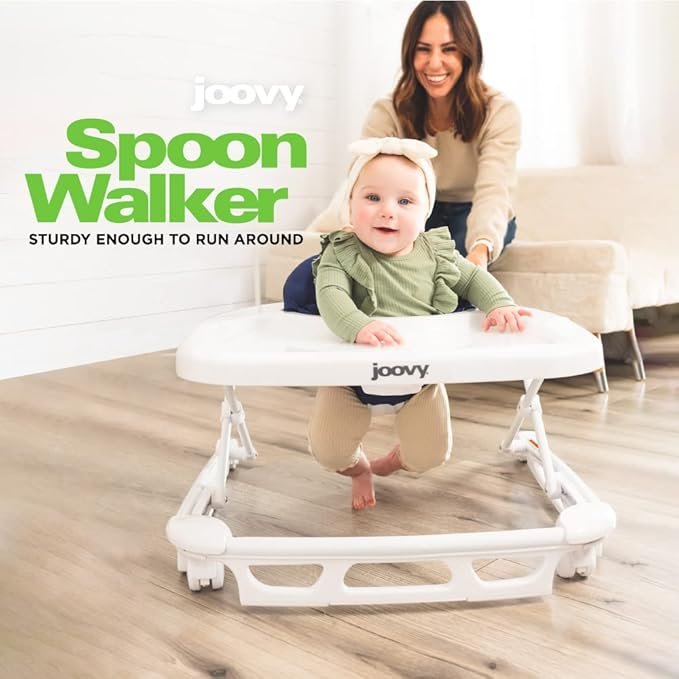
A useful way to judge this developmental debate is to look at both traditional seated structures and dedicated push alternatives. Here are seven different models that represent different decisions made in early childhood transit design.
Traditional Frame Styles: The Sitting Category
This model is the classic, fully enclosed seated frame design. It has an oversized adult-height tray surface and a thick, machine-washable fabric seat insert that cradles the infant right inside the perimeter. The ultra-wide plastic lower base is structurally engineered to prevent side tipping and keep little fingers from getting pinched against walls. But the design is inherently tied to the suspension setup. The baby sitting inside is in the classic hips-forward position, using tiptoes to push off to slide across flat floors, highlighting the structural posture contrast at the heart of the safety debate.
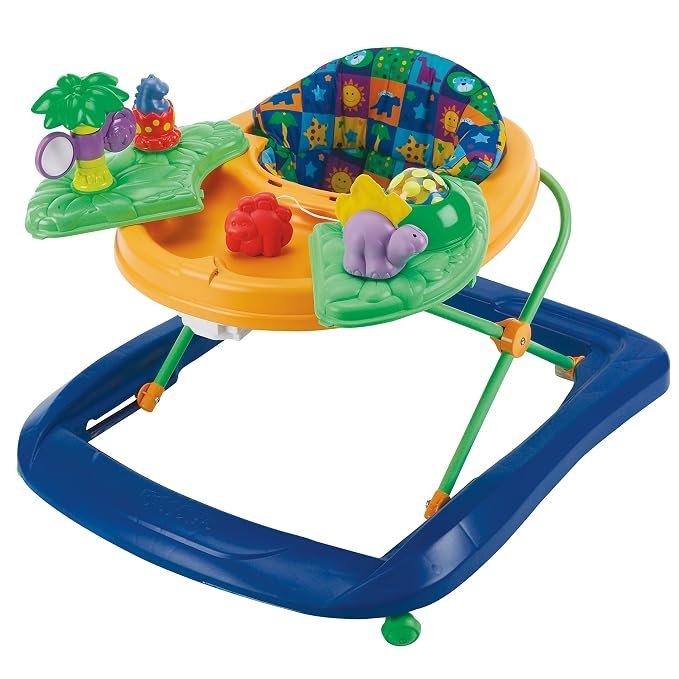
2. Safety 1st Dino Sounds Hatch Activity Walker
This traditional activity center is heavily decorated and provides three-position vertical height adjustment for accommodating growing legs. The upper tray has spinning plastic dinosaurs and electronic sound bars designed to attract an infant’s visual attention. However the bottom caster wheels are free to spin in 360 degrees, so the suspended child can move at rapid speeds with little physical exertion. The mechanical plastic frame is responsible for balance, not the child’s own muscles.
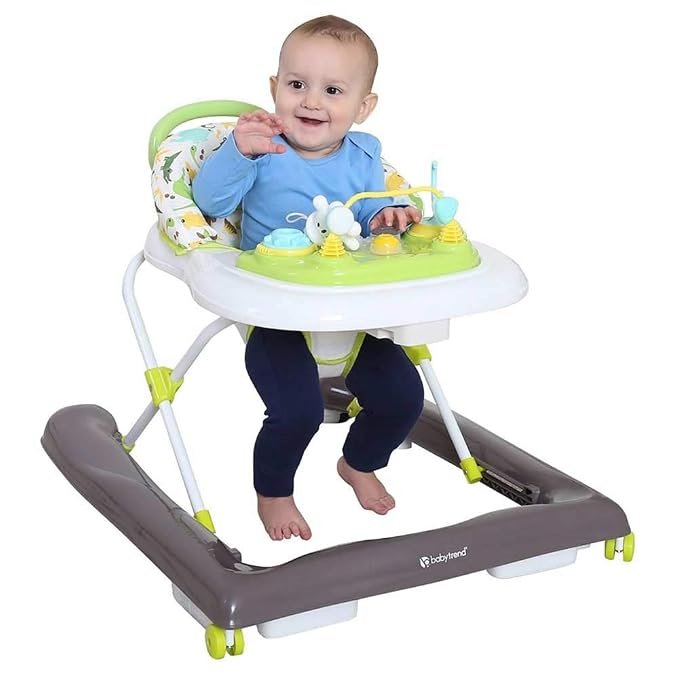
3. Trend Activity Walker Baby Trend
The traditional seated unit has a highly compact folding frame and multi-directional front wheels for quick directional changes. It has a high back to help keep an unaided sitter upright. The child is completely enclosed by the physical structure and thus separated from the raw surface of the floor. The child does not, therefore, feel the weight shifts and balance thresholds required for unassisted upright balance.
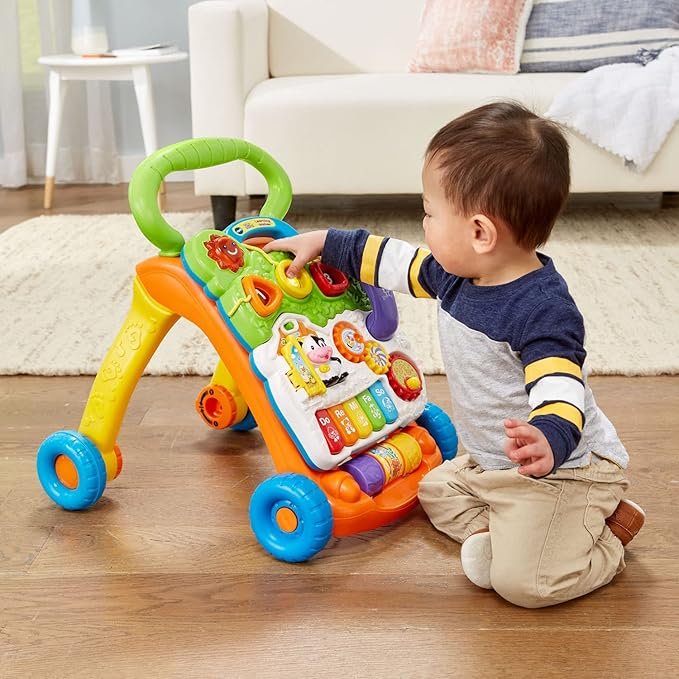
The Push Category: Alternative Open Floor
4. VTech Sit to Stand Learning Walker
In the open alternative design, this push model is based on a very stable triangular plastic chassis, which the child strictly uses from behind. It has a two-speed tension switch on the rear axle wheels that parents can adjust to dial in heavy friction to slow down early cruisers. The front electronic dashboard can be popped right off the frame and laid flat on the rug, so that sitting infants are using the toy for fine motor finger matching before they ever try to stand and walk.
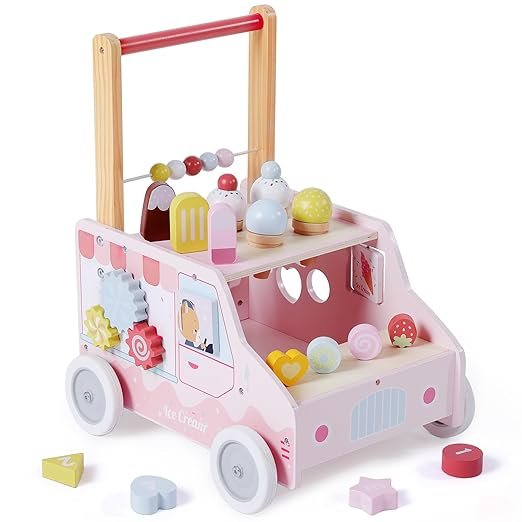
5. Labebe Wooden Activity Walker Wagon for Toddlers
This push alternative is a minimalist, deep-sided wooden shopping cart, built completely of dense birch wood. There is a large internal cargo bed where parents can put heavy books or sandbags to easily customize the overall weight distribution of the device for early standers. That heavy timber frame keeps it from flipping backward when an infant pulls up with the handle. The wheels are covered with thick rubber bands to provide maximum traction on the floor.
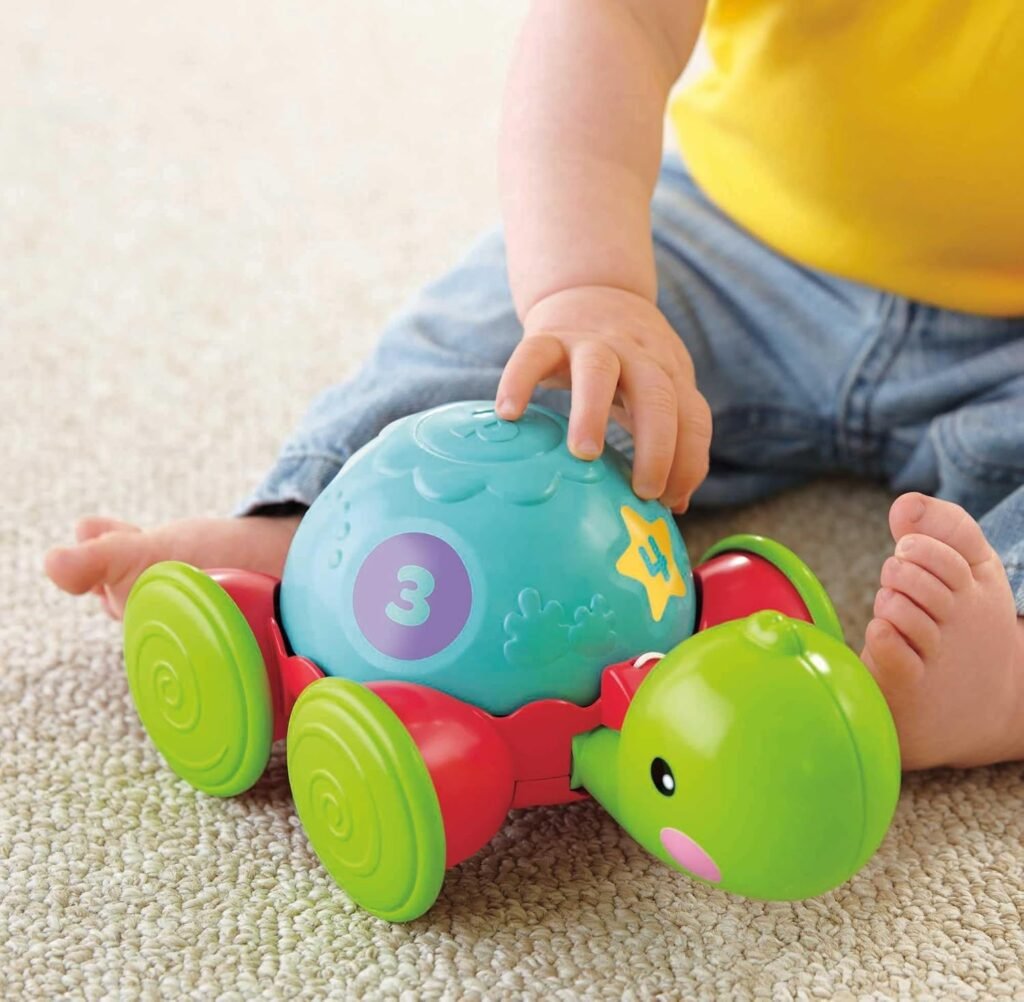
6. Fisher-Price Moves Along With You Turtle Walkers
This push option is completely battery free and includes a clever kinetic reward system to encourage walking distances. Inside the low-slung turtle shell is a clear transparent dome with five colorful rolling balls. And then when your baby pushes the frame forward and plants their feet flat, internal mechanical gears pop colorful balls into motion with a soft, rhythmic popcorn sound. The wide, easy-to-grip plastic handle lets infants comfortably adjust their hand spacing as they develop cross-body coordination.
7. Brio Toddler Wooden Pull Along Cart and Push Walker
This is an example of the classic clean Scandinavian design. A sleek wood and steel cart with a highly adjustable mechanical interface. It features a rear axle with an adjustable wheel brake dial and a two-position steel handle. For babies who are ready to stand, the handle locks completely upright so their center of gravity is directly over the wheels, preventing tipping. As they transition into a steady run, you can tilt the handle back to give them a sportier stroller feel.
Kinetic Environment Safety: The Real Life Way
The most important safety comparison between these two devices is the velocity and environmental access they provide, beyond the effects on muscles and skeletons. A baby in a traditional seated walker can cover the floor of a smooth room at a terrifying rate. They can push off a wall with great force, flying across a room faster than an adult can react. The frame is holding all of their body weight.
This velocity means that typical home floor plans are high impact risk areas. Seated walkers often topple over when the bottom caster wheels come upon small transitions (e.g., hardwood to a thick area rug).
Or even worse, if a baby can make its way towards an unlatched basement door or a raised kitchen step, a walker that is sitting can drop down the stairs in a second.
The walker also makes the child unnaturally tall, giving them an amazing physical reach. They can easily grab dangerous items like mugs of hot coffee on tables or electrical cords dangling from counters that would otherwise be far beyond the reach of a crawling infant.
A push walker has a built-in safety cutoff mechanism inherent in the child’s physical stability. If an infant using a push toy loses their footing, tires out or bumps a small object on the floor, their hands just let go of the handle and they fall safely on their bottom. They are not trapped in a diving frame by the walker or pulled down down a step.
The device can only move as fast as the child’s own muscles can move it. This gives a natural boundary that suits their emerging spatial awareness and reducing tracking speeds.
Prioritizing Autonomy over Containment
When considering long-term cognitive and development effects, the push walker is a clear winner in terms of safety and physical growth. Seated baby center frames are convenient for adults, but they are highly environmentally risky, promote bad alignment, and isolate the precise muscles needed for balance.
If you ensure you purchase a heavy, well balanced push walker with adjustable wheel friction then your baby will have the ultimate engine to master their center of gravity, step flat footed and explore the natural world with rock solid confidence.
Check out the floors in your living room today, choose a push model with a good rating to suit your lifestyle and then sit back and let your independent child reach their mobility milestones completely on their own terms.
You don’t have to make these decisions alone for your early childhood gear. For a steady stream of expert child development advice, practical home layout management frameworks and honest product audits, stay with Cozy Parents your trusted digital village next door.