
It is one of the most prevalent flashpoints of daily life for parents. You’ve got a business email to finish, food boiling on the stove, or you just need twenty minutes of unbroken calm to gather your thoughts. Then your toddler starts to whine at your feet, needing constant entertainment.
When you’re fatigued, it feels like a survival strategy to pull out a tablet or turn on the TV. It’s like a digital sedative, quickly anchoring their eyes to the screen.
But for most parents, the hidden cost of that quick remedy is known. The constant presence of digital media overstimulates a child’s nervous system. The screen goes black and often the sensory overload that has been building up causes a massive emotional break down and you’re more tired than you were before.
Toddlers get bored so fast with regular toys not because they have a limited attention span. Most mass-market toys are “closed-ended”: they sing, they flash and they instruct the youngster exactly how to play. Once the sequence of buttons is learned the brain goes offline.
To nurture authentic, hours-long independent play, you need to provide open-ended activities that challenge their fine-motor planning, ignite narrative storytelling and fulfil their inherent desire for tactile containment. Here are the ultimate screen-free basics that keep little hands occupied and give you the breathing space you need.
At Cozy Parents, we believe play spaces are peaceful and intentional locations that support profound child autonomy. If you’re ready to create a house that prioritises deep attention above commercial clutter, the step-by-step toolkits at our website will connect you with clear, therapist-backed plans built for real family living.
The Art of Sensory Mapping Without The Mess
Toddlers have a powerful inborn drive to sort, scoop and pour tangible objects. But this repeating movement is not mindless; it is how their brains record early math tracking, spatial volume and kinetic cause and effect.
Often when parents think of sensory play they think of a high stress cleaning disaster, with spilt colourful rice or wet shaving cream on the living room rug. But with self-contained structure puzzles you can quickly provide high-value tactile exploration that is absolutely mess-free.
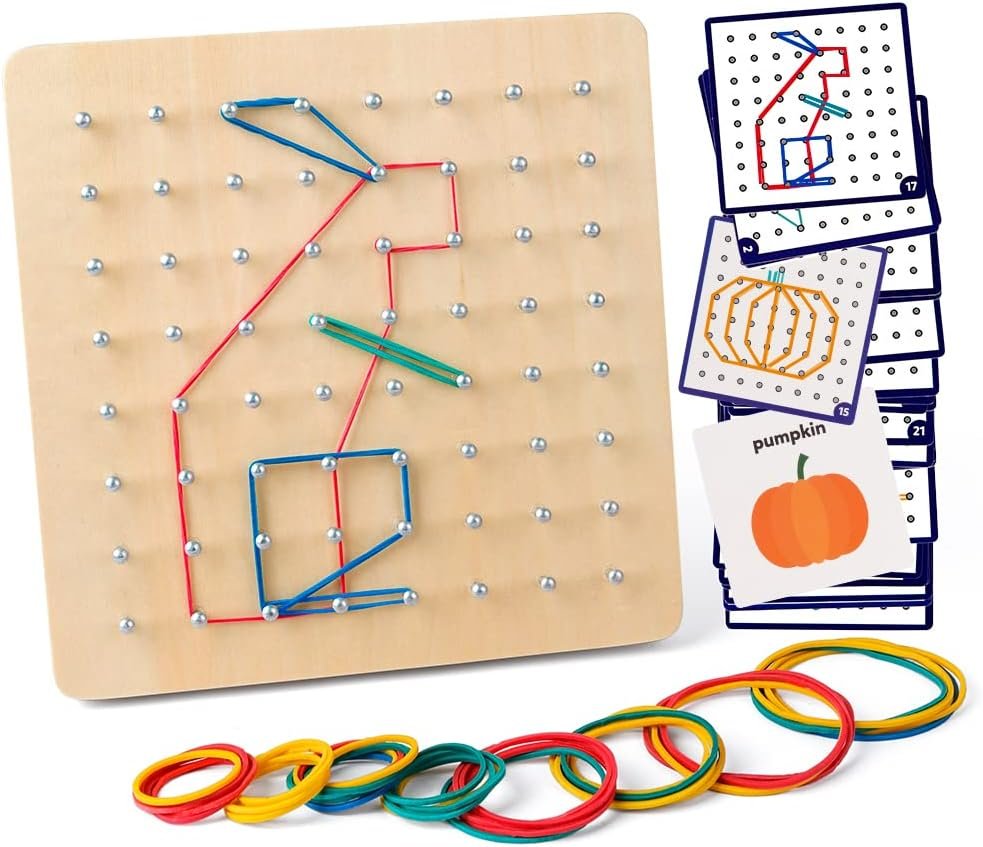
★Coogam Wooden Geoboard Matrix Puzzle totally re-engineers geometric classification into a highly addictive open-ended coordinate board. Instead of sliding plain blocks into pre-cut windows, kids stretch colourful rubber bands across an array of smooth, embedded steel pegs to sketch out abstract lines and geometric houses. Younger toddlers are totally absorbed by the physical resistance of stretching bands as they explore spatial space with intense finger isolation and grip strength.
When children have the freedom to explore texture and resistance without a pre-conceived pattern, their play organically deepens. They are little scientists, pushing limits, not just looking for the one proper solution.
Magnetic assembly systems are the ultimate screen-free extension for older toddlers ready to move from fundamental spatial push-and-pull tasks to exact architectural design.
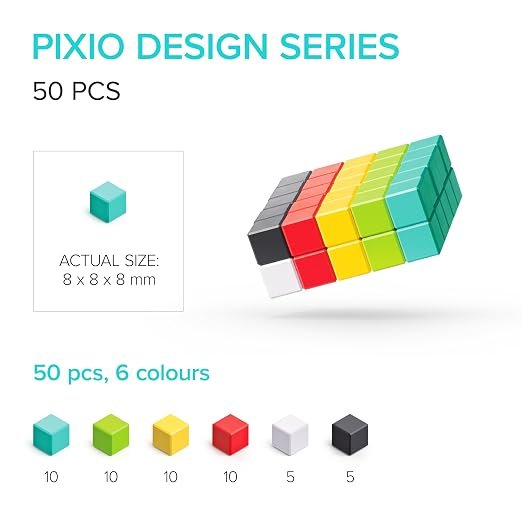
Kids develop durable three-dimensional models solely on their own through trial and error with the ★Pixio Magnetic Building Blocks Set. A two-year-old will spend lengthy stretches of time merely clicking the retro, pixelated micro-cubes flat on the floor to create colour patterns, or snapping them together into simple vertical pillars just to see how gravity will break them down.
But at four years old, the same designs are no longer just towers but elaborate parking garages, rocket ship hulls and animal corrals, keeping their creative focus for hours at a time. The open approach lets the toy keep pace gracefully with its maturing logic without requiring an update of the hardware.
Heavy Work & Large Motor Decompression
If a toddler is chaotic, hyperactive or starts hurling toys across the living room their body is sending a message that they need proprioceptive stimulation. Their huge muscle groups and joints are in need of significant resistance to assist ground their neurological system.
Instead of allowing kids to jump on the cushions of the sofa, a specific, safe indoor climbing architecture allows them to test their physical bounds without converting your living room into a high-risk zone.
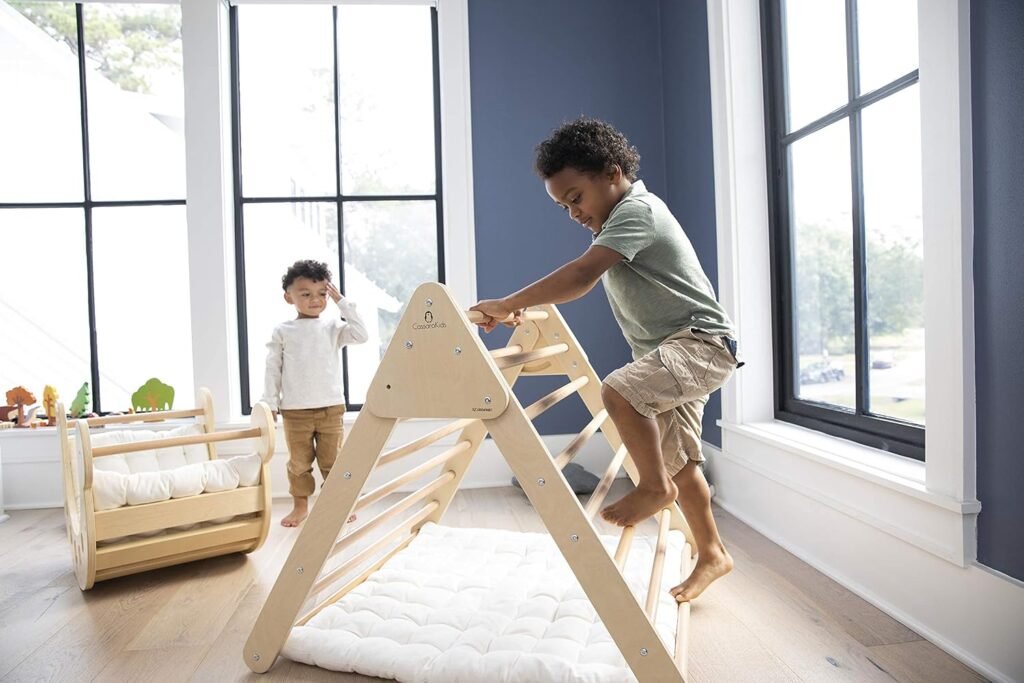
★The Cassaro Folding Wooden Climbing Triangle is the ideal indoor gross motor engine for tiny spaces. Made from the highest quality, sustainable New Zealand pine wood, it provides children with a safe, low profile ladder framework to develop vertical balance, foot placement and core stabilisation. Climbing up and over the apex gives deep soothing signals directly to the brainstem, expelling pent-up physical energy so they can effortlessly transition into tranquil evening activities.
When you give kids a place to put their bodies, it transforms the atmosphere of the entire house. Knowing exactly where they’re authorised to climb, they don’t have to push or test their vertical boundaries on illicit places like dining tables or kitchen countertops.
A simple balance curvature is a great solution to let children track their physical coordination on a smaller, extremely portable footprint.
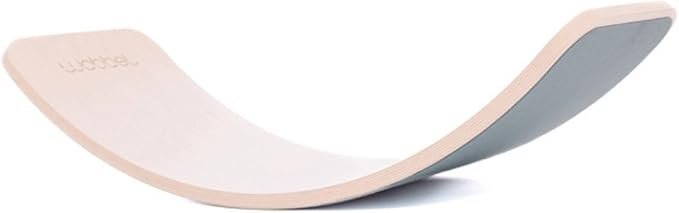
★Wobbel Original Bamboo Balance Board is a sleek minimalist arch design that does not require assembly. Toddlers can stand on top and rock back and forth to establish deep ankle and core stabilisers. Once active movement time is finished, they may turn the durable bamboo board over and use it as a smooth vehicle ramp, simple rocking cradle for dolls or robust stepping stool, getting the most out of your playroom’s functionality. For more smart advice on how to use gross motor gear to reduce down afternoon power battles, check out the extensive parent resource databases at Cozy Parents.
Creative make-believe play & language building
When toddlers approach the preschool years, their brains are open to the possibility of abstract narrative mapping. They get a kick out of mimicking everyday domestic chores, working through social feelings of the day, and creating a huge glossary of action verbs through small world play. By means of imitation they claim the world about them and work towards independence.
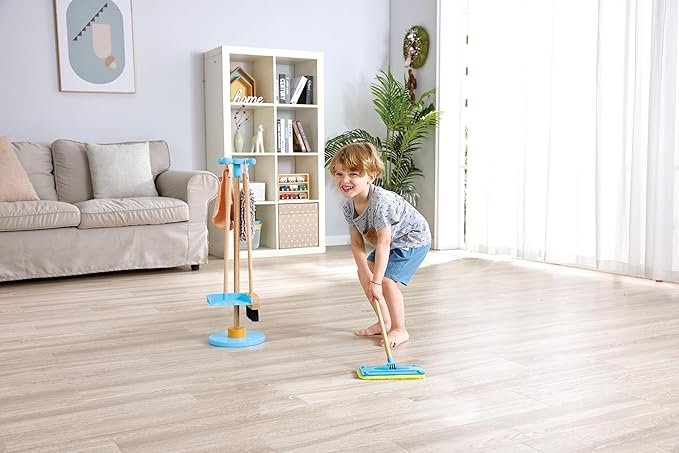
★Hape Little Cleaners Wooden Housekeeping Set channels a toddler’s fascination with grown-up tasks into a functional, child-sized toolbox. It comes with a real hardwood broom, mop, duster and brush that hang from an organised vertical stand and will let your child mimic your cleaning procedures totally on their own. Sweeping real dust motes or dry beans across the floor improves outstanding hand-eye accuracy and bilateral integration while making children feel a vital participant in family life.
When the tools meet their physical proportions, chores evolve into collaborative games. Once they’re done cleaning, their imaginations often go for rich storytelling places where they can enact complex social situations.
When they’re ready to break aside from home chores and dive into imaginative storytelling, high-traction structural backdrops are the ultimate anchor.
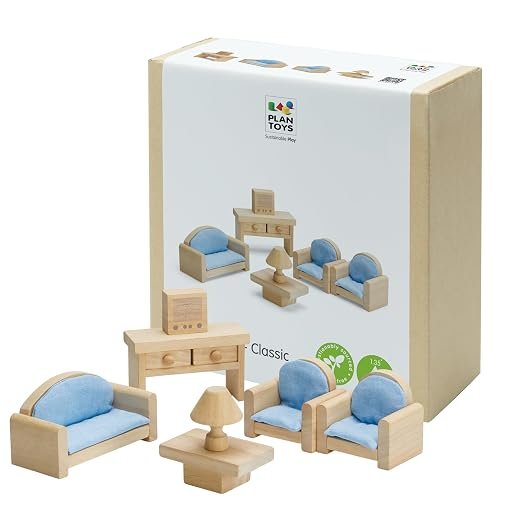
★PlanToys Minimalist Wooden Creative Cabin is stunningly simple, non-electronic and made from sustainable, chemical-free rubberwood. The modular walls have clean, unpainted lines, and no flashing digital screens or pre-scripted sound waves, so your preschooler is free to direct the story any way he or she wishes. They aren’t required to follow a scripted TV theme. They are the ultimate directors of their own reality.
Big structural backgrounds are far better filled up with simple figures free to interpretation than with cinematic characters having a very complex story attached to them.
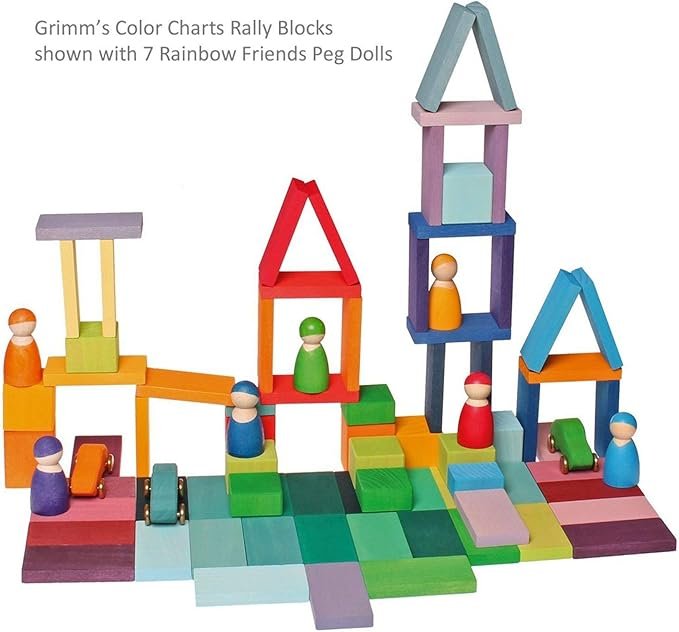
This layout is the perfect complement for ★Grimm’s Rainbow Friends Wooden Peg Dolls, providing children a blank canvas of multi-hued character figures that can be knights, doctors, family members or deep-space pilots. This open-ended versatility extends their language processing and creative vocabulary significantly more than single-function, themed plastic toys that perform one thing exclusively.
The Return of Boredom Magic
Breaking free of the digital cycles doesn’t mean you have to become a full-time cruise director, scheduling every minute of your child’s afternoon. True childhood resilience is cultivated when we back off, remove the plastic clutter of single-utility toys and provide our children with the breathing room to survive a short period of boredom through their own internal ingenuity.
Fill your home ecosystem with versatile, high-utility items like self-contained magnetic tiles, wooden climbing frames and non-prescriptive pretend play toys and you gift your child the keys to an independent world of deep confidence.
Audit your existing toy arrangement today. Make sure you have a good selection of open-ended tools that require genuine physical or mental effort. Then watch with pride as your independent youngster creates vast worlds from a blank canvas.
You don’t have to go through these early kid growth phases alone. Keep Cozy Parents close at hand for a continual feed of professional child development frameworks, practical playroom evaluations and warm parental community validation.