
Walk into the kitchen any evening, and you’ll undoubtedly find a little shadow following your every move. You’re chopping vegetables, washing dishes, stirring something on the stove and your child is right there pulling your trouser leg asking to hold the metal whisk or trying to crawl into the dishwasher.
The intensity is not a passing phase, nor just trying to get your attention. It is a profound, biological urge towards practical life mimicking in the sphere of early childhood development.
Toddlers are wired to see the adult world and mimic its complicated daily procedures. They don’t want to play with dumbed-down, single-purpose plastic baby toys, they want to undertake the heavy, meaningful labour they see their primary caretakers doing every day.
The ultimate architectural level for this evolution is a nicely constructed toy kitchen. The dangerous and forbidden parts of the adult kitchen hot stoves, sharp knives and delicate glass are re-worked as a secure and accessible structure within which a kid can assert total domestic independence.
But not all play kitchen setups can keep long-term engagement. Cheap plastic versions loaded with screaming electronic sounds, flashing fake burners and canned talking recipes often steal the internal inventiveness of youngsters. Once the automatic noise becomes predictable the novelty wears off and you are left with a large pink plastic shell taking up valuable real estate in your living room.
Let’s avoid the hyper-stimulating commercial gadgets. Let’s stick to clear structural lines, open-ended materials, and realistic mechanical input. A high-use cooking area sets the stage for engaging, independent play that easily grows from simple toddler sorting to complex preschool narrative.
At Cozy Parents, we view childhood investments as spatial minimalism, child-led exploration, and real milestone integration. We think your house should be a peaceful sanctuary where your child’s attention can grow and deepen naturally.
If you’re ready to find more therapist-approved blueprints to create a rich, clutter-free home environment, check out Cozy Parents for practical, therapist-supported playroom ideas designed for real family living.
Mechanical Baseline
To an eighteen-month-old toddler, a play kitchen is essentially an elaborate mechanical puzzle box. At this stage their play is very tactile, sensitive and learning the cause and effect of space.
They are quite interested in testing physical limits, how much effort it takes to close a door or how to balance an object on a flat shelf.
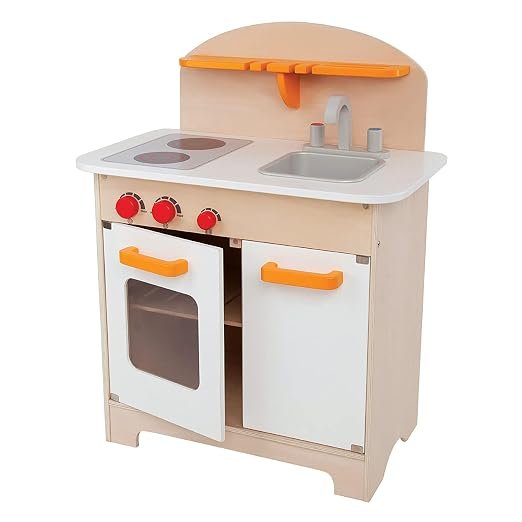
★The Hape Gourmet Kitchen Wooden Toy Set is the perfect canvas for this early mechanical monitoring. It is made from sustainable timbers, beautifully built, readily available on Amazon and has a clean minimalist profile that is intentionally devoid of distracting electronic lights or synthetic sounds.
Instead, it offers satisfying, resistant tactile feedback: the firm click of turnable oven control knobs, the hefty magnetic pull of cupboard doors closing, and a slick removable sink basin.
When a youngster twists a clicking knob, his brain is linking hand-eye coordination with distinct aural and tactile feedback. They’re learning to isolate their wrist rotation, develop their pincer grasp and they’re doing it completely screen-free.
The design is still incredibly subtle so the toddler is the absolute author of the activity. The sink can be a washing station, a place to store blocks or a concealed garage for toy vehicles.
As their hand accuracy improves, introducing simple items requiring two-handed coordination will greatly widen their window of focus.
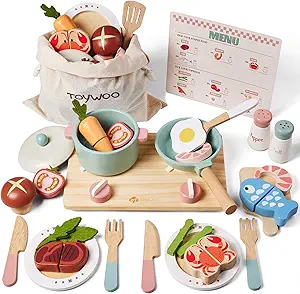
★The Hape Gourmet Wooden Kitchen Starter Accessories Set includes a stunningly smooth selection of solid-wood pots, pans, plates and utensils coated in water-based, non-toxic dyes.
Younger children will spend extended, focused periods of time just matching lids to pots, stirring abstract things with the wooden spatula and stacking plates inside the oven shelf.
This bilateral integration stabilising a pot with the non-dominant hand while the dominant hand actively stirs the pot trains both brain hemispheres to communicate clearly and provides the physical foundation for independent self-feeding.
Abstract Narrative Architecture
When your child is older than three years old, their play will make a huge cognitive leap. They go away from the strictly physical mechanics of opening and closing doors and into the abstract deep mapping of story.
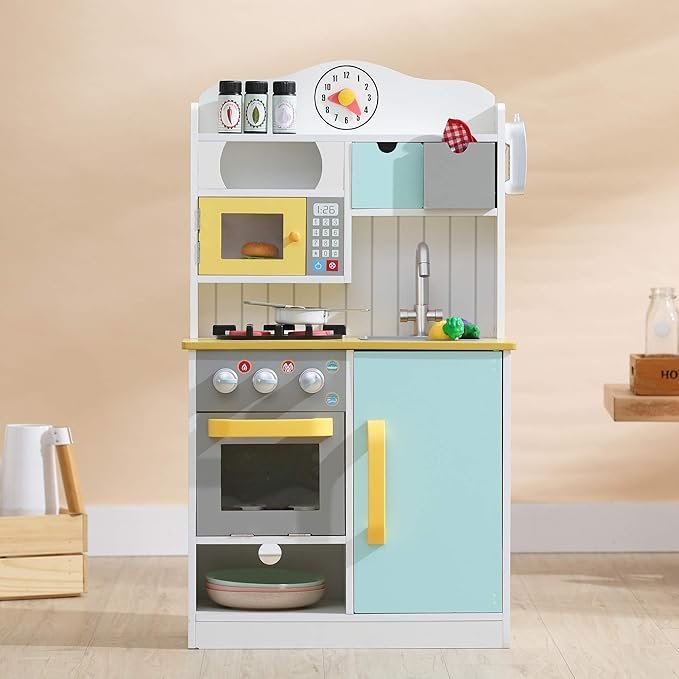
The play kitchen transforms from a dashboard of buttons into a vibrant, interactive community centre where they navigate social emotions, develop linguistic structure and negotiate real-world routines.
★Teamson Kids Florence Wooden Play Kitchen is a charming tiny vintage design that works great to help bridge this developmental leap. It has a built-in imitation ice machine, overhead storage shelf and a farmhouse style clock with moving hands. It’s a highly detailed backdrop that anchors complex dramatic action without taking up vast square area.
Preschoolers love running imaginary cafes, taking breakfast orders from family members and maintaining tight kitchen timers.
In this dramatic stage, the level of their cognitive problem-solving will be set by the kind of accessories you supply. If you choose non-prescriptive, open-ended tools, you allow their creativity to flex much further than pre-sliced plastic velcro foods that can only be constructed one way.
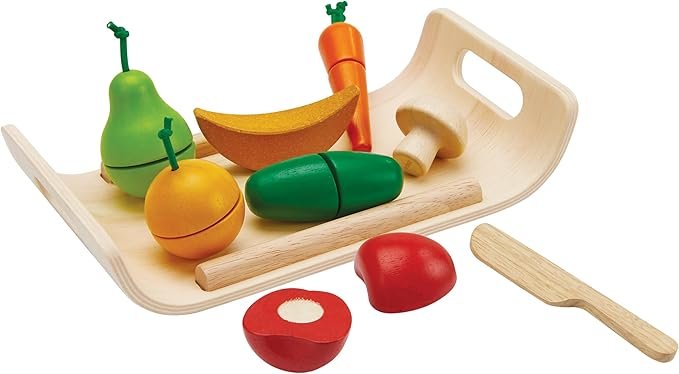
★PlanToys Wooden Fruit and Vegetable Assortment Play pretend cooking with sustainable, chemical-free rubberwood and safe water-based pigments set re-engineers.
The kit includes a dull wooden knife and a sturdy cutting board, so children can practice the correct hand pressure and spatial alignment required to safely divide portions of food.
The shapes are wonderfully basic and abstract, so the child’s brain has to actively fill in the blanks, turning a wooden disc into a slice of onion, a rare coin or a secret ingredient in a magical soup. This kind of abstract thinking flows right into their readiness for early math and literacy. More ideas for using dramatic play to naturally construct language milestones are available in the parent resource databases at Cozy Parents.
The Masterchef Work Space
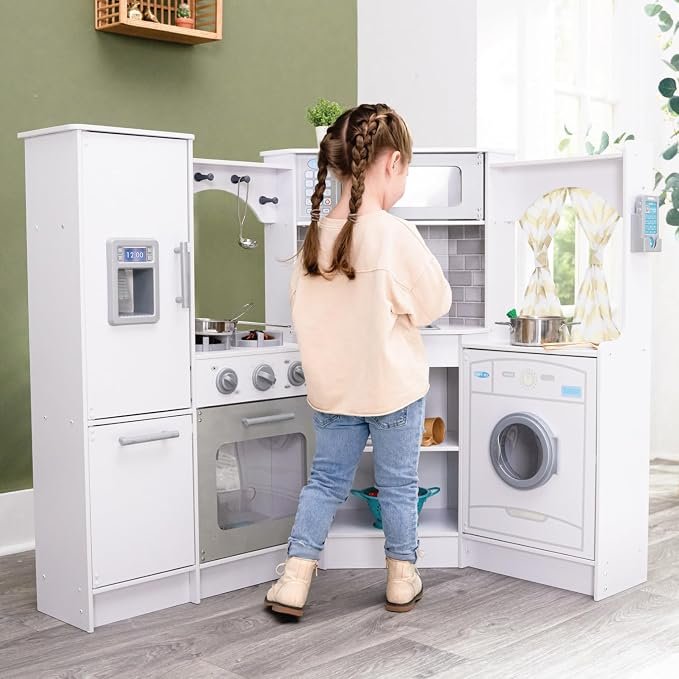
True play value is that a toy scales easily to accommodate collaborative, multi-child playdates or sibling involvement. This means two or three youngsters can be in the same physical area without bumping into each other. They learn to share space, assign tasks and express intent.
★The KidKraft Ultimate Corner Wooden Play Kitchen is designed to maximise limited space with a unique slanted corner design. Here you get the most active surface area on the counters with an integrated refrigerator, freezer, microwave and washing machine.
Older preschoolers can operate as a team, with one child responsible for “washing” fabric towels in the machine, another for “chopping” materials at the corner counter, and a third for working the oven timers.
This sophisticated cooperative play teaches high-level executive functioning since youngsters have to retain a multi-step plan in their brains, articulate their boundaries vocally, and shift gears when a peer modifies the storyline.
Elegant serving rituals offer a superb behavioural anchor when they desire to shift from huge, interactive restaurant to quiet, focused hospitality routines.
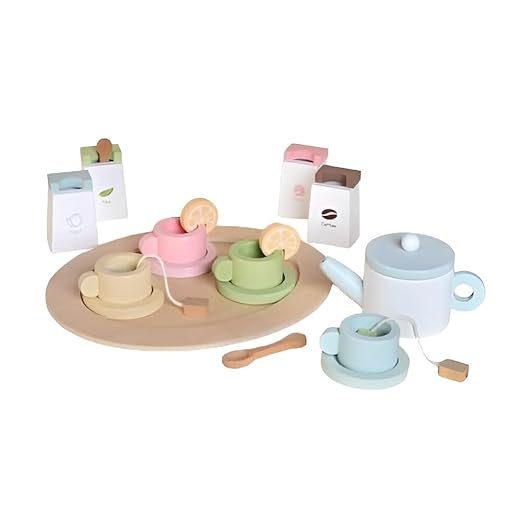
★The Raduga Grez Wooden Tea Party Set is a stunning heirloom quality addition to any play kitchen counter. Clay-colored teapots, cups and sugar bowls are made from solid lime wood and treated with velvety non-toxic water colours, providing a rich organic texture that feels grounding in a child’s palm.
Preschoolers appreciate the careful balancing of teapots to pour unseen liquids into cups, organising seating arrangements for their stuffed animals, and rehearsing polite table discussions, all of which naturally calms a hyper-aroused nervous system before bedtime.
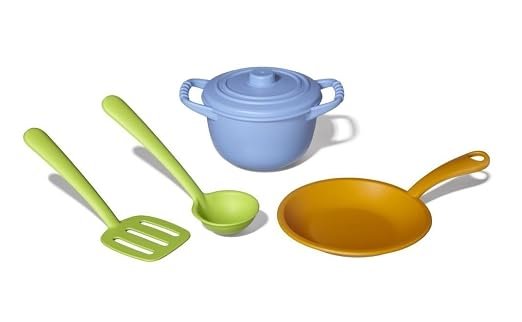
★Green Toys Chef Duck Character Set is a fun, easy-to-sanitize character anchor to complete your own kitchen ecology. Made in the USA from 100% recycled plastic milk jugs, without any external coatings or paints, this rugged little duck figure can be submerged directly in real dishwater or sand boxes and tossed into the dishwasher at night, making it an incredibly low maintenance companion for real sensory culinary labour.
Regaining the Rhythm of Home
Choosing not to buy plastic flashing electronic toys and instead filling your home with a high value sustainable wooden play kitchen is a lovely investment in your child’s growing autonomy. Simple lines, non-toxic finishes and open-ended accessories. You trade in the cacophony, the overstimulation of modern toy commercialism for the quiet, intentional attention of a child dominating their surroundings.
Audit your present living room layout today, remove away the single-utility distractions that do all the cognitive work for the youngster and step aside to let your independent little chef create their own recipe for unshakeable confidence.
You never have to go through these early childhood growth phases alone or guess what developmental materials truly contribute to your family’s daily tranquilly. Keep our website handy as your trusted digital village for a constant feed of expert child development frameworks, practical playroom layout assessments and honest product reviews.