

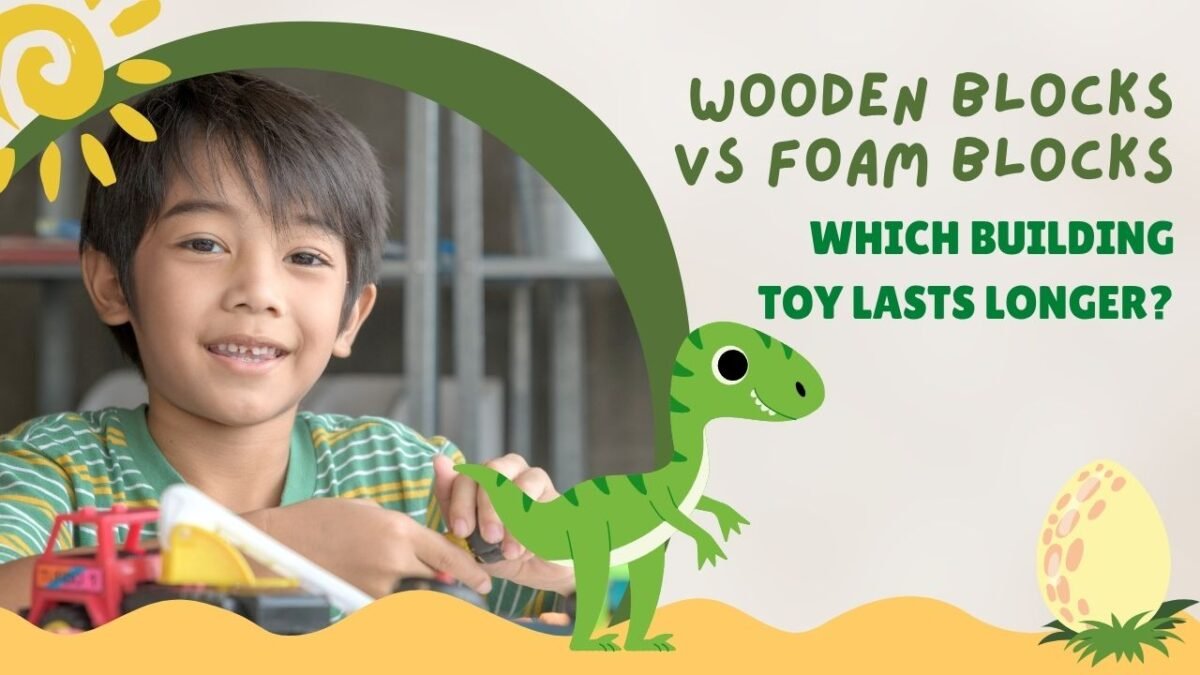
Building blocks are the ultimate open-ended toy. Before a child learns formal physics or architectural design, stacking physical blocks provides them with direct, hands-on experience with balance, gravity, spatial thinking and cause-and-effect. A humble set of building blocks transforms effortlessly from simple infant stacking to sophisticated preschool castles, city grids and marble runs.
But, as parents begin to choose the perfect foundational block set for their home, they are faced with a classic dilemma: Wooden Blocks vs. Foam Blocks.
For one, solid hardwood blocks have classic weight, inherent tactile appeal and heirloom-level lifespan. In contrast, soft foam construction blocks offer quiet play, no risk of impact injuries and minimal weight for young hands.
Both materials have their virtues, but if you look at building toys through the lenses of long-term material durability, safety, tactile input and environmental clutter, there are some notable distinctions. Open-ended toys are an investment in your child’s developmental milestones for years to come, while keeping your living space serene, sustainable and organized.
At Cozy Parents, we assess early children equipment via a rigorous filter of spatial clarity, physical health, developmental utility and clutter-controlled minimalism. We think your home should be a tranquil haven for your child’s creativity to grow, without the excess of toys.
If you’re excited to learn more therapist-approved frameworks, home organization tips, and expert gear recommendations for increasing families, head over to Cozy Parents will connect you to useful resources for purposeful daily living.
Biomechanical & Sensory Physics: How Materials Shape Play
To determine which building material delivers better value over time, it helps to evaluate how the material qualities of wood and foam effect a child’s neurological system and physical play style.
Building play relies significantly on tactile proprioception the brain’s ability to detect physical weight, resistance and balance.
1. Gravity and weight feedback
Solid hardwood blocks have their own natural mass and density. When a youngster lays a hefty wooden unit block on top of another, the tactile weight gives explicit input about gravitational alignment. If the block is off-center the structural change is sensed immediately in the child’s hands,
By contrast, foam blocks are feather-light. This lightness means toddlers can build large structures without fear of huge crashes, but it doesn’t have the substantial physical weight that helps youngsters develop inherent hand strength and accurate pressure control.
2. Sensory and Acoustical
Foam blocks may also be quite quiet when they fall. In fact, one of the biggest selling features of foam blocks is that foam towers when they fall create almost no noise. While this acoustic attenuation can be an advantage for noise-sensitive households or shared apartment walls, the sound of falling wooden blocks really has a significant developmental role. The auditory click of wooden blocks provides rapid sensory closure, reinforcing the physical cause and effect loop for young builders.
3. Structural stability and friction of surfaces
The blocks are made from high grade hardwood, with a gently textured, unpolished or matte finished grain for natural surface friction. It is this friction that produces the stability required for complicated architectural cantilevers, arches and bridges to be in balance.
Often, dense EVA foam or coated vinyl blocks have smooth, non-porous surfaces. Comfortable to squeeze, however dense foam might compress a little under weight so towering buildings can wobble abruptly or slide apart easily when built on carpeted surfaces.
Wood vs Foam: 5 Key Categories Comparison Head-to-Head
Let us examine wooden and foam building sets across five key ownership criteria to find out which material lasts better over time:
1. Wear Resistance and Durability of material
Wooden Blocks: Great durability for heirlooms. Solid hardwoods such as beech, maple and rubberwood will not dent, break or splinter after decades of intense everyday play. Small scratches can be simply sanded out or re-oiled.
Foam Blocks: Moderate durability in the short term. Soft blocks of high density EVA foam and vinyl are stackable but can be bitten into by teething children and can be permanently dented or torn by heavy furniture placed on them.
2. Safety and Chemical Hygiene
Wooden Blocks: Are naturally non-toxic when sealed with organic beeswax, food-grade oils or non-toxic water-based paints. Unfinished hardwood is naturally antimicrobial and may be readily cleaned with a quick wipe of a moist microfiber cloth.
Foam Blocks: These need to be checked very carefully. Lower-grade EVA foam may include phthalates and formamide or out-gas chemical odors. The vinyl-covered foam is easy to wipe clean but exposed closed-cell foam can absorb moisture or saliva if nibbled on by newborns.
3. Physical safety and risk of impact
Wooden Blocks: Greater chance of injury from falling towers. Heavy wooden edges can give slight bumps or bruises if tossed or knocked over on small toes and fingers.
Foam Blocks: No risk of impact. Soft foam blocks remove the risk of physical injury altogether, so they are a safe option for babies who are still learning how to sit and balance independently.
4. Long Time & Flexible in Various Ages
Wooden Blocks: Long multi-stage life span (ages 1-10+). Wooden unit blocks continue to be appealing through primary school as youngsters integrate them into intricate pretend play, engineering problems, and marble runs.
Foam Blocks: Functional lifespan is shorter (6 months to 3 years of age). Most children outgrow soft foam blocks as their fine motor abilities develop and they need more stable, precise building tools.
5. Storage and Sustainability in Environment
Wooden Blocks: As sustainable as it comes. Responsibly sourced hardwood is biodegradable, renewable and sells well on the second-hand markets.
Foam Blocks: Man-made. EVA foam and petroleum-based vinyl aren’t naturally biodegradable and are commonly thrown away in landfills, when compressed or broken.
7 Best Building Block Sets
So, to assist you select the ideal building set that fits your family’s demands, let us audit seven different, highly rated products that are alive and well on Amazon US.
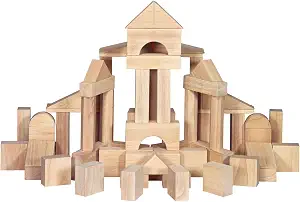
1. Melissa & Doug Standard Unit Wooden Building Blocks, 60 pcs
This 60-piece hardwood set of properly scaled unit blocks based on conventional architectural ratios is considered the gold standard for open-ended play. Each block is constructed from solid hardwood, with rounded, smooth corners and a clear, non-toxic finish.
The standardised dimension of the units helps to discover mathematical idea to children e.g. to find out that two square blocks equal the precise length of one rectangular unit block.
This heirloom set assembles in a durable hardwood storage crate for years of vigorous construction activity while keeping smooth surface friction for stable building.
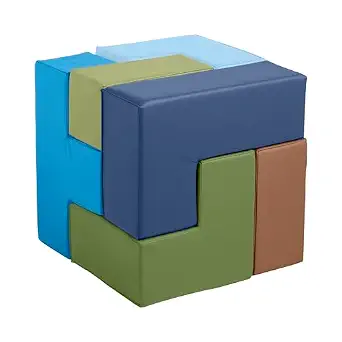
2. ECR4Kids SoftZone Soft Building Blocks – 7 Piece Set
This 7-piece big foam set is designed for newborns and young toddlers and has soft polyurethane foam cores that are encased in durable, wipe-clean vegan leather. With the big cubes and rectangles, children can build soft indoor towers, fort walls and obstacle courses with little chance of hard hits.
Vinyl covers are non-porous and spill proof and easy to sanitize with mild soap and water or child safe disinfectant wipes.
This soft block set is Certified GREENGUARD Gold for reduced chemical emissions and offers a comfortable, peaceful building experience for small living rooms or nursery play spaces.
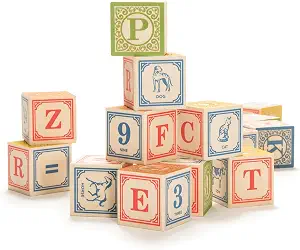
3. Uncle Goose Wood Blocks Classic ABC
Crafted by hand in the USA from sustainable Midwestern basswood, this 28-piece wooden block set blends classic building play with tactile literacy development. Each block is hand-printed with debossed uppercase letters, numerals and animal pictures in non-toxic, child-safe inks.
Its carved, tactile edges enable infants feel letter shapes with their fingers, developing kinesthetic pre-reading abilities as they stack.
Its petite 1.75-inch cube size fits well into little toddler hands and is a classic complement to low shelves or nursery display baskets.
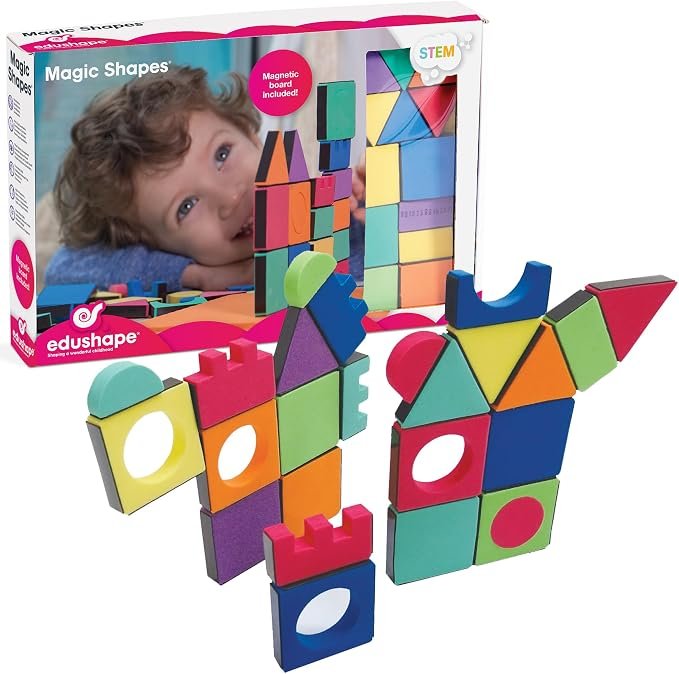
4. Edushape Foam Building Blocks (80 Piece Kit)
This 80-piece set has the beauty of genuine wood with the lightweight softness of foam. The pieces are high-density EVA foam blocks, decorated with realistic wood-grain designs. These thick foam pieces are 1.5″ thick and stack much more stably than thin foam cut outs, but still make no noise at all as they tumble down.
The foam is water resistant so these blocks float making them fun to use in the bath or creating at the outdoor water table.
The kit includes a range of designs including arches, cylinders, triangular roofs and long beams which enable children to build big structures safely.
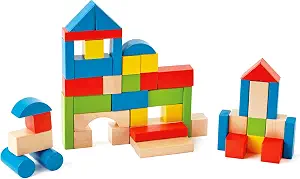
5. Hape Maple Wood Blocks – 50 Piece Set
This 50-piece set adds colorful fun to the classic block play, and is made of solid maple wood from forests certified by the Forest Stewardship Council. This set includes a variety of natural wood blocks and non-toxic painted blocks in brilliant primary and secondary colors.
The blocks come in a hardwearing canvas drawstring bag for easy and quick clean-up by young children.
The smooth, splinter-free finish and rounded edges are kind to little hands and the substantial maple density means the set will stand up to drops and active play sessions for years to come.
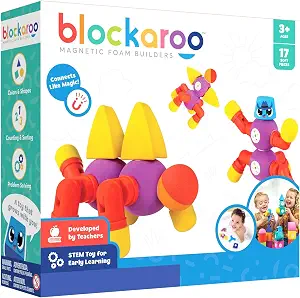
6. Blockaroo Magnetic Foam Building Blocks – 17 Piece Set
This 17 piece set combines soft EVA foam with new magnetic quick-connect connectors for a fun modern take on foam building. The foam blocks have enclosed 360 degree spinning magnets that snap together smoothly no matter the magnetic polarity, so there’s no frustration for the little ones (even early toddlers).
The soft foam pieces rotate easily on magnetic joints so kids can create anything that move such as critters, cars and floating things.
The soft, non-toxic foam pieces are 100% dishwashing safe and float in water, making them a flexible pick that easily moves from playroom floors to the bathtub.
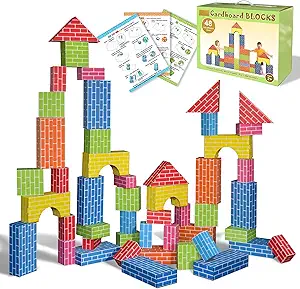
7. SUMBOO Extra Large Building Blocks
This natural wood set is perfect for kids who love to build castles and towers on a grand scale. Oversized (and super sturdy) solid wood blocks have smooth sanded surfaces and softened corners. The untreated, natural wood finish showcases organic timber grain for a relaxing, tactile appeal in minimalist playrooms.
The considerable weight of the larger blocks requires older toddlers and preschoolers to exercise core body balance and two-handed spatial control as they build.
This sturdy timber kit is free of synthetic lacquers, varnishes and plastic coatings and provides a robust natural base for open-ended construction play.
How to Create a Welcoming Block Corner at Home
A validated block set is an important first investment, but it is the ordered, low-friction building environment that makes everyday construction play exciting and disciplined.
Here are four practical ways you can create a peaceful, clutter-controlled building space at home:
1. Level the building surface
Offer a low-pile play rug or a solid wood play mat to be your child’s constructing foundation. A flat, firm surface keeps the towers from toppling too soon on soft carpet and gives the children accurate feedback about their balance and alignment.
2. Exercise Controlled Quantity
Rather than a large dump of 100 plus blocks which can over whelm a young child and lead to dispersed mess in the room, start with 20 to 30 carefully selected pieces in an open wooden tray. As your child’s structural confidence and clean-up habits mature, slowly increase the size of the set available.
3. Use natural loose parts
Place a small woven basket of natural loose bits close by to enhance the open-ended block play such as smooth river stones, wooden peg dolls or felt trees. Loose bits and blocks help children to plan spaces, imagine stories and pretend.
4. Create a “Structure Preservation” Rule
If your child has created an elaborate castle or tower at the end of the day, set aside a small corner shelf where the construction can stay in tact for a few days. Respect for what they have completed, fosters pride, stimulates further multi-day play projects and avoids clean-up disputes.
The Verdict: What Material Lasts the Longest?
If you look at it just in terms of endurance, durability of materials and value throughout a number of stages of development, solid timber blocks are the clear long term winner.
Soft foam blocks provide instant safety and peaceful play benefits during the newborn and early toddler phases (ages 6 to 18 months), but their practical lifespan is quite short. Foam pieces wear out quicker, compress over time and are often outgrown when kids want for stable, precise materials for bigger structures .
However, solid hardwood blocks are virtually unbreakable. They promote fine motor skills , physical spatial reasoning , and creative engineering from toddlerhood through elementary school. And they stand up to the test of time and resale value for generations .
Buy Timeless Open-Ended Play
Selecting the correct building blocks for your home involves weighing your child’s age against your future goals for play value and material durability. By choosing high-quality, sustainably sourced wood unit blocks and augmenting with soft foam sets for the early infant play stage, you provide your kid a basic tool that fosters creativity, spatial intelligence and autonomous problem-solving.
Today, spend a time to take a look at your child’s current building area. Remove any damaged or flimsy plastic pieces, put out a clean wooden block set on an accessible shelf and enjoy watching your little architect build their world piece by piece.
You don’t need to make decisions on early childhood equipment choices or home setup on your own. For a steady flow of realistic developmental frameworks, minimalist home organization suggestions and honest product reviews, maintain Cozy Parents as your reliable digital resource.